Most people don’t realize that improperly disposing of portable power station batteries can release harmful toxins and waste valuable materials. To recycle these batteries safely, we need to first fully discharge and inspect them for damage, then clean and tape the terminals to prevent hazards. But knowing the right local programs and handling steps is essential to guarantee environmental safety and resource recovery. Let’s explore how to prepare and find proper recycling options for these batteries.
Key Takeaways
- Fully discharge the portable power station battery before recycling to minimize residual charge and ensure safety.
- Inspect batteries for damage like swelling or leaks, and handle damaged units according to special guidelines.
- Tape battery terminals to prevent accidental contact and clean corrosion for safer recycling.
- Locate authorized recycling centers or certified drop-off points via local waste management or resources like Earth911.
- Follow manufacturer and local recycling guidelines to properly prepare and dispose of batteries for environmental safety.
Why Recycling Portable Power Station Batteries Is Essential
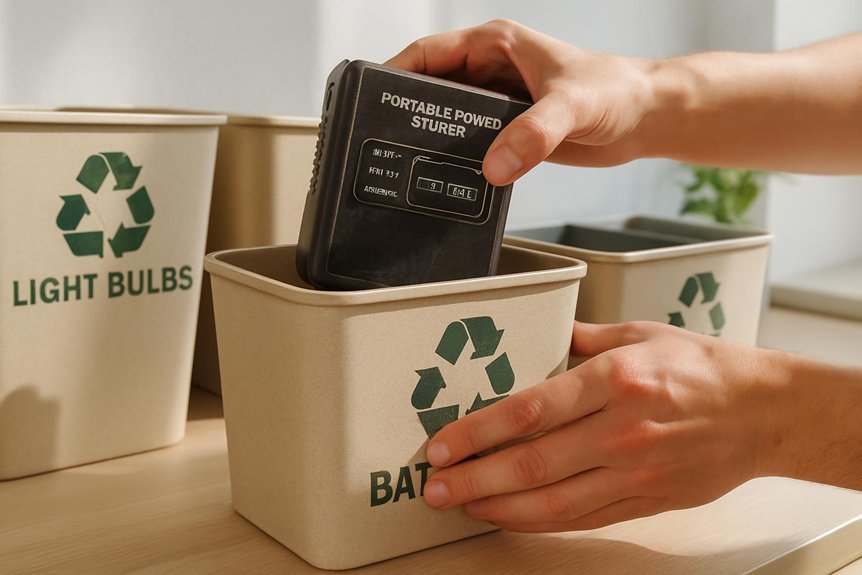
Although portable power station batteries offer convenience and reliable energy storage, we must prioritize recycling them to prevent environmental harm and resource depletion. The finite battery lifespan means that, over time, these batteries lose efficiency and must be replaced. Improper disposal leads to hazardous chemicals leaching into ecosystems, amplifying the environmental impact. Recycling allows us to recover valuable materials like lithium, cobalt, and nickel, reducing the demand for virgin mining and conserving natural resources. By implementing effective recycling protocols, we minimize toxic waste and lower greenhouse gas emissions associated with battery production. As users and stewards of technology, we have a responsibility to close the loop on battery life cycles, ensuring sustainable energy solutions while mitigating the environmental footprint of portable power station batteries.
How to Prepare Your Batteries for Safe Recycling
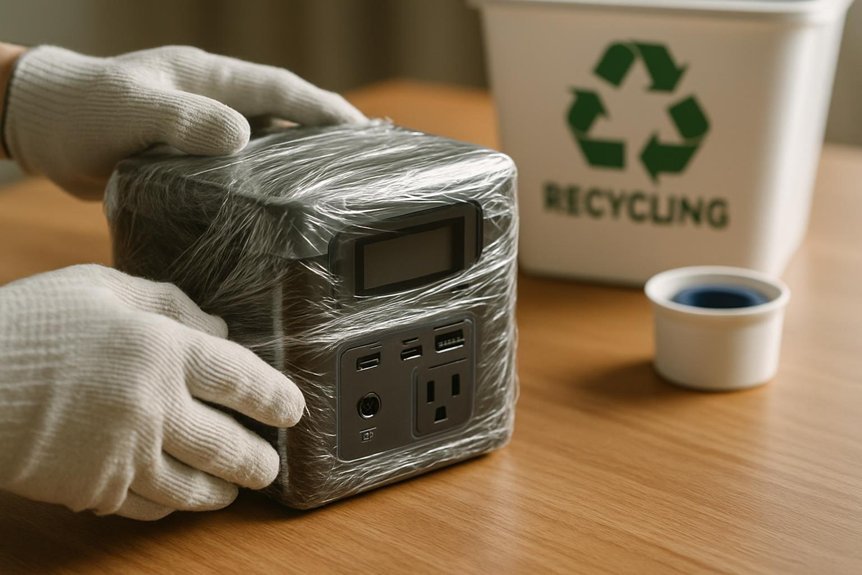
To effectively recycle portable power station batteries, we need to start by properly preparing them to guarantee safety and maximize material recovery. First, we should fully discharge the battery to minimize residual charge, reducing the risk of short circuits during handling. Next, we carefully inspect the battery for damage, such as swelling or leaks, since compromised batteries require special handling under battery safety protocols. We then clean the battery terminals to remove corrosion, facilitating better contact during recycling processes. It’s essential to follow specific recycling guidelines provided by manufacturers or local authorities, including taping terminals to prevent accidental contact. By adhering to these steps, we secure a safe and efficient recycling process, preserving valuable materials while preventing hazards associated with improper battery disposal.
Where to Find Local Recycling Programs for These Batteries
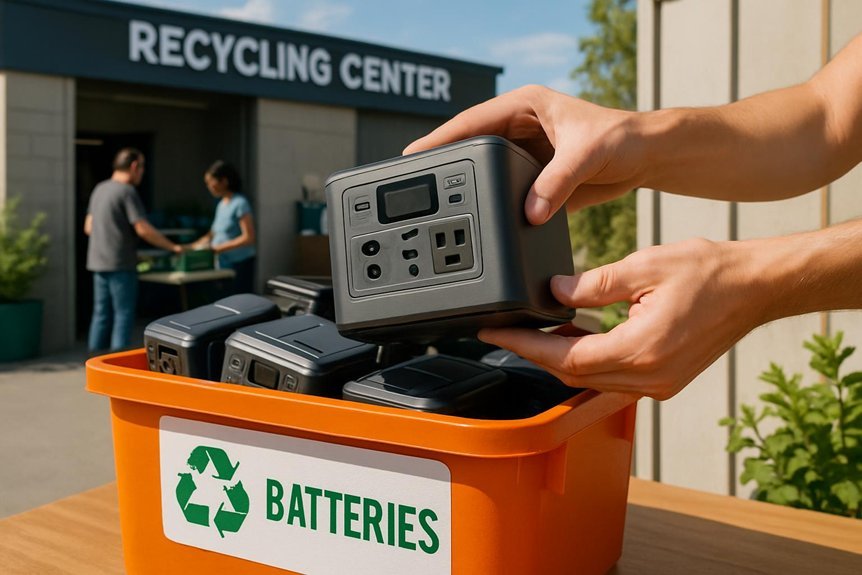
Where can we locate reliable local recycling programs for power station batteries? Our first step is to identify authorized recycling centers specializing in lithium-ion and lead-acid batteries. We can begin by checking municipal waste management websites, which often provide updated lists of battery collection points. Additionally, many electronics retailers and hardware stores offer designated drop-off locations for portable power station batteries. We should verify that these facilities comply with environmental regulations to guarantee proper handling. Online resources like Earth911 or Call2Recycle also help us find certified battery collection services nearby by entering our zip code. By targeting official recycling centers, we reduce environmental risks and promote efficient resource recovery. Staying informed about local options guarantees we responsibly recycle our batteries without unnecessary delays or hazards.
What Happens to Batteries After Recycling
Once we drop off our power station batteries at a certified recycling center, specialized processes take over to safely dismantle and recover valuable materials. Technicians first separate components based on the battery composition, isolating metals like lithium, cobalt, nickel, and copper. These materials undergo mechanical and chemical treatments to purify and prepare them for reuse in new batteries or other products. This approach minimizes environmental impact by reducing the need for raw material extraction and preventing hazardous waste from entering landfills. Additionally, recycling centers follow strict protocols to handle toxic substances safely, further protecting ecosystems. By efficiently reclaiming battery components, the recycling process closes the loop on resource use, promoting sustainability and lessening the ecological footprint of portable power stations.
Tips for Reducing Battery Waste With Smart Usage and Disposal
Effective battery waste reduction starts with how we use and dispose of power station batteries. To extend battery lifespan, we should practice smart charging—avoiding both overcharging and deep discharges. Using chargers with built-in cutoff mechanisms helps maintain ideal charge levels, preventing stress on battery cells. Additionally, storing batteries at moderate temperatures minimizes degradation. When a battery reaches end-of-life, we must dispose of it through certified recycling programs to recover valuable materials and prevent environmental contamination. Regular maintenance checks can identify early signs of battery wear, allowing timely intervention. By combining smart charging habits, proper storage, and responsible disposal, we actively reduce battery waste and promote sustainability in portable power solutions. Let’s commit to these practices to maximize battery efficiency and environmental stewardship.
Frequently Asked Questions
Can I Recycle Portable Power Station Batteries Internationally?
We can recycle portable power station batteries internationally, but must follow strict international regulations on battery disposal. Partnering with certified recyclers guarantees compliance, safe transport, and environmentally responsible handling across borders.
Are All Battery Types in Portable Power Stations Recyclable?
Not all battery types in portable power stations are recyclable—surprising, right? We must prioritize lithium-ion safety and follow strict battery disposal protocols to guarantee environmental protection and prevent hazards while responsibly handling diverse battery chemistries.
How Long Do Portable Power Station Batteries Last Before Recycling?
We understand portable power station batteries typically have a battery lifespan of 3 to 5 years. Once performance declines, we should initiate the recycling process to recover valuable materials and guarantee environmental safety.
Can Damaged Batteries Be Safely Recycled at Home?
We can’t safely recycle damaged batteries at home due to battery safety risks. Instead, we should use specialized recycling methods, like taking them to certified facilities that handle hazardous materials properly and prevent environmental harm.
Do Manufacturers Offer Buy-Back Programs for Used Batteries?
Yes, many manufacturers offer buy-back programs to guarantee proper battery disposal, reducing environmental impact. We can return used batteries directly, promoting safe recycling and minimizing hazardous waste in landfills, protecting our ecosystems efficiently.
Conclusion
Recycling portable power station batteries is vital for environmental safety and resource recovery. By fully discharging, inspecting, and properly preparing batteries, we guarantee safe handling and compliance with local recycling programs. Finding authorized centers makes the process easier and more effective. So, why risk environmental harm when responsible disposal is straightforward? Let’s commit to smart battery usage and recycling, protecting both our planet and future energy needs with precise, solution-driven actions.