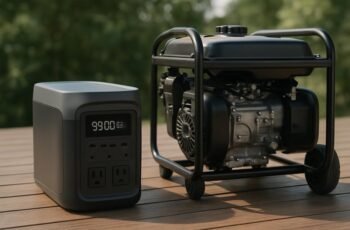
Building an off-grid power system requires a precise understanding of your energy demands and the integration of advanced renewable technologies. We approach this with a focus on scalable design, component compatibility, and safety protocols, ensuring long-term reliability. As we explore the essential steps—from load analysis to system maintenance—it’s clear that thoughtful planning and innovative solutions are key. The path to a sustainable, autonomous energy setup begins with critical decisions, and there’s much more to uncover.
Key Takeaways
- Assess your energy needs through detailed load analysis and identify suitable renewable sources like solar, wind, or micro-hydro.
- Select compatible, scalable components such as batteries, inverters, and charge controllers based on your power requirements.
- Design a reliable, modular system emphasizing proper wiring, component placement, and future expansion capabilities.
- Install with safety measures, proper grounding, and effective wiring practices, then perform regular maintenance and troubleshooting.
- Upgrade and expand your system over time by integrating higher-capacity batteries, smart controllers, and additional renewable sources.
How Off-Grid Power Systems Work and Why You Need One
Have you ever wondered how off-grid power systems reliably generate and store electricity without connection to the main grid? These systems leverage renewable energy sources like solar panels, wind turbines, or micro-hydro generators to convert natural resources into electrical energy. This power is then managed by charge controllers that optimize efficiency and protect storage components. Electrochemical batteries, usually lithium-ion or lead-acid, store surplus energy for times of low generation. An inverter converts DC stored power into AC, making it compatible with household appliances. This integrated approach guarantees continuous, autonomous energy supply, even in remote locations. The innovation lies in balancing generation, storage, and load demands seamlessly, providing a resilient, sustainable solution that eliminates dependence on centralized grids.
Assessing Your Power Needs and Setting Realistic Goals
To optimize an off-grid system, we start by precisely quantifying our energy consumption through detailed load analysis. Next, we identify reliable power sources that match our needs, balancing renewable options with backup solutions. Finally, we establish realistic, scalable goals that align with our consumption patterns and resource availability, ensuring system longevity and efficiency.
Determine Energy Consumption
Evaluating your power needs is a critical first step in designing an effective off-grid energy system. To accurately determine consumption, we analyze the load profile by cataloging all electrical devices, noting their wattage, and estimating daily usage hours. This process involves creating a detailed energy audit, which helps identify peak demands and average loads. We utilize advanced metering tools and real-time monitoring to gather precise data, ensuring our calculations reflect actual usage patterns. By establishing a clear energy baseline, we can set realistic, scalable goals for storage capacity and generation. Precision in this phase minimizes over-sizing or under-sizing components, optimizing system efficiency and longevity. This strategic assessment forms the foundation for selecting appropriate renewable sources and designing a resilient, cost-effective off-grid power solution.
Identify Power Sources
How can we effectively identify the most suitable power sources for our off-grid system? We start by analyzing our energy demand, considering peak loads and daily consumption patterns. Then, we evaluate available renewable resources and their consistency in our location. Reliable power sources should align with our goals of sustainability and efficiency. To optimize selection, we consider:
- Solar insolation data and seasonal variations
- Wind speed and patterns for wind energy potential
- Availability of hydropower or micro-hydro options
- Compatibility of energy storage solutions with chosen sources
- System scalability for future energy needs
Set Achievable Goals
Establishing clear, achievable goals for your off-grid power system begins with accurately evaluating your energy needs. We start by calculating your peak load, considering appliances, lighting, and essential devices, then factor in future expansion. Precise consumption data allows us to determine the appropriate capacity for solar panels, batteries, and backup generators. Setting realistic goals also involves understanding seasonal variations and potential system inefficiencies. By establishing measurable targets—such as daily energy output or autonomy periods—we guarantee the system aligns with your lifestyle and environmental conditions. This technical foundation prevents overbuilding and optimizes resource allocation. Informed goal-setting guides component selection and system design, ultimately creating a resilient, efficient off-grid power solution tailored to your specific energy profile.
Exploring Renewable Energy Options: Solar, Wind, and Micro-Hydro
Exploring renewable energy sources requires understanding the core principles behind solar, wind, and micro-hydro systems to optimize efficiency and reliability. We focus on how solar panels convert sunlight, wind turbines harness kinetic energy, and micro-hydro setups utilize water flow for consistent power generation. This technical foundation enables us to tailor off-grid solutions that maximize energy output while minimizing environmental impact.
Solar Power Basics
Have you ever considered how solar power can revolutionize off-grid living? Solar technology harnesses photovoltaic cells to convert sunlight directly into electricity, offering a reliable, sustainable energy source. Its modular nature allows scalable systems tailored to specific energy needs. Key components include high-efficiency solar panels, charge controllers, batteries, and inverters. Advances in panel efficiency and energy storage are pushing the boundaries of self-sufficiency. Here’s what makes solar power essential:
- High energy conversion efficiency
- Rapid scalability and modular design
- Low operational and maintenance costs
- Technological innovations in battery storage
- Integration with smart energy management systems
Wind and Hydro Options
Could wind and micro-hydro power be the key to diversifying off-grid energy systems? Absolutely. Wind turbines harness kinetic energy from variable wind speeds, providing scalable, reliable electricity when paired with proper siting and storage solutions. Micro-hydro systems utilize the natural flow of water, converting potential energy into continuous power with minimal environmental impact. These options enhance system resilience, especially in remote locations where solar may be limited by weather or daylight hours. Advanced turbine designs and control systems optimize efficiency, ensuring consistent output. Integrating wind and hydro with solar creates a hybrid system that balances intermittency, maximizes energy capture, and reduces reliance on storage. Together, they form a robust, sustainable foundation for off-grid power, pushing the boundaries of renewable energy innovation.
Choosing the Right Components: Batteries, Inverters, and Charge Controllers
Selecting the appropriate batteries, inverters, and charge controllers is fundamental to building an efficient off-grid power system. Proper component selection guarantees system stability, longevity, and peak performance under varying loads.
Key considerations include:
- Battery chemistry: Lithium-ion offers higher energy density and longer lifespan compared to lead-acid.
- Inverter capacity: Must handle surge loads and continuous power needs precisely.
- Charge controller type: MPPT controllers maximize power harvest from solar panels, improving efficiency.
- Voltage compatibility: Components should align to prevent power losses and system mismatch.
- Scalability potential: Choose modular components that allow future expansion without overhaul.
Designing Your Off-Grid System for Reliability and Scalability
Designing an off-grid system with reliability and scalability in mind requires a strategic approach to component integration and system architecture. We focus on modular design principles, allowing easy expansion without disrupting existing infrastructure. Redundant configurations, such as multiple charge controllers and parallel inverter setups, enhance system resilience against component failures. Proper load analysis is essential, ensuring the system can handle peak demands and future growth. We prioritize robust wiring schemes, strategic component placement, and effective monitoring systems to optimize performance and simplify troubleshooting. Scalability is achieved by selecting adaptable energy storage solutions and flexible power management systems that accommodate additional panels or batteries. By integrating these technical strategies, we create off-grid power systems that are both dependable today and ready for future expansion.
Calculating Your Budget and Planning for Installation Costs
Understanding the full scope of your off-grid power system costs is essential for creating a realistic budget and ensuring project success. To accurately plan, consider the following key factors:
Proper planning of off-grid power costs ensures project success and budget accuracy.
- Equipment costs: Batteries, inverters, charge controllers, and solar panels or other renewable sources.
- Installation labor: Skilled labor for system setup, wiring, and structural integration.
- Permitting and inspections: Local regulatory fees and safety compliance expenses.
- Site preparation: Land clearing, foundation work, and mounting structures.
- Contingency funds: Buffer for unexpected costs or system upgrades.
Installing Your Off-Grid Power System Safely and Effectively
Proper wiring techniques are essential to guarantee system reliability and safety, minimizing electrical losses and preventing faults. We must also prioritize the use of appropriate safety equipment, such as insulated tools and protective gear, to mitigate risks during installation. By adhering to these technical standards, we can optimize system performance while safeguarding everyone involved.
Proper Wiring Techniques
To guarantee your off-grid power system operates safely and reliably, precise wiring techniques are essential. Proper wiring minimizes energy loss, prevents shorts, and assures system longevity. We recommend using appropriately gauged wire for current capacity, maintaining consistent polarity, and securely connecting all terminals. Use crimp connectors or solder joints to ensure solid, corrosion-resistant connections. Maintain proper wire routing to avoid mechanical stress and interference. Label all wiring paths for easy troubleshooting, and employ color coding for positive and negative lines. Regularly inspect insulation for damage, and keep wiring organized to prevent accidental disconnections. Adopting these best practices enhances system efficiency and safety, making your off-grid setup resilient and effective in powering your needs.
Safety Equipment Usage
Ensuring safety during installation is critical to prevent hazards and protect both personnel and equipment. We prioritize the use of high-quality personal protective equipment (PPE), including insulated gloves, safety goggles, and flame-resistant clothing, to guard against electrical shocks and arc flashes. Proper grounding and the use of insulated tools minimize risk during handling and connection of live components. We also implement lockout/tagout procedures to prevent accidental energization. Ventilated environments are essential for working with batteries and inverters that emit hazardous gases. Regular inspection and maintenance of safety gear guarantee effectiveness throughout the installation process. By rigorously applying these safety protocols, we create a secure environment that enhances operational integrity and reduces the risk of accidents during off-grid power system deployment.
Maintaining and Troubleshooting Your Off-Grid Energy Setup
Regular maintenance and proactive troubleshooting are essential to keep your off-grid power system operating at peak efficiency. Consistent monitoring ensures maximum performance and early detection of potential issues. Advanced diagnostic tools can identify voltage irregularities, battery health, and inverter efficiency.
Routine maintenance and data-driven troubleshooting ensure optimal, reliable performance of your off-grid power system.
Key actions include:
- Regularly inspecting and cleaning solar panels for debris and dirt
- Monitoring battery voltage and capacity with digital gauges
- Checking inverter output for stability and error codes
- Ensuring all wiring connections are secure and corrosion-free
- Utilizing remote sensors for real-time system diagnostics
Implementing a rigorous maintenance schedule minimizes downtime and prolongs system lifespan. Troubleshooting should be rooted in data analysis, enabling precise identification of faults and swift resolution, keeping your off-grid setup resilient and reliable.
Upgrading Your System for Increased Capacity or New Technologies
As technology advances and energy demands grow, upgrading your off-grid power system becomes essential to maintain efficiency and meet new requirements. We focus on integrating advanced components like higher-capacity batteries, more efficient inverters, and smart monitoring systems to optimize performance. Implementing modular architectures allows seamless expansion, enabling the addition of solar panels, wind turbines, or energy storage without overhauling the entire setup. Upgrading also involves adopting cutting-edge technologies such as lithium-ion batteries for longer lifespan and faster charge cycles, and integrating smart controllers for real-time system management. These upgrades *guarantee* your system remains resilient, scalable, and capable of supporting emerging energy solutions while maximizing energy output and minimizing downtime. Staying ahead with technological advancements secures a sustainable, reliable off-grid power infrastructure.
Tips for Maximizing Efficiency and Ensuring Sustainable Power Supply
Maximizing efficiency and maintaining a sustainable power supply requires a strategic approach to system management and component optimization. To achieve this, we focus on reducing energy losses, balancing load demands, and integrating advanced monitoring tools. Properly sizing batteries and selecting high-efficiency inverters are vital for minimizing waste. Regular system diagnostics help identify inefficiencies early, while smart controls optimize energy flow based on consumption patterns and renewable input. Additionally, incorporating energy storage and backup systems ensures reliability during low-generation periods. Constantly updating software for system management enhances performance, and employing renewable sources like solar and wind maximizes sustainability.
Optimizing system management and component selection ensures sustainable, efficient power supply through smart controls and renewable integration.
- Use high-efficiency appliances and components
- Implement real-time monitoring systems
- Optimize battery sizing and placement
- Automate load management with smart controllers
- Regularly perform system diagnostics
Frequently Asked Questions
How Long Does It Take to Install an Off-Grid Power System?
Installation typically takes from a few days to several weeks, depending on system complexity, site conditions, and permits. We streamline this process with precise planning, efficient component integration, and skilled labor to minimize downtime and guarantee peak performance.
Can I Connect My Off-Grid System to the Grid Later?
Connecting your off-grid system to the grid later is technically feasible, but it’s complex and requires careful planning, permits, and upgrades—think of it as transforming a spaceship into a hybrid vehicle, demanding precision and expert engineering.
What Are the Common Environmental Impacts of Off-Grid Systems?
We find that off-grid systems can impact the environment through habitat disruption, resource extraction, and waste generation. By adopting sustainable materials and efficient designs, we minimize these effects, promoting eco-friendly energy independence and reducing ecological footprints.
How Do Weather Conditions Affect Renewable Energy Generation?
Weather acts like an unpredictable maestro, conducting our renewable sources—sun, wind, and water—with varying intensity. Storms, cloud cover, or calm days challenge efficiency, demanding adaptive, innovative energy storage solutions to maintain consistent power output.
Are There Any Legal Regulations for Off-Grid Power Systems?
Yes, regulations vary but typically include permits for system installation, safety standards, and grid interconnection rules. We recommend consulting local authorities and compliance experts to guarantee your off-grid power system adheres to all legal requirements.
Conclusion
Building an off-grid power system isn’t just about technology; it’s about rethinking our energy independence. We’ve found that integrating smart, scalable solutions aligns with the idea that innovative design can challenge traditional energy models. By meticulously evaluating needs and leveraging renewable sources, we enable reliable, sustainable power. Embracing these advanced strategies proves that with thoughtful planning and cutting-edge components, off-grid systems can outperform conventional grids—making independence not just a goal, but a practical reality.