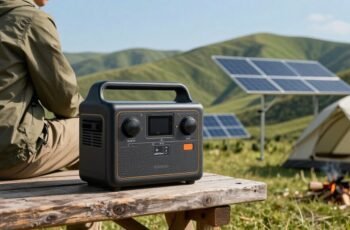
Like a lighthouse guiding ships through darkness, a solar generator can illuminate the path toward reliable off-grid power for cabins. Its ability to harness sunlight and convert it into usable electricity offers a sustainable alternative to traditional systems. Yet, understanding how these systems operate, scale, and adapt to remote conditions is essential for making informed decisions. As we explore these aspects, you’ll see why choosing the right setup can markedly impact your cabin’s independence and efficiency.
Key Takeaways
- Choose a solar generator with sufficient capacity to meet your cabin’s essential appliances and energy needs.
- Prioritize durability, weather resistance, and high-quality components for reliable off-grid operation.
- Consider system scalability and future expansion for additional appliances or increased energy demands.
- Evaluate costs of solar panels, batteries, inverter, and installation for an optimized budget.
- Opt for systems with monitoring and safety features to ensure efficient and secure operation.
What Is a Solar Generator and How Does It Work for Cabins?
Have you ever wondered how a solar generator provides reliable power to off-grid cabins? Essentially, it’s a system that converts sunlight into usable electricity through photovoltaic (PV) cells. These cells absorb solar radiation, generating direct current (DC) electricity via the photovoltaic effect. This DC power is then stored in high-capacity batteries for later use. A built-in inverter converts the stored DC into alternating current (AC), which powers standard appliances. Modern solar generators often include charge controllers to optimize charging efficiency and prevent battery overcharge. The system’s performance depends on factors like panel efficiency, battery capacity, and energy consumption patterns. This combination enables off-grid cabins to operate independently, delivering a renewable, low-maintenance power source that’s both scalable and resilient.
Key Benefits of Using Solar Generators in Remote Cabins
The advantages of employing solar generators in remote cabins extend beyond their fundamental ability to produce electricity; they offer a range of operational and economic benefits that enhance off-grid living. Solar generators provide a reliable power source with minimal maintenance, reducing the risk of system failure due to mechanical components. Their decentralized nature minimizes infrastructure costs associated with traditional power grids, offering long-term financial savings. Additionally, solar generators operate silently, minimizing noise pollution and disturbance to natural surroundings. Their scalability allows customization based on energy demands, optimizing resource use. Moreover, utilizing renewable energy reduces carbon emissions, aligning with environmental sustainability goals. Overall, these benefits establish solar generators as a technically viable, economically advantageous, and environmentally responsible solution for powering remote cabins.
How to Choose the Right Solar Generator Size for Your Cabin
Determining the appropriate size of a solar generator for your cabin requires a precise assessment of your energy consumption patterns and future needs. To do this effectively, consider these key factors:
- Identify essential appliances and their wattage—calculate total continuous power requirements.
- Estimate daily usage hours for each device to determine total energy consumption in watt-hours.
- Factor in future expansion—additional appliances or increased usage should influence generator capacity.
- Account for efficiency and losses—include system inefficiencies, typically 10-15%, in your calculations.
Top Features to Look for in a Cabin Solar Generator
When selecting a cabin solar generator, prioritizing key features guarantees reliable performance and long-term value. Essential attributes include high efficiency in energy conversion to maximize output from limited sunlight, and a robust battery capacity to sustain essential loads over extended periods. Portability may be less critical than durability, so rugged construction and weather resistance are crucial. The inverter’s capacity must match or exceed your peak power demands to prevent overloads, while multiple outlets facilitate versatile device connections. Integrated monitoring systems enable real-time performance tracking, guaranteeing optimal operation and maintenance. Additionally, safety features such as overcharge, short circuit, and thermal protections are necessary to safeguard both the system and users. Focusing on these technical features ensures a resilient, efficient, and safe solar power solution for cabin use.
Comparing Portable vs. Stationary Solar Generators for Cabins
Choosing between portable and stationary solar generators hinges on understanding their respective strengths and limitations in the context of cabin use. Portable units offer mobility, easy setup, and adaptability for varying energy needs, making them ideal for temporary or off-grid applications. However, they typically have lower capacity and efficiency compared to stationary systems. Stationary generators, on the other hand, provide higher power output, long-term reliability, and can support larger appliances, but they require permanent installation and space.
Key differences include:
- Mobility: Portable units excel in transportability, stationary systems do not.
- Capacity: Stationary generators generally handle larger loads more efficiently.
- Installation: Portable units require minimal setup, stationary systems need dedicated space.
- Cost: Stationary systems often involve higher initial investment but lower long-term costs.
Installing and Maintaining Your Solar Generator System
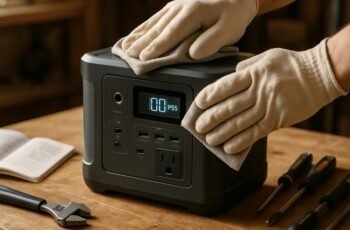
Installing and maintaining your solar generator system requires careful planning and ongoing attention to guarantee peak performance and longevity. Proper installation involves precise positioning of solar panels to maximize sun exposure, ensuring ideal tilt and orientation based on geographic location. Secure connections between panels, charge controllers, batteries, and inverters must adhere to technical specifications to prevent electrical faults. Regular maintenance includes inspecting for corrosion, checking cable integrity, and cleaning surfaces to sustain efficiency. Monitoring system performance through data logging helps identify potential issues early, allowing for proactive repairs. Battery management is critical; maintaining proper charge levels and avoiding deep discharges prolongs lifespan. Consistent inspections and timely component replacements ensure the system operates reliably, supporting the cabin’s energy needs sustainably and efficiently over time.
Best Practices for Maximizing Solar Power Efficiency in Your Cabin
Maximizing solar power efficiency in your cabin requires strategic system optimization and careful environmental assessment. To achieve peak performance, consider the following best practices:
- Tilt and orientation: Adjust the solar panel angle to maximize sun exposure based on your geographic location, typically between 30-45 degrees.
- Shading minimization: Eliminate obstructions such as trees or structures that cast shadows during peak sunlight hours.
- Regular cleaning: Keep panels free of dust, dirt, and debris to ensure maximum light absorption.
- Monitoring systems: Use real-time performance tracking to identify inefficiencies and optimize energy usage accordingly.
Implementing these practices enhances energy capture, improves system longevity, and ensures your cabin’s solar generator operates at top efficiency.
Common Challenges and Troubleshooting Solar Generators in Remote Settings
Remote settings often pose unique challenges for solar generator operation, primarily due to fluctuating environmental conditions and limited access to technical support. Variations in sunlight intensity, temperature extremes, and weather patterns can cause inconsistent power output and impact system efficiency. Troubleshooting often involves monitoring voltage and current levels to identify potential issues, such as degraded batteries, faulty connections, or inverter malfunctions. Power fluctuations may indicate shading problems or soiling of panels, requiring inspection and cleaning. Limited remote access complicates timely repairs, so designing systems with remote diagnostics and robust components is essential. Additionally, understanding system fault indicators and maintaining detailed logs help in preemptively addressing issues, ensuring reliable operation despite environmental unpredictability.
Cost Considerations and Budgeting for a Cabin Solar Power System
Understanding the costs associated with a cabin solar power system is essential for effective budgeting and project planning. Accurate financial assessment guarantees ideal system design within budget constraints. Key cost components include:
Effective budgeting relies on understanding cabin solar system costs for optimal, cost-efficient design.
- Solar panels and mounting hardware – typically the largest upfront expense, influenced by wattage and quality.
- Inverter and charge controller – essential for converting and regulating power, with costs varying by capacity and efficiency.
- Battery storage – critical for off-grid reliability; costs depend on capacity, chemistry, and lifespan.
- Installation and permitting – includes labor, site preparation, and regulatory compliance, which can considerably impact overall budget.
A thorough analysis of these factors enables precise cost estimation and informed decision-making for sustainable, cost-effective cabin solar systems.
Real-Life Cabin Solar Generator Setups and User Experiences
Real-life cabin solar generator setups reveal a range of configurations tailored to specific energy needs and environmental conditions. Many users opt for hybrid systems combining lithium-ion batteries with high-capacity solar panels, optimizing for both efficiency and longevity. For remote cabins, modular systems with portable inverters provide flexibility, allowing users to scale capacity as required. In colder climates, setups incorporate thermal management components to prevent battery degradation. User experiences highlight the importance of precise system sizing; undersized setups struggle to meet demand, while oversized systems incur unnecessary costs. Monitoring tools and automation features enable real-time performance adjustments, ensuring reliability. Overall, these configurations demonstrate that well-designed, adaptable solar generator setups can effectively power cabins while accommodating environmental and usage variability.
Frequently Asked Questions
How Long Does a Solar Generator Typically Last in a Cabin Setting?
A solar generator typically lasts 8 to 15 years in a cabin setting, depending on usage, maintenance, and component quality. Regular upkeep and monitoring extend lifespan, ensuring reliable power supply over its operational life.
Can a Solar Generator Power All Cabin Appliances Simultaneously?
Yes, a solar generator can power all cabin appliances simultaneously if its capacity exceeds the total wattage load. We analyze energy demands carefully, ensuring the generator’s output matches or surpasses appliance requirements, acting as a reliable energy backbone.
What Safety Precautions Are Necessary When Using Solar Generators in Cabins?
We guarantee safety by installing proper grounding, maintaining adequate ventilation, using certified wiring, avoiding overloads, and regularly inspecting connections. These precautions prevent electrical hazards, prolong equipment lifespan, and ensure reliable operation in cabin solar generator setups.
How Does Weather Affect the Performance of Solar Generators?
Weather considerably impacts solar generator performance; cloudy, rainy, or snowy conditions reduce sunlight exposure, decreasing efficiency. We analyze solar input fluctuations and adapt system components to optimize energy output despite such atmospheric variability, ensuring reliable power supply.
Are There Any Government Incentives for Installing Solar Power in Cabins?
Yes, government incentives like tax credits and rebates are available for installing solar power in cabins, which can considerably offset costs. We recommend researching federal, state, and local programs to maximize financial benefits and guarantee compliance with eligibility requirements.
Conclusion
In essence, a solar generator combines precision engineering with sustainable practicality, transforming sunlight into reliable power for cabins. While the technology offers control and independence, it requires careful planning and maintenance to optimize performance. Balancing raw efficiency with resilience, these systems exemplify how innovative design meets environmental responsibility. Ultimately, embracing solar power in remote cabins is a calculated investment—merging technical mastery with eco-consciousness to guarantee enduring energy independence amidst challenging conditions.