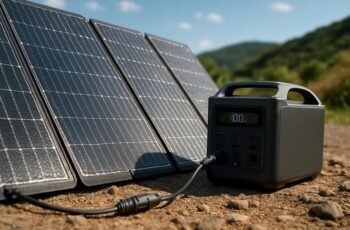
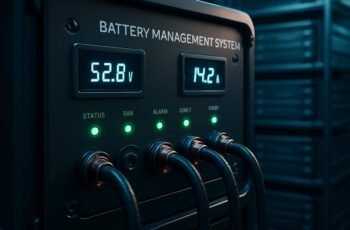
Much like the rigorous safety checks that keep aircraft flying smoothly, portable power stations rely on strict certifications to guarantee safe operation. We often overlook these credentials, yet they are essential in preventing electrical failures and overheating risks. Understanding which certifications truly matter can protect us from hidden dangers and costly mistakes. Let’s explore what these safety marks mean and how they influence the reliability of our portable power solutions.
Key Takeaways
- UL 2743 certification ensures electrical safety, thermal management, and battery protection in portable power stations.
- FCC Part 15 compliance guarantees minimal electromagnetic interference for reliable device operation.
- CE marking confirms adherence to European health, safety, and environmental standards.
- Safety certifications reduce risks of electrical faults, overheating, and battery failures in power stations.
- Verifying certification labels prevents counterfeit claims and confirms product safety and reliability.
Why Safety Certifications Matter for Portable Power Stations
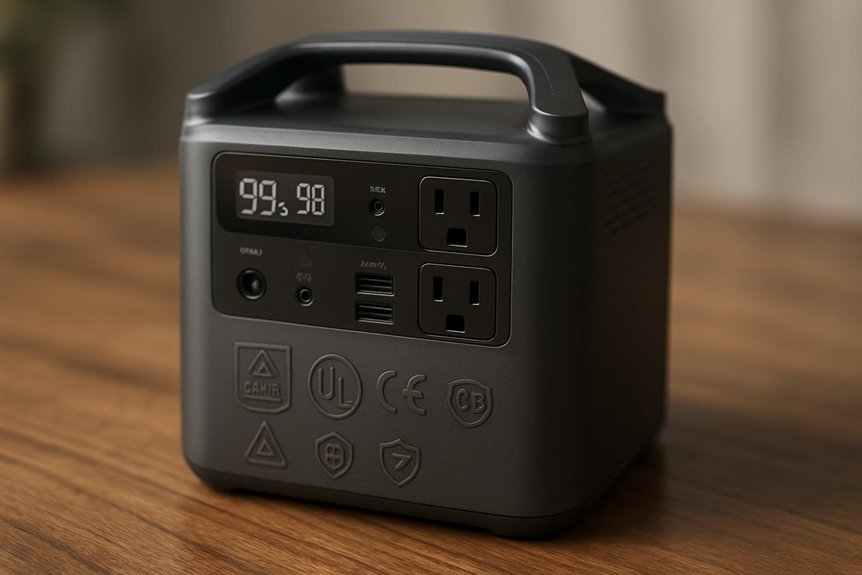
Why should we prioritize safety certifications when choosing a portable power station? Because these certifications demonstrate regulatory compliance, guaranteeing the device meets established safety standards. When we select a certified power station, we reduce risks such as electrical faults, overheating, or battery failures that could cause injury or damage. Safety certifications serve as verified proof that manufacturers adhere to strict testing protocols, which directly supports consumer protection. By prioritizing these certifications, we hold manufacturers accountable and guarantee the product’s reliability under varied conditions. Additionally, regulatory compliance helps prevent legal liabilities and recalls, safeguarding our investment. Fundamentally, safety certifications are not just formalities; they are essential guarantees that the power station operates within safe parameters, protecting both users and property effectively.
Top Safety Certifications to Look For in Portable Power Stations
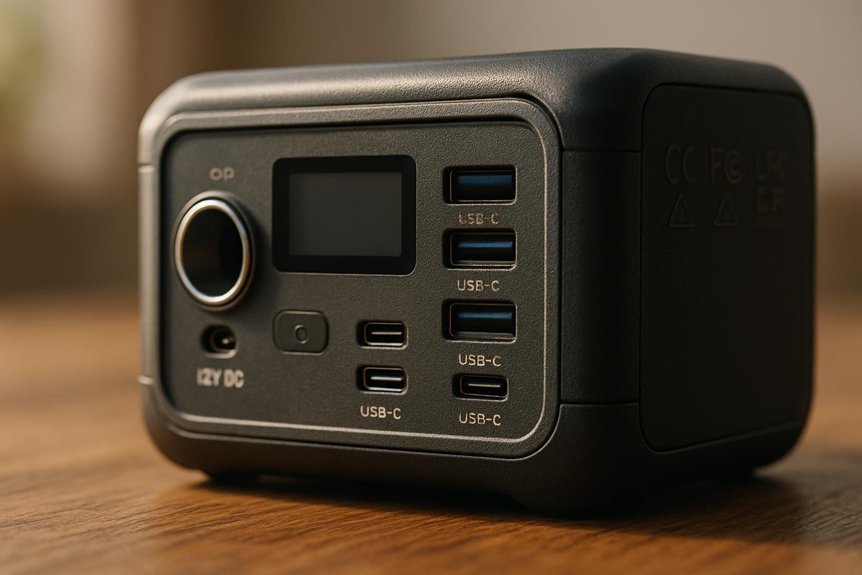
Although many safety certifications exist, we should focus on those most relevant and recognized within the portable power station industry. These certifications validate rigorous testing of safety features and the certification process itself, ensuring reliable protection for users.
Focusing on key certifications ensures trusted safety and reliable protection for portable power station users.
- UL 2743 – This certification specifically addresses portable power stations, verifying electrical safety, thermal management, and battery protection systems.
- FCC Part 15 – Though primarily for electromagnetic interference, it plays an essential role in ensuring the device doesn’t disrupt or suffer from external electronic noise.
- CE Marking – Required for European markets, this certification confirms compliance with health, safety, and environmental standards, reflecting a thorough certification process.
How Each Certification Ensures Electrical and Battery Safety
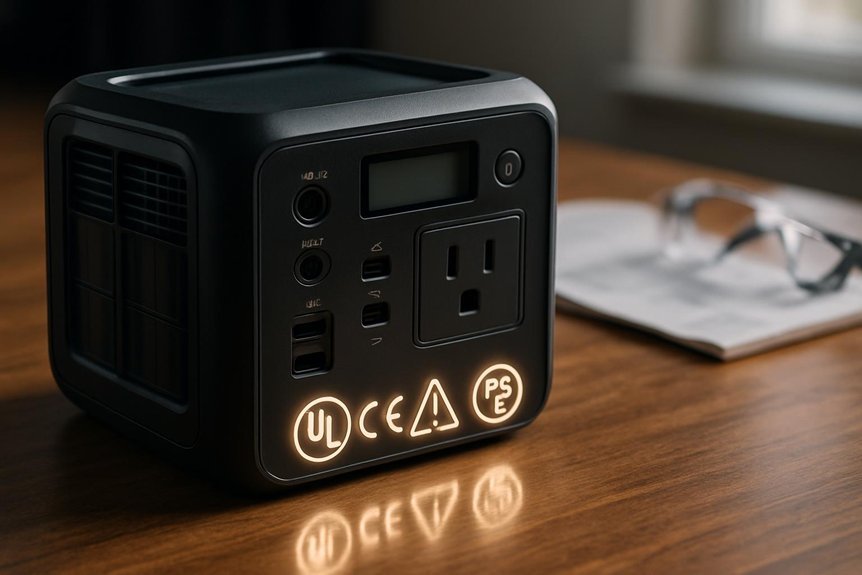
Understanding the specific ways each certification safeguards electrical and battery systems helps us appreciate their practical impact on portable power station safety. Certifications like UL and IEC require rigorous testing of battery performance under various conditions, ensuring cells resist overheating and maintain stable energy output. This prevents thermal runaway and extends battery lifespan. Electrical safety standards evaluate components for insulation integrity, short-circuit prevention, and surge protection, which optimize electrical efficiency and reduce fire risks. Additionally, certifications mandate compliance with electromagnetic compatibility (EMC) standards, minimizing interference that could disrupt device operation. By enforcing these criteria, certifications collectively guarantee that portable power stations operate reliably and safely, maintaining consistent electrical efficiency while protecting battery health, which is critical for user confidence and long-term device performance.
What Certification Labels Mean on Your Power Station
Let’s examine the common certification labels found on portable power stations and understand their significance in ensuring safety and compliance. We’ll also cover how to verify these certifications to confirm the product meets industry standards. This knowledge helps us make informed decisions when selecting reliable power stations.
Common Certification Labels
When we examine the certification labels on portable power stations, we gain essential insights into their safety, quality, and regulatory compliance. Understanding the label significance helps us identify which certification types a product meets, ensuring it adheres to industry standards.
- UL (Underwriters Laboratories): Indicates compliance with rigorous safety testing in North America, confirming electrical and fire hazard resistance.
- CE (Conformité Européenne): Demonstrates conformity with European health, safety, and environmental protection standards, essential for products sold in the EU.
- FCC (Federal Communications Commission): Certifies that the device meets electromagnetic interference limits, ensuring it won’t disrupt other electronic equipment.
Certification Importance Explained
Although certification labels may seem like small details on a portable power station, they provide critical information about the product’s safety and reliability. These labels indicate compliance with rigorous regulatory standards designed to prevent electrical hazards, overheating, and other risks. When we see recognized certifications, we understand the device has undergone systematic testing and evaluation by accredited bodies. This process guarantees components meet specific performance and safety criteria, reducing the likelihood of malfunction. Furthermore, certification labels build consumer trust by signaling transparency and accountability from manufacturers. Without these assurances, users face uncertainty regarding product integrity. Essentially, certification labels are not mere symbols—they are verifiable endorsements that the portable power station adheres to essential safety protocols, safeguarding both users and their equipment.
How To Verify
How can we confidently determine the authenticity and significance of certification labels on our portable power stations? First, we examine the label’s verifiable certification mark, verifying it corresponds to recognized organizations like UL, CE, or FCC. Second, we cross-reference the product model and serial number with the certifying body’s official database to confirm it passed the certification process. Third, we analyze the stated testing standards, verifying that they align with relevant industry requirements for electrical safety, electromagnetic compatibility, and performance. By following these steps, we verify the certification label is not only genuine but also meaningful, reflecting rigorous testing standards and compliance. This analytical approach prevents reliance on counterfeit or misleading certifications, safeguarding our safety and investment.
How to Verify If a Portable Power Station Is Properly Certified
Where can we find reliable proof that a portable power station meets safety standards? We start by examining certification labels on the device or packaging. These labels indicate the product has undergone rigorous certification processes and product testing by recognized bodies. Additionally, we can verify certifications by cross-referencing the model number with official databases maintained by certifying organizations.
| Certification Body | Verification Method |
|---|---|
| UL | Online database search |
| CE | Manufacturer declaration check |
| FCC | Product ID in FCC database |
Tips for Choosing a Safe and Reliable Portable Power Station
Several key factors determine the safety and reliability of a portable power station. When choosing one, we must analyze technical specifications alongside user reviews and user experiences to guarantee thorough evaluation.
- Certification Verification: Confirm the device holds recognized safety certifications like UL, CE, or FCC. These guarantee compliance with industry safety standards.
- Battery Quality and Management: Assess the battery type, capacity, and built-in protection systems such as overcharge, short circuit, and temperature control. Reliable battery management is essential to prevent hazards.
- Real-World Feedback: Examine user reviews and user experiences focusing on durability, performance stability, and any reported safety concerns. This data reveals practical reliability beyond manufacturer claims.
Frequently Asked Questions
Can Safety Certifications Affect the Warranty of My Portable Power Station?
Yes, safety certifications can affect warranty implications since manufacturers often require compliance with specific safety standards. If those standards aren’t met, we risk voiding the warranty, so verifying certifications is essential for coverage assurance.
Are Safety Certifications Required for International Shipping of Power Stations?
Just like crossing borders requires passports, international shipping demands safety certifications to meet international regulations. We guarantee shipping compliance by verifying these certifications, preventing delays or legal issues while transporting portable power stations worldwide.
How Often Should Certified Portable Power Stations Be Re-Inspected or Recertified?
We recommend adhering to the re-inspection frequency specified by the manufacturer, typically every 1–3 years, to guarantee certification validity. Regular re-inspections maintain compliance with evolving safety standards and verify ongoing operational integrity of the device.
Do Safety Certifications Cover Environmental Impact and Recyclability?
Safety certifications typically focus on environmental standards, ensuring products meet emission limits and safe material use. However, recyclability guidelines often fall under separate regulations, so certifications don’t always cover full environmental impact or end-of-life disposal processes.
Can Uncertified Power Stations Be Legally Sold or Used in Certain Regions?
Like traversing a legal labyrinth, we find uncertified power stations face strict legal implications; some regions ban their sale or use. Yet, market demand sometimes drives grey-area transactions, challenging regulatory enforcement and consumer safety standards.
Conclusion
When choosing a portable power station, safety certifications are like a sturdy shield, protecting us from electrical hazards and ensuring reliable performance. By understanding certifications such as UL 2743 and CE Marking, we can confidently select products that meet rigorous safety standards. Let’s prioritize certified power stations to safeguard our devices and ourselves, knowing manufacturers are held accountable. In doing so, we reduce risks and enhance trust in the technology we depend on every day.