We understand portable power stations can cut carbon footprints by up to 60% compared to traditional generators. This significant reduction stems from their use of renewable energy and rechargeable batteries. Yet, while they offer clear environmental benefits, we must also consider the impact of sourcing and manufacturing their components. Understanding both sides of this equation is essential before fully embracing these devices as green alternatives.
Key Takeaways
- Portable power stations reduce carbon footprints by using rechargeable batteries charged via renewable energy or off-peak electricity.
- Solar-powered stations cut carbon emissions by up to 60% compared to conventional fossil fuel generators.
- Battery production involves energy-intensive mining and manufacturing, causing habitat disruption and emissions.
- Recycling battery metals like lithium and cobalt is essential but currently underutilized, with less than 5% recycled globally.
- Proper battery care and smart charging reduce energy waste and extend lifespan, lowering overall environmental impact.
How Portable Power Stations Reduce Carbon Footprints
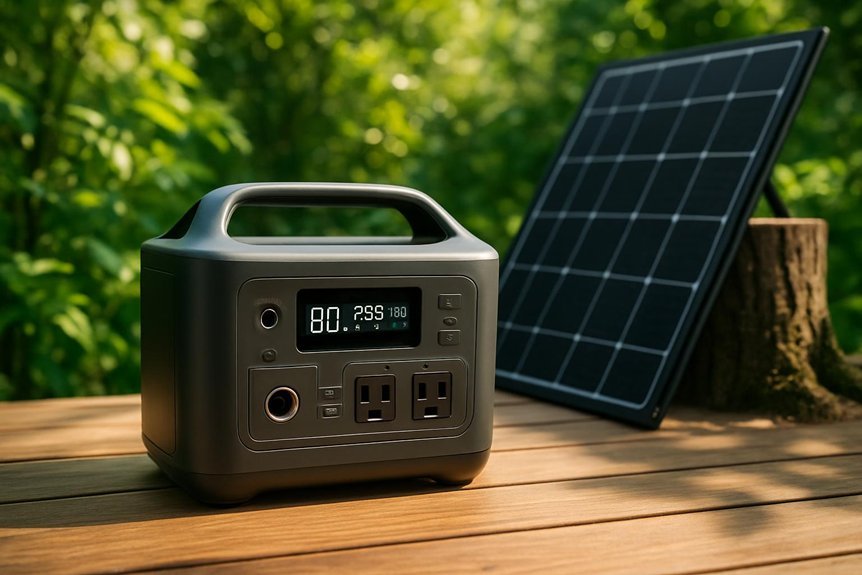
Although traditional power sources rely heavily on fossil fuels, portable power stations offer a cleaner alternative by utilizing rechargeable batteries charged through renewable energy or off-peak electricity. By integrating solar panels, these stations harness solar integration to directly convert sunlight into stored energy, greatly cutting greenhouse gas emissions. Studies show that using solar-powered portable stations can reduce carbon footprints by up to 60% compared to conventional generators. Additionally, charging during off-peak hours allows us to take advantage of cleaner grid electricity, further lowering environmental impact. This shift to renewable energy not only decreases reliance on fossil fuels but also promotes grid stability and energy efficiency. Together, these factors demonstrate how portable power stations effectively contribute to reducing carbon footprints in both residential and outdoor applications.
What Materials Go Into Making Portable Power Stations

Let’s examine the materials that make up portable power stations, focusing on their key battery components, essential metals and minerals, and the plastics and circuit elements involved. Understanding the quantity and sourcing of lithium, cobalt, nickel, and rare earth elements is critical for evaluating environmental impact. We’ll also consider the role of plastics and electronic circuitry in the overall material footprint.
Key Battery Components
Because portable power stations rely heavily on their batteries, understanding the key materials involved is essential for evaluating their environmental impact. The core component is the battery cell, whose performance depends on battery chemistry—typically lithium-ion variants like lithium iron phosphate (LFP) or nickel manganese cobalt (NMC). These chemistries influence energy density, dictating how much power a unit can store relative to its weight and size. Higher energy density means fewer raw materials per unit of stored energy, potentially reducing resource extraction impacts. Additionally, battery cells incorporate electrolytes and separators, which affect safety and efficiency but also contribute to environmental considerations during manufacturing and disposal. By analyzing these components, we gain insight into the balance between performance and ecological footprint, guiding more sustainable portable power station development.
Metals and Minerals Used
Understanding the battery components sets the stage for examining the specific metals and minerals that make up portable power stations. Key materials include lithium, cobalt, nickel, copper, and rare earths, each with distinct mining impacts. Lithium sourcing, for example, raises concerns over mineral depletion and environmental degradation, while copper extraction involves energy-intensive processes. Sustainable sourcing and ethical sourcing have become priorities across the supply chain to mitigate these effects. Recycling metals is critical to reducing demand for virgin materials and lowering environmental footprints. Strict environmental regulations guide mining operations, aiming to balance resource extraction with ecological preservation. By analyzing these factors, we can better assess how portable power stations’ material choices influence global mineral depletion and environmental sustainability.
Plastic and Circuit Materials
While metals form the core of portable power stations, plastics and circuit materials play equally essential roles in their overall structure and functionality. Plastics, primarily used for casing and insulation, often consist of non-biodegradable polymers, contributing considerably to environmental waste. However, incorporating biodegradable plastics can reduce this impact, offering a promising alternative without sacrificing durability. On the circuitry side, the materials involve various semiconductors, solder, and printed circuit boards that require careful sourcing. Circuit sustainability focuses on minimizing hazardous substances and enhancing recyclability. Studies show that adopting lead-free solders and recyclable substrates can decrease toxic waste by up to 30%. By prioritizing biodegradable plastics and sustainable circuit components, we can mitigate the environmental footprint of portable power stations while maintaining performance and safety standards.
Energy Sources Used to Recharge Portable Power Stations
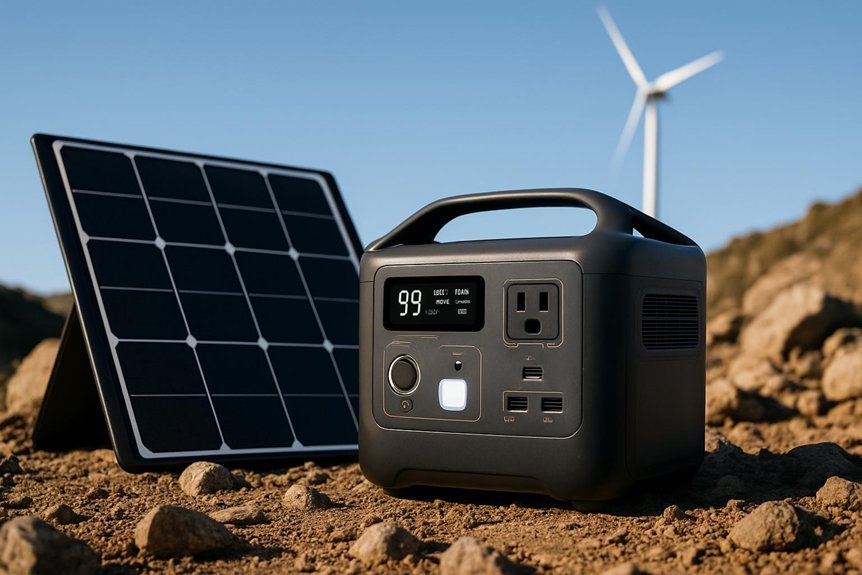
Although portable power stations offer convenience, the environmental impact largely depends on how we recharge them. Solar charging and wind energy stand out as sustainable options, drastically reducing carbon emissions compared to grid electricity, which often relies on fossil fuels. Studies show that solar panels can offset up to 90% of the energy consumed during production over their lifespan, making solar charging a low-impact choice. Wind energy similarly provides clean power, with life cycle emissions averaging around 11 grams of CO2 per kWh, far less than coal-generated electricity. Utilizing these renewable sources to recharge portable power stations minimizes greenhouse gas emissions and air pollutants. However, the availability and efficiency of solar and wind vary by location and weather, so integrating multiple energy sources can optimize environmental benefits while ensuring reliable recharging.
The Environmental Cost of Battery Production and Disposal
Recharging portable power stations with renewable energy considerably reduces their operational emissions, but we must also consider the environmental toll of producing and disposing of their batteries. The battery lifecycle involves energy-intensive mining, manufacturing, and end-of-life disposal or recycling processes. Strict environmental regulations aim to mitigate impacts, yet challenges persist in resource depletion and toxic waste management.
| Battery Stage | Environmental Impact | Regulatory Focus |
|---|---|---|
| Raw Material Mining | Habitat disruption, emissions | Sustainable sourcing mandates |
| Manufacturing | High energy use, pollutants | Emission limits, waste control |
| Usage | Minimal direct impact | Safety and efficiency standards |
| Disposal/Recycling | Toxic waste, resource loss | Recycling quotas, hazardous waste handling |
Comparing Noise and Air Pollution: Portable Power vs. Gas Generators
Because noise and air pollution greatly affect both public health and environmental quality, comparing portable power stations to gas generators reveals important differences. Gas generators typically emit noise levels between 60 to 75 decibels, contributing considerably to noise pollution in residential areas. In contrast, portable power stations operate nearly silently, often below 40 decibels, minimizing auditory disruption. Regarding air quality, gas generators release pollutants such as carbon monoxide, nitrogen oxides, and particulate matter, which degrade local air quality and pose respiratory risks. Portable power stations, powered by batteries and charged via renewable sources or the grid, produce zero direct emissions during use, thereby considerably reducing air pollution. From an environmental and health perspective, portable power stations offer a cleaner, quieter alternative to gas generators, making them a preferable choice in noise-sensitive and air-quality-conscious settings.
How to Extend the Life of Your Portable Power Station
When we prioritize proper care and usage habits, we can greatly extend the lifespan of our portable power stations. Implementing effective battery maintenance tips not only preserves battery capacity but also reduces the frequency of replacements, decreasing environmental strain. Climate impact awareness guides us to optimize usage conditions, minimizing degradation caused by extreme temperatures. Key strategies include:
Prioritizing proper care and climate-aware usage significantly extends portable power station lifespan and reduces environmental impact.
- Store batteries at moderate temperatures to prevent capacity loss.
- Avoid fully discharging the battery to extend cycle life.
- Use the manufacturer-recommended charging practices consistently.
- Limit exposure to moisture and dust to protect internal components.
- Perform regular system diagnostics to identify early signs of wear.
Recycling and Disposal Options for Portable Power Station Batteries
Extending the life of our portable power stations helps reduce environmental impact, but eventually, all batteries reach the end of their usable cycle. At this stage, responsible battery recycling becomes essential to minimize hazardous waste and recover valuable materials like lithium, cobalt, and nickel. Studies show that less than 5% of lithium-ion batteries are currently recycled globally, highlighting a gap in effective disposal methods. We should prioritize using certified recycling facilities that follow strict protocols to safely dismantle and process battery components. Improper disposal, such as landfill dumping, risks soil and water contamination. By understanding and utilizing proper battery recycling and disposal methods, we contribute to a circular economy, reduce environmental harm, and conserve finite resources embedded in portable power station batteries.
Tips for Using Portable Power Stations More Sustainably
To use portable power stations more sustainably, we should optimize charging by avoiding overcharging and using appropriate chargers to extend battery life. Minimizing energy consumption through efficient device use can greatly reduce environmental impact. Additionally, choosing eco-friendly accessories made from recyclable or biodegradable materials supports overall sustainability efforts.
Optimize Charging Practices
Although portable power stations offer convenience, we must focus on optimizing their charging practices to minimize environmental impact. Integrating solar panel integration and employing smart charging technologies can greatly reduce carbon footprints. Data shows that smart charging reduces energy waste by up to 20%, while solar integration cuts reliance on grid electricity, lowering emissions.
To optimize charging practices, we should:
- Schedule charging during off-peak hours to utilize cleaner energy sources
- Use solar panel integration whenever possible to harness renewable power
- Implement smart charging systems to prevent overcharging and extend battery life
- Monitor charging efficiency regularly to detect and fix losses
- Avoid frequent full discharges that degrade battery performance prematurely
Minimize Energy Consumption
Since every watt saved reduces environmental strain, we should focus on minimizing energy consumption when using portable power stations. Data shows that employing smart energy management can cut power loss by up to 20%, greatly extending battery life and reducing recharge frequency. We can achieve this by prioritizing efficient usage—running only essential devices and avoiding peak power draws that cause inefficiencies. Utilizing built-in energy monitoring tools helps us track consumption patterns, enabling informed adjustments. Additionally, powering devices with lower wattage or energy-saving modes further decreases draw. By adopting these strategies, we not only conserve stored energy but also reduce the environmental impact associated with frequent recharging cycles, including electricity sourced from fossil fuels. Emphasizing smart energy and efficient usage is essential for sustainable portable power station operation.
Choose Eco-Friendly Accessories
When we select accessories for our portable power stations, opting for eco-friendly options greatly reduces environmental impact. Data shows that integrating sustainable components can lower carbon footprints by up to 30%. Prioritizing accessories made from biodegradable materials guarantees fewer pollutants during disposal. Additionally, incorporating solar chargers enhances renewable energy usage, reducing reliance on fossil fuels. To maximize sustainability, we recommend focusing on:
- Solar chargers with high conversion efficiency
- Accessories constructed from biodegradable materials
- Modular, repairable components to extend lifespan
- Energy-efficient cables and connectors
- Packaging made from recycled or minimal materials
Frequently Asked Questions
How Do Portable Power Stations Perform in Extreme Weather Conditions?
We find portable power stations show varied temperature resilience; extreme cold reduces battery efficiency considerably, while high heat can shorten lifespan. Choosing models with thermal management systems helps maintain performance in harsh weather conditions.
Are Portable Power Stations Safe for Indoor Use?
Yes, portable power stations are generally safe for indoor use since they produce no emissions. However, we recommend ensuring proper ventilation requirements are met to prevent overheating and maintain indoor safety during extended operation periods.
What Is the Average Cost of Maintaining a Portable Power Station?
We estimate maintenance expenses for portable power stations average around $50 to $100 annually, mainly influenced by battery lifespan. Replacing batteries every 3-5 years is the primary cost, so monitoring usage patterns helps manage expenses effectively.
Can Portable Power Stations Power Large Household Appliances?
Let’s cut to the chase: portable power stations can power some large household appliances, but their energy capacity limits appliance compatibility. We must analyze wattage needs carefully to guarantee efficient, sustained operation without overloading the system.
How Long Does It Take to Fully Charge a Portable Power Station?
Charging duration typically ranges from 4 to 12 hours, depending on battery capacity and input power. We analyze battery efficiency closely, as higher efficiency reduces charging time and energy loss, optimizing overall performance for our needs.
Conclusion
Together, we can truly shift the needle toward greener energy by embracing portable power stations. Their ability to cut carbon footprints by up to 60% compared to traditional generators shows the power of innovation. Yet, we must keep our eyes wide open to the environmental costs of battery production and disposal. By extending battery life, responsibly recycling, and choosing sustainable energy sources, we’ll not only reduce harm but also guarantee our efforts don’t go up in smoke.