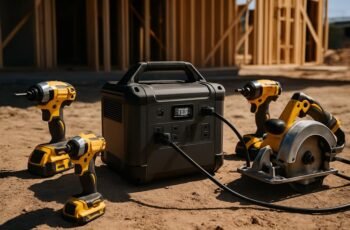
When we consider off-grid energy systems, portable power stations stand out as a versatile and efficient solution. They combine advanced battery technology with compact design to deliver reliable energy without relying on traditional grids. Understanding how these devices operate and integrate with renewable sources like solar panels is vital for optimizing performance. However, selecting the right unit and managing its limitations requires careful analysis—an essential step before fully embracing off-grid independence.
Key Takeaways
- Portable power stations store and convert energy efficiently for off-grid use, supporting reliable power supply without fuel dependence.
- Integrating solar panels with portable power stations enhances energy sustainability and optimizes renewable energy harvesting.
- Proper load management and prioritizing essential devices prevent overloads and extend battery life in off-grid systems.
- Regular battery maintenance and optimal charging practices maximize battery lifespan and ensure consistent energy availability.
- Choosing power stations based on capacity, portability, and charging options is vital for effective off-grid energy solutions.
How Portable Power Stations Work in Off Grid Energy Systems
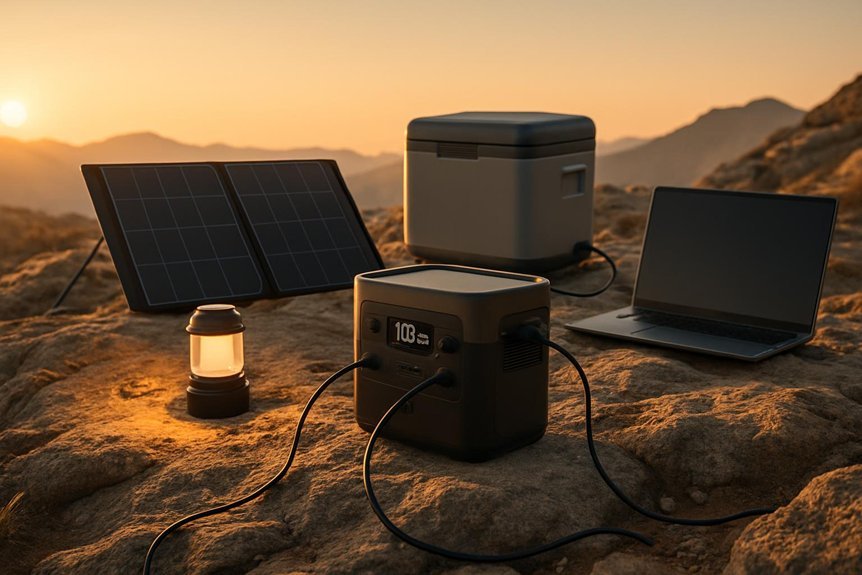
Although off grid energy systems vary widely, portable power stations play a vital role in providing reliable, on-demand electricity without dependence on traditional grids. These stations use advanced battery technology, typically lithium-ion or lithium iron phosphate cells, to store electrical energy efficiently. We manage this stored energy through integrated energy management systems, which optimize charging and discharging cycles, extend battery life, and regulate power output. Portable power stations convert DC battery power into AC electricity via inverters, enabling compatibility with standard appliances. Their compact design incorporates safety features like overcharge, short circuit, and temperature protection. By continuously monitoring energy flow, these systems guarantee stable voltage and current delivery, essential for sensitive electronics. Understanding these core components helps us appreciate how portable power stations effectively support off grid energy demands with precision and reliability.
Key Benefits of Using Portable Power Stations Off Grid
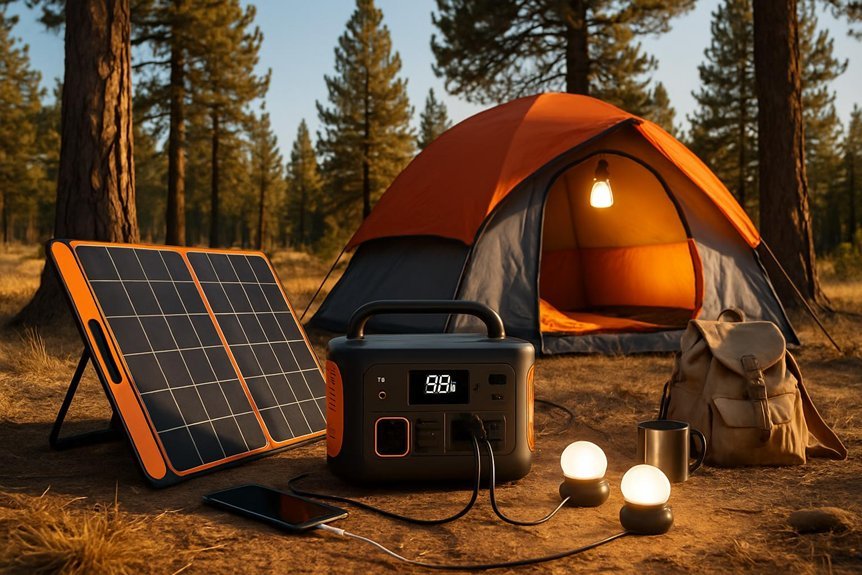
When we rely on portable power stations off grid, we gain several key advantages that enhance energy independence and operational efficiency. These units provide reliable, on-demand power without the need for fuel, reducing carbon emissions and offering significant sustainability benefits. Their compact design allows for easy transport and deployment in varied environments, making them invaluable for off-grid living and field operations. Additionally, portable power stations improve emergency preparedness by ensuring continuous access to electricity during outages or natural disasters. Their ability to integrate with renewable energy sources, such as solar panels, further optimizes off-grid energy systems, minimizing reliance on nonrenewable resources. In sum, these stations deliver a scalable, efficient, and eco-friendly power solution that strengthens both our energy autonomy and resilience.
Choosing the Right Portable Power Station for Your Needs
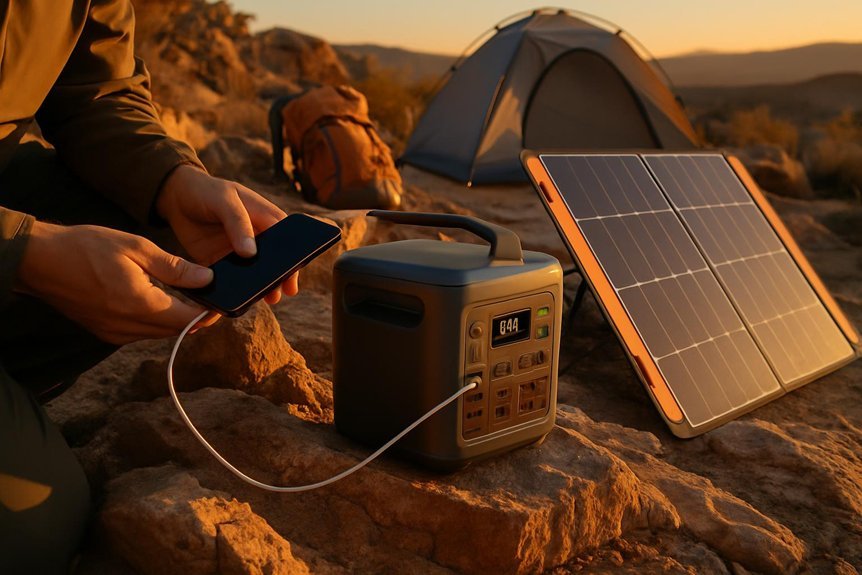
When selecting a portable power station, we first need to assess our power capacity requirements based on the devices we plan to run. Next, we must consider portability and weight to guarantee the unit matches our mobility needs. Finally, evaluating available charging options will determine how efficiently we can replenish the power station in off-grid scenarios.
Power Capacity Requirements
Since our energy needs vary widely depending on the devices we use and the duration of power supply required, accurately evaluating power capacity becomes essential in selecting the right portable power station. We must analyze the total energy demand, measured in watt-hours (Wh), and guarantee the power rating, given in watts (W), can handle peak loads without failure. Estimating both continuous and surge power needs helps avoid undersizing.
| Device Type | Typical Power Rating (W) |
|---|---|
| Smartphone | 5–20 |
| Laptop | 40–90 |
| Mini Fridge | 50–100 |
Portability and Weight
Although power capacity is critical, we must also review portability and weight to guarantee our portable power station suits our mobility needs. Selecting a unit constructed from lightweight materials and featuring a compact design enhances ease of transport without sacrificing durability or performance. When evaluating options, we focus on:
- Weight-to-capacity ratio: making sure the device is manageable for frequent relocation.
- Ergonomic features: handles and form factors that facilitate carrying.
- Spatial footprint: a compact design that fits in limited storage spaces or vehicle compartments.
Balancing these factors helps us maintain operational flexibility in diverse environments, from remote campsites to emergency scenarios. Prioritizing portability guarantees our power station complements our off-grid lifestyle, delivering power where and when we need it without undue physical burden.
Charging Options Available
Because energy replenishment directly impacts our off-grid autonomy, understanding the available charging options is fundamental when selecting a portable power station. We must evaluate solar charging for sustainable, quiet energy, and vehicle charging for mobility during travel. Wall outlet charging offers reliable, fast replenishment, while wind charging can supplement in windy environments, though it’s less common. Generator backup provides consistent power but requires fuel and noise considerations. Evaluating power management systems and inverter options is imperative to optimize efficiency and compatibility with battery types, such as lithium-ion or lead-acid. Charging speeds vary widely; faster rates reduce downtime but may affect battery longevity. Adhering to maintenance tips, including proper charging cycles and temperature monitoring, guarantees system reliability and prolongs battery life, making informed choices essential for effective off-grid energy management.
Integrating Solar Panels and Other Renewables With Portable Power
When we integrate solar panels and other renewable sources with portable power systems, we enhance both energy reliability and flexibility in off-grid setups. Solar integration demands careful consideration of voltage matching and charge controller compatibility to optimize energy transfer. Ensuring renewable compatibility involves selecting inverters and converters that handle variable inputs from sources like wind turbines or micro-hydro units. Key factors to evaluate include:
- Efficient charge controllers that maximize power harvest from solar and other renewables
- Modular system design for seamless addition of multiple renewable inputs
- Real-time monitoring capabilities to balance loads and prevent overcharging
Tips for Maximizing Battery Life and Efficiency Off Grid
To maximize battery life and efficiency off grid, we need to focus on ideal charging practices that prevent overcharging and deep discharges. Monitoring and managing energy consumption carefully guarantees we use power within the battery’s preferred operating range. By combining these strategies, we can extend battery lifespan and maintain consistent system performance.
Optimal Charging Practices
Although maintaining battery health off-grid can be challenging, adopting excellent charging practices considerably extends battery life and enhances system efficiency. By implementing prime charging techniques, we can prevent battery degradation and improve energy retention, critical for off-grid reliability. Key energy management strategies include:
- Using multi-stage chargers to guarantee batteries receive bulk, absorption, and float charges precisely, avoiding overcharging or undercharging.
- Monitoring battery temperature and adjusting charging current accordingly to prevent thermal stress and capacity loss.
- Scheduling charging cycles to maintain batteries within prime state-of-charge ranges, typically between 20% and 80%, to reduce deep discharges and overcharges.
These practices allow us to maximize battery longevity and maintain consistent power availability for off-grid systems.
Efficient Energy Consumption
Since battery capacity off-grid is limited, managing our energy consumption efficiently becomes essential to prolong battery life and optimize system performance. We must prioritize energy efficiency by selecting low-power devices and minimizing unnecessary loads. Monitoring consumption patterns allows us to identify and eliminate energy waste, ensuring sustainable practices are maintained. Scheduling high-energy tasks during peak solar generation maximizes charging effectiveness and reduces battery strain. Implementing energy-efficient lighting, such as LEDs, and utilizing power-saving modes on electronics further conserves power. Additionally, balancing load distribution prevents deep discharges that degrade battery health. By integrating these strategies, we not only extend battery lifespan but also enhance overall system reliability. Embracing efficient energy consumption is fundamental to achieving a resilient off-grid energy system that supports sustainable living.
Common Challenges Using Portable Power Stations and How to Solve Them
What obstacles do we commonly face when relying on portable power stations in off-grid setups? Understanding and addressing these challenges is vital for system reliability and longevity. Key issues include:
Common obstacles in off-grid portable power include maintenance, load management, and energy replenishment challenges.
- Battery maintenance: Regular monitoring and proper charging cycles prevent capacity loss and extend battery life.
- Load management: Overloading stations can cause shutdowns or reduce efficiency, so balancing consumption with available power is essential.
- Energy replenishment: Limited solar input or fuel availability can restrict operational time, requiring strategic planning of energy use and recharge opportunities.
Frequently Asked Questions
Can Portable Power Stations Be Used Indoors Safely?
Yes, we can use portable power stations indoors safely by ensuring proper ventilation needs are met to prevent overheating. Prioritizing indoor safety, we avoid fuel-burning generators, favoring battery-based units that emit no harmful gases.
How Do Weather Conditions Affect Portable Power Station Performance?
Cold temperatures slow charging speed and reduce energy output, while heat shortens battery longevity. High humidity can corrode components, decreasing performance. Conversely, ideal weather boosts solar efficiency, balancing temperature impact and humidity effects for reliable operation.
Are Portable Power Stations Compatible With Electric Vehicle Charging?
Yes, portable power stations support EV charging, but their power capacity limits charging speed and duration. We must carefully assess capacity specifications to guarantee efficient EV charging, especially for larger batteries requiring higher power levels.
What Maintenance Is Required for Long-Term Storage of Power Stations?
We’ve all faced dead batteries unexpectedly. For long-term storage, we recommend maintaining battery care by keeping charge levels between 40-60%, storing units in cool, dry environments, and performing periodic checks to prevent capacity loss and damage.
Can Portable Power Stations Power Medical Devices During Emergencies?
Yes, we can rely on portable power stations to power essential medical equipment during emergencies. Their capacity and output support critical devices, making them crucial for emergency preparedness and ensuring continuous operation when traditional power sources fail.
Conclusion
As we embrace off-grid energy systems with portable power stations, we’re not just stepping into the future—we’re reviving the spirit of Edison’s innovation with modern technology. By choosing the right station, integrating renewables, and optimizing battery use, we guarantee reliable, sustainable power wherever we go. Though challenges arise, our analytical approach and practical solutions keep us powered efficiently, supporting a resilient, eco-friendly lifestyle beyond traditional grids. Let’s continue advancing with precision and purpose.