When power outages occur or remote locations lack grid access, having reliable off-grid solutions becomes critical. We need systems that can deliver consistent, independent energy—often through renewable sources like solar panels and batteries—while ensuring essential equipment stays operational. Understanding the different types and proper setup is essential for resilience. Exploring these options thoroughly helps us prepare effectively, but the key details that make a system dependable are often more complex than they initially appear.
Key Takeaways
- Assess critical power needs and environmental conditions to select suitable off-grid energy sources like solar, wind, or generators.
- Combine renewable systems with batteries and backup generators for reliable, continuous emergency power.
- Ensure proper system setup with appropriate sizing, wiring, safety features, and weather protection.
- Regularly monitor system health using sensors, data logging, and remote diagnostics to prevent failures.
- Maintain redundancy, perform routine maintenance, and conduct testing to ensure resilience during outages or crises.
What Are Emergency Off-Grid Power Solutions and Why Are They Important?
Emergency off-grid power solutions are independent energy systems designed to provide reliable electricity during outages or in remote locations where grid access is unavailable. They utilize a combination of renewable sources, batteries, and backup generators to guarantee continuous power supply. These systems are crucial for critical applications such as medical facilities, communication hubs, and safety equipment, where uninterrupted operation is essential. Their importance lies in minimizing downtime, preventing data loss, and maintaining safety protocols during emergencies. By integrating efficient energy storage and management technologies, these solutions offer resilience against grid failures. They enable users to operate essential devices reliably, regardless of external power disruptions, making them indispensable for ensuring operational continuity in unpredictable or isolated environments.
Types of Off-Grid Power Systems for Emergencies
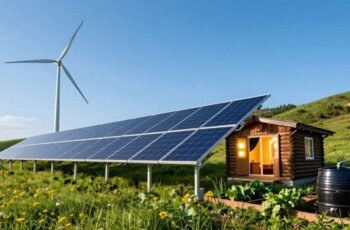
Several off-grid power systems are specifically designed to guarantee reliable energy supply during emergencies, each suited to different operational needs and environmental conditions. These include solar photovoltaic (PV) systems, portable generators, and hybrid solutions. Solar PV systems provide sustainable, maintenance-free power but depend on sunlight availability. Portable generators offer immediate, high-capacity power but require fuel and produce emissions. Hybrid systems combine renewable sources with backup generators, ensuring continuous operation regardless of environmental factors.
| System Type | Power Capacity | Key Features |
|---|---|---|
| Solar PV | Low to high | Renewable, silent, minimal maintenance |
| Portable Generators | Moderate to high | Fuel-based, portable, high output |
| Hybrid Systems | Variable | Combines renewables and generators |
These options enable tailored responses based on environment and load demands during emergencies.
How to Choose the Right Off-Grid Power Solution for Your Needs?
To select the appropriate off-grid power system, we first need to accurately assess our total energy requirements based on essential loads. Next, we should evaluate available energy sources—such as solar, wind, or generators—and their suitability for our environment. Finally, understanding our budget constraints helps us balance initial investment against ongoing maintenance and operational costs.
Assess Power Requirements
How do you determine the appropriate off-grid power solution for your needs? Precise assessment of your load demands is essential. Start by listing critical appliances and their wattages, then estimate daily usage hours. This process yields the total energy requirement, influencing system size. To clarify, consider this:
| Device | Power Rating (W) | Usage (hours/day) |
|---|---|---|
| Refrigerator | 150 | 24 |
| LED Lights | 10 | 4 |
| Communication Equipment | 50 | 8 |
Calculating these values enables accurate sizing of batteries, solar panels, or generators. Proper evaluation ensures the power system reliably meets your operational needs while optimizing efficiency and cost-effectiveness.
Consider Energy Sources
Selecting the appropriate energy source for an off-grid power system requires a thorough evaluation of available options based on reliability, sustainability, and cost. To determine the best choice, consider these factors:
- Availability: Assess local resource abundance, such as sunlight, wind, or biomass.
- Efficiency: Analyze the energy conversion efficiency and system performance under variable conditions.
- Environmental Impact: Evaluate emissions, ecological footprint, and sustainability of each source.
- Maintenance and Durability: Consider the long-term operational requirements and system lifespan.
Evaluate Budget Constraints
Evaluating budget constraints is a vital step in choosing an off-grid power solution that aligns with both operational needs and financial realities. Cost analysis must account for initial investment, ongoing maintenance, and operational expenses. Prioritizing solutions involves balancing capital expenditure against long-term savings and reliability. Below is a comparison table illustrating key cost factors:
| Solution Type | Initial Cost | Maintenance Cost | Lifespan |
|---|---|---|---|
| Solar PV | Moderate | Low | 25+ years |
| Wind Turbines | High | Moderate | 20+ years |
| Battery Storage | Moderate | Moderate | 10-15 years |
| Diesel Generators | Low | High | 10-15 years |
| Hybrid Systems | Varies | Varies | 15-25 years |
Choosing within your budget requires precise analysis of these factors relative to your energy demands.
Setting Up a Portable Off-Grid Power System at Home or Business
Establishing a portable off-grid power system for your home or business requires careful planning and precise component selection. First, determine your energy demand to select an appropriately rated power source. Second, choose high-capacity batteries with proper voltage and cycle life to guarantee reliable storage. Third, select a compatible inverter that converts DC to AC with sufficient wattage for your load. Fourth, incorporate a durable, weather-resistant enclosure to protect the system components during transportation and operation. Proper wiring, safety disconnects, and grounding are essential for system integrity and safety. By focusing on these technical aspects, you maximize efficiency and reliability in your portable off-grid setup, ensuring it functions effectively during emergencies while remaining adaptable to various environments.
Key Factors to Consider for Reliable Emergency Power Backup
When designing a reliable emergency power backup, understanding the key factors that influence system performance and dependability is essential. Critical considerations include power capacity, system redundancy, and efficiency. Adequate capacity guarantees the system can handle peak loads, while redundancy ensures continuous operation during component failures. Efficiency affects fuel consumption and operational costs, making it a crucial factor in system sustainability. The following table summarizes essential elements:
| Key Factor | Impact |
|---|---|
| Power Capacity | Meets peak and baseline energy demands |
| Redundancy | Ensures uninterrupted power during component failure |
| System Efficiency | Minimizes fuel use and operational costs |
| Scalability | Allows system expansion as needs grow |
Prioritizing these factors ensures a resilient, dependable emergency power system tailored to specific requirements.
Maintaining and Troubleshooting Off-Grid Power Systems During Crises
Effective system monitoring is essential for early detection of faults during crises, enabling prompt intervention. We follow specific troubleshooting steps, such as inspecting connections, verifying component functionality, and checking power output levels. Maintaining reliable emergency backup relies on systematic oversight and swift resolution of issues as they arise.
System Monitoring Techniques
Maintaining ideal performance of off-grid power systems during crises requires continuous, real-time monitoring of critical parameters. Effective system monitoring ensures early detection of issues and excellent operation under stress. Key techniques include:
- Voltage and Current Measurement: Regularly track voltage and current levels in all circuits to identify fluctuations indicating potential faults.
- Battery State of Charge (SoC) Monitoring: Use specialized sensors to assess battery health and prevent over-discharge or overcharge conditions.
- Temperature Sensors: Monitor component temperatures, especially batteries, inverters, and charge controllers, to avoid thermal damage.
- Data Logging and Remote Access: Implement automated data logging and remote monitoring platforms for real-time alerts, diagnostics, and system analysis.
These techniques enable precise, rapid responses, ensuring system resilience during crises.
Common Troubleshooting Steps
In crisis situations, promptly identifying and resolving issues in off-grid power systems is essential to maintain reliable operation. Systematic troubleshooting guarantees minimal downtime and sustained power. First, verify battery voltage to confirm proper charge levels. Next, inspect connections for corrosion or looseness, which can impede current flow. Finally, test inverter output to ensure proper conversion and load handling.
| Step | Diagnostic Focus | Action |
|---|---|---|
| Battery Voltage Check | State of charge | Use multimeter; recharge if low |
| Connection Inspection | Physical integrity | Tighten or replace corroded terminals |
| Inverter Testing | Output accuracy and load capacity | Measure voltage; verify load compatibility |
Emergency Power Backup
During crises, guaranteeing continuous power supply from off-grid systems requires proactive emergency backup strategies and swift troubleshooting. To maintain system integrity, we focus on:
- Maintaining redundant power sources such as backup batteries or generators to ensure immediate switch-over during primary system failure.
- Regularly testing automatic transfer switches to confirm seamless power rerouting without manual intervention.
- Monitoring battery health through voltage and capacity checks, replacing cells as needed to prevent unexpected outages.
- Implementing remote diagnostics to detect faults early and facilitate rapid troubleshooting, minimizing downtime.
These measures enable rapid response, reduce system failure risks, and guarantee reliable power continuity during emergencies. Proper maintenance and diagnostics are essential for resilient off-grid power systems during crises.
Cost, Benefits, and Where to Buy Emergency Off-Grid Power Solutions
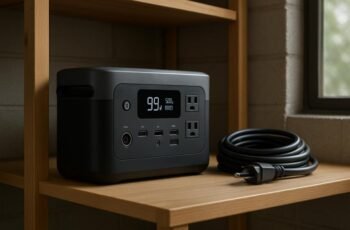
The costs associated with emergency off-grid power solutions vary widely based on system complexity, capacity, and features, but investing in these technologies can considerably enhance resilience during outages. Lower-cost options, such as portable solar generators, typically range from $500 to $2,000, offering limited capacity for essential devices. More advanced systems, like integrated solar-plus-battery setups, can cost between $5,000 and $20,000, providing sustained power for extended periods. Benefits include increased independence from grid disruptions, continuous power supply, and enhanced safety. To purchase these solutions, consult specialized renewable energy suppliers, online marketplaces like Amazon or specialized distributors, or directly contact manufacturers such as Goal Zero, Jackery, or Renogy. Proper assessment of your power needs guarantees ideal system selection and investment efficiency.
Frequently Asked Questions
How Long Can Emergency Off-Grid Power Systems Typically Operate During Outages?
Emergency off-grid power systems typically operate between 8 to 72 hours during outages, depending on battery capacity, load demand, and system design. We recommend evaluating these factors to guarantee reliable, extended power during emergencies.
Are There Any Safety Concerns When Installing Off-Grid Power Solutions?
We recognize installing off-grid power is like steering through a complex labyrinth; safety concerns include proper wiring, grounding, and voltage regulation. We prioritize thorough planning, adherence to electrical codes, and professional installation to guarantee safe, reliable operation.
Can Off-Grid Power Systems Be Integrated With Existing Grid Infrastructure?
Yes, off-grid power systems can be integrated with existing grid infrastructure through hybrid systems, utilizing inverters and synchronization controls to guarantee seamless energy flow, stability, and safety during grid connection or disconnection.
What Are the Environmental Impacts of Different Off-Grid Power Options?
Surprisingly, each off-grid power option impacts the environment differently; solar minimizes emissions, while diesel generators produce pollutants. We carefully analyze these effects to choose sustainable solutions, reducing ecological footprints and promoting responsible energy independence for users like you.
How Do Weather Conditions Affect the Performance of Off-Grid Power Systems?
Weather conditions markedly influence off-grid power system performance; storms can cause outages, snow reduces solar efficiency, and high winds can damage equipment. We design systems to mitigate these effects, ensuring reliability across diverse weather scenarios.
Conclusion
In summary, having a reliable off-grid power system is essential for ensuring continuity during emergencies. By selecting the right setup, properly installing it, and performing regular maintenance, we can stay prepared when it matters most. Remember, an ounce of prevention is worth a pound of cure—so investing in resilient power solutions now will pay dividends in safety and peace of mind when crises strike. Staying proactive is the key to staying powered.