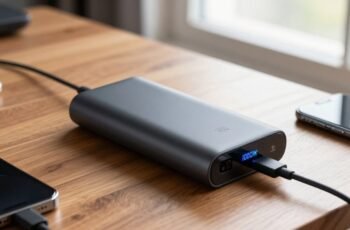
When sizing a portable power station, we need to start by accurately calculating the total watt-hours our devices will consume, factoring in both continuous and peak power demands. This means understanding not just the battery capacity but also how it aligns with our usage patterns and recharge capabilities. Balancing these technical details with portability and safety features guarantees reliable performance. But how do we translate these requirements into the right power station size?
Key Takeaways
- Calculate total energy needs by summing device wattages multiplied by operating hours to determine required watt-hours (Wh).
- Include peak power demands and continuous watt ratings to ensure the power station can handle startup surges safely.
- Match the power station’s output voltage and type (AC/DC) with your devices for compatibility and efficient operation.
- Balance battery capacity with recharge time and portability to meet usage duration without excessive weight or downtime.
- Factor in a 20-30% safety margin for unexpected surges and choose models with safety certifications and proper thermal management.
How to Calculate Your Total Power Needs
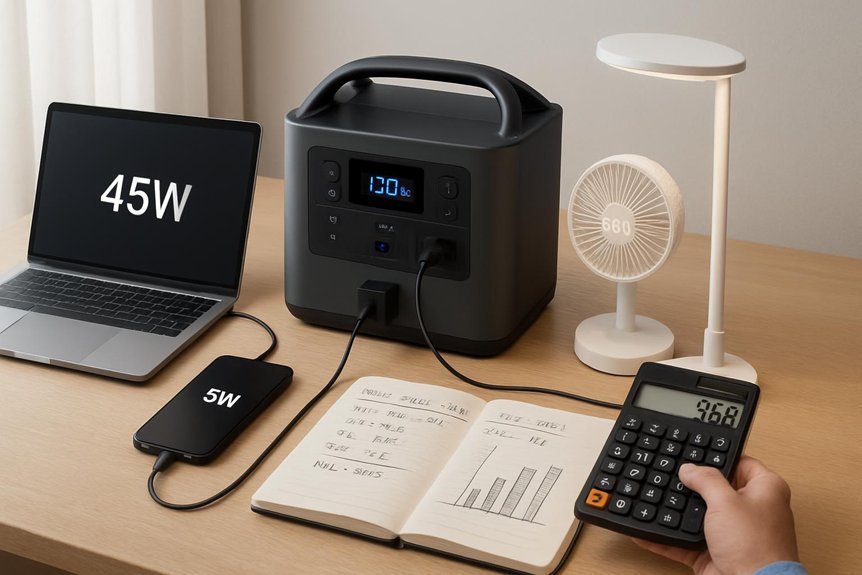
How do we accurately determine the total power requirements for a portable power station? First, we must identify each device’s power consumption, typically measured in watts, and note their operating durations. Summing these values gives us the total watt-hours needed. It’s essential to verify device compatibility with the power station’s output type—AC or DC—and voltage levels to prevent inefficiencies or damage. We should consider peak power demands, as some devices require higher startup power than their continuous consumption. By analyzing both continuous and surge power needs alongside device compatibility, we guarantee the power station can handle all connected equipment reliably. This systematic approach avoids undersizing and ensures the station meets practical energy demands without overestimating unnecessarily.
Why Battery Capacity Matters for Portable Power Stations
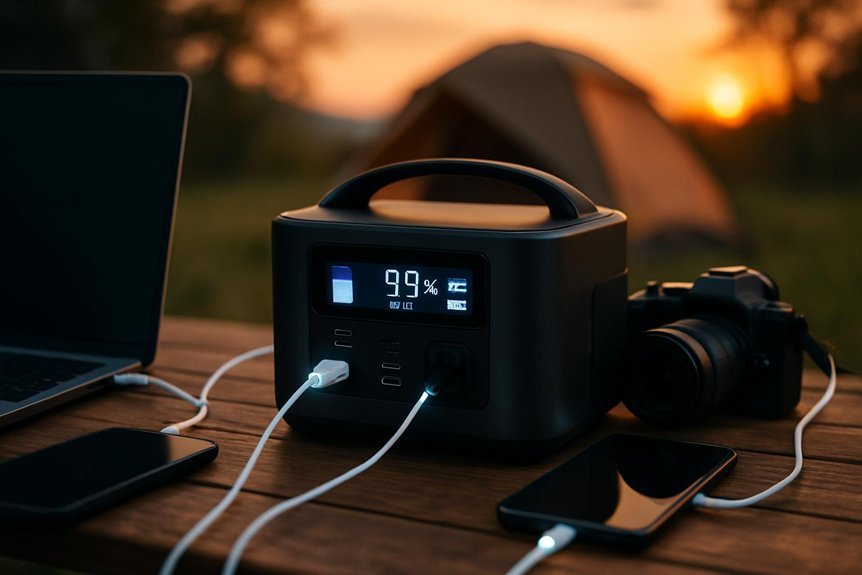
Battery capacity defines the total amount of energy a portable power station can store, typically measured in watt-hours (Wh). Understanding this capacity helps us estimate how long the device can power our equipment before needing a recharge. Accurately matching capacity to our energy demands guarantees efficient usage and prevents unexpected outages.
Battery Capacity Explained
Although power output is important, the capacity determines how long a portable power station can supply energy before needing a recharge. Battery capacity depends heavily on battery types, with lithium-ion offering higher energy density compared to lead-acid alternatives. Understanding discharge rates is essential, as exceeding recommended rates reduces efficiency and shortens lifecycle management. Charging cycles directly impact long-term capacity retention, so monitoring these cycles helps maintain performance. Thermal management also plays a significant role in preserving battery health by preventing overheating, which can degrade cells prematurely. Considering environmental impact, opting for batteries with recyclable components and responsible disposal methods is important. Following maintenance tips such as avoiding deep discharges and storing batteries at ideal temperatures enhances reliability and extends usable lifespan in portable power stations.
Impact on Usage Time
When we consider the practical use of portable power stations, the capacity directly influences how long our devices can run before requiring a recharge. Battery capacity, measured in watt-hours (Wh), determines the total energy available, which is a primary impact factor on usage time. Different usage scenarios—such as powering a laptop, charging multiple smartphones, or running small appliances—demand varying energy levels, affecting runtime accordingly. Additionally, other impact factors include device power consumption and efficiency losses during energy conversion. Understanding these variables helps us accurately estimate how long a given capacity will sustain our needs. By analyzing the interplay between battery capacity and specific usage scenarios, we can select a portable power station that guarantees peak operation time without frequent recharging interruptions.
Understanding Watt-Hours vs. Watts for Sizing
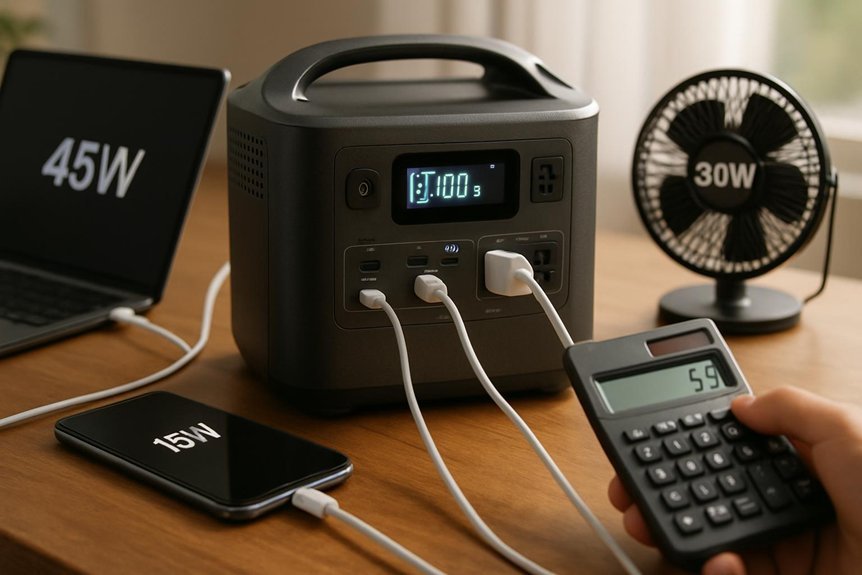
Let’s break down the difference between watt-hours (Wh) and watts (W) to size a portable power station effectively. The watt hour definition refers to the energy capacity stored, indicating how much total energy the battery holds. Watt usage, on the other hand, is the power drawn by a device at any moment. Understanding both helps us estimate how long a power station can run our devices.
| Term | Definition | Unit Example |
|---|---|---|
| Watt (W) | Instantaneous power consumption | 50 W lamp |
| Watt-hour (Wh) | Total energy capacity | 500 Wh battery |
| Usage Time | Energy ÷ Power | 500 Wh ÷ 50 W = 10h |
This clarity guarantees accurate sizing for our power needs.
How to Match Your Devices to the Power Station Output
Matching our devices to the power station output requires analyzing both the voltage and current requirements of each device and guaranteeing they align with the station’s available ports and maximum output ratings. We must verify device compatibility by comparing power ratings with the station’s surge capacity and continuous output limits. Different inverter types affect energy efficiency and the quality of AC power delivered, which impacts sensitive electronics. Considering outlet types is vital to match plugs and avoid adapters. In varied usage scenarios, prioritizing charging based on energy needs secures peak power management. Balancing simultaneous device loads prevents overloads and preserves battery life. By systematically evaluating these factors, we can select a power station that reliably supports our devices while maximizing efficiency and operational safety.
Choosing the Right Battery Type for Your Usage
Understanding how our devices interact with the power station’s output is only part of guaranteeing reliable energy supply; selecting the appropriate battery type shapes performance, lifespan, and safety. When choosing battery types, we must analyze usage scenarios carefully to match chemistry and capacity with demands. Key considerations include:
Reliable energy supply depends on matching battery chemistry and capacity to specific device needs and usage scenarios.
- Energy density for weight and volume constraints
- Cycle life to estimate longevity under regular use
- Thermal stability affecting safety in varying environments
- Discharge rate compatibility with connected devices
- Cost-efficiency relative to expected usage duration
Lithium-ion batteries excel in energy density and cycle life but require thermal management. Lead-acid options offer affordability but add bulk and reduce cycle counts. By evaluating these factors, we guarantee the chosen battery type meets our specific usage scenarios efficiently and safely, optimizing the portable power station’s overall reliability.
How to Factor in Recharge Time and Portability
When sizing a portable power station, we need to assess recharge speed carefully, as quicker recharge times maximize uptime. Balancing weight against capacity is critical to guarantee the unit remains portable without sacrificing power. Additionally, evaluating the variety of charging options available helps us maintain flexibility in diverse environments.
Recharge Speed Importance
How quickly can we get a portable power station back to full charge? This directly impacts usability and convenience, especially in time-sensitive scenarios. Evaluating recharge methods and charging speed is essential to optimize downtime. Let’s break down key factors influencing recharge speed importance:
- Input power source: AC wall outlets, solar panels, or car chargers vary in voltage and current capacity.
- Maximum input wattage: Determines how fast the battery can accept charge safely.
- Battery capacity: Larger batteries naturally require longer recharge times.
- Charging technology: Fast charging protocols and multi-port inputs enhance efficiency.
- Portability constraints: Higher charging speed often involves heavier or more complex hardware.
Weight Versus Capacity
Balancing weight and capacity remains one of the most critical challenges in selecting a portable power station. We must analyze weight distribution carefully to guarantee portability without compromising energy storage. Larger capacity units inevitably weigh more, affecting transport convenience and setup flexibility. Our goal is capacity optimization—maximizing usable energy per pound. This means choosing batteries and components that deliver high energy density while maintaining structural balance for ease of handling. Additionally, we factor in recharge time since heavier units often require longer to replenish, impacting overall efficiency in the field. By quantifying these trade-offs analytically, we can select a power station that aligns with both our mobility needs and energy demands, avoiding unnecessary bulk while ensuring reliable performance during use.
Charging Options Variety
Although selecting a portable power station involves capacity and weight deliberations, we must also evaluate the variety of charging options available, as these directly influence recharge time and overall portability. Analyzing charging speeds and outlet types is essential to guarantee device compatibility and minimize downtime. Solar compatibility adds versatility but requires examining sunlight availability and panel efficiency. User reviews and brand comparisons provide insight into real-world performance and maintenance tips, helping us avoid models with slow recharge or limited ports. Portability factors hinge on how quickly and conveniently we can recharge the unit in our environment.
Key factors to reflect on include:
- Fast charging capabilities and multiple outlet types
- Solar input options and panel compatibility
- Device compatibility across USB, AC, and DC outputs
- User feedback on recharge duration and reliability
- Maintenance needs impacting long-term portability
What Safety Features to Look for in a Power Station
Since portable power stations handle significant electrical loads, we need to prioritize safety features that prevent hazards such as overcharging, overheating, and short circuits. First, check for safety certifications like UL or CE, which verify compliance with industry standards. Overcharge protection is vital; it prevents battery damage and potential fire risks by automatically stopping the charge once full capacity is reached. Short circuit prevention mechanisms guarantee the device can detect abnormal current flows and shut down to avoid electrical faults. Effective thermal management is also necessary to dissipate heat generated during operation, maintaining ideal temperature and prolonging battery life. Evaluating these features allows us to select a power station that delivers reliable performance while minimizing safety risks inherent to high-capacity electrical devices.
How to Plan for Peak and Continuous Power Demands
When sizing a portable power station, we must account for both peak and continuous power demands to guarantee reliable operation. Peak power refers to the maximum wattage devices draw during startup, while continuous power is the steady wattage required for ongoing operation. Effective power management balances these demands, ensuring the station can handle surges without compromising energy efficiency.
To plan correctly, we should:
- Identify devices’ startup (peak) and running (continuous) power ratings
- Sum continuous wattages for total baseline load
- Add peak wattages to account for simultaneous startups
- Factor in a safety margin (typically 20-30%) for unexpected surges
- Prioritize energy-efficient devices to reduce continuous load
This precise approach prevents overloads and maximizes runtime, ensuring our power station supports all needs reliably.
Comparing Power Station Sizes for Different Use Cases
Let’s compare small, medium, and large portable power stations based on their typical use cases and capacity benefits. Small units excel in portability and powering low-demand devices, while medium capacity stations balance runtime and power for moderate needs. Large stations suit extended off-grid applications, handling high continuous loads and multiple devices simultaneously.
Small Power Station Uses
Portable power stations come in various sizes, each tailored to specific energy demands and usage scenarios. Small power stations excel in portability and efficiency, making them ideal for targeted applications. When selecting one, we focus on compactness without compromising essential output. Typical small power station uses include:
- Charging smartphones, tablets, and laptops during outdoor activities
- Powering camping essentials such as LED lights and portable fans
- Providing emergency backup for critical small appliances like routers and medical devices
- Running camera equipment and drones for fieldwork
- Supporting low-wattage cooking devices like electric kettles
Medium Capacity Advantages
Medium-capacity power stations strike an excellent balance between portability and power output, making them versatile for a wider range of applications. The medium capacity benefits include sufficient watt-hours to power multiple devices simultaneously without the bulk and weight of larger units. They typically offer 300 to 600 watt-hours, which supports ideal usage scenarios such as extended camping trips, outdoor work sites, or emergency home backup for essential electronics. These stations provide faster recharge times compared to large models, enhancing usability in dynamic environments. By analyzing power draw and duration, we see medium capacity stations excel when moderate energy demands meet portability needs. Therefore, selecting a medium-capacity power station aligns well with users who require reliable, efficient, and mobile power solutions without overcommitting to size or cost.
Large Station Applications
Although large power stations tend to be less portable, they deliver the high watt-hour capacity necessary for demanding applications that require sustained power output. When comparing power station sizes, it’s vital to match capacity with your specific power demands to optimize energy efficiency and operational reliability. Large stations suit scenarios where continuous, high-load power is essential, such as:
- Running multiple heavy-duty tools simultaneously
- Supporting extended off-grid living or emergency backup
- Powering medical devices with strict reliability requirements
- Operating refrigeration or HVAC units over long durations
- Charging multiple devices or EVs rapidly
Tips for Extending Battery Life and Maximizing Efficiency
To optimize the lifespan and performance of your power station’s battery, we need to implement specific charging and usage strategies. Applying battery maintenance tips such as avoiding full discharges and maintaining a moderate charge level can prevent capacity degradation. Additionally, energy conservation strategies like minimizing high-drain device usage prolong operational time and reduce cycle count.
| Strategy | Benefit |
|---|---|
| Partial Charging | Reduces stress, extends life |
| Avoiding Extreme Temps | Prevents chemical breakdown |
| Load Management | Enhances efficiency, cuts waste |
Frequently Asked Questions
Can I Use a Portable Power Station During Extreme Weather Conditions?
Yes, we can use a portable power station during extreme weather conditions, but we must implement strict weather precautions and power management strategies to guarantee safety, maintain peak performance, and prevent damage caused by moisture, temperature extremes, or power surges.
How Do Portable Power Stations Affect Home Insurance Policies?
Portable power stations can be a double-edged sword for insurance coverage. We must assess liability concerns carefully, as some policies may exclude damages or require specific disclosures to guarantee we’re fully protected against potential risks.
Are Portable Power Stations Safe to Use Indoors?
We confirm portable power stations are safe indoors, as they don’t emit carbon monoxide. For ideal indoor safety, let’s guarantee proper ventilation and avoid using gas-powered generators, which pose carbon monoxide risks in enclosed spaces.
What Maintenance Is Required for a Portable Power Station?
Like tending a delicate garden, we prioritize battery care by charging regularly and avoiding deep discharges. We practice load management to prevent overloads, ensuring peak performance and extending our portable power station’s lifespan efficiently and safely.
Can Portable Power Stations Be Used for Medical Devices?
Yes, we can use portable power stations for medical devices, but we must evaluate medical device compatibility and battery capacity considerations carefully to guarantee uninterrupted, reliable power supply, meeting essential safety and performance requirements.
Conclusion
By carefully calculating our total watt-hour needs and considering both peak and continuous demands, we guarantee our portable power station matches our devices perfectly. For example, if we plan a weekend camping trip powering a 60W mini-fridge for 10 hours plus charging phones, sizing a 700Wh battery with 20% safety margin assures reliability. Prioritizing battery type, recharge options, and safety features optimizes performance and longevity, making our power setup both efficient and dependable.