When considering solar energy solutions, understanding the fundamental differences between off-grid and grid-tied systems is crucial for making an informed decision. Each approach offers distinct advantages and challenges based on design, costs, and environmental factors. As we analyze their functionalities, it’s important to take into account how these systems align with specific energy needs, infrastructure constraints, and sustainability goals, prompting a closer look at what best fits diverse applications and future expansions.
Key Takeaways
- Off-grid systems operate independently with batteries, while grid-tied systems connect directly to the utility grid.
- Off-grid systems have higher upfront costs due to batteries; grid-tied systems are generally more affordable initially.
- Off-grid setups suit remote areas with no grid access; grid-tied systems are ideal for urban and suburban environments.
- Off-grid systems require regular maintenance and component replacements; grid-tied systems need less upkeep.
- Both systems’ efficiency is influenced by local climate, sunlight availability, and environmental conditions.
How Do Off-Grid and Grid-Tied Systems Differ in Design and Functionality
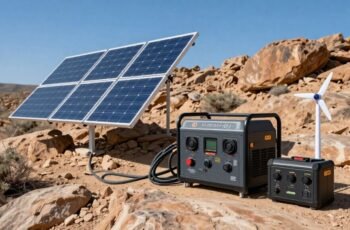
Off-grid and grid-tied solar systems differ fundamentally in their design and functionality, primarily in how they manage energy flow and storage. Off-grid systems operate independently from the utility grid, relying solely on batteries to store excess energy generated by solar panels. They include charge controllers, inverters, and battery banks to guarantee continuous power supply, especially during low sunlight periods. Conversely, grid-tied systems connect directly to the utility grid, allowing excess energy to be fed back for credits or compensation, eliminating the need for large battery storage. They use grid synchronization inverters to manage power flow seamlessly between the solar array and the grid. This fundamental difference influences system complexity, reliability, and scalability, making each suited to specific applications based on energy independence requirements.
What Are the Cost Implications of Off-Grid vs. Grid-Tied Solar Systems
While the initial investment for solar power systems varies considerably, the overall cost implications of off-grid and grid-tied configurations depend on multiple factors, including system size, component quality, and long-term operational expenses. Off-grid systems typically require higher upfront costs due to battery storage and backup infrastructure, but they eliminate ongoing grid charges. Conversely, grid-tied systems usually have lower initial costs and benefit from net metering, reducing energy bills. Consider these key points:
- Upfront Investment: Off-grid systems demand significant initial capital, especially for batteries and backup gear.
- Operational Expenses: Grid-tied systems often incur minimal ongoing costs, relying on grid access.
- Long-term Savings: Off-grid setups may lead to higher maintenance costs, while grid-tied systems offer potential savings through feed-in tariffs and incentives.
Understanding these factors helps in evaluating total cost implications for each system type.
Which System Is Better for Different Types of Energy Users
Choosing the right solar system depends heavily on the specific energy needs and circumstances of the user. Off-grid systems suit those with limited grid access or a desire for energy independence, typically for remote homes or cabins. Grid-tied systems are ideal for urban or suburban users relying on grid power, maximizing efficiency through net metering. To illustrate:
| User Type | Recommended System |
|---|---|
| Remote property owners | Off-grid |
| Urban dwellers with grid access | Grid-tied |
| Users seeking backup power | Hybrid systems (combination) |
This table highlights that off-grid setups prioritize independence, while grid-tied systems maximize for cost and convenience. Selecting the right system hinges on location, energy demands, and reliance on grid infrastructure.
What Are the Maintenance and Reliability Factors for Each System
Because maintenance requirements and reliability can vary considerably between systems, it’s essential to understand the specific factors that influence each setup’s performance. Off-grid systems demand regular inspection and component replacement, such as batteries and inverters, which are prone to degradation over time. Grid-tied systems, however, benefit from fewer maintenance needs but depend heavily on grid stability and inverter functionality.
Maintenance needs vary; off-grid systems require regular checks, while grid-tied systems rely on stable grid and inverter performance.
Key reliability considerations include:
- Battery lifespan and management—critical for off-grid systems’ independence.
- Inverter durability—affects both systems’ energy conversion efficiency.
- Component failure risk—off-grid setups face higher risks due to isolated operation.
Understanding these factors helps optimize system longevity and operational certainty.
How Do Environmental and Location Factors Influence Your Choice
Environmental and location factors, such as solar potential and local climate, directly impact the efficiency and feasibility of different energy systems. Regions with abundant sunlight support higher energy yields, making grid-tied systems more practical, while less sunny areas may favor off-grid solutions. Understanding these variables is essential for optimizing system selection based on geographic conditions.
Solar Potential and Sunlight
The amount of sunlight an installation receives considerably impacts the efficiency and viability of off-grid and grid-tied solar systems. Sunlight availability directly influences energy output, system sizing, and economic feasibility.
Key factors include:
- Sunlight Intensity: Higher solar irradiance maximizes energy production, reducing system size and costs.
- Daylight Duration: Longer sunny periods improve daily energy yield, essential for off-grid independence.
- Seasonal Variations: Seasonal fluctuations affect power consistency, influencing system design and storage needs.
Understanding these environmental factors helps determine whether a system can meet energy demands reliably and economically. Proper assessment ensures suitable placement and capacity, minimizing losses and maximizing return on investment, regardless of system type.
Local Climate Conditions
When selecting between off-grid and grid-tied solar systems, understanding local climate conditions is essential, as these environmental and location factors directly impact system performance and longevity. Extreme temperatures can affect panel efficiency, with high heat reducing output and cold conditions potentially causing material stress. Precipitation patterns influence system durability, as frequent snow or heavy rain may necessitate enhanced mounting and protective measures. Humidity levels can accelerate corrosion, especially in coastal areas, demanding corrosion-resistant components. Additionally, wind exposure might require sturdier mounting structures. By analyzing local climate data, we can determine appropriate system sizing, component selection, and maintenance strategies, ensuring ideal performance and durability tailored to environmental challenges. This understanding guides us to make informed, resilient solar investments.
Which System Supports Sustainability Goals and Future Expansion
Both off-grid and grid-tied systems offer distinct advantages in scalability and flexibility, impacting their ability to support long-term sustainability goals. Off-grid setups typically excel in environmental impact reduction by minimizing reliance on fossil fuels, while grid-tied systems can leverage existing infrastructure for cost efficiency and expansion. Analyzing these factors helps determine which system aligns best with future growth and environmental commitments.
Scalability and Flexibility
Off-grid systems often present limitations in scalability and flexibility because they rely on fixed battery capacities and dedicated infrastructure, which can hinder future expansion. These constraints restrict the ability to adapt to increasing energy demands or technological advancements.
Consider these points:
- Limited capacity growth—adding batteries or panels involves significant cost and effort, often requiring system overhauls.
- Inflexible infrastructure—once installed, modifications are complex, reducing adaptability for evolving energy needs.
- Sustainability alignment—off-grid setups may struggle to incorporate renewable innovations or expand seamlessly to meet future sustainability goals.
While off-grid systems excel in independence, their rigidity can stifle long-term growth. Conversely, grid-tied systems typically offer better scalability and adaptability, supporting ongoing sustainability initiatives.
Environmental Impact Reduction
Have we considered which energy system aligns more effectively with sustainability goals and minimizes environmental impact? Off-grid systems often utilize renewable sources like solar or wind, reducing reliance on fossil fuels and lowering greenhouse gas emissions. They typically avoid grid infrastructure, minimizing land disturbance and habitat disruption. Conversely, grid-tied systems connect to existing infrastructure, which can involve environmental costs from transmission line construction and maintenance. However, grid-tied setups can leverage cleaner energy mixes as grids incorporate more renewables, *therefore* reducing overall carbon footprints. Additionally, grid-tied systems support future expansion by integrating energy storage and smart grid technologies, enhancing flexibility and efficiency. Overall, off-grid systems excel in remote, eco-sensitive areas, while grid-tied systems can optimize environmental benefits through cleaner grid integration and scalable infrastructure.
Long-term Cost Efficiency
When evaluating long-term cost efficiency, it’s important to take into account how each system aligns with sustainability goals and supports future expansion. Off-grid systems often require higher upfront investments, but their independence from utility rates offers significant savings over time. Grid-tied systems generally have lower initial costs and benefit from net metering, reducing operational expenses.
Consider these factors:
- Scalability: Grid-tied systems facilitate easier capacity upgrades, supporting growth without major redesigns.
- Resilience: Off-grid systems provide reliable energy independence, ensuring sustainability during grid outages.
- Environmental Impact: Both systems support sustainability, but off-grid setups can be more adaptable for remote locations, aligning with long-term eco-goals.
Ultimately, the choice hinges on balancing initial costs with future expansion and sustainability priorities.
Frequently Asked Questions
Can Off-Grid Systems Operate During Prolonged Cloudy or Snowy Weather?
Yes, off-grid systems can operate during prolonged cloudy or snowy weather, but their efficiency drops. We rely on battery storage and backup generators to maintain power, ensuring continuous operation despite reduced sunlight and snow coverage.
Are There Specific Permits or Regulations for Installing Each System Type?
Getting the ball rolling on permits depends on local ordinances; grid-tied systems often require utility approval, while off-grid setups usually face fewer restrictions. We advise checking with your local authorities to avoid running into red tape.
How Do Battery Lifespan and Replacement Costs Compare Between Systems?
Battery lifespan typically ranges from 5 to 15 years, with grid-tied systems often having lower replacement costs due to smaller capacity and less deep cycling, whereas off-grid batteries endure more cycles, increasing their overall replacement costs over time.
What Are the Best Backup Options for Grid-Tied Systems During Outages?
During outages, we recommend installing a robust battery backup system, like a hybrid inverter with ESS, or a portable generator, to guarantee continuous power supply, especially when grid dependence is temporarily unavailable or unreliable.
How Do System Efficiencies Vary With Different Geographic Climates?
We observe that solar panel efficiencies can vary by up to 25% across climates; in colder, sunnier regions, systems perform ideally, whereas humid, shaded areas reduce output, emphasizing the importance of climate-specific system design for maximum efficiency.
Conclusion
Ultimately, choosing between off-grid and grid-tied systems isn’t just about costs or setup—it’s about aligning with our values and future needs. While off-grid systems offer resilience and independence, grid-tied setups promote sustainability and scalability within existing infrastructure. We believe that understanding these differences enables us to make informed decisions, ensuring our energy solutions are both technically sound and environmentally responsible. Embracing the right system can power a more sustainable, resilient future for all.