We often assume that portable power stations can handle any workload without overheating, but is that really the case? Understanding the critical role of thermal management reveals how temperature directly impacts battery health and overall system reliability. As we explore the mechanisms behind heat regulation—from passive designs to active cooling systems—we’ll uncover why managing thermal conditions is essential for maximizing performance and extending device lifespan.
Key Takeaways
- Effective thermal management prevents overheating, ensuring safe and reliable operation of portable power stations under varying load conditions.
- Passive cooling uses heat sinks and conductive materials for silent, energy-efficient heat dissipation without mechanical parts.
- Active cooling with fans or liquid systems is essential for high thermal loads and continuous heavy use to maintain optimal temperatures.
- Advanced materials like graphene composites enhance thermal transfer and reduce hotspots, improving overall thermal efficiency and device longevity.
- Regular maintenance, including dust removal and temperature monitoring, is critical to sustain cooling performance and prevent heat-related failures.
Why Thermal Management Matters in Portable Power Stations
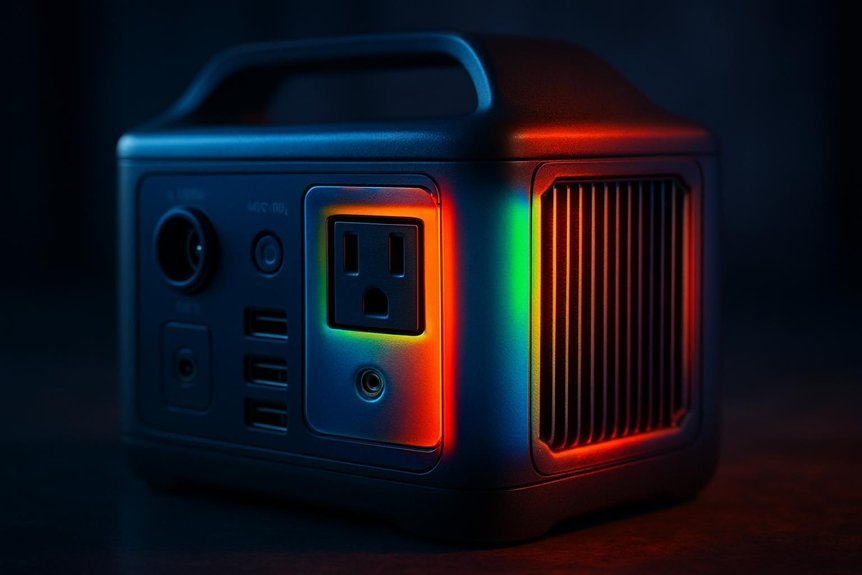
Although portable power stations are designed for convenience and mobility, we must recognize that effective thermal management is critical to their performance and longevity. Maintaining ideal thermal efficiency guarantees that internal components operate within safe temperature ranges, preventing thermal stress that degrades battery cells and electronic circuits. When we control heat dissipation effectively, we enhance power longevity by minimizing capacity loss and reducing the risk of sudden failures. Poor thermal regulation can lead to overheating, which accelerates chemical degradation inside batteries and shortens overall device lifespan. By prioritizing thermal management, we improve energy conversion processes and maintain consistent power output. Consequently, integrating precise thermal control mechanisms is essential for sustaining device reliability and maximizing operational endurance in portable power stations.
Common Causes of Overheating in Portable Power Stations
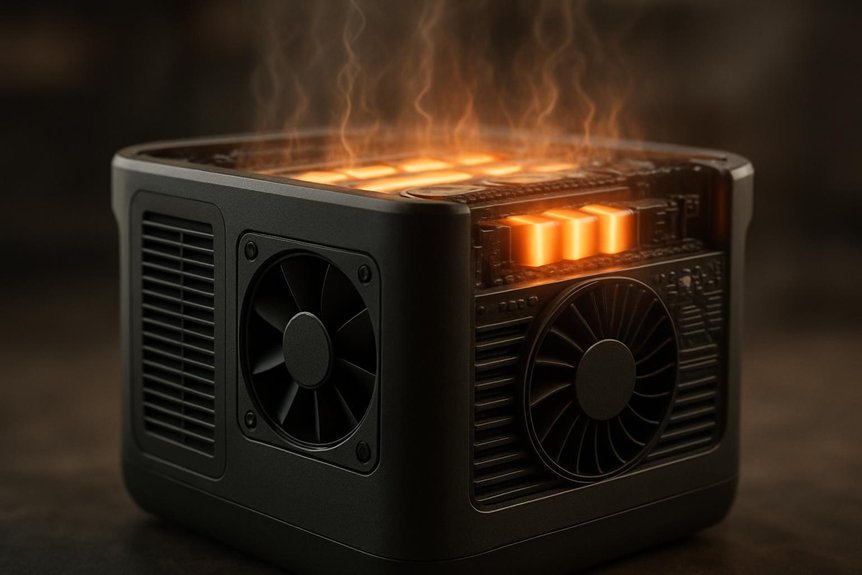
Understanding the factors that cause overheating helps us implement better thermal management strategies in portable power stations. Common overheating causes include excessive load, poor ventilation, high ambient temperatures, battery degradation, and internal component faults. Each factor can accelerate thermal failure by increasing internal heat beyond design limits.
| Overheating Causes | Impact on Thermal Failure |
|---|---|
| Excessive Load | Generates excess heat |
| Poor Ventilation | Restricts heat dissipation |
| High Ambient Temperature | Limits cooling efficiency |
| Battery Degradation | Increases internal resistance |
| Component Faults | Causes localized hotspots |
How Passive Cooling Keeps Power Stations Safe and Quiet
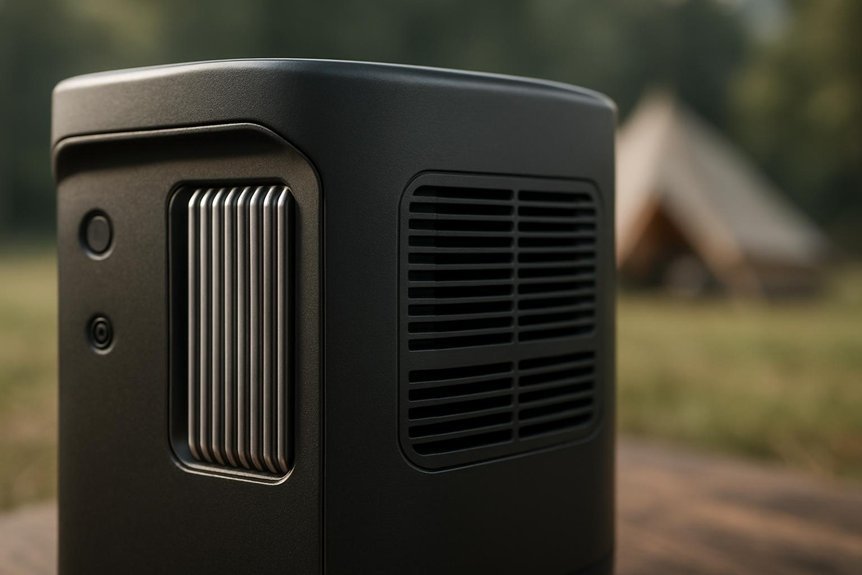
Since portable power stations often operate in confined spaces or noisy environments, passive cooling plays an essential role in maintaining safety and reducing sound emissions. By employing passive techniques such as heat sinks, thermal conductive materials, and optimized airflow channels, we achieve effective heat dissipation without relying on moving parts. This silent operation not only enhances user safety by minimizing mechanical failures but also supports energy efficiency by eliminating power consumption from fans or pumps. Additionally, integrating passive cooling within compact solutions allows us to preserve design aesthetics while addressing thermal challenges. These approaches reduce environmental impact by lowering energy use and extending component lifespan. Overall, passive cooling guarantees that portable power stations remain safe, quiet, and reliable during operation, making them ideal for sensitive or noise-restricted settings.
When Active Cooling Systems Make a Difference
While passive cooling offers many benefits, there are scenarios where active cooling systems become necessary to maintain peak performance and safety in portable power stations. When thermal loads exceed passive dissipation capacity, active cooling benefits become evident by preventing overheating and ensuring consistent operation. Cooling system types such as fans and liquid cooling circuits actively remove heat, enabling higher power output and prolonged device lifespan. We must consider factors like ambient temperature, power density, and usage duration to determine when active cooling is justified. Incorporating active cooling enhances thermal regulation precision and response time, critical for applications demanding continuous heavy loads or rapid charge-discharge cycles. By strategically deploying active cooling systems, we improve reliability and protect sensitive components, ultimately optimizing the station’s performance under demanding conditions.
Materials and Design Features That Improve Heat Dissipation
Let’s examine how advanced heat conductive materials like graphite and copper improve thermal transfer efficiency in portable power stations. We’ll also consider innovative design features such as integrated heat sinks and optimized airflow channels that enhance passive cooling performance. Together, these elements play a critical role in maintaining safe operating temperatures without increasing power consumption.
Advanced Heat Conductive Materials
Although managing heat in portable power stations involves various strategies, selecting advanced heat conductive materials plays an essential role in enhancing thermal performance. These materials optimize heat transfer by combining high thermal conductivity with efficient energy absorption, ensuring rapid dissipation of generated heat. By integrating materials such as graphene-enhanced composites or advanced metal alloys, we improve material efficiency and reduce thermal resistance. This approach supports performance optimization by maintaining stable operating temperatures without compromising insulation techniques critical to safety. In addition, design innovation in material composition allows us to tailor conductive properties, aligning with specific cooling technologies to maximize heat dispersion. Consequently, advanced heat conductive materials form a foundational aspect of thermal management, enabling portable power stations to operate reliably under demanding conditions while minimizing overheating risks.
Innovative Cooling Design Features
Building on the role of advanced heat conductive materials, innovative cooling design features integrate both material properties and structural elements to optimize heat dissipation in portable power stations. We focus on combining thermal insulation strategically to prevent heat buildup in sensitive components while guiding excess heat toward dissipation zones. Airflow optimization plays a critical role; carefully designed vents and internal channels facilitate efficient convective cooling, reducing hotspots without increasing noise or power consumption. Additionally, incorporating phase-change materials and heat pipes enhances transient thermal management by absorbing and redistributing heat rapidly. By harmonizing these elements—thermal insulation, airflow pathways, and dynamic heat spreaders—we achieve a balanced system that maintains operational stability, prolongs component life, and guarantees reliable performance under varying load conditions in portable power stations.
Monitoring and Maintenance Tips to Prevent Heat Issues
To prevent heat-related failures in portable power stations, we must implement regular temperature monitoring using accurate sensors to detect abnormal rises early. Maintaining effective cooling practices, such as cleaning vents and ensuring unobstructed airflow, is essential for consistent thermal regulation. By combining these strategies, we can optimize performance and extend the device’s operational lifespan.
Regular Temperature Monitoring
Since temperature fluctuations can quickly lead to performance degradation or safety hazards, we must implement regular temperature monitoring in portable power stations. Integrating accurate temperature sensors and heat indicators enables real-time thermal feedback essential for early detection of anomalies. Advanced monitoring systems with robust data logging allow us to track temperature trends over time, facilitating predictive maintenance. Alert mechanisms configured within intuitive user interfaces promptly notify us of critical thresholds, preventing overheating incidents. By systematically analyzing this thermal data, we optimize performance tracking and identify inefficiencies before they escalate. This precise, continuous monitoring forms the backbone of effective thermal management, ensuring operational reliability and safety without relying solely on reactive measures. Consistent temperature oversight is indispensable for sustaining power station longevity and preventing heat-related failures.
Effective Cooling Practices
Three key cooling practices substantially enhance the thermal stability of portable power stations. First, we must guarantee proper heat sink installation and maintenance; clean, well-attached heat sinks efficiently dissipate heat from vital components. Second, airflow optimization is essential—unobstructed vents and strategic fan placement promote consistent air circulation, preventing hotspots. Third, regular monitoring of temperature sensors enables us to detect early thermal anomalies and adjust cooling parameters before issues escalate. We should also schedule periodic maintenance to clear dust buildup, which impairs heat sinks and airflow channels. By rigorously applying these practices, we maintain ideal operating temperatures, extend battery and electronic lifespan, and prevent performance degradation. Integrating these measures into our routine monitoring protocols guarantees the power station operates safely and reliably under varying load conditions.
Choosing a Portable Power Station With Effective Thermal Management
How do we guarantee a portable power station maintains peak performance under varying conditions? We must prioritize effective thermal management integrated with advanced battery management systems. When choosing a unit, we analyze how its design dissipates heat to prevent thermal buildup, which directly impacts power efficiency and battery longevity. Look for stations that incorporate active cooling mechanisms, such as strategically placed fans or heat sinks, paired with sensors that monitor temperature in real time. Robust battery management guarantees cells operate within safe thermal thresholds, reducing degradation risks. Additionally, evaluating manufacturer data on thermal performance under load helps us identify models optimized for sustained power delivery. By focusing on these technical criteria, we guarantee the portable power station delivers reliable, efficient operation across diverse environments.
Frequently Asked Questions
Can Extreme Cold Affect the Thermal Management of Portable Power Stations?
Yes, extreme cold can reduce battery performance by slowing chemical reactions. We must use advanced insulation materials to maintain ideal temperatures, ensuring efficient thermal management and preventing power loss in portable power stations during harsh cold conditions.
How Does Altitude Impact the Cooling Efficiency of Portable Power Stations?
Altitude effects reduce air density, lowering convective cooling efficiency in portable power stations. We must optimize cooling mechanisms, like enhanced fans or heat sinks, to compensate for diminished airflow and maintain effective thermal regulation at high elevations.
Are There Specific Brands Known for Superior Thermal Management Technology?
We’ve found that brands like Goal Zero and Jackery lead in technology innovations, excelling in brand comparisons for thermal management. Their advanced cooling systems and material choices greatly enhance portable power station efficiency and reliability under various conditions.
Can Thermal Management Extend the Overall Lifespan of Portable Power Stations?
We understand some might doubt it, but effective heat dissipation directly enhances battery longevity. By maintaining ideal temperatures, we greatly extend the overall lifespan of portable power stations, ensuring reliable, long-term performance in diverse conditions.
What Are the Risks of DIY Modifications to Improve Cooling Systems?
We risk damaging components or voiding warranties when attempting cooling system upgrades without expertise. Improper heat dissipation methods can cause overheating, reduced efficiency, or electrical hazards. Let’s prioritize tested solutions to guarantee safety and reliability.
Conclusion
As we’ve seen, effective thermal management is essential to maintaining portable power stations’ performance and longevity. Did you know that overheating can reduce battery life by up to 50%? By combining passive and active cooling methods, optimized materials, and regular maintenance, we can prevent these losses and guarantee safe operation. Let’s prioritize these strategies when choosing and using our power stations to maximize reliability and extend their lifespan under all conditions.