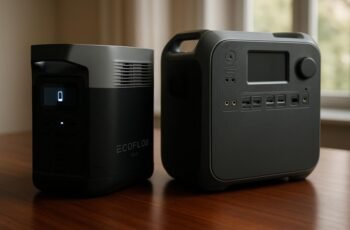
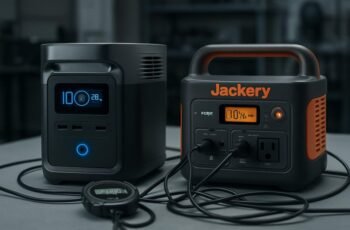
When we compare the EcoFlow River Pro’s 720 Wh capacity with the Jackery Explorer 1000’s 1002 Wh, it’s clear that battery size alone doesn’t tell the whole story. Factors like inverter efficiency, output variety, and charging options play critical roles in overall performance. As we explore these elements alongside portability and safety features, we’ll uncover which models truly meet the demands of off-grid power needs.
Key Takeaways
- High capacity power stations typically range from 1000Wh to 2000Wh, suitable for extended off-grid use and emergency power supply.
- Pure sine wave inverters ensure safe operation of sensitive electronics like laptops and medical devices.
- Lithium iron phosphate batteries offer longer cycle life and better energy density compared to traditional lithium-ion options.
- Multiple output ports, including AC, DC, USB-A, and USB-C with Power Delivery, enhance device compatibility and fast charging.
- Pricing varies from $800 to $2,000, with warranty length and safety features influencing long-term reliability and cost-effectiveness.
What to Look for in a High Capacity Portable Power Station
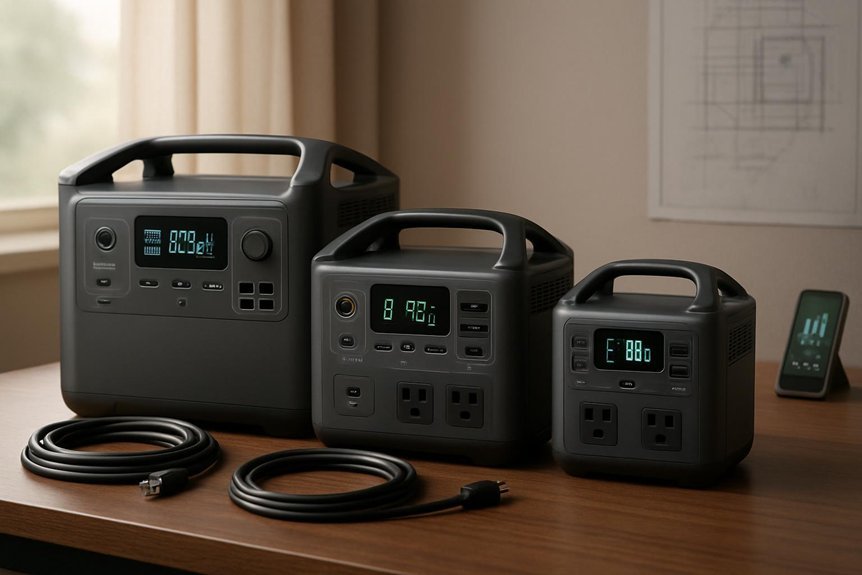
When choosing a high capacity portable power station, we need to focus on several vital specifications that directly impact performance and usability. First, solar charging compatibility is fundamental for sustainable, off-grid energy replenishment; we should verify the station’s maximum solar input wattage and supported panel types to optimize recharge efficiency. Next, understanding inverter types is essential: pure sine wave inverters provide clean, stable power compatible with sensitive electronics, while modified sine wave inverters may suffice for less demanding devices but can cause inefficiencies or damage. We must also assess continuous and surge power ratings to guarantee the station meets peak and steady-state load requirements. Finally, consider input/output port variety and charging speed, as these factors determine flexibility and operational convenience in diverse scenarios.
Comparing Battery Life and Capacity of Top Models
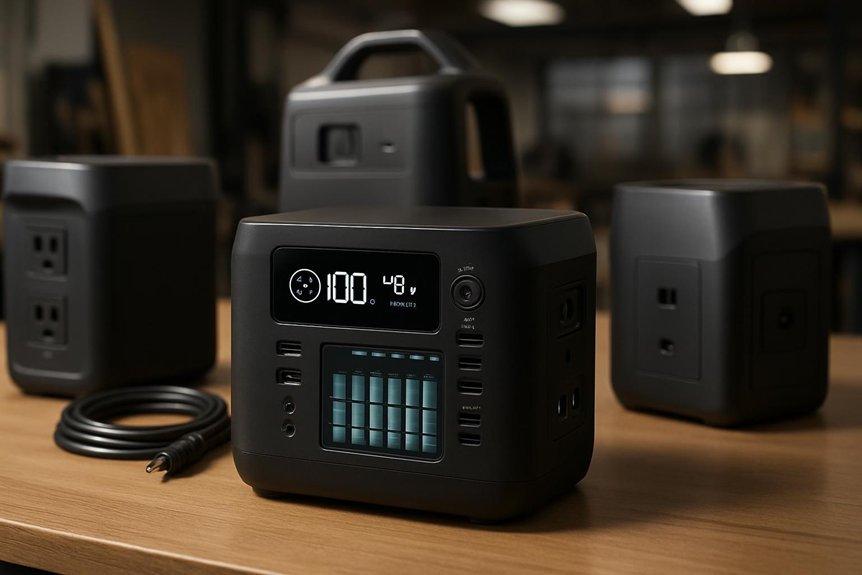
Let’s compare the battery capacities of leading portable power stations, focusing on watt-hour ratings to determine their energy storage capabilities. We’ll also analyze runtime performance under typical loads to assess efficiency and real-world usability. This data-driven approach will help us identify which models offer the best balance between capacity and operational duration.
Battery Capacity Comparison
Although portable power stations vary widely in design, their battery capacity remains the essential factor determining overall performance and runtime. When comparing top models, we focus on watt-hour (Wh) ratings, which directly quantify stored energy. Advanced battery technology, such as lithium iron phosphate (LiFePO4), offers higher cycle life and thermal stability over traditional lithium-ion cells, impacting long-term capacity. For instance, models with 1000Wh to 1500Wh capacities are common in high-capacity units, balancing size and power. Charging speed also plays a vital role; faster input rates reduce downtime but require compatible battery management systems to avoid degradation. By analyzing these metrics, we guarantee our comparisons reflect both raw capacity and practical usability, guiding you to the best portable power station suited for extended off-grid use.
Runtime Performance Analysis
Since battery capacity directly influences runtime, analyzing how top portable power stations perform under various loads is essential for selecting the right model. We focus on runtime efficiency by measuring energy consumption against battery capacity to determine actual operational duration. Comparing these metrics reveals which models maximize energy use under real-world conditions.
| Model | Battery Capacity (Wh) | Runtime @ 100W Load (hrs) |
|---|---|---|
| PowerStation A | 1000 | 9.5 |
| PowerStation B | 1200 | 11.2 |
| PowerStation C | 1100 | 10.3 |
PowerStation B leads in runtime efficiency, translating capacity into longer usage. This comparison helps us identify models that balance capacity and energy consumption effectively.
How Portability Affects Your Power Station Choice
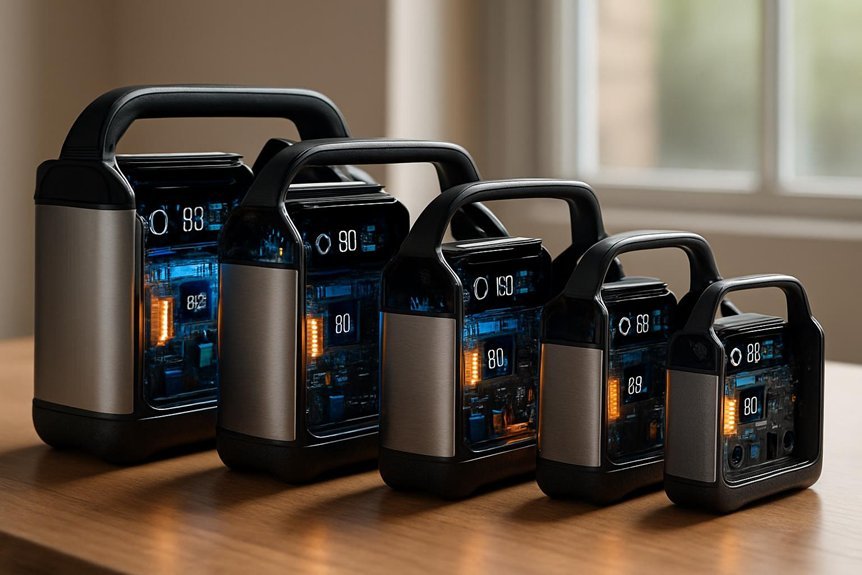
When choosing a high-capacity power station, we must balance weight against battery capacity, as heavier units often provide longer runtimes but reduce mobility. Size directly impacts how easily we can transport and deploy the unit in various environments. Let’s analyze how these factors influence our ideal power station selection.
Weight Versus Battery Capacity
As we evaluate high-capacity portable power stations, we must balance battery capacity with weight, since increased energy storage typically results in heavier units. Modern battery technology, such as lithium iron phosphate (LiFePO4), offers improved energy density, allowing us to achieve higher capacities without proportionally increasing weight. However, weight distribution remains critical; uneven distribution can compromise portability and user comfort during transport. For instance, power stations with centralized battery packs often feel more manageable than those with bulkier, uneven layouts. When selecting a unit, we should analyze watt-hour (Wh) ratings relative to total weight, aiming for the highest Wh per kilogram ratio. By understanding these trade-offs, we can choose a power station that meets our energy needs while maintaining practical portability for field or emergency use.
Size Impact On Mobility
Balancing battery capacity with weight lays the groundwork for understanding how size influences a power station’s mobility. Effective size optimization guarantees the unit remains compact without sacrificing capacity, while strategic weight distribution enhances ease of transport. A bulky or poorly balanced power station can hinder portability, especially in outdoor or emergency scenarios. Consider the following comparison of typical units:
| Model | Dimensions (in) | Weight (lbs) |
|---|---|---|
| Compact Pro | 12 x 8 x 7 | 15 |
| Mid-Range Max | 16 x 10 x 9 | 22 |
| Ultra Heavy | 20 x 14 x 12 | 35 |
We see that smaller dimensions paired with balanced weight distribution improve maneuverability. Prioritizing size optimization aligns with user mobility needs, making your power station choice more practical.
Which Power Outputs Matter Most for Your Devices
Which power outputs truly matter for our devices depends on understanding their specific voltage and current requirements. Most portable power stations offer multiple output types: AC outlets, DC ports, USB-A, and USB-C. Device compatibility hinges on matching these outputs with our gadgets’ input specifications. For instance, laptops often demand 19-20V DC via USB-C Power Delivery, while smartphones typically use 5V USB-A or USB-C. Prioritizing power efficiency means selecting a station that provides stable voltage and current with minimal conversion losses. High wattage AC outputs matter for power-hungry appliances, whereas efficient USB-C ports support fast charging with less energy waste. Ultimately, knowing the exact output specifications our devices require guarantees peak performance and extends battery life, making power output versatility and efficiency critical evaluation criteria.
Best Power Stations for Camping and Outdoor Adventures
When we venture into camping and outdoor adventures, selecting a portable power station with reliable capacity and rugged durability becomes essential. For these activities, power stations equipped with pure sine wave inverters are preferable, ensuring compatibility with sensitive electronics. We recommend units offering at least 500Wh capacity to support multiple device charges and small appliances. Solar charging capability is an important feature, enabling extended off-grid use by harnessing sunlight efficiently. We prioritize models with MPPT charge controllers for best solar input conversion, boosting charging speed and efficiency. Additionally, the station’s weight and form factor matter; compact, weather-resistant designs enhance portability and resilience. By focusing on inverter types, battery capacity, and integrated solar charging, we pinpoint power stations tailored for dependable, versatile outdoor performance.
Top Options for Remote Work and Off-Grid Productivity
Productivity in remote work and off-grid environments hinges on power stations that deliver consistent, high-capacity output with multiple connectivity options. When comparing brands, we focus on energy efficiency and charging speed to minimize downtime and maximize off grid productivity. Models with integrated solar inputs provide eco friendly options, reducing reliance on fuel-based generators. User reviews consistently highlight portability features—weight, size, and handle design—as critical for field mobility. Among top contenders, units offering seamless USB-C PD and AC outlets stand out for powering laptops and communication devices simultaneously. Data shows some brands outperform others in sustained output and recharge cycles, emphasizing durability for extended remote work. By analyzing these metrics, we identify power stations best suited to meet the demands of professional users operating off-grid.
Emergency Power Stations That Keep You Ready and Safe
While high-capacity power stations support sustained off-grid work, emergency power stations focus on reliability and rapid response during unexpected outages. Prioritizing safety features and streamlined emergency preparedness, these stations deliver critical power instantly. Here’s a technical comparison of top emergency power stations, highlighting capacity, recharge time, and key safety features:
| Model | Capacity (Wh) | Safety Features |
|---|---|---|
| EcoFlow River Pro | 720 | Overload protection, thermal management |
| Jackery Explorer 1000 | 1002 | Short circuit prevention, battery management system |
| Goal Zero Yeti 1500X | 1516 | Surge protection, temperature monitoring |
| Anker 757 PowerHouse | 1229 | Voltage regulation, fire-resistant casing |
| Bluetti AC200P | 2000 | Multiple safety sensors, emergency shutdown |
These specifications guarantee reliable power during crises, while safeguarding users and devices.
How Price and Warranty Impact Your Purchase Decision
How much are we willing to invest in a high-capacity portable power station, and what level of warranty assurance do we require? Price comparison reveals that units range from $800 to $2,000, depending on capacity and features. We’ll want to balance upfront cost against long-term reliability. Warranty importance cannot be overstated; a robust warranty—typically 2 to 5 years—signals manufacturer confidence and protects our investment against defects or performance degradation. When comparing prices, we must factor in warranty coverage as a value multiplier. For instance, a $1,200 unit with a 5-year warranty may offer better cost-efficiency than a $900 unit with only a 1-year warranty. Ultimately, integrating warranty importance into our price comparison guarantees we select a power station that delivers both performance and peace of mind.
Frequently Asked Questions
How Do Portable Power Stations Perform in Extreme Weather Conditions?
It is understood that portable power stations experience decreased battery efficiency in extreme temperatures, with cold reducing capacity and heat accelerating degradation. Temperature effects can lower runtime, so we recommend using thermal insulation and avoiding prolonged exposure to harsh conditions.
Can I Use Solar Panels to Recharge These Power Stations?
Yes, we can use solar panels to recharge these power stations, but we must guarantee solar panel compatibility and optimize charging efficiency by matching voltage and wattage specifications precisely for maximum energy transfer and minimal power loss during recharging.
What Maintenance Is Required to Keep the Battery Healthy?
Like tending a garden, battery longevity thrives with care: we avoid extreme temperatures, limit charging cycles to 80%, and follow maintenance tips like regular calibration to guarantee peak performance and extend your power station’s life.
Are There Any Safety Concerns With Long-Term Storage?
Yes, we must avoid extreme temperatures during long-term storage, as temperature effects accelerate battery degradation. Storing batteries at moderate temperatures and around 50% charge helps minimize degradation and enhances overall safety for the power station.
How Do These Power Stations Handle Surge Power Demands?
We’ve found these stations manage surge capacity by using inverters with high efficiency and robust peak power ratings, allowing short bursts above continuous output without damage. This guarantees stable performance during sudden power demand spikes.
Conclusion
So, after crunching the numbers and specs, it turns out that choosing the “perfect” high-capacity portable power station is less about finding a flawless unit and more about accepting trade-offs—like sacrificing some watt-hours for portability or paying more for advanced safety features. Ironically, the best power station is the one that meets your specific needs, not the one with the biggest battery or flashiest specs. In other words, power is personal, not universal.