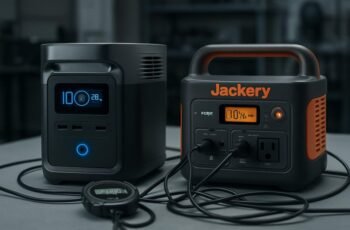
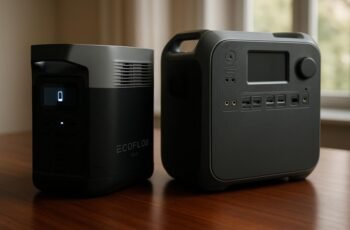
Weighing silent efficiency against raw power, comparing portability with fuel demands, and balancing emissions with runtime are essential when choosing between quiet portable power stations and gas generators. Both have clear strengths and limitations depending on usage scenarios, but understanding their technical differences can greatly impact your choice. Let’s examine how noise levels, power capacity, maintenance, and costs stack up to help clarify which option best fits your specific needs.
Key Takeaways
- Quiet portable power stations use lithium-ion batteries for clean, consistent power, while gas generators rely on combustion engines producing fluctuating output.
- Power stations operate quietly below 50 decibels with zero emissions; gas generators exceed 70 decibels and emit pollutants.
- Portable power stations are lighter (20-60 lbs) and require minimal maintenance compared to heavier (100+ lbs) gas generators needing regular upkeep.
- Upfront costs are higher for power stations ($300-$2,000) but offer long-term fuel savings versus cheaper gas generators with fluctuating fuel prices.
- Power stations suit noise-sensitive, low-demand uses like camping; gas generators excel in high-demand, extended runtime scenarios.
How Quiet Portable Power Stations and Gas Generators Work
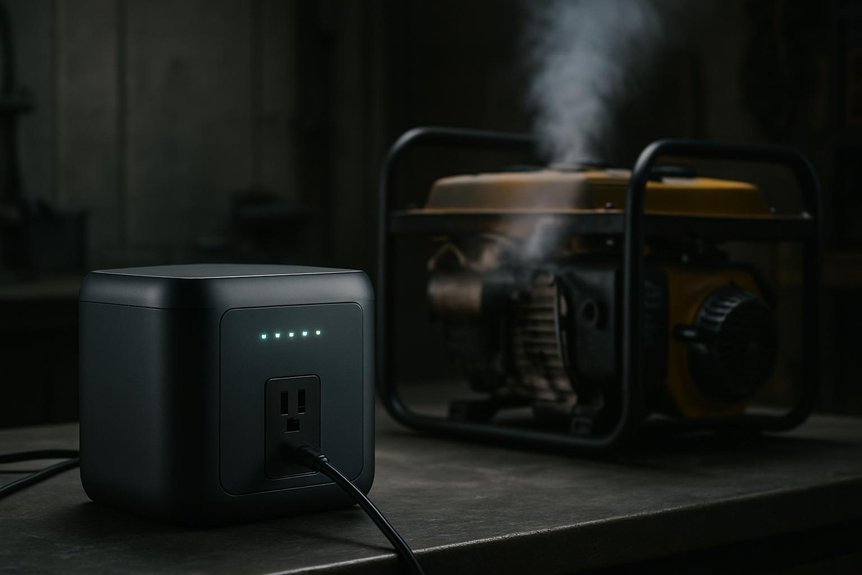
Although both quiet portable power stations and gas generators supply electricity on the go, they operate on fundamentally different principles. Quiet portable power stations leverage advanced battery technology—typically lithium-ion cells—to store electrical energy. They convert this stored DC power into AC electricity through sophisticated inverter systems, ensuring stable and clean output suitable for sensitive electronics. In contrast, gas generators rely on internal combustion engines fueled by gasoline or propane to mechanically drive an alternator, generating AC power directly. While power stations emphasize energy storage and electronic conversion efficiency, gas generators focus on continuous fuel combustion to produce power. This distinction impacts their operational profiles, maintenance needs, and energy efficiency. Understanding these technical differences helps us choose the right power source based on our specific energy demands and portability preferences.
Noise and Emissions: What to Expect From Each Power Source
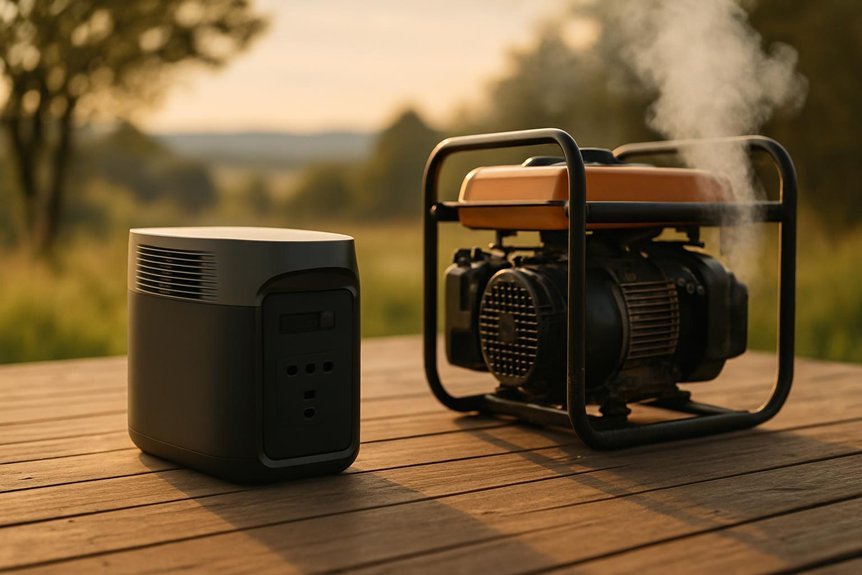
Let’s compare noise levels first: quiet portable power stations typically operate below 50 decibels, while gas generators can exceed 70 decibels, creating considerably more sound pollution. On emissions, power stations produce zero direct emissions, whereas gas generators emit carbon monoxide and other pollutants due to combustion. Understanding these differences helps us evaluate their environmental and practical impacts.
Noise Levels Comparison
How loud can we expect each power source to be during operation? Portable power stations typically operate between 40 to 60 decibel levels, comparable to a quiet conversation or background office noise. Their solid-state design and built-in sound insulation effectively minimize operational noise. In contrast, gas generators often produce noise above 70 decibels, akin to a vacuum cleaner or busy street, primarily due to combustion engines and exhaust systems. Even with some sound insulation, gas generators remain particularly louder. This difference is essential when considering use in noise-sensitive environments or extended operation periods. By comparing the decibel levels and sound insulation effectiveness, it’s clear that quiet portable power stations offer a markedly quieter experience, reducing noise pollution without compromising power output.
Emission Impact Differences
While noise levels play an essential role in evaluating power sources, emissions greatly impact environmental and health considerations. Quiet portable power stations produce zero direct emissions, relying on stored electrical energy, which aligns well with stringent environmental regulations targeting carbon footprints and pollutant output. In contrast, gas generators combust fossil fuels, emitting carbon dioxide (CO2), nitrogen oxides (NOx), and particulate matter, directly increasing their carbon footprint. Studies show gas generators can emit up to 10 times more CO2 per kilowatt-hour compared to renewable-powered stations. Additionally, regulatory agencies increasingly limit permissible emissions, pressuring gas generators to adopt costly control technologies or face restrictions. Consequently, from an emissions perspective, quiet portable power stations offer a cleaner, regulation-compliant solution with minimal environmental impact, making them superior for users prioritizing sustainability and health.
Comparing Power Capacity and Runtime for Different Needs
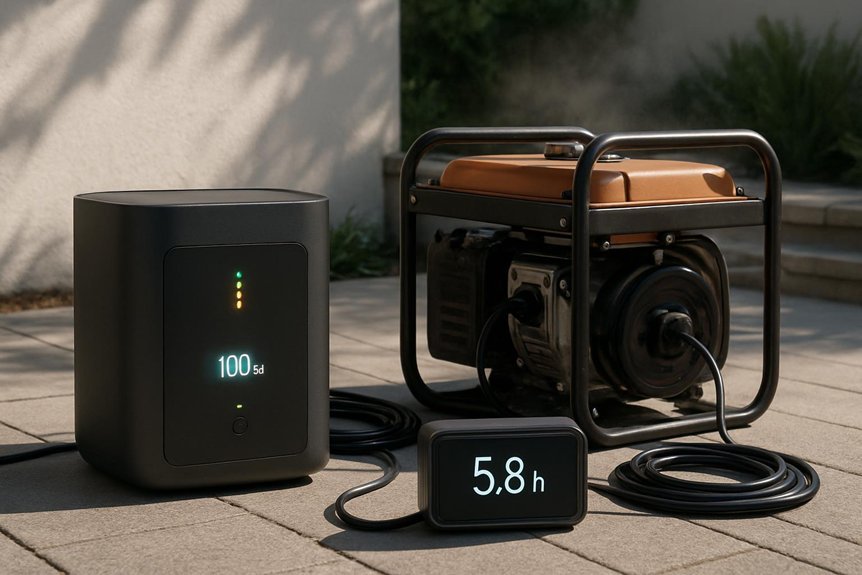
Because our power needs vary widely depending on the application, comparing power capacity and runtime between quiet portable power stations and gas generators requires careful analysis. Power stations typically offer capacity types measured in watt-hours (Wh), ideal for sensitive electronics and short-term use, while gas generators provide capacity in watts (W), better suited for continuous, high-demand loads. Runtime factors differ greatly: power stations’ runtime depends on battery size and load efficiency, often lasting 4–12 hours per charge. Gas generators run as long as fuel is available, typically 8–20 hours per tank, making them more suitable for extended use. However, power stations maintain consistent output without fuel consumption, whereas generator runtime fluctuates with load and fuel efficiency. Understanding these distinctions helps us select the right solution tailored to specific power capacity needs and runtime demands.
Portability and Maintenance: Which Is Easier to Handle?
When considering portability and maintenance, which option truly makes our lives easier? Quiet portable power stations generally weigh between 20 to 60 pounds, offering superior ease of transport compared to gas generators, which can exceed 100 pounds. Their compact design and integrated handles enhance mobility, addressing critical weight considerations. Regarding maintenance frequency, power stations require minimal upkeep—mainly periodic battery checks—while gas generators demand regular oil changes, spark plug replacements, and fuel system inspections. User-friendly features like intuitive controls and plug-and-play operation further simplify power stations’ handling. Conversely, gas generators involve more complex start-up procedures and safety precautions. Overall, quiet portable power stations provide a more streamlined, less labor-intensive experience when considering portability and maintenance, making them easier to handle for most users.
Best Use Cases for Quiet Portable Power Stations vs Gas Generators
When considering ideal outdoor scenarios, quiet portable power stations excel in noise-sensitive environments and short-term use, while gas generators deliver longer runtimes for high-demand applications. For emergency power needs, portable stations provide clean, instant power without fuel storage risks, whereas gas generators offer sustained output during extended outages. Let’s compare their performance metrics to identify which suits specific use cases best.
Ideal Outdoor Scenarios
Although both quiet portable power stations and gas generators serve as reliable energy sources, their ideal outdoor scenarios differ markedly based on noise levels, fuel requirements, and power output. For camping trips and tailgating events, quiet portable power stations excel due to their near-silent operation—typically under 50 decibels—minimizing noise pollution. Their rechargeable lithium-ion batteries eliminate the need for fuel, enhancing convenience and safety. Conversely, gas generators, with higher power output (up to several kilowatts), suit scenarios demanding heavy-duty appliances but produce noise levels exceeding 65 decibels and require fuel refills. Therefore, for low-noise, lightweight applications like camping or tailgating, quiet portable power stations provide efficient, maintenance-free power. For prolonged, high-demand tasks, gas generators remain more practical despite noise and fuel logistics.
Emergency Power Needs
Because emergency power needs often vary in duration and load, choosing between quiet portable power stations and gas generators depends on specific requirements such as runtime, power capacity, and noise constraints. For emergency preparedness, power reliability is paramount. Gas generators typically offer higher continuous power output and longer runtimes but produce significant noise and emissions. In contrast, quiet portable power stations excel in noise-sensitive environments with cleaner operation but have limited capacity and runtime.
| Feature | Quiet Portable Power Station | Gas Generator |
|---|---|---|
| Runtime | 4-12 hours | 8-24+ hours |
| Power Output | 300-2000 watts | 2000-10,000+ watts |
| Noise Level (dB) | 40-60 | 60-90 |
We recommend matching your emergency power solution to your specific reliability and noise tolerance needs.
Cost Breakdown: Upfront Price, Fuel, and Long-Term Expenses
We can break down the cost of quiet portable power stations and gas generators into three main categories: upfront price, fuel expenses, and long-term maintenance. Quiet portable power stations typically have higher upfront costs, ranging from $300 to $2,000, compared to gas generators, which start around $200. However, fuel prices heavily favor power stations since they rely on rechargeable batteries instead of gasoline, which fluctuates between $3 to $5 per gallon. Over time, this leads to significant long term savings for power station users. Maintenance expenses also differ; gas generators require regular oil changes, spark plug replacements, and fuel system upkeep, while power stations need minimal maintenance beyond battery care. Let’s summarize:
- Upfront costs: power stations higher, generators lower
- Fuel prices: power stations use electricity, generators need gasoline
- Maintenance expenses: power stations minimal, generators frequent and costly
Frequently Asked Questions
Can Quiet Portable Power Stations Be Used Indoors Safely?
Yes, we can safely use quiet portable power stations for indoor usage due to their zero emissions and low noise levels, unlike gas generators that produce harmful fumes and louder sound, making them unsuitable for enclosed spaces.
How Do Weather Conditions Affect Gas Generator Performance?
Isn’t it ironic that gas generators, built for all conditions, falter under extreme weather? We see performance factors like temperature effects drastically reducing efficiency and output, proving weather’s critical role in real-world generator reliability.
Are Quiet Portable Power Stations Compatible With Solar Panels?
Yes, we’ve found that quiet portable power stations often feature solar panel compatibility, enhancing power station efficiency by enabling renewable energy input. This integration typically improves runtime and reduces reliance on fuel compared to traditional generators.
What Safety Precautions Are Needed When Storing Fuel for Gas Generators?
Oh, sure—let’s store fuel next to fireworks for fun! Instead, we follow strict safety measures: use approved containers, store in a cool, ventilated area, avoid ignition sources, and regularly inspect fuel storage to minimize risks and guarantee safe fuel storage.
Do Gas Generators Require Special Permits or Licenses to Operate?
We don’t usually need special permits for personal gas generator use, but regulatory considerations vary by location. Following operational guidelines guarantees compliance, especially for commercial or large-scale use, where licenses or inspections might be mandatory.
Conclusion
When choosing between quiet portable power stations and gas generators, we weigh the gentle hum of silent energy against the robust roar of power. Portable stations offer clean, whisper-quiet operation, ideal for delicate environments and shorter bursts, while gas generators deliver enduring strength for heavy-duty demands, albeit with a louder footprint. By balancing noise, emissions, runtime, and cost, we can select the power source that best fits our specific needs, ensuring efficient and responsible energy wherever we go.