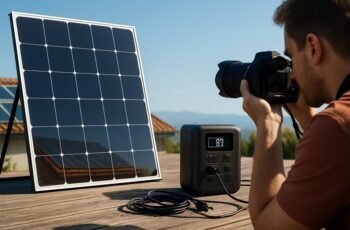
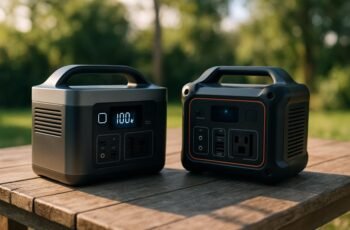
When choosing between Goal Zero and Jackery power stations, we often weigh durability against portability. Goal Zero stands out with its rugged build and higher battery capacity, suited for demanding outdoor use. On the other hand, Jackery offers sleek designs and fast charging that appeal to those on the move. Understanding their differences in design, functionality, and value can help us decide which fits our specific needs best—so let’s explore these factors in detail.
Key Takeaways
- Goal Zero power stations prioritize rugged durability and higher battery capacity for extended heavy-duty use.
- Jackery offers sleek, lightweight designs with efficient battery use, ideal for portability and balanced performance.
- Goal Zero supports versatile charging options including multiple ports and robust solar panel compatibility.
- Jackery emphasizes fast charging and user-friendly features, pairing well with SolarSaga panels for reliable solar charging.
- Goal Zero units are pricier but durable with strong brand reputation; Jackery provides budget-friendly options with solid warranties.
How Goal Zero and Jackery Power Stations Differ in Design and Build
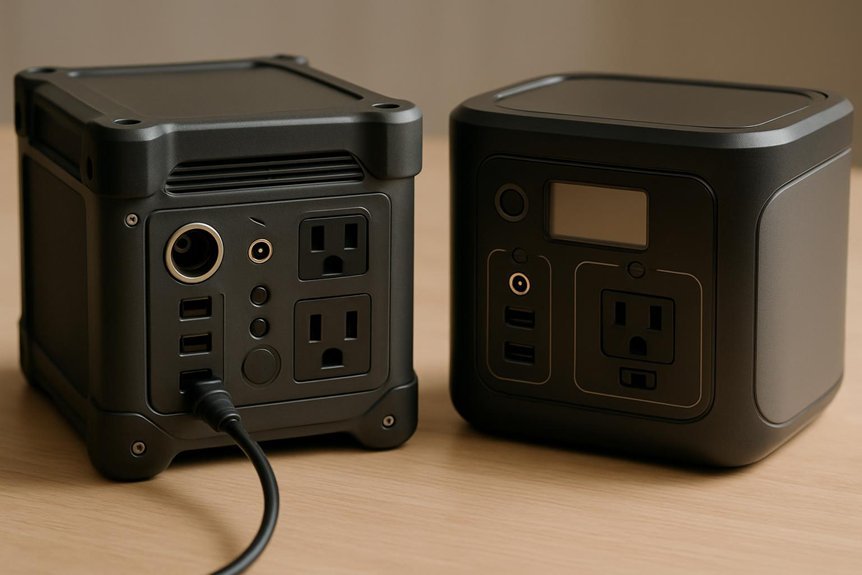
Although both Goal Zero and Jackery power stations serve the same essential purpose, their design and build reflect distinct philosophies that cater to different user preferences. Goal Zero tends to emphasize ruggedness, using durable build materials like reinforced plastics and rubberized edges, which enhance shock resistance and outdoor resilience. Their design aesthetics lean towards a utilitarian, robust look, often with bold branding and functional handles. In contrast, Jackery focuses on sleek, minimalist design aesthetics, favoring smoother lines and a more polished finish. They use lightweight but sturdy materials that balance portability with durability. While Goal Zero’s build appeals to those prioritizing toughness for extreme conditions, Jackery’s design suits users valuing portability and modern style without compromising structural integrity. Both offer practical choices depending on what design traits matter most to us.
Comparing Battery Capacity and Runtime for Outdoor Use
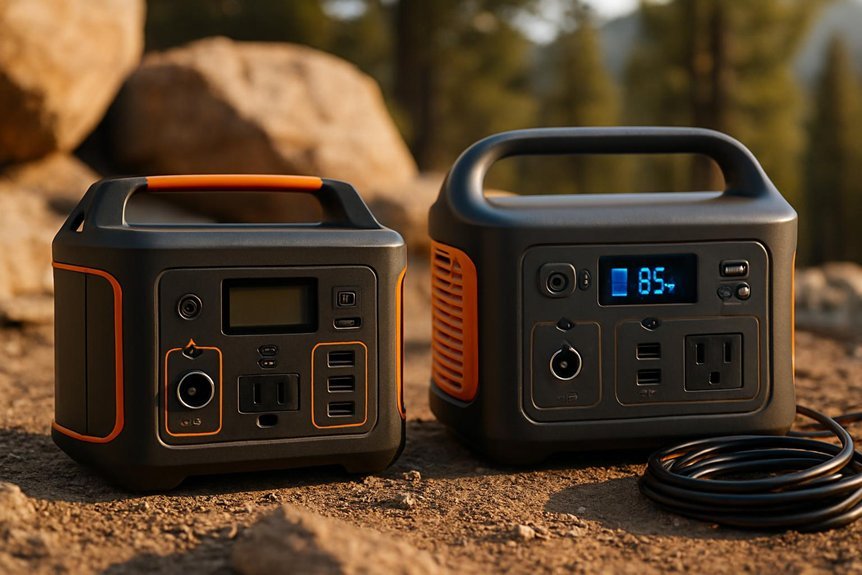
When we evaluate power stations for outdoor use, battery capacity and runtime become critical factors that directly impact our experience. Goal Zero models often offer higher battery capacities, which can translate into longer usage periods for demanding devices. Jackery, however, emphasizes battery efficiency, optimizing power delivery to extend runtime without necessarily increasing battery size. In runtime comparisons, Goal Zero units tend to excel in prolonged, heavy-duty applications, while Jackery’s designs favor balanced performance with lighter, more efficient consumption. Both brands provide reliable power, but our choice depends on whether we prioritize sheer capacity or efficient power use. Understanding these nuances helps us select the right station to match our outdoor needs, ensuring dependable energy supply throughout our adventures.
What Charging Options Do Goal Zero and Jackery Offer?
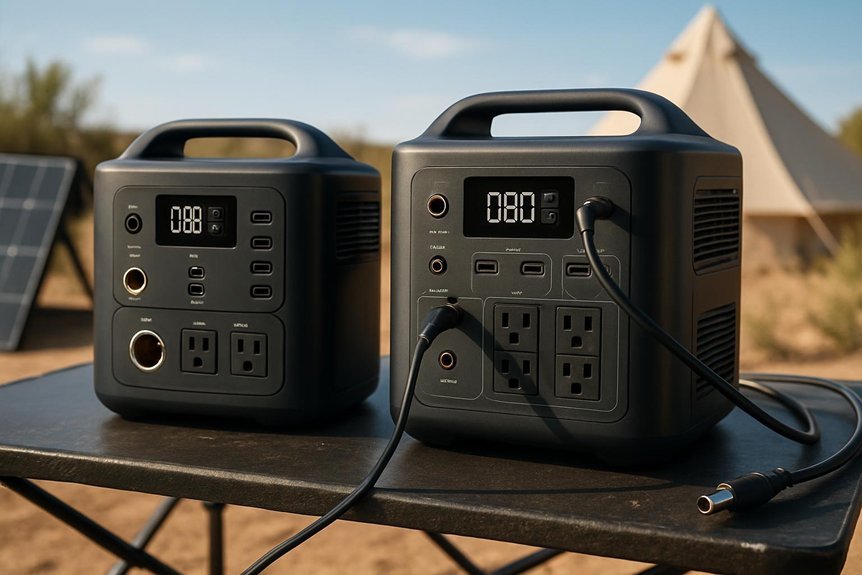
Understanding battery capacity and runtime gives us a clear picture of how long our devices will stay powered, but it’s equally important to contemplate how we recharge these portable stations. Goal Zero offers multiple charging options, including wall outlets, car chargers, and robust solar compatibility with their Boulder and Nomad panels. Their charging speed varies depending on the model, but solar charging is optimized for efficiency. Jackery also supports wall and car charging, with a focus on fast charging speeds to minimize downtime. Their Explorer series pairs well with SolarSaga panels, providing solid solar compatibility, though some find Goal Zero’s solar integration more versatile. Comparing both, Goal Zero tends to excel in flexible solar options, while Jackery emphasizes quicker wall charging, letting us choose based on our charging priorities.
Portability and Size: Which Power Station Is Easier to Carry?
How much does size and weight influence our choice between Goal Zero and Jackery power stations? When comparing portability, both brands offer compact models, but their weight distribution and handle design make a difference. Goal Zero units tend to be slightly heavier, yet their balanced weight distribution helps reduce strain during transport. Jackery power stations are often lighter, with ergonomic handle designs that enhance grip and ease carrying over short distances. While Goal Zero’s robust build adds bulk, it feels stable when carried, especially on uneven terrain. Jackery’s lighter frame is advantageous for quick trips but may feel less sturdy. Ultimately, ease of carrying depends on how we prioritize weight versus handle comfort, making both brands viable but suited to slightly different portability needs.
User Interface and Controls: Which Brand Is More Intuitive?
What makes a power station’s user interface truly intuitive? It’s a blend of display clarity, control layout, and accessibility features that guarantee smooth, intuitive navigation. Comparing Goal Zero and Jackery, both offer straightforward user interfaces but differ subtly in design and user experience.
| Feature | Goal Zero | Jackery |
|---|---|---|
| Display Clarity | High-resolution LCD, easy to read | Simple LED with essential info |
| Control Layout | Multiple buttons, logically placed | Fewer buttons, minimalist design |
| Accessibility Features | Backlit display for low light | Audible alerts for status |
| Intuitive Navigation | Menu-driven, slightly complex | Direct, user-friendly |
Performance in Real-World Scenarios: Camping, Emergencies, and More
Although both Goal Zero and Jackery power stations excel in controlled settings, their true value reveals itself during real-world use like camping trips or emergencies. In our camping experiences, Jackery tends to offer lighter, more compact units, making it easier to carry and set up. Goal Zero, on the other hand, often provides higher capacity and ruggedness, which is ideal for extended trips or rough conditions. When it comes to emergency preparedness, Goal Zero’s modular solar compatibility can be a significant advantage, ensuring longer off-grid power. Jackery’s quick recharge times and user-friendly interface, however, make it reliable for rapid deployment. Both brands deliver solid performance, but your choice should align with whether portability or extended capacity matters more in your specific scenarios.
Price and Value: Which Power Station Fits Your Budget?
When comparing Goal Zero and Jackery power stations, we need to weigh the initial costs against long-term benefits to see which offers better value. Both brands provide a range of features, so it’s important to evaluate what you’re getting for the price. Let’s break down how each model fits different budgets without compromising on essential capabilities.
Initial Cost Comparison
Many buyers face the challenge of balancing cost and features when choosing between Goal Zero and Jackery power stations. When we compare the initial cost, Jackery models generally offer a lower entry price, appealing to those with tighter budgets. Goal Zero units tend to be pricier upfront but often include advanced features that may justify the expense depending on your needs. Conducting a careful budget analysis helps us weigh whether the higher initial cost of Goal Zero translates into better investment value for our specific use cases. In price comparison, Jackery focuses on affordability without sacrificing essential functionality, while Goal Zero leans toward ruggedness and versatility at a premium. Understanding these differences guarantees we select the power station that aligns best with our financial plan and power requirements.
Long-Term Investment Benefits
Beyond the initial cost, we need to assess how Goal Zero and Jackery power stations deliver value over time. When considering durability factors, Goal Zero tends to use rugged materials suited for harsh conditions, potentially extending device lifespan and increasing long term savings. Jackery, while durable, focuses more on lightweight design, which may affect resale value if heavily used outdoors. With regard to energy efficiency, both brands perform well, but Goal Zero’s advanced battery management often results in slightly better efficiency, reducing energy waste. Resale value also plays a role; Goal Zero products generally hold value better due to brand reputation and build quality. Ultimately, if long term savings and durability are priorities, Goal Zero might edge out Jackery, though Jackery offers competitive efficiency that suits many budgets.
Features Versus Price
Although both Goal Zero and Jackery offer reliable power stations, choosing one depends heavily on balancing features against price. When we explore a price comparison and feature analysis, here’s what stands out:
- Goal Zero often presents rugged designs with higher durability, but this can raise the price point.
- Jackery typically offers more affordable options with user-friendly interfaces, appealing to budget-conscious buyers.
- Both brands provide similar battery capacities, but Goal Zero includes more versatile charging ports in some models.
- Warranty and customer support vary, with Goal Zero sometimes charging more for extended service plans.
Warranty, Customer Support, and Brand Reputation
When choosing between Goal Zero and Jackery power stations, understanding their warranty policies, customer support quality, and overall brand reputation is essential. In our warranty comparison, Goal Zero offers a two-year limited warranty on most products, while Jackery generally provides a 24-month warranty, matching Goal Zero’s coverage. Both brands have responsive customer service teams, but Goal Zero has a slight edge with more extensive online resources and community forums. Regarding brand reputation, Goal Zero is often praised for rugged, durable designs suited for outdoor enthusiasts, whereas Jackery is recognized for user-friendly, value-oriented models. Ultimately, both brands maintain solid customer service and trustworthy warranties, but your choice may depend on how much you value extensive support resources versus ease of use.
Choosing the Right Power Station for Your Lifestyle and Needs
As we consider our specific power needs and lifestyle, selecting the right power station means balancing capacity, portability, and functionality. To guarantee lifestyle compatibility and meet energy needs, we should focus on:
- Capacity – Match battery size with your typical energy consumption; larger capacity suits extended use, smaller favors portability.
- Portability – Consider weight and size; Goal Zero often offers rugged designs, while Jackery emphasizes lightweight models.
- Output Options – Check if the station supports your devices’ charging requirements, including USB-C, AC outlets, and solar compatibility.
- Usage Scenario – Identify whether you need it for camping, emergencies, or daily use, as this influences the preferred features.
Frequently Asked Questions
Are Goal Zero and Jackery Power Stations Compatible With Solar Panels?
Yes, both Goal Zero and Jackery power stations offer solar panel compatibility, but their charging efficiency varies. We’ve found Goal Zero supports more panel types, while Jackery excels with optimized charging on specific panels.
Can These Power Stations Be Used to Jump-Start a Car?
Coincidentally, both power stations lack robust jump starting capabilities due to their modest battery size. While Jackery offers limited jump-start features, Goal Zero focuses more on power delivery, so neither excels as a reliable car jump starter.
How Long Do Goal Zero and Jackery Batteries Last Before Needing Replacement?
We’ve found that both brands offer a battery lifespan of about 500-1000 cycles. Replacement indicators include reduced capacity and charging issues, with Goal Zero often providing clearer alerts compared to Jackery’s more subtle signs.
Do Either of the Brands Offer Smartphone App Integration?
Both brands offer smartphone features, but Goal Zero excels with robust app compatibility for monitoring and control. Jackery’s app integration is more limited, focusing mainly on basic power status updates rather than extensive remote management.
Are There Any Safety Features to Prevent Overcharging or Overheating?
We’ve found both brands include battery management systems and thermal protection to prevent overcharging and overheating. While Goal Zero emphasizes advanced monitoring, Jackery offers reliable safeguards, ensuring safe, efficient power use in various conditions.
Conclusion
When choosing between Goal Zero and Jackery, it’s like picking between a rugged mountain climber and a swift marathon runner—each excels in different terrains. Goal Zero’s durability and battery heft suit those who need heavy-duty power, while Jackery’s sleek, lightweight design favors portability and quick charging. Ultimately, knowing your adventure style helps us decide which powerhouse fits your lifestyle best, ensuring you’re never left powerless on the road or off the grid.