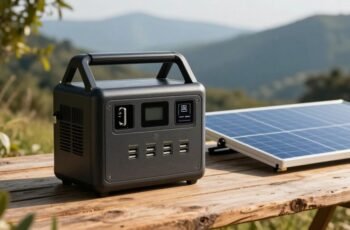
Outdoor cooking power stations represent a significant advancement in portable energy solutions, combining high-capacity batteries with sophisticated inverter technology to reliably power culinary equipment in remote settings. Their design emphasizes durability, safety, and versatility, supporting various appliances through multiple outlets. Understanding their core functions and features is essential for optimizing outdoor culinary experiences, especially when conventional power sources are unavailable. As we explore their capabilities, consider how these units can transform your outdoor cooking endeavors and the critical factors influencing their performance.
Key Takeaways
- Portable units with high-capacity batteries and inverters support outdoor cooking and power needs simultaneously.
- Multiple outlets (AC, USB, DC) allow connection of various appliances and devices during outdoor activities.
- Power capacity and wattage determine the station’s ability to handle high-temperature cooking and multiple devices.
- Charging options include solar panels, vehicle adapters, and wall outlets for off-grid recharging.
- Proper safety, maintenance, and setup are essential to ensure reliable, safe outdoor cooking experiences.
What Are Outdoor Cooking Power Stations and How Do They Work?
Outdoor cooking power stations are all-inclusive, portable units designed to provide reliable electrical power specifically for outdoor culinary applications. These units incorporate integrated batteries, typically lithium-ion or deep-cycle lead-acid, coupled with power inverters that convert DC to AC electricity. They feature high-capacity storage to guarantee continuous power delivery, even during extended cooking sessions. Power stations include multiple outlets—AC, USB, and DC—to support various appliances and devices. They are equipped with sophisticated charge management systems, ensuring efficient energy use and safety. The internal circuitry employs protective features like overload, short-circuit, and thermal cutoffs. Their design emphasizes durability, weather resistance, and ease of transport, making them essential for maintaining consistent power supply in outdoor culinary environments.
Key Features to Look for in an Outdoor Cooking Power Station
When selecting an outdoor cooking power station, it’s essential to evaluate its power output and capacity to guarantee it can meet your cooking demands efficiently. Portability and design influence ease of transport and durability in outdoor conditions, while battery life and charging options determine operational longevity. Understanding these core features allows for informed choices tailored to your specific outdoor cooking needs.
Power Output and Capacity
The power output and capacity of a cooking power station are critical metrics that determine its suitability for outdoor culinary applications. Higher wattage indicates greater heating power, essential for quick cooking or high-temperature tasks. Capacity, measured in amp-hours or watt-hours, reflects how long the station can sustain operation before recharging. For example, a station with 3000W output and 500Wh capacity can deliver intense heat for extended periods, suitable for multiple dishes.
| Power Output | Capacity |
|---|---|
| 2000W | 300Wh |
| 2500W | 400Wh |
| 3000W | 500Wh |
| 3500W | 600Wh |
| 4000W | 700Wh |
Portability and Design
Selecting a portable cooking power station requires careful consideration of its design and ease of transport, as these factors directly impact usability in outdoor environments. We evaluate construction materials for durability, preferring rugged, weather-resistant casings like reinforced plastics or aluminum alloys that withstand rough handling and exposure. Compact form factors with integrated handles or wheels enhance mobility, minimizing setup time. Weight distribution is critical to prevent strain during transport, while ergonomic handles provide secure gripping. Additionally, the overall layout should facilitate quick access to ports and controls without compromising structural integrity. Slim profiles and lightweight builds are ideal, yet must not sacrifice internal component protection. A well-designed power station balances portability with robustness, ensuring reliable performance in diverse outdoor settings while remaining manageable to carry and deploy.
Battery Life and Charging
Battery life and charging capabilities considerably influence the overall performance and convenience of an outdoor cooking power station. A high-capacity battery ensures prolonged operation, minimizing the need for frequent recharges during extended outdoor activities. Look for units with lithium-ion or lithium-polymer batteries, as these offer superior energy density and longevity. Fast-charging features are essential, allowing quick replenishment of power to reduce downtime. Additionally, evaluate the input charging options—solar panels, AC outlets, or vehicle adapters—to guarantee versatility in various outdoor environments. Battery management systems (BMS) are critical for safety, preventing overcharging and discharging, thereby extending battery lifespan. Ultimately, balancing battery capacity with efficient charging solutions assures reliable performance, maximizing utility during outdoor cooking sessions.
Comparing Portable Power Stations: Which One Fits Your Camping Needs?
When selecting a portable power station for outdoor cooking, we evaluate critical parameters such as power capacity and runtime to guarantee it can sustain devices for the duration of your trip. Portability and weight are equally important, as they influence ease of transport and setup, especially in rugged environments. Additionally, examining charging options and available accessories helps optimize compatibility and convenience across various camping scenarios.
Power Capacity and Runtime
Have you ever wondered how a portable power station’s capacity aligns with your outdoor cooking needs? Power capacity, measured in watt-hours (Wh), determines how long a station can sustain appliances like grills, induction cooktops, or refrigerators. For instance, a 500Wh unit can typically power a 100W cooktop for about five hours, assuming ideal conditions and minimal energy loss. Runtime depends heavily on the load; higher wattage devices drain capacity faster. It’s vital to match the station’s continuous power output—its rated wattage—to your appliance’s startup and running wattage. Adequate capacity ensures uninterrupted cooking sessions, while insufficient power leads to frequent recharges or incomplete tasks. Consequently, understanding your equipment’s wattage and typical usage duration is key for selecting a power station that reliably meets your outdoor culinary demands.
Portability and Weight
Selecting the right portable power station for outdoor cooking involves more than just capacity—it requires careful consideration of portability and weight. A lightweight, compact design enhances mobility, especially when traversing uneven terrain or packing into smaller vehicles. When evaluating options, consider:
- Weight: Measured in pounds or kilograms, directly impacts ease of transportation.
- Form Factor: Compact, ergonomic designs facilitate handling and storage.
- Handle and Carrying Features: Integrated handles or straps improve ergonomics during transport.
A robust power station should balance sufficient wattage with minimized weight to prevent fatigue during extended outings. Aluminum or high-strength polymer casings contribute to durability without adding excessive bulk. Ultimately, selecting a power station with ideal portability ensures seamless integration into your camping setup, maintaining power availability without compromising mobility.
Charging Options and Accessories
Ever wondered how a portable power station’s charging options can influence your camping experience? The choice of charging methods directly impacts versatility and convenience in remote settings. Most units support AC wall charging, guaranteeing rapid recharges at campgrounds with outlets. Solar panel compatibility is vital for off-grid sustainability, with some stations featuring USB-C PD or MC4 inputs for efficient solar input. Car cigarette lighter adapters facilitate quick top-ups during transit, while some models include multiple charging ports for simultaneous recharging of different devices. Accessories like solar panels, AC adapters, and vehicle cables expand usability, but their quality and compatibility vary. Selecting a station with diverse, high-capacity charging options guarantees uninterrupted power, optimizing outdoor cooking and other essential activities. Robust accessory ecosystems enhance overall functionality and adaptability in varied camping scenarios.
How to Use an Outdoor Cooking Power Station Safely and Effectively
To guarantee safe and effective operation of an outdoor cooking power station, it’s essential to understand and adhere to manufacturer instructions and safety protocols. Proper setup involves verifying circuit capacity, ensuring grounding, and positioning the station on a stable, non-flammable surface. Always inspect cables and connectors for damage before use, and avoid overloading outlets to prevent electrical hazards. Use the power station within its specified wattage limits to optimize performance and longevity. Additionally, maintain clear access to ventilation and keep flammable materials away from heat sources.
- Confirm compatibility with your cooking appliances’ power requirements
- Use grounded extension cords rated for outdoor use
- Regularly check for signs of wear or damage before each use
Top Benefits of Using Power Stations for Outdoor Cooking Trips
Utilizing power stations during outdoor cooking trips offers significant advantages that enhance both convenience and safety. They provide reliable, portable energy, enabling us to operate various appliances simultaneously without electrical grid dependence. This assures consistent power for lighting, cooking devices, and communication equipment, reducing risk during night activities or emergencies. To visualize their capacity, consider this:
| Power Capacity | Usage Scenario | Key Benefit |
|---|---|---|
| 500W – 1000W | Small appliances | Compact, lightweight |
| 1000W – 2000W | Cooking devices | Versatile, high output |
| 2000W+ | Heavy-duty tools | Power-hungry equipment |
This technical versatility makes power stations indispensable for extended outdoor excursions, guaranteeing operational continuity and safety in remote environments.
Battery Life and Charging Options for Outdoor Cooking Power Stations
Since outdoor cooking trips often extend over several hours or multiple days, understanding the battery life and charging options of power stations becomes essential for maintaining reliable energy supply. High-capacity lithium-ion batteries typically offer between 200Wh to 1500Wh, providing hours of power depending on load and device efficiency. Fast-charging capabilities, such as USB-C Power Delivery or AC wall adapters, enable rapid replenishment, reducing downtime. Additionally, many stations support versatile charging methods, including:
Understanding power station battery life and versatile charging options ensures reliable energy during extended outdoor cooking trips.
- Solar panels, for eco-friendly, off-grid recharging
- Car adapters, for on-the-move top-ups
- AC wall outlets, for rapid, stationary charging
These options guarantee continuous operation, making power stations adaptable to various outdoor scenarios. Proper understanding of these features optimizes energy management, guaranteeing reliable operation throughout extended outdoor cooking sessions.
Tips for Maintaining and Extending the Lifespan of Your Power Station
Proper maintenance of your outdoor cooking power station is key to guaranteeing it remains reliable over multiple trips and extended use. Regular inspection of connectors, cables, and vents helps prevent corrosion and component failure. Keep the device clean by carefully removing dust, dirt, and debris with non-abrasive tools, and avoid using harsh chemicals that could damage internal circuitry. Store the power station in a cool, dry environment away from direct sunlight and extreme temperatures to minimize thermal stress. Periodically calibrate internal batteries and monitor voltage levels to prevent over-discharge, which can diminish lifespan. Implement firmware updates when available to optimize performance and security. Consistent, proactive attention to these maintenance practices ensures maximum efficiency, reduces downtime, and prolongs the operational lifespan of your outdoor power station.
Best Practices for Cooking and Grilling With a Power Station
To achieve the best results when cooking and grilling with a power station, it’s crucial to understand the device’s power capabilities and integrate them effectively into your culinary process. Properly managing load capacity ensures consistent performance and prevents overloads. We recommend pre-planning your cooking sessions by:
Manage your power station wisely for reliable cooking and grilling results, avoiding overloads and ensuring optimal performance.
- Using appliances within the power station’s continuous wattage limits to prevent voltage drops or shutdowns.
- Employing surge protectors or soft-start devices for high-inrush appliances like grills or induction cooktops.
- Monitoring battery levels and runtime to optimize energy use during prolonged cooking or grilling activities.
Troubleshooting Common Issues With Outdoor Cooking Power Stations
When outdoor cooking power stations encounter issues, prompt and precise troubleshooting is essential to maintain reliable performance. First, check the power source connection; loose or damaged cables can cause power failures. Verify that the inverter and battery system are functioning correctly, inspecting for any error indicators or warning lights. If the station fails to power on, test the circuit breaker and fuses, replacing any blown components. Overheating can trigger automatic shutdowns; ensure proper ventilation and clean cooling vents regularly. For inconsistent power output, calibrate the control interface and verify the load parameters are within recommended limits. If the station exhibits unusual noise or vibration, inspect mechanical components for wear or damage. Systematic diagnosis of electrical and mechanical elements guarantees peak operation and longevity of the outdoor cooking power station.
Frequently Asked Questions
Can Outdoor Cooking Power Stations Power Multiple Devices Simultaneously?
Yes, outdoor cooking power stations can power multiple devices simultaneously, thanks to their multiple outlets and high-capacity batteries, allowing us to efficiently operate various appliances without interruption, making outdoor cooking and activity setups more convenient and reliable.
What Is the Maximum Wattage Capacity for Outdoor Cooking Power Stations?
Like a mighty engine, outdoor cooking power stations typically max out around 2,000 to 3,000 watts, ensuring robust performance for multiple devices. We recommend verifying specific models for exact wattage capacities to meet your power needs precisely.
Are Outdoor Cooking Power Stations Weather-Resistant or Waterproof?
Outdoor cooking power stations are typically weather-resistant, designed with sealed enclosures and corrosion-resistant materials; however, most are not fully waterproof. We recommend protective covers and avoiding direct exposure to heavy rain or submersion for ideal longevity.
How Long Does It Take to Fully Charge an Outdoor Cooking Power Station?
It typically takes 3 to 6 hours to fully charge an outdoor cooking power station, depending on the battery capacity and charging source. We recommend using a high-output AC adapter for maximum, rapid recharging efficiency.
Do Outdoor Cooking Power Stations Emit Any Harmful Fumes or Odors?
Outdoor cooking power stations do not emit harmful fumes or odors during operation, as they run on clean energy sources like batteries or solar power, ensuring safe, odorless, and environmentally friendly cooking experiences without toxic emissions or vapors.
Conclusion
As we explore the capabilities and nuances of outdoor cooking power stations, it becomes clear that their true potential extends beyond mere convenience—unlocking new levels of efficiency and safety in outdoor culinary experiences. But, are you fully prepared to harness their power? The key lies in understanding their intricacies and mastering their use. Stay tuned, because the next step could redefine how you approach outdoor cooking—an innovation that’s just waiting to be uncovered.