Studies show that using high-wattage AC outlets with compatible fast chargers can reduce charging times by up to 50%. As professionals, we understand that optimizing power input involves technical considerations like cable gauge, connection security, and advanced protocols such as USB Power Delivery. Understanding these factors can greatly impact efficiency, but the best approach depends on multiple variables. To maximize your power station’s recharge speed, it’s essential to analyze these methods in detail.
Key Takeaways
- Use a high-wattage AC wall charger compatible with the power station’s input specifications for fastest charging.
- Utilize fast-charging protocols like USB Power Delivery or QC with suitable adapters to reduce recharge time.
- Optimize environmental conditions, such as maintaining moderate temperatures, to improve charging efficiency.
- Ensure secure, high-quality connections and cables to minimize energy loss during charging.
- Consider solar panels with high efficiency and proper orientation for supplementary, faster solar charging when conditions permit.
What Factors Affect Charging Speed for Portable Power Stations
Understanding what influences charging speed for portable power stations is essential for maximizing their use. Several factors directly impact how quickly these devices recharge. First, the input power wattage plays a critical role; higher wattage inputs deliver more energy per unit time, reducing charging duration. Second, the charging protocol and connector type affect efficiency; faster charging standards like USB Power Delivery or QC can markedly increase speed. Third, the capacity of the power station’s battery influences the overall charging time—larger batteries naturally take longer to fill, even with high input power. Additionally, battery chemistry and age impact charging efficiency, as degraded cells slow down the process. Finally, ambient temperature and cable quality can either facilitate or hinder ideal energy transfer, affecting overall charging speed.
Comparing Charging Methods: Which One Is Fastest?
When comparing charging methods, factors like solar panel efficiency, AC wall charging, and car charger speed critically influence overall recharge times. Each method’s performance varies based on power output and technology, affecting how quickly a power station reaches full capacity. Analyzing these variables helps determine the most efficient approach for different scenarios.
Solar Panel Efficiency
Have you ever wondered which charging method delivers the fastest power transfer to a portable power station? Solar panel efficiency critically impacts this, as higher efficiency panels convert more sunlight into usable energy. To analyze this, consider these factors:
- Cell Technology: Monocrystalline panels typically reach 20%+ efficiency, outperforming polycrystalline counterparts.
- Surface Area: Larger panels increase total energy capture, but effectiveness determines how much of that surface converts sunlight effectively.
- Angle and Orientation: Ideal positioning maximizes insolation, directly affecting the conversion rate.
- Temperature Coefficients: Lower coefficients mean panels perform better under high temperatures, maintaining superior efficiency levels.
AC Wall Charging
Ever wondered which charging method provides the quickest power transfer to a portable power station? AC wall charging typically offers the fastest and most consistent method due to high input power levels and stable voltage delivery. Most units support charging at 50 to 150 watts, enabling rapid replenishment of the battery in a relatively short time. The efficiency largely depends on the power station’s input circuitry and the maximum AC input rating. Unlike solar or car charging, AC wall outlets provide a fixed, high-current source that minimizes transfer losses. However, the actual charging speed also depends on the power station’s battery capacity and internal charging circuitry. Overall, AC wall charging remains the most time-efficient method for quickly restoring portable power stations, especially when rapid turnaround is essential.
Car Charger Speed
Compared to AC wall charging, using a car charger to power a portable station typically results in slower recharge times due to lower power output levels. Car chargers generally operate within a 12V to 24V range, limiting their maximum charging power. To understand the efficiency, consider these factors:
- Output Power: Car chargers usually deliver between 60W to 120W, markedly less than wall outlets.
- Voltage Stability: Fluctuations in car power systems can reduce charging consistency.
- Cable Quality: Thin or low-quality cables introduce resistance, decreasing effective power transfer.
- Charging Protocols: Limited compatibility with fast-charging standards further prolongs recharge times.
While convenient in emergencies, car chargers are less suited for rapid recharging, emphasizing the need for higher-capacity options when speed is critical.
Using AC Wall Outlets for Rapid Charging
Using AC wall outlets is one of the most efficient methods for rapidly charging portable power stations, leveraging the high current capacity these outlets provide. Standard household outlets supply AC power at voltages typically ranging from 110V to 240V, enabling higher wattage input compared to other charging methods. When paired with compatible fast chargers, this allows for considerably reduced recharge times—sometimes within a few hours. The key is the power management circuitry within the station, which must support high-current input without overheating or voltage spikes. Proper synchronization between the outlet’s power delivery and the station’s internal charging circuitry ensures maximum efficiency and safety. This method’s advantages include consistent power delivery, minimal degradation of battery health over time, and compatibility with most high-capacity power stations designed for rapid charging.
Fast Charging With Solar Panels: Is It Possible?
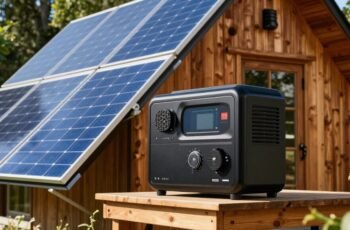
While solar panels are often associated with slow, steady energy collection, recent advancements suggest that fast charging portable power stations with solar energy is increasingly feasible under certain conditions. Achieving rapid solar charging depends on several technical factors:
- Panel Efficiency: High-efficiency monocrystalline panels convert sunlight more effectively, increasing power output.
- Sunlight Intensity: Peak conditions (midday, clear skies) considerably boost charging speeds.
- System Voltage Compatibility: Optimized MPPT (Maximum Power Point Tracking) controllers ensure maximum extraction of energy.
- Panel Array Size: Larger, properly calibrated arrays provide higher wattage, reducing charging time.
Despite these factors, real-world constraints like weather variability and system design limit the practical speed of solar charging compared to AC or DC sources.
Charging via Car DC Outlet: Benefits and Limitations
Charging via a car DC outlet offers the convenience of on-the-go power replenishment, making it practical for remote locations. However, the limited power output constrains charging speed, which may extend replenishment times for larger power stations. Additionally, frequent use risks impacting the vehicle’s battery health, necessitating careful consideration of long-term effects.
Convenient On-the-Go Charging
Charging a portable power station via a car’s DC outlet offers a practical solution for maintaining device power during travel, especially when grid access isn’t available. This method provides key benefits:
- Portability: Enables charging without relying on external power sources, ideal for remote locations.
- Convenience: Utilizes existing vehicle infrastructure, minimizing additional equipment.
- Efficiency: Offers relatively quick charging compared to alternative portable methods.
- Continuous Power: Supports ongoing device operation during long trips, reducing downtime.
However, limitations include potential power constraints from the vehicle’s alternator, variability in charging rates depending on vehicle engine load, and the need for compatible adapters. Despite these factors, car DC charging remains an essential, flexible option for on-the-go energy management, especially when quick, reliable power access is required.
Limited Power Output
Although connecting a portable power station to a car’s DC outlet offers convenience, it inherently limits the power output available for charging. Car outlets typically provide a maximum of 120 to 180 watts, which constrains the charging rate. This lower wattage results in longer recharge times compared to AC wall outlets or dedicated fast-charging solutions. Additionally, the power transfer efficiency can fluctuate due to cable quality, voltage fluctuations, and the vehicle’s electrical system. This bottleneck directly impacts the feasibility of rapid recharging, especially for larger capacity units. While convenient for short-term use and emergency scenarios, relying solely on car DC outlets hampers efforts to optimize charging speed. Hence, understanding these limitations is essential for planning effective and efficient power station recharging strategies.
Vehicle Battery Impact
Using a car’s DC outlet to power a portable station can be advantageous, but it also impacts the vehicle’s battery health and overall electrical system. Prolonged or frequent use may lead to battery depletion, especially if the engine isn’t running. Key considerations include:
- Battery Discharge Risk: Continuous draw can lower the battery’s charge, affecting starting power.
- Electrical System Strain: High current loads may stress alternators and wiring, risking damage.
- Charging Cycle Limitations: Frequent deep discharges shorten battery lifespan.
- System Compatibility: Not all vehicle systems are designed for sustained high-load connections, risking unintended malfunctions.
Understanding these impacts helps optimize charging strategies and prevent long-term vehicle electrical issues.
Maximizing Charging Speed With Portable Power Station Accessories
By selecting the right accessories, we can greatly enhance the charging speed of portable power stations. High-capacity input cables with refined gauge reduce resistance, allowing higher current flow during charging cycles. Quick-charge adapters and compatible solar charge controllers, designed for rapid input, directly influence charging efficiency. For example, using a dedicated fast-charging AC wall adapter with higher wattage ratings can substantially decrease recharge times. Additionally, integrating smart charging modules that regulate voltage and current prevents bottlenecks and ensures ideal power transfer. Properly matched accessories prevent energy losses caused by mismatched specifications, maximizing the input power delivered to the station. Overall, choosing high-quality, compatible accessories with advanced power management features is crucial to achieve faster, more efficient charging, especially under high-demand conditions.
Tips to Optimize Your Power Station’s Charging Efficiency
Optimizing your power station’s charging efficiency requires a strategic approach that extends beyond selecting the right accessories. To maximize efficiency, focus on the following factors:
- Use a high-current charger that matches the power station’s input specifications, reducing charging time.
- Maintain optimal ambient temperatures—avoid extreme heat or cold, which can impair battery chemistry and slow charging.
- Ensure clean, secure connections between the charger and power station to prevent energy loss and intermittent charging issues.
- Balance load distribution by avoiding simultaneous high-power device use during charging, which can reduce overall efficiency.
Implementing these strategies enhances energy transfer, minimizes losses, and accelerates the charging process, ensuring your power station is ready faster with minimal waste.
Frequently Asked Questions
Can Using Multiple Charging Methods Simultaneously Increase Overall Charging Speed?
Using multiple charging methods simultaneously can increase overall speed, but efficiency depends on the power station’s design. We analyze that combining sources may overload circuits or reduce charge rate, so it’s crucial to follow manufacturer guidelines for best, safe charging.
How Does Temperature Affect the Charging Rate of Portable Power Stations?
Temperature considerably impacts charging rates; cold environments slow chemical reactions, reducing efficiency, while excessive heat accelerates degradation. We analyze thermal effects carefully, optimizing charging conditions to maintain battery health and maximize performance, even in extreme climates.
Are There Specific Brands Known for Faster Charging Capabilities?
We find that brands like Goal Zero, Jackery, and EcoFlow are recognized for faster charging capabilities due to advanced battery management systems and high input power designs. These innovations optimize charging speed, making them preferable for rapid power replenishment.
What Safety Precautions Should Be Taken During Rapid Charging?
We guarantee safe rapid charging by using compatible chargers, avoiding overvoltage, monitoring temperature, and adhering to manufacturer guidelines. Regular inspections and avoiding external damage prevent risks, maintaining device integrity and safety during accelerated charging processes.
Does the Age or Condition of the Power Station Impact Charging Speed?
Yes, the age and condition of the power station can affect charging speed; older or degraded units often have reduced efficiency due to diminished battery capacity, increased internal resistance, and potential hardware issues, which slow down charging performance.
Conclusion
In conclusion, maximizing charging speed demands a strategic approach combining high-wattage AC outlets, advanced protocols, and quality accessories—much like a well-orchestrated symphony. While solar panels offer a renewable edge, they require patience akin to waiting for a carriage at dawn. By understanding each method’s nuances and optimizing environmental conditions, we can guarantee our power stations are ready when needed, blending modern efficiency with timeless ingenuity for reliable, rapid energy access.