Understanding how long a 500Wh power station can sustain your devices requires a precise analysis of energy consumption and efficiency factors. While it might seem straightforward, the actual runtime depends on multiple variables, including device wattage and inverter efficiency. As we explore these dynamics, you’ll gain the knowledge to better plan for off-grid scenarios or emergency use, making the question of runtime more than just a simple calculation.
Key Takeaways
- Runtime depends on device wattage; lower watt devices last longer on a 500Wh capacity.
- Adjust for inverter efficiency (85-95%) to estimate real usable energy.
- Higher power devices (e.g., power tools) deplete the station faster, reducing runtime.
- Battery health and environmental conditions can decrease actual operational time.
- Planning requires summing device usage and adding 10% for inefficiencies to determine duration.
What Is a 500Wh Power Station and How Does It Work?
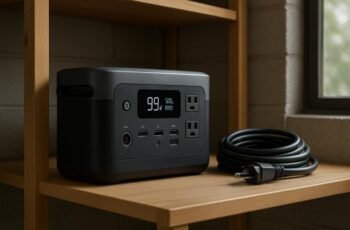
A 500Wh power station is a portable energy storage device designed to supply electrical power to various devices and appliances. It functions by converting stored chemical energy into electrical energy through an internal battery, typically lithium-ion or lithium-polymer. The capacity, measured in watt-hours (Wh), indicates how much energy the unit can deliver before recharging is necessary. Power stations incorporate an inverter to convert DC (direct current) from the battery into AC (alternating current), making it compatible with standard household devices. They also feature multiple output ports—USB, AC outlets, and DC ports—for versatile device connectivity. The device’s efficiency depends on internal circuitry, battery health, and load, which influence how effectively stored energy is transferred and used over time.
How Much Energy Do Common Devices Consume?
Understanding the typical power usage of common devices helps us estimate their daily energy demands accurately. We’ll examine their power consumption rates, daily energy requirements, and how these figures impact the runtime of a 500Wh power station during camping. This analysis enables precise planning for reliable off-grid power management.
Typical Device Power Usage
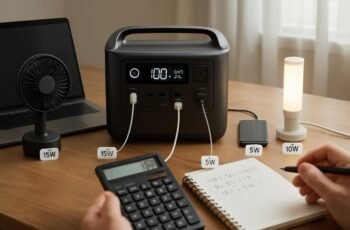
To accurately estimate how long a 500Wh power station will last, we need to analyze the typical energy consumption of common devices. Devices vary markedly in power usage, from low-consuming LED lights at around 5W to high-demand laptops operating at 60-90W. Small appliances like mini-fridges can consume 50-100W continuously, while smartphones generally use about 5-10W during charging. Power tools, such as drills, may draw 300-500W, but only for short bursts. Understanding these consumption rates allows us to calculate potential run times. For example, a device averaging 50W will drain a 500Wh capacity in roughly 10 hours, whereas a 10W device could operate for approximately 50 hours. Precise estimates depend on the actual power draw and usage patterns of each device.
Daily Energy Consumption
Since different devices consume varying amounts of energy during operation, evaluating their typical daily usage helps us estimate how long a 500Wh power station can sustain them. To understand this, we analyze common device consumption patterns. For example:
- A laptop typically uses 50-100W, translating to 0.5-1kWh daily with continuous use.
- LED lights consume approximately 10W each, totaling around 0.1kWh per 10 hours.
- A small refrigerator averages 100W, consuming about 2.4kWh daily.
These figures highlight that higher-power appliances considerably reduce runtime, emphasizing the importance of knowing each device’s energy profile for accurate planning. This approach enables us to predict how long the power station can support essential devices during daily operations.
Energy Needs for Camping
When planning for camping trips, evaluating the energy demands of essential devices guarantees that portable power sources are sufficient to meet needs. Common devices such as smartphones, LED lights, portable refrigerators, and small fans have specific power consumptions measured in watts. For instance, smartphones typically draw around 5W during charging, while LED lanterns consume approximately 3-5W. Small portable refrigerators may require 40-60W, operating intermittently. Understanding these consumption rates allows us to estimate total energy requirements by summing device wattages and accounting for usage duration. This precise assessment *assures* that a 500Wh power station can adequately support essential devices during extended trips, preventing power shortfalls. Accurate energy planning optimizes device operation and enhances overall camping experience.
Estimating How Long Your Power Station Will Last Based on Device Usage
Understanding how long a 500WH power station can sustain your devices requires precise calculations based on each device’s power consumption. To estimate runtime, first determine the device’s wattage (W). Then, divide the power station’s capacity (Wh) by the device’s wattage:
- Calculate Device Power Consumption: Check the device’s watt rating or multiply voltage by current.
- Estimate Runtime: Divide 500Wh by the device’s wattage to get hours of operation.
- Account Efficiency Losses: Adjust calculations for inverter or conversion efficiencies, typically 85–95%, to refine estimates.
This method provides a straightforward, quantitative approach to predict how long your power station can sustain specific devices, enabling better planning and resource management during off-grid or emergency situations.
Factors That Affect the Runtime of a 500Wh Power Station
The actual runtime of a 500Wh power station varies considerably based on multiple operational factors. These include device power consumption, efficiency, battery health, and environmental conditions. Higher wattage devices drain the battery faster, reducing runtime. The inverter’s efficiency impacts how much stored energy converts to usable power, with losses occurring during conversion. Battery degradation over time diminishes capacity, shortening operational periods. Ambient temperature affects chemical reactions within the battery, influencing performance.
| Factor | Impact on Runtime | Consideration |
|---|---|---|
| Device Power Usage | Higher wattage = shorter runtime | Use energy-efficient devices |
| Inverter Efficiency | Lower efficiency = more energy loss | Opt for high-quality inverters |
| Battery Age & Health | Degraded batteries = less capacity | Regular maintenance and checks |
| Temperature | Extreme temps reduce performance | Store and operate within ideal ranges |
| Environmental Conditions | Humidity and altitude effects | Minimize exposure to harsh elements |
Practical Examples: Powering Devices During Camping or Emergencies
During camping trips or emergency situations, a 500Wh power station serves as a critical power source, enabling us to operate essential devices reliably. Its capacity guarantees continuous operation for key electronics, reducing reliance on grid power or generators. To maximize efficiency, understanding device power consumption is essential. For example:
- A 50W LED lantern can run approximately 10 hours.
- A 60W laptop may operate for about 8 hours.
- A 100W small refrigerator could run for roughly 5 hours.
This data highlights how device wattage directly impacts runtime. By analyzing power draw, we can strategically allocate energy, prioritize critical devices, and optimize the station’s usability during extended off-grid activities or emergencies. Proper planning ensures reliable power supply without unexpected depletion.
Tips to Maximize Your Power Station’s Runtime
To maximize your power station’s runtime, implementing strategic power management practices is essential. First, prioritize high-efficiency devices and minimize simultaneous power draws to reduce overall load. Use energy-saving modes on connected equipment whenever possible, and avoid unnecessary device operation. Implementing load management, such as scheduling high-power activities during peak capacity, helps prevent overtaxing the system. Additionally, maintaining ideal battery health through proper charging cycles preserves capacity and prolongs performance. Regularly monitor usage via the power station’s display or app, enabling informed decisions on power allocation. Keeping cables and connectors in good condition also minimizes energy loss. By adopting these practices, we ensure that the power station operates at peak efficiency, extending runtime and maximizing the utility of your 500WH capacity.
When to Upgrade or Choose a Larger Capacity Power Station
Monitoring your power station’s performance can reveal when its capacity no longer meets your energy demands. Indicators include consistent depletion before critical tasks are completed, increased frequency of recharging, and inability to power high-energy devices. When these signs appear, it’s time to consider an upgrade.
Monitor your power station; signs like early depletion and inability to run devices indicate it’s time to upgrade.
Key considerations include:
- Energy consumption trends – if usage steadily increases, a larger capacity is warranted.
- Operational efficiency – frequent recharging reduces reliability and increases downtime.
- Future needs – planning for additional devices or longer outings necessitates higher capacity.
Upgrading ensures uninterrupted power, minimizes recharging cycles, and accommodates future load increases. Analyzing these factors helps determine the ideal timing for a capacity increase, enhancing operational reliability and energy management.
How to Calculate Your Power Needs Before Your Next Outing
Before heading out, accurately calculating your power needs guarantees your energy supply will meet your device demands without interruption. Start by listing all devices you’ll use and noting their wattage ratings. Multiply each device’s wattage by its estimated daily usage hours to find total energy consumption per device. Sum these values to determine your total daily energy requirement. Consider inefficiencies, such as inverter losses, typically around 10%, and add this margin to your total. This precise calculation allows you to assess if your power station, like a 500Wh unit, can sustain your devices throughout the outing. By quantifying your energy needs beforehand, you optimize your power station selection, ensuring reliable operation and avoiding unexpected outages or the need for supplemental power sources.
Frequently Asked Questions
Can a 500WH Power Station Charge Multiple Devices Simultaneously?
Yes, a 500Wh power station can charge multiple devices simultaneously, depending on the total power draw. We analyze the device’s wattage and port capacity to guarantee the station can handle combined demands efficiently.
How Long Does a Fully Charged 500WH Station Take to Recharge?
A fully charged 500Wh station typically takes 4 to 8 hours to recharge, depending on input power, much like filling a reservoir at different rates; higher wattage chargers considerably reduce recharging time, optimizing efficiency.
Is a 500WH Power Station Suitable for Long-Term Power Backup?
We believe a 500Wh power station can serve as a short- to medium-term backup solution, but for long-term needs, it’s insufficient without consistent recharging, as its capacity limits prolonged use during extended outages.
What Safety Precautions Should I Follow When Using a 500WH Station?
Like a trusty steed in the digital age, we always wear insulated gloves and avoid overloading the station. We monitor temperature and voltage levels, ensuring safe operation and preventing damage during use.
How Does Temperature Impact a 500WH Power Station’s Performance?
Temperature critically influences our 500Wh power station’s performance; high temperatures can cause thermal throttling, reducing efficiency, while cold conditions may impair battery chemistry, decreasing capacity and runtime. Ideal ambient temperatures ensure consistent, reliable operation.
Conclusion
Think of our 500Wh power station as the heartbeat of our off-grid adventures—its rhythm dictated by the devices we choose to energize. By understanding its capacity and consumption patterns, we can fine-tune our energy use like a skilled conductor guiding an orchestra. This analytical approach guarantees we’re never caught off guard, allowing us to optimize runtime and make informed decisions about upgrades—turning a simple power source into a reliable partner in every scenario.