Adopting an off-grid lifestyle demands reliable, adaptable power solutions that integrate seamlessly into remote environments. We recognize that advanced portable energy systems—combining renewable sources, storage, and smart management—are vital for sustainability and independence. As technology evolves, so do opportunities for optimizing performance and efficiency. Understanding the nuances of these systems is essential for making informed choices that guarantee resilience and operational continuity beyond traditional grids; the next step involves exploring how these innovations shape our approach.
Key Takeaways
- Portable power solutions enable off-grid independence by providing reliable energy for essential devices and appliances.
- Integrating renewable energy sources like solar enhances sustainability and reduces reliance on fossil fuels.
- Proper selection, setup, and maintenance of portable power systems ensure longevity and optimal performance.
- Advanced battery technologies and power management systems improve efficiency and safety in outdoor environments.
- Ongoing technological innovations support lighter, more durable, and smarter portable power options for off-grid living.
How Portable Power Fits Into an Off-Grid Lifestyle
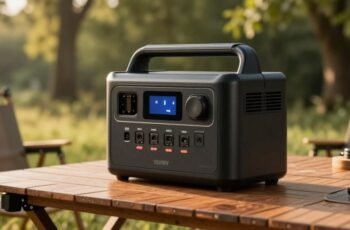
In an off-grid lifestyle, portable power systems serve as the crucial bridge between independence and practicality, enabling us to maintain essential functions without relying on traditional infrastructure. These systems integrate advanced energy storage and conversion technologies, like lithium-ion batteries and high-efficiency inverters, to deliver reliable power in remote environments. They are optimized for modularity, allowing us to tailor capacity and output based on specific needs, from small appliances to essential tools. Their lightweight, durable design ensures portability without sacrificing performance, making them adaptable to diverse terrains and conditions. By utilizing renewable sources such as solar or wind, portable power systems enhance sustainability, reducing dependence on fossil fuels. Ultimately, they empower us to sustain critical operations, promote resilience, and expand the boundaries of off-grid living.
Different Types of Portable Power Sources Explained
We examine how solar power generators and portable battery packs serve as essential, efficient energy solutions for off-grid living. Solar generators harness photovoltaic technology for sustainable, high-capacity power, while battery packs offer immediate, flexible energy storage. Together, they provide a strategic combination of renewable and portable energy sources, optimizing independence and resilience.
Solar Power Generators
Solar power generators come in a variety of designs, each optimized for specific off-grid applications and energy demands. These systems typically integrate photovoltaic panels with an internal inverter and battery storage, enabling efficient conversion and storage of solar energy. High-capacity models are engineered for extended use, supporting appliances and tools with continuous power output, while compact units prioritize portability with lightweight, foldable panels and streamlined circuitry. Advanced designs incorporate MPPT (Maximum Power Point Tracking) technology to maximize energy harvest under varying sunlight conditions. Innovations focus on modular configurations, allowing users to customize capacity based on their needs. By combining durability, efficiency, and scalability, solar power generators serve as resilient off-grid power solutions that adapt to diverse environmental challenges and energy consumption profiles.
Portable Battery Packs
There are several types of portable battery packs designed to meet diverse off-grid power needs, each with distinct technical features and performance characteristics. Lithium-ion packs dominate due to their high energy density, lightweight design, and rapid recharge capabilities, making them ideal for prolonged use and frequent cycling. Lithium-polymer variants offer flexible form factors, allowing for custom shapes and increased safety margins. Nickel-metal hydride packs, though less common, provide cost-effective solutions with moderate energy density and durability. Recent innovations include solid-state batteries, promising higher safety levels and greater longevity. Understanding each type’s voltage, capacity, recharge cycles, and compatibility is vital for selecting the right pack to optimize off-grid sustainability and guarantee reliable power delivery in remote environments.
Choosing the Right Portable Power System for Your Needs
Selecting the appropriate portable power system hinges on carefully evaluating your specific energy demands and operational environment. We analyze load profiles, considering peak and continuous power requirements, to determine whether batteries, inverters, or hybrid solutions suit your needs. Portability factors—weight, size, and durability—are critical, especially in rugged or remote conditions. We also assess charging options, such as solar input, generators, or grid connection, to guarantee reliable, sustainable energy supply. Recognizing the efficiency and conversion losses helps optimize system performance, while scalability considerations allow future expansion. By combining technical specs with practical constraints, we design solutions that balance power capacity, mobility, and longevity, enabling an off-grid lifestyle that’s both resilient and adaptable to diverse environments.
Setting Up and Maintaining Your Portable Power Equipment
Establishing a reliable setup and performing routine maintenance are key to ensuring your portable power system functions at its best over time. Proper initial configuration involves verifying connections, calibrating inverter settings, and ensuring batteries are correctly balanced to optimize efficiency. Regular inspections should target critical components such as cables, connectors, and fuses, checking for corrosion or wear that could compromise performance. Implementing a systematic maintenance schedule—including cleaning terminals, updating firmware, and monitoring voltage levels—prevents potential failures. Utilizing diagnostic tools allows us to identify inefficiencies early and fine-tune system parameters for maximum output. This proactive approach not only extends equipment lifespan but also sustains consistent power delivery, making your off-grid lifestyle more resilient and adaptable to changing demands.
Best Practices for Using Portable Power Outdoors
Effective portable power use outdoors hinges on ideal charging techniques and strict adherence to safety protocols. Ensuring proper charging cycles maintains battery integrity and prolongs equipment lifespan, while safe handling minimizes risk of damage or injury. By implementing these best practices, we maximize efficiency and reliability in off-grid environments.
Proper Charging Techniques
Have you ever wondered how to enhance the lifespan and performance of your portable power sources when operating outdoors? Proper charging techniques are essential for maintaining battery health and efficiency in off-grid environments. We recommend avoiding deep discharges; maintaining charge levels between 20% and 80% minimizes stress on the cells. Using solar chargers with MPPT (Maximum Power Point Tracking) technology guarantees maximum energy transfer, especially under variable sunlight conditions. Temperature management is critical; charging in extreme cold or heat accelerates degradation. Equally important is avoiding overcharging—disconnect once fully charged—to prevent voltage stress and potential damage. Regularly monitoring charge cycles and voltage levels enables us to fine-tune the process, extending battery life and maximizing performance in demanding outdoor settings.
Safe Equipment Handling
Ever wondered how to guarantee safety and peak performance when handling portable power equipment outdoors? Ensuring proper handling involves understanding the equipment’s design and limitations. Always inspect units before use, checking for damage or loose connections that could cause short circuits or failures. Use insulated tools and wear appropriate personal protective equipment to prevent electrical shocks. Maintain a stable stance and secure connections to avoid accidental disconnections or sparks. Follow manufacturer guidelines strictly, especially regarding load capacities and environmental conditions—avoiding wet or dusty environments that compromise safety. Properly managing cables prevents tripping hazards and damage. Implementing these best practices minimizes risks, optimizes power delivery, and prolongs equipment lifespan—crucial for reliable off-grid operation. Precision and awareness are key to safe, effective portable power handling outdoors.
Comparing Costs and Performance of Portable Power Solutions
When evaluating portable power solutions for off-grid living, understanding the balance between cost and performance is essential. Lithium-ion batteries offer high energy density and rapid recharge cycles, making them cost-effective over time despite higher upfront costs. Conversely, traditional lead-acid batteries are cheaper initially but require more maintenance and have shorter lifespans, impacting long-term value. Solar generators provide modular scalability and quiet operation, with performance directly tied to solar input and battery capacity. Fuel-based generators deliver high power output and rapid fueling but pose environmental concerns and operational costs. Comparing these options involves appraising initial investment, efficiency, durability, and suitability for specific energy demands. Analyzing the technical trade-offs enables us to select the most resilient, cost-efficient solution tailored to off-grid needs.
Troubleshooting Common Portable Power Issues
Despite careful selection and maintenance, portable power systems can still encounter performance issues that hinder their reliability. Diagnosing these problems requires a systematic approach. Common issues include voltage drops, which can stem from overloaded circuits or degraded batteries. Faulty connections or corroded terminals often cause intermittent power loss. Inverter failures may result from thermal overload or component wear, affecting AC output. Battery health deterioration impacts capacity and runtime, especially after extended use. To troubleshoot effectively, consider these steps:
- Check all connections and terminals for corrosion or looseness
- Test voltage output across different load levels
- Inspect and replace worn or damaged fuses and circuit breakers
- Monitor battery voltage and consider capacity testing if issues persist
Applying precise diagnostics enables targeted repairs, optimizing system longevity and performance.
Future Trends in Portable Power Technology
Advancements in portable power technology are accelerating rapidly, driven by innovations in energy storage, power management, and materials science. We anticipate the emergence of ultra-efficient lithium-silicon batteries offering higher energy density and longer lifespan, enabling more compact and durable solutions. Solid-state batteries are poised to replace liquid electrolytes, enhancing safety and charging speed. Integration of advanced power management systems will optimize energy flow, extending device operation and reducing waste. Novel materials such as graphene will enhance conductivity and thermal regulation, allowing for lighter, more robust devices. Additionally, hybrid systems combining solar, kinetic, and thermoelectric energy harvesting will become more prevalent, providing reliable off-grid power in diverse environments. These trends promise a future where portable power is more sustainable, smarter, and seamlessly integrated into our off-grid lifestyles.
Frequently Asked Questions
How Long Can Portable Power Sources Run Off-Grid?
Typically, portable power sources run off-grid for 8 to 24 hours, depending on capacity, load, and efficiency. We analyze energy consumption, optimize storage, and incorporate renewable inputs to extend runtime, ensuring reliable off-grid power solutions.
Are Portable Power Systems Environmentally Friendly?
We believe portable power systems are generally eco-friendly, especially when using renewable sources like solar or wind. They reduce reliance on fossil fuels, minimize emissions, and promote sustainable off-grid living, making them a smart, environmentally conscious choice.
Can Portable Power Devices Power High-Demand Appliances?
Yes, portable power devices can power high-demand appliances, but it depends on their wattage capacity, energy storage, and inverter efficiency. We analyze these factors carefully to guarantee reliable performance without overloading or system failure.
What Safety Precautions Are Necessary for Portable Power Use?
We prioritize safety by ensuring proper grounding, avoiding overloading circuits, and using quality surge protectors; studies show 60% of portable power accidents occur from neglecting these precautions, emphasizing the importance of meticulous safety practices in off-grid energy systems.
How Do Weather Conditions Affect Portable Power Performance?
Weather conditions greatly impact portable power performance; extreme temperatures can reduce efficiency, moisture causes corrosion, and wind or storms may damage equipment. We constantly analyze environmental data to optimize system resilience and guarantee reliable energy supply in diverse conditions.
Conclusion
As we embrace off-grid living, understanding portable power’s role is vital, especially as the market is projected to grow at a CAGR of 8.4% through 2027, reflecting its increasing importance. By selecting the right system and maintaining it properly, we guarantee energy resilience and sustainability. Advancements like integrated solar and wind solutions promise even greater efficiency, empowering us to live confidently outside traditional grids. Staying informed and innovative keeps us ahead in this evolving energy landscape.