Did you know that AI-driven energy management can improve battery efficiency in portable power stations by up to 30%? By analyzing real-time consumption data, these systems dynamically adjust power allocation to reduce waste and extend battery lifespan. This shift marks a significant leap from traditional models, but what specific AI features enable such precise optimization? Understanding these mechanisms reveals how portable power solutions are evolving beyond simple energy storage.
Key Takeaways
- AI dynamically optimizes power usage and charging cycles, enhancing energy efficiency and reducing battery stress in portable power stations.
- Continuous monitoring and predictive load management improve battery lifespan by preventing deep discharges and overcharges.
- AI-driven thermal management maintains optimal temperature, boosting performance and energy efficiency.
- Learning algorithms analyze consumption patterns to forecast energy demand and proactively allocate resources.
- AI-powered stations offer smarter interfaces and adaptive energy management, surpassing traditional static systems in reliability and user experience.
How AI Improves Energy Efficiency in Portable Power Stations
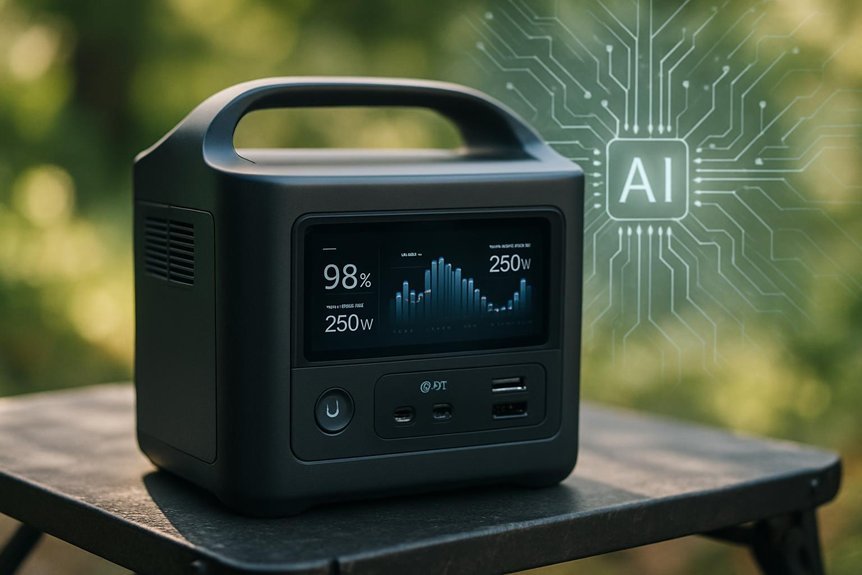
Although portable power stations have traditionally relied on fixed energy management protocols, integrating AI allows us to dynamically enhance power usage based on real-time data. By continuously monitoring energy consumption patterns, AI algorithms adjust power distribution to minimize waste and extend operational time. This adaptive approach improves battery efficiency, as AI predicts load demands and manages charging cycles more efficiently than static systems. Consequently, we reduce unnecessary energy drain, improving overall system efficiency. The AI’s ability to analyze environmental and usage variables enables precise control over power output, ensuring the battery operates within ideal parameters. This technological advancement leads to prolonged battery lifespan and consistent performance, making portable power stations smarter and more efficient in meeting variable energy needs.
Key AI Features That Optimize Battery Life
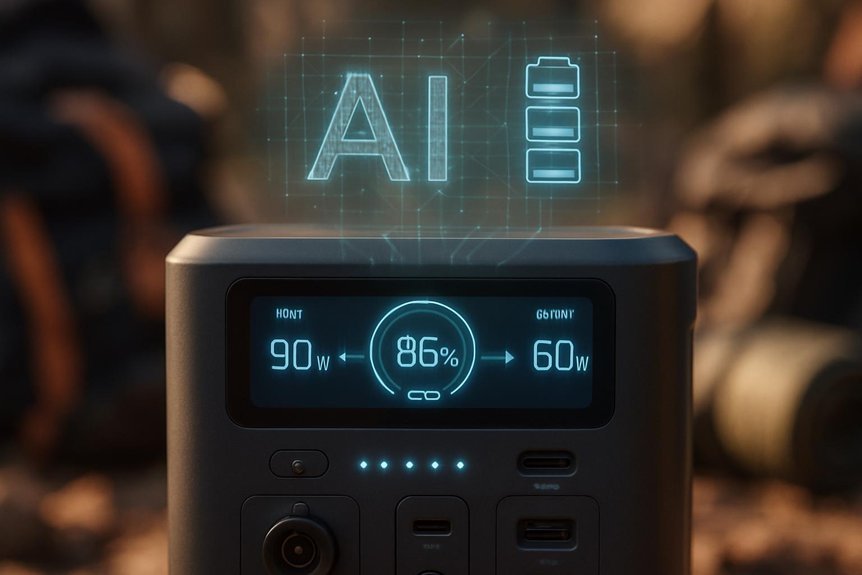
Because battery longevity hinges on efficient charge and discharge cycles, AI incorporates several key features that actively enhance these processes. First, adaptive charge management algorithms dynamically adjust charging current and voltage to minimize stress on battery cells, improving battery performance. Second, intelligent load balancing guarantees power distribution aligns with device priorities, preventing unnecessary drain and enabling power conservation. Additionally, state-of-charge (SoC) and state-of-health (SoH) monitoring provide real-time data, allowing AI to predict and avoid deep discharges or overcharges that degrade battery life. Thermal management, driven by AI, regulates temperature to maintain ideal operating conditions, further reducing wear. Together, these AI features form a thorough system that not only extends battery lifespan but also improves overall energy efficiency in portable power stations.
How AI Learns and Adapts to Your Power Usage
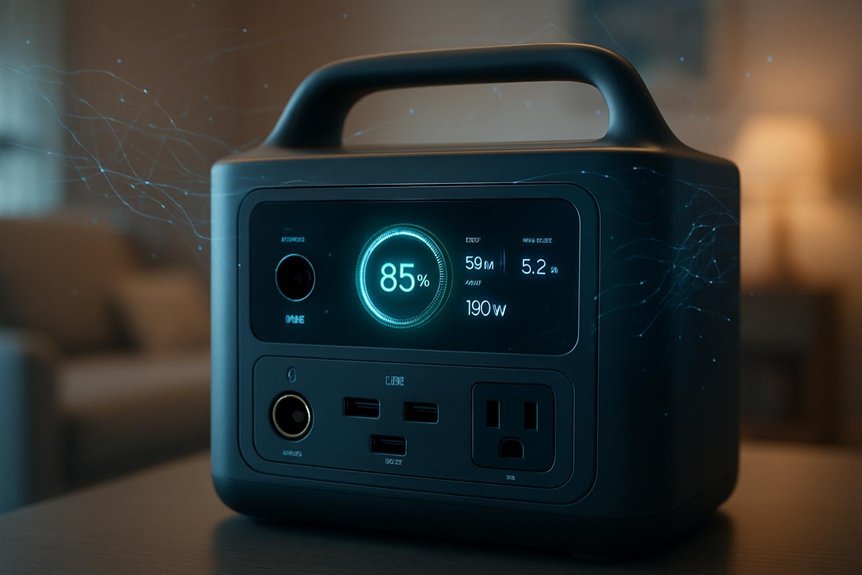
We analyze your usage patterns to identify consistent energy demands and peak times. Using this data, we predict and allocate energy resources efficiently to match your needs. Additionally, the system adjusts consumption in real time to optimize performance and extend battery life.
Usage Pattern Recognition
When we use AI-powered portable power stations, the system continuously monitors our energy consumption to identify recurring patterns and peak usage periods. By analyzing energy patterns and user behavior, it generates detailed usage analytics that highlight consumption trends and power habits. This enables the AI to refine efficiency metrics and utilization patterns tailored to our unique device interaction.
Key components include:
- Continuous data collection on device interaction and energy draw.
- Analysis of consumption trends to detect peak and off-peak periods.
- Identification of repetitive power habits for optimized response.
- Integration of efficiency metrics to improve overall energy management.
Through these processes, the AI adapts dynamically, ensuring smarter, more efficient power distribution aligned with our real-world energy needs.
Predictive Energy Allocation
Although usage pattern recognition lays the groundwork, predictive energy allocation takes AI-powered power stations a step further by proactively anticipating our future energy demands. By leveraging advanced algorithms, the AI performs energy forecasting based on historical consumption data, environmental factors, and device-specific requirements. This allows the system to allocate power resources efficiently before we even realize the need. Through continuous learning, the AI refines its predictions, enhancing usage optimization by minimizing energy waste and ensuring availability during peak demand periods. This proactive approach improves battery longevity and overall system reliability. Essentially, predictive energy allocation transforms passive monitoring into intelligent management, enabling portable power stations to adapt dynamically to our evolving power profiles with precision and foresight.
Real-Time Consumption Adjustment
As usage patterns shift throughout the day, AI-driven portable power stations continuously monitor and adjust energy distribution in real time to match our immediate power needs. This real-time consumption adjustment relies on dynamic adjustments informed by continuous data analysis and user feedback. Here’s how the system operates:
- Sensors track power draw from connected devices, identifying fluctuations instantly.
- AI algorithms analyze consumption trends to optimize energy allocation dynamically.
- User feedback refines AI models, enhancing responsiveness to unique usage behaviors.
- The system prioritizes critical loads while minimizing wastage, ensuring efficient energy use.
Comparing AI-Powered vs. Traditional Portable Power Stations
Let’s compare AI-powered and traditional portable power stations by examining their efficiency and energy consumption patterns. We’ll analyze the smart features that distinguish AI systems from conventional models and evaluate cost and maintenance implications. This approach will help us understand the practical advantages and trade-offs of integrating AI into portable power management.
Efficiency and Energy Use
When we examine energy efficiency in portable power stations, AI-powered models consistently outperform traditional units by optimizing power distribution based on real-time data. This leads to superior battery optimization and enhanced energy conservation. Specifically, AI systems:
- Dynamically adjust output to match load demands, reducing energy waste.
- Manage charging cycles intelligently to extend battery lifespan.
- Predict usage patterns to allocate energy resources efficiently.
- Minimize standby power consumption through adaptive control algorithms.
In contrast, traditional power stations rely on static settings that often lead to suboptimal energy use and faster battery degradation. By leveraging AI, we achieve precise energy management that not only conserves power but also maximizes operational runtime and reliability, making AI-powered stations the preferred choice for efficiency-focused users.
Smart Features Comparison
Although both AI-powered and traditional portable power stations serve the core function of energy supply, their smart features differ considerably in complexity and adaptability. AI-powered stations integrate advanced smart technology, enabling real-time energy optimization through predictive algorithms. This results in automated load balancing and enhanced battery longevity. Their user interface is often touchscreen-based, providing intuitive control and detailed analytics, which allows users to monitor performance metrics precisely. Traditional stations, by contrast, rely on basic control panels with limited smart functions, offering manual settings and less dynamic response to energy demand. While traditional interfaces provide straightforward operation, they lack the adaptive intelligence seen in AI-powered models. By leveraging smart technology, AI-powered stations fundamentally improve user experience and energy management efficiency, setting a new standard in portable power solutions.
Cost and Maintenance Differences
Since AI-powered portable power stations incorporate advanced technology and components, their upfront costs tend to be higher than traditional models. A thorough cost analysis reveals that this initial investment can be offset by optimized maintenance strategies and enhanced efficiency. Here’s how the differences break down:
- Initial Cost: AI units demand higher capital due to embedded sensors and processors.
- Maintenance Frequency: Traditional models require more frequent manual checks; AI systems use predictive diagnostics.
- Repair Costs: AI stations can reduce unexpected failures, lowering long-term repair expenses.
- Operational Efficiency: AI-driven energy management extends component lifespan, decreasing total cost of ownership.
Real-World Benefits of AI Energy Management for Users
As we integrate AI energy management into portable power stations, we gain significant improvements in efficiency and user experience. The user benefits are evident through advanced smart features that optimize energy consumption, delivering substantial energy savings. AI allows for customization options that adapt power output and charging patterns to individual needs, enhancing user convenience. This technology integration supports enhanced mobility by reducing weight and increasing runtime reliability, critical for on-the-go applications. Additionally, AI-driven management promotes eco friendly solutions by minimizing waste and maximizing renewable input utilization. Together, these factors create a seamless interface between the user and the device, ensuring power stations operate at peak performance while addressing diverse user demands with precision and adaptability. This combination of technology and design fundamentally elevates everyday portable power usage.
What the Future Holds for AI in Portable Power Solutions
When we explore the future of AI in portable power solutions, we see a clear trajectory toward increasingly intelligent, autonomous systems that optimize energy use with minimal human intervention. Future advancements will focus on enhancing predictive analytics, adaptive load management, and seamless integration with renewable sources. However, integration challenges remain, particularly in ensuring interoperability across diverse hardware and communication protocols.
We anticipate four key developments:
- Advanced machine learning algorithms for real-time energy optimization
- Enhanced battery health diagnostics to extend lifespan
- Robust cybersecurity measures to safeguard AI-driven systems
- Cross-platform compatibility frameworks to overcome integration challenges
Frequently Asked Questions
How Does AI Affect the Weight of Portable Power Stations?
We see AI enables weight optimization by precisely managing energy use, reducing battery size without sacrificing energy efficiency. This leads to lighter portable power stations, improving portability while maintaining reliable power output for varied applications.
Are Ai-Powered Stations Compatible With All Types of Devices?
Of course, AI-powered stations magically work with every device out there—except they don’t. We guarantee broad device compatibility and optimize power efficiency, but some specialized gadgets might still challenge the system’s adaptive management capabilities.
What Is the Average Cost Difference Between AI and Non-Ai Models?
We’ve found the average cost difference between AI and non-AI models ranges around 15-25%. Despite higher upfront costs, AI-powered stations offer superior cost efficiency through optimized energy use, making the technology comparison favor long-term savings.
Can AI Systems Be Manually Overridden in Emergencies?
We trust, we monitor, we intervene. Yes, AI systems allow manual control during emergencies, following strict emergency protocols. This guarantees safety, maintains stability, and grants us the ability to override automation when conditions demand immediate human response.
How Secure Is the Data Collected by AI in These Stations?
We guarantee data privacy by implementing robust encryption standards like AES-256 and TLS protocols. Our systems continuously monitor for vulnerabilities, so you can trust the data collected remains secure against unauthorized access or breaches.
Conclusion
As we’ve seen, AI energy management can boost portable power station efficiency by up to 30%, considerably reducing energy waste. By dynamically adapting to our usage patterns and optimizing battery performance, AI not only extends device lifespan but also enhances reliability. Embracing these advancements means smarter, greener power solutions that meet our evolving needs. Together, we’re stepping into a future where intelligent energy management transforms portability and sustainability in profound ways.