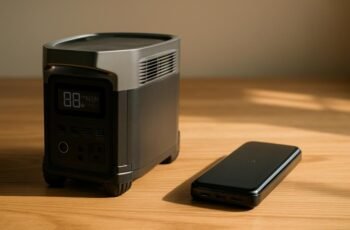
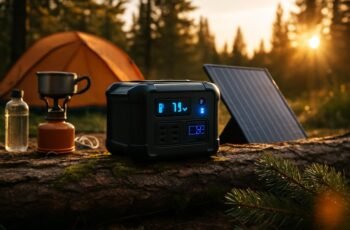
Choosing the right portable power station is like finding the backbone of your home’s emergency plan—reliable, strong, and ready when you need it most. We’ll analyze critical specs such as capacity, recharge speed, and versatility to help you make an informed decision. Whether it’s the heavy-hitting 1500Wh model or a budget-friendly compact option, understanding these differences can save you from unexpected downtime. Let’s explore what truly sets these units apart.
Key Takeaways
- Choose a power station with sufficient capacity (1000Wh+) to cover essential home devices during outages.
- Prioritize pure sine wave inverters for sensitive electronics and appliances with high surge power needs.
- Opt for models with multiple output options (AC, USB-C, 12V DC) to support diverse device charging.
- Consider fast recharge capabilities and solar compatibility to minimize downtime in extended power outages.
- Evaluate durability features like IP65 rating and robust casing for reliable emergency home backup use.
How to Choose the Right Portable Power Station for Home Backup
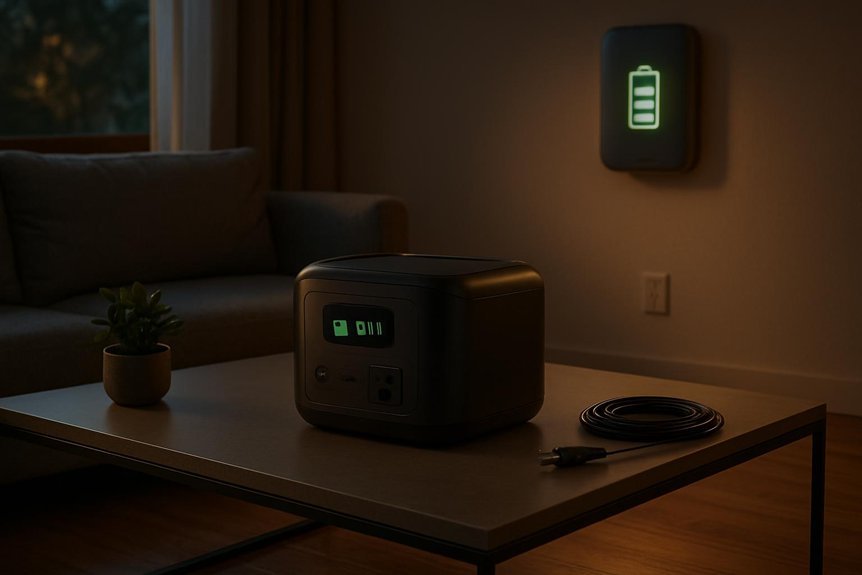
When selecting the right portable power station for home backup, we need to start by evaluating our specific energy requirements. Calculating total power needs involves summing the wattage of all essential devices we intend to run simultaneously. This helps us determine the minimum continuous output capacity required. Next, inverter types are critical; pure sine wave inverters provide clean, stable power suitable for sensitive electronics, while modified sine wave inverters are less efficient but often more affordable. We should prioritize pure sine wave units for home backup to avoid device damage. Additionally, understanding surge capacity is important for appliances with high startup power demands. By focusing on accurate power needs assessment and inverter type selection, we can guarantee reliable, efficient operation during outages without overspending or underpowering our home system.
Comparing Battery Capacity and Runtime for Home Use
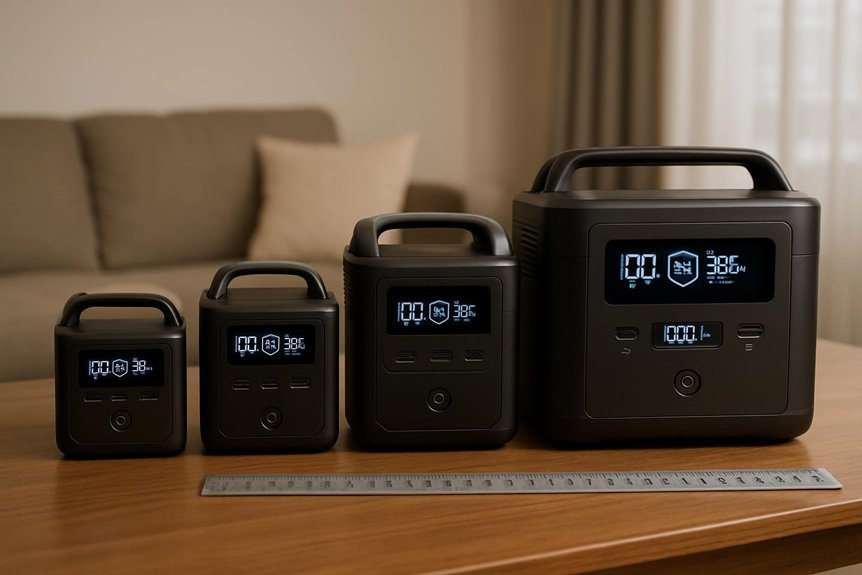
How long can a portable power station realistically keep our essential devices running during an outage? The answer hinges on battery capacity and runtime efficiency, both closely linked to battery types. Lithium-ion batteries, for example, offer higher energy density and longer cycle life compared to lead-acid alternatives, impacting overall runtime.
When comparing options for home use, consider:
- Battery capacity measured in watt-hours (Wh) defines total stored energy.
- Runtime efficiency depends on inverter quality and power draw consistency.
- Different battery types affect weight, recharge speed, and degradation rates.
- Real-world runtime varies based on device power requirements and usage patterns.
Key Features That Make a Portable Power Station Ideal for Emergencies
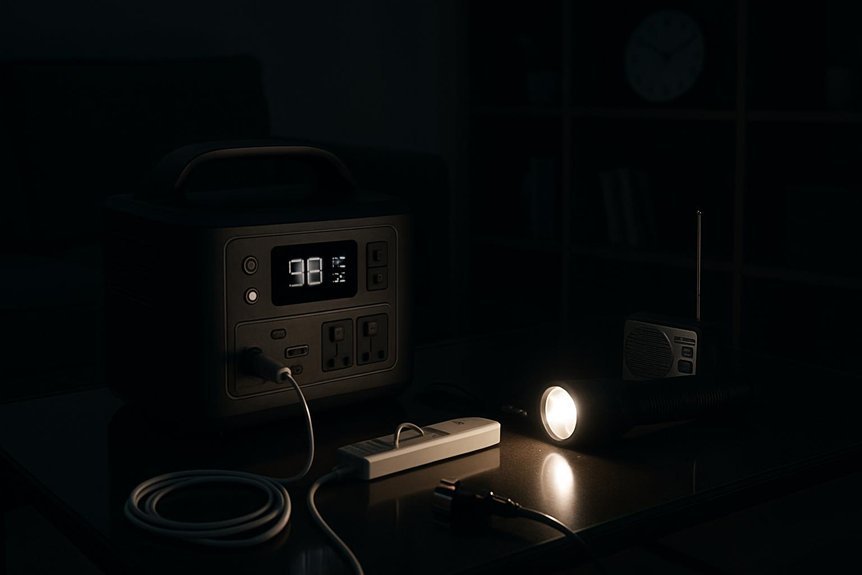
Understanding battery capacity and runtime is just one piece of the puzzle when selecting a portable power station for emergencies. For effective emergency preparedness, we must prioritize power reliability, multiple output options, fast recharge capabilities, and durability. These features guarantee continuous power during outages and versatile device compatibility.
| Feature | Importance | Example Specification |
|---|---|---|
| Power Reliability | Guarantees consistent output | Pure sine wave inverter |
| Output Options | Supports varied devices | AC, USB-C, 12V DC ports |
| Recharge Speed | Minimizes downtime | Solar and AC fast charging |
| Durability | Withstands harsh conditions | IP65-rated, robust casing |
Focusing on these features helps us select power stations that truly support emergency preparedness and power reliability.
Top Portable Power Stations for Home Backup: Pros and Cons
Since selecting the right portable power station hinges on balancing capacity, output versatility, recharge speed, and durability, we’ll analyze top models to help you make an informed choice. Each device varies in solar compatibility, which affects off-grid charging efficiency. Weight considerations also play a significant role, especially if portability is a priority.
Choosing the right portable power station means balancing capacity, versatility, recharge speed, durability, and portability.
Here’s a concise comparison:
- Model A offers high capacity (1500Wh) with excellent solar compatibility but is heavier (35 lbs).
- Model B weighs only 18 lbs, ideal for mobility, but has a lower output (600Wh) and limited solar input.
- Model C balances a 1000Wh capacity with fast recharge and multiple AC/USB ports but is pricier.
- Model D is budget-friendly, compact, but lacks advanced solar compatibility and lower surge power.
Evaluating these factors guarantees you find the best fit for home backup needs.
How to Maintain and Safely Use Your Portable Power Station at Home
Choosing the right portable power station sets the foundation, but maintaining and using it safely guarantees reliable performance over time. We must follow key safety precautions, such as avoiding exposure to extreme temperatures and moisture, which can degrade battery life. Regularly inspecting connectors and cables for damage helps prevent electrical faults. Maintenance tips include charging the unit every three months to prevent battery degradation and storing it in a cool, dry place. We should also avoid overloading the power station beyond its rated capacity to prevent overheating. Using the manufacturer’s recommended charger guarantees ideal battery health. By adhering to these safety precautions and maintenance tips, we maximize efficiency, extend battery lifespan, and ensure our portable power station remains a dependable home backup during outages.
Frequently Asked Questions
Can Portable Power Stations Be Used for Outdoor Camping Trips?
Yes, we can use portable power stations for camping trips since they provide reliable power capacity, making them essential camping essentials. Their technical specs guarantee efficient energy delivery for devices, enhancing our outdoor experience with consistent power supply.
How Do Portable Power Stations Perform in Extreme Weather Conditions?
Like engines battling icy winds or desert heat, portable power stations face extreme temperature effects that can reduce battery efficiency and lifespan. Yet, with proper insulation and cooling, we guarantee performance reliability remains solid under harsh conditions.
Are Portable Power Stations Safe to Use Around Pets and Children?
Yes, portable power stations are generally safe with proper child supervision and pet safety measures. We recommend securing cables and outlets, ensuring ventilation, and monitoring usage to prevent accidental contact or overheating, minimizing risks effectively.
Can I Charge a Portable Power Station Using Solar Panels?
Yes, we can charge a portable power station using solar panels, provided we guarantee solar panel compatibility and optimize charging efficiency by matching voltage and wattage specifications for maximum energy transfer and minimal power loss during the charging process.
What Is the Typical Lifespan of a Portable Power Station Battery?
Think of the battery as the heart of your power station; its typical lifespan ranges between 500 to 1,000 charging cycles. With proper battery maintenance, we can extend its effective life and guarantee reliable performance over time.
Conclusion
When choosing a portable power station for home backup, it’s wise to balance capacity, versatility, and recharge speed. While Model A offers robust power and solar options, its weight might feel substantial. Model C provides a harmonious mix of speed and connectivity, fitting most needs gracefully. For tighter budgets, Model D serves as a modest companion. Ultimately, selecting a station with reliable, sufficient power guarantees peace of mind during outages, turning challenges into manageable moments.