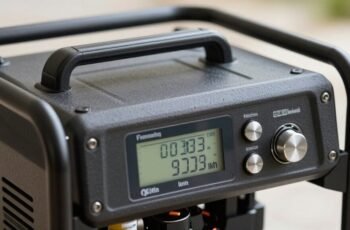
Understanding watt-hours in power stations is essential for evaluating energy production and efficiency. These measurements quantify the total energy generated over time, directly impacting operational decisions and sustainability goals. But how exactly do watt-hours relate to a station’s capacity and performance? Exploring this connection reveals critical insights into energy management, making it crucial to grasp the underlying principles behind this metric.
Key Takeaways
- Watt-hours measure the total energy produced or consumed over time in power stations.
- They combine power output (watts) with operational duration (hours).
- Watt-hours help assess a power station’s capacity and efficiency.
- They are used to quantify energy storage in batteries and grid systems.
- Watt-hours enable comparison of energy output across different power sources and periods.
What Are Watt-Hours and Why Do They Matter in Power Stations
What exactly are watt-hours, and why are they essential in the context of power stations? Watt-hours measure energy consumption or storage capacity, representing the amount of work done over time. In power stations, watt-hours quantify how much energy a system can generate or store, providing a standardized metric for comparison. This unit helps operators determine the efficiency and capacity of power systems, ensuring reliable supply and *ideal* performance. By understanding watt-hours, we can evaluate how long a power station can sustain output before needing to recharge or refuel. It also informs decisions related to infrastructure investments, system design, and energy management. Ultimately, watt-hours serve as a fundamental unit for analyzing the operational capacity and effectiveness of power generation and storage solutions.
How Watt-Hours Relate to Power Output and Storage Capacity
Understanding watt-hours helps us quantify the total energy a power station can produce or store over time. This measurement directly impacts how we assess storage capacity and system efficiency. By analyzing watt-hours, we can optimize power output and guarantee reliable energy availability.
Energy Measurement Basics
How do watt-hours serve as a fundamental unit in measuring energy, and why are they essential for understanding power output and storage capacity? Watt-hours quantify the total energy transferred or stored over time, combining power (watts) with duration (hours). This measurement allows us to precisely assess how much energy a system can generate or hold, which is crucial for evaluating power station performance. When analyzing power output, watt-hours indicate the cumulative energy delivered over a period, providing insight into efficiency and capacity. For storage, watt-hours define the maximum energy a battery or reservoir can hold, guiding design and operational decisions. Overall, watt-hours are indispensable for comparing different energy sources and ensuring systems meet demand reliably and efficiently.
Storage Capacity Implications
Watt-hours directly determine the storage capacity of energy systems, serving as a critical metric for evaluating how much energy a battery, reservoir, or other storage medium can hold. This measurement reflects the total energy available for use, directly impacting system design and operational flexibility. Higher watt-hour capacities enable longer discharge durations, supporting sustained power output without frequent recharging. Conversely, systems with lower watt-hour ratings require more frequent replenishment, limiting practical application. When assessing storage solutions, we analyze watt-hours in conjunction with power ratings to optimize efficiency and responsiveness. Understanding this relationship helps us balance energy capacity with the system’s intended use, ensuring reliable power delivery while minimizing resource utilization and maximizing storage longevity.
Calculating Watt-Hours: A Step-by-Step Explanation
To accurately calculate watt-hours, we first need to understand that it represents the amount of energy transferred or consumed over time, combining power and duration into a single metric. The calculation involves multiplying the power output (in watts) by the operational time (in hours). For example, if a generator supplies 1,000 watts over 3 hours, the energy produced is 1,000 watts × 3 hours = 3,000 watt-hours. Precision in measurement is vital; verify the power value reflects actual operational capacity, and time is recorded accurately. This straightforward multiplication forms the basis for energy assessment in power stations, enabling us to quantify energy production or consumption reliably. Proper calculation supports efficiency analysis, capacity planning, and operational optimization.
Comparing Watt-Hours to Other Energy Measurements Like Kilowatt-Hours
While watt-hours and kilowatt-hours both measure electrical energy, they differ primarily in scale, with kilowatt-hours representing a larger quantity. A watt-hour (Wh) quantifies energy consumption or production over one hour at a power level of one watt, whereas a kilowatt-hour (kWh) equals 1,000 Wh, facilitating easier representation of larger energy amounts. The key distinction lies in their application: watt-hours are useful for small-scale or detailed measurements, such as battery capacities, while kilowatt-hours are standard in utility billing and large-scale energy accounting. Understanding this relationship enables precise comparison and conversion between different measurement scales. This clarity is essential for analyzing energy efficiency, capacity, and consumption patterns across various power station operations and consumer contexts.
Why Watt-Hours Are Important for Evaluating Power Station Efficiency
Understanding the measurement of energy in watt-hours provides a precise means to evaluate how efficiently a power station converts fuel or other energy sources into electrical power. Watt-hours quantify the total energy output, allowing us to compare performance across different facilities. By analyzing watt-hour data, we identify energy losses and inefficiencies, which are critical for optimization.
| Aspect | Measurement Focus | Significance |
|---|---|---|
| Energy Output | Total watt-hours produced | Indicates overall production capacity |
| Conversion Efficiency | Energy input vs. output | Measures how well fuel converts to electricity |
| Losses | Unused or dissipated energy | Highlights areas for process improvement |
This analysis helps optimize operations, reduce costs, and promote sustainable energy practices.
Real-World Examples of Watt-Hour Usage in Renewable and Traditional Power Plants
Examining real-world watt-hour data reveals how renewable sources like solar panels optimize storage capacity, enabling better energy management. Conversely, traditional coal plants demonstrate high energy output levels, reflecting their substantial contribution to grid demand. Analyzing these examples clarifies the practical implications of watt-hour metrics across different power generation methods.
Solar Panel Storage Capacity
How do solar panel systems quantify their storage capacity in watt-hours, and what does this mean for their real-world performance? Storage capacity reflects the total energy a system can hold, directly impacting its ability to supply power during low sunlight periods. Higher watt-hour ratings enable more reliable energy availability, smoothing fluctuations and reducing grid dependency.
Key implications include:
- Ensuring continuous power supply during cloudy days or at night
- Supporting critical infrastructure with stable energy reserves
- Enhancing grid stability with stored renewable energy
- Reducing reliance on fossil fuel backups
- Increasing overall efficiency and resilience of solar installations
Accurate measurement of watt-hours helps optimize system design, ensuring that energy storage aligns with consumption needs and environmental conditions, ultimately maximizing the benefits of renewable energy integration.
Coal Plant Energy Output
Coal power plants typically measure their energy output in measurements of megawatt-hours (MWh), a unit that reflects the total energy produced over a specific period. This measurement provides a clear understanding of a plant’s capacity to generate electricity, often ranging from hundreds to thousands of MWh daily. For example, a large-scale coal plant producing 1,000 MWh daily operates at a significant capacity factor, highlighting its reliance on consistent fuel supply and operational efficiency. Analyzing real-world data, coal plants tend to have high energy outputs but also exhibit lower flexibility compared to renewable sources. Precise watt-hour measurements help quantify their contribution to the grid, assess efficiency, and evaluate environmental impacts, emphasizing the importance of detailed, data-driven energy management strategies.
How Understanding Watt-Hours Can Help You Make Better Energy Choices
Understanding watt-hours enables us to make more informed energy decisions by precisely measuring the amount of energy consumed or supplied over time. This knowledge allows us to evaluate energy efficiency, compare power sources, and optimize consumption patterns. By grasping watt-hour metrics, we can:
Understanding watt-hours helps us measure and optimize energy use for smarter, more sustainable choices.
- Reduce energy waste and lower costs
- Support sustainable consumption habits
- Make smarter choices about appliances and devices
- Advocate for cleaner, renewable energy solutions
- Track progress toward environmental goals
Having a clear understanding of watt-hours empowers us to analyze our energy use critically, identify inefficiencies, and advocate for better policies. This technical insight transforms abstract power metrics into actionable strategies, helping us make choices that benefit both our wallets and the planet.
Frequently Asked Questions
How Do Watt-Hours Influence the Design of Power Station Systems?
Watt-hours determine the capacity and energy storage needs in power station system design, guiding us to optimize component sizes, guarantee reliable supply, and balance efficiency with safety, ultimately enhancing system performance and sustainability.
Can Watt-Hours Be Used to Compare Different Types of Energy Sources?
Watt-hours serve as a common yardstick, allowing us to compare energy capacities across sources like solar, wind, and fossil fuels. They act as a bridge, translating diverse energy forms into a unified, measurable language for analysis.
What Role Do Watt-Hours Play in Renewable Energy Grid Integration?
Watt-hours quantify stored or generated energy, enabling us to assess renewable sources’ capacity and reliability within grids. They help us optimize energy management, balance supply-demand, and improve integration strategies for sustainable, efficient power system operations.
Are Watt-Hours Applicable in Estimating Household Energy Consumption?
Yes, watt-hours effectively estimate household energy consumption by quantifying the total energy used over time, allowing us to analyze usage patterns, optimize efficiency, and plan for energy needs accurately within a technical and analytical framework.
How Do Weather Conditions Affect Watt-Hour Measurements in Solar Plants?
Weather conditions can dramatically impact watt-hour measurements in solar plants, as cloud cover, temperature fluctuations, and atmospheric moisture directly influence solar irradiance, often causing variations comparable to a rollercoaster ride in energy production.
Conclusion
By understanding watt-hours, we gain a clearer picture of a power station’s true energy capacity and efficiency. This measurement acts as a lens, revealing how effectively stations convert fuel or resources into usable electricity. When we analyze watt-hours alongside other metrics, we can optimize operations, reduce environmental impact, and make informed energy choices. It’s like decoding the station’s energy DNA—empowering us to build a more reliable and sustainable energy future.