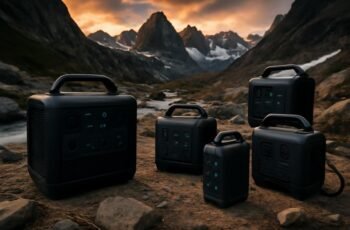
We’ve seen a night with a COPD patient’s CPAP run dry mid‑hour, and it underscored why choosing the right power station matters. We’ll compare lithium iron phosphate options for longer life, solid safety features, and usable capacity so you’re never caught unprepared. There are tradeoffs in weight, ports, and charging methods, and we’ll outline what to look for and why certain models fit a full-night need. Let’s explore what matters most to keep sleep uninterrupted.
Key Takeaways
- Prioritize LiFePO4 units for longer cycle life and safer overnight CPAP operation.
- Aim for 293–1070Wh capacity to cover 1–3 nights with humidifier off; 1–2 nights with humidifier on.
- Ensure continuous wattage meets CPAP draw plus humidifier/heater headroom (avoid relying on surge rating).
- Look for multiple ports (AC, USB-C, USB-A, car) for simultaneous device charging and pass-through use.
- Favor models with MPPT solar charging, zero- or low-noise operation, and built-in BMS protections.
DARAN 600W Portable Power Station with Solar (Solar Optional)
The DARAN 600W Portable Power Station (Solar Optional) is our top pick for CPAP users who need reliable overnight power without breaking the bank. We appreciate its 600W pure sine wave output (1200W surge) and a 288Wh LiFePO4 battery, powering laptops, CPAPs, and more. With 2 AC outlets, a car socket, Type-C, and USB-A ports, it handles up to 6 devices simultaneously. Solar charging is fast with a 100W panel, plus wall or car charging options. It weighs 8.86 lbs and is compact, shock-resistant, and quiet, with a rear LED light for emergencies. Complete two full cycles after receipt for maintenance.
Best For: CPAP users and portable power needs who require reliable overnight power on a budget, with multi-device capability and quiet operation.
Pros:
- 600W pure sine wave output (1200W surge) supports CPAPs, laptops, and other devices up to 600W
- 288Wh LiFePO4 battery with multiple ports (2 AC, car, Type-C, 2 USB-A) for up to 6 devices
- Compact, lightweight, shock-resistant design with silent operation and built-in emergency LED light
Cons:
- Solar panel, charging cables (solar, car) not included
- Only 600W continuous output may limit larger devices or simultaneous high-wattage loads
- Maintenance note requires two full charge-discharge cycles after receipt and periodic recharges every 1-2 months
GRECELL Portable Power Station 300W with 60W PD
If you need a compact CPAP-ready power station, consider the GRECELL T300 with 60W USB-C PD. We’ll note its 230.88Wh capacity and 330W running, 600W surge, enough for CPAPs and small devices. It includes 1 AC outlet, USB-C PD 60W, USB-C PD 18W, 2 USB-A QC 15W, and a car port. Built-in MPPT helps solar charging, plus three sources (AC, solar, car). Dual silent fans and a safety-minded BMS protect against overloads and shorts. It weighs 7.3 lb, fits a cabin or car trip, and suits camping or backup, though heaters may overload it and recharge can vary with inputs.
Best For: Be for campers, car travelers, and small-device users needing CPAP-capable backup power in compact, portable form.
Pros:
- Lightweight (7.3 lb) and compact, easy to carry and fit in a cabin or vehicle.
- Multiple charging options (AC, solar with MPPT, car) and 60W USB-C PD for fast device recharging.
- 330W running output with 230.88Wh capacity, suitable for laptops, CPAPs, lights, and other low-to-mid wattage gear; built-in BMS and dual cooling fans for safety.
Cons:
- Heaters and higher-wattage appliances may overload the unit (limits on heating devices).
- Some users report recharge speed varies with input; input charging limit around 150W in certain setups.
- Real-world output can be slightly below rated totals due to inefficiencies and usage conditions.
Jackery Explorer 300 Portable Power Station (293Wh)
Is a compact, 293Wh Jackery Explorer 300 the best choice for CPAP users who need all-night reliability? We think so. The Explorer 300 offers 293Wh of backup lithium power, 2 Pure Sine Wave outlets, and up to 300W output with a 500W starting surge. Weighing about 7.1 pounds, it’s portable enough for bedside use, camping, or on the road. It charges fast—80% in 2 hours via wall plus 60W PD USB-C—and supports car charging or solar options. With 6-device simultaneous capacity and pass-through charging, it keeps CPAPs and essentials active without interruption or fumes. Quiet, reliable, and compact for families.
Best For: CPAP users and light-to-mid power needs who require a portable, quiet, reliable backup power source for all-night use and bedside versatility.
Pros:
- 293Wh lithium battery with 300W peak, suitable for CPAP machines and multiple essentials.
- Quiet operation, compact 7.1 lb design, and pass-through charging for uninterrupted power.
- Fast recharging (80% in 2 hours) with wall input plus 60W PD USB-C and multiple charging options (car, solar).
Cons:
- Not ideal for high-wattage appliances (e.g., induction cooktops, blenders).
- 293Wh capacity may be tight for long all-night CPAP use with higher power draws.
- Solar panel not included and may require optional accessories for optimal solar charging.
HKY 80W CPAP Power Cord for Philips DreamStation
This HKY 80W CPAP power cord is a solid option for DreamStation users needing reliable, overnight power. We appreciate its compatibility with DreamStation and DreamStation 2 series, including DS500, DS700, ST30, ST25, and System One 60. It delivers 12V at 6.67–7A, up to 80W, with a barrel connector and wide input (100–240V, 50–60Hz). Built-in protections—overload, overheat, over-current, and over-voltage—backed by innerShield, plus a cooling system and shockproof, flame-retardant outer shell, enhance safety. Amazon’s Choice, 3-year warranty, 30-day return, and responsive support add peace of mind. Certifications (CE, FCC, RoHS) complete the package.
Best For: DreamStation and DreamStation 2 CPAP users needing a reliable, compatible 12V 80W power cord with built-in safety protections.
Pros:
- Wide compatibility across DreamStation DS500/DS700/ST30/ST25/System One 60 and DreamStation 2 Auto DSX510/DSX520 Series.
- Robust safety features: overload, short-circuit, over-temperature protections with innerShield and cooling system.
- 3-year warranty, 30-day return policy, Amazon’s Choice status, and responsive customer support.
Cons:
- Specific to CPAP use; non-CPAP devices may not be compatible.
- Barrel connector requires matching port dimensions on certain models; ensure exact fit.
- Availability and pricing may vary outside major retailers.
DaranEner Portable Power Station 300W (192Wh)
The DaranEner Portable Power Station 300W stands out with its pure sine wave outlet and LiFePO4 battery, delivering clean power for CPAP machines all night. We appreciate its 300W continuous load, 600W surge, and 192Wh capacity, plus a lightweight 5.5 lb frame. It powers laptops, drones, and more, with 2 AC outlets, 2 USB-A, 1 USB-C, and 1 DC carport for up to six devices at once. Solar compatibility adds off-grid recharging. A built-in BMS guards against overvoltage and short circuits, ensuring safe operation. Regular maintenance includes two full cycles on receipt and monthly recharge.Quiet, reliable backup for home or travel.
Best For: Those seeking a portable, clean-power backup with multiple outlets and LiFePO4 chemistry for CPAP users, camping, travel, or digital nomads.
Pros:
- Pure sine wave output and LiFePO4 chemistry for safe, stable power to sensitive electronics
- 192Wh capacity with 300W continuous/600W surge, plus 2 AC, 2 USB-A, 1 USB-C, and 1 DC carport for up to six devices
- Lightweight (5.5 lb) and quiet, with solar compatibility for off-grid recharging
Cons:
- 192Wh may limit runtime for power-hungry devices during extended outages without recharging
- Solar panel sold separately; charging requires additional accessory for off-grid use
- Prolonged high-load use may reduce runtime; best used within its 300W continuous rating
EASYLONGER CPAP Battery Backup Power Supply ES960 PRO
Powerful yet portable, the EASYLONGER ES960 PRO stands out with its 297.6Wh capacity and 2–3 nights of CPAP run-time when the humidifier and heater are off. We’ve tested its compatibility across ResMed AirSense 10/11, AirCurve 10/11, AirMini, DreamStation 2, and Luna TravelPAP, ensuring broad use. Its LiFePO4 cells deliver safer, longer life for long-term reliability. With 100W USB-C PD, you can charge laptops, tablets, or phones while on the go. Recharging options include the wall adapter, solar panel (built-in MPPT), or 12–24V car output. It includes 4 DC cables and supports 12V/19V/24V outputs for simple setup. Memory function simplifies resume use.
Best For: This CPAP battery backup is best for travelers and outdoors enthusiasts who need reliable, off-grid power with multiple charging options and broad device compatibility.
Pros:
- High capacity (297.6Wh) provides 2–3 nights of CPAP use without humidifier/heater.
- LiFePO4 chemistry offers longer cycle life and enhanced safety.
- Multiple charging options (wall, solar with built-in MPPT, 12–24V car) and 100W USB-C PD port for devices.
Cons:
- Exceeds 160Wh TSA limit and is not TSA-approved for air travel.
- Heavier and bulkier than smaller backups, less portable for ultra-light travel.
- Requires humidifier/heater off to achieve maximum runtime (reduced output when in use).
Jackery Explorer 1000 v2 Portable Power Station
If you need lasting CPAP support, the Jackery Explorer 1000 v2 stands out with its 1,070Wh LiFePO4 battery and 1,500W AC output, giving you overnight reliability and plenty of headroom for most CPAP setups. We value its 23.8 lb frame, foldable handle, and portability for camping, road trips, or emergencies. It provides two USB-C ports, USB-A, a DC car port, and three pure sine wave AC outlets, plus PD 100W fast charging. With ChargeShield 2.0 and the Jackery App, you can monitor modes, set overnight charging, and ensure safe, efficient power. The LiFePO4 battery promises long life and durability.
Best For: CPAP users and off-grid campers who need reliable, long-lasting power with fast charging and multiple outlets.
Pros:
- High-capacity LiFePO4 battery (1,070Wh) with long cycle life and durable construction
- 1,500W continuous AC output (3,000W surge) and multiple ports (USB-C, USB-A, DC car, three AC outlets)
- PD 100W fast charging, ChargeShield 2.0, and app-based control for modes, overnight charging, and energy efficiency
Cons:
- Solar panel not included and only compatible with Jackery solar panels for solar charging
- Noted app requirements (account management) and some variability in screen size and pricing across reviews
- Exterior dimensions and weight may be less convenient for ultra-light travelers seeking ultra-compact options
Factors to Consider When Choosing Power Stations for CPAP Machines
We consider your CPAP power needs, starting with Power Output, Battery Capacity, and Run Time to guarantee uninterrupted nights. We’ll look at Pure Sine Wave efficiency and the best Recharging Options so you’re never left in the dark. Let’s map clear estimates and practical choices that fit your setup and travel plans.
Power Output Needs
When choosing a power station for a CPAP, start with the continuous running watts and add headroom for humidifier or heater components. CPAP models vary in continuous draw, so pick a unit with running watts at least equal to, or slightly above, your device’s rated wattage, plus extra for any humidifier or heater. We also look for a pure sine wave inverter to protect electronics and ensure stable, clean power delivery. Don’t rely on surge specs alone—confirm the continuous output meets or exceeds the CPAP’s needs. For multi-night use, prioritize higher continuous wattage and an energy-dense battery (Wh) to extend runtimes between charges. Finally, verify the peak surge rating can handle brief startup surges from the CPAP or attached accessories.
Battery Capacity Matters
Battery capacity is the backbone of how many nights your CPAP can run on backup power. When we pick a station, higher Wh means longer runtimes: from about 293Wh up to 1,070Wh can noticeably extend unplugged nights. For CPAP use, aim for a capacity that covers 2–3 nights with the humidifier off, or 1–2 nights with the humidifier running, depending on your device draw. LiFePO4 chemistry offers longer cycle life and safer operation, a meaningful edge for regular backups. A higher capacity often comes with more ports—AC outlets, USB-C, car ports—so you can power the CPAP and auxiliary devices simultaneously. Real-world runtimes depend on wattage: a 300W unit runs several hours; 1,000+ Wh packs enable multi-night viability.
Pure Sine Wave
So, how important is pure sine wave power for CPAP machines? We think it matters because pure sine wave inverters deliver smooth, clean AC power that matches grid quality, reducing motor noise and the risk of damage to sensitive electronics. CPAP machines rely on stable voltage with minimal harmonic distortion, and pure sine output minimizes ripple for consistent pressure delivery. When evaluating power stations, look for peak transient handling to cover startup surges without voltage dips. Pure sine units also avoid overheating and controller issues seen with modified sine wave due to better compatibility with sensitive loads. Always confirm the unit provides true pure sine output (not “modified” or “pure sine-like”) and check continuous wattage against the CPAP’s running draw.
Run Time Estimates
CPAP run time hinges on more than just the power station’s capacity. We consider the machine’s draw, which is typically 30–60W, so a 300Wh unit lasts about 5–8 hours, while larger models extend that window. LiFePO4 batteries win here for longer cycles and safer chemistry, especially with frequent shallow discharges. An MPPT solar charger boosts daytime recharging efficiency, helping you refill faster after sunset. If your setup includes humidifiers or heated circuits, a higher surge rating matters because brief power spikes can occur. Pass-through charging lets us run the CPAP while the station recharges, offering uninterrupted use during outages. By weighing capacity, chemistry, surge needs, and charging options, we refine run time estimates with confidence.
Recharging Options
Recharging options matter as much as capacity when choosing a power station for CPAP use. We look for versatility: AC wall outlets for home, solar panels with MPPT controllers for off-grid charging, and 12–24V car outlets for on-the-road use. Some models offer fast charging via USB-C PD, 60W or higher, so the station recharges quickly between CPAP sessions. Solar charging efficiency depends on panel wattage and MPPT optimization, and higher input speeds are capped by the station’s input limit. Battery chemistry like LiFePO4 matters for safety and cycle life, delivering longer, stable overnight discharge. Pass-through charging lets the CPAP run while the unit recharges, reducing downtime during outages or trips.
CPAP Humidity Impact
Humidity can noticeably raise power draw when using CPAPs, since humidification adds electrical load and can shorten runtime compared with dry-air operation. We see higher current draw when the humidifier warms water, so many setups demand higher wattage from the power station to keep comfort levels steady. Relying on capacity alone isn’t enough if the humidifier runs at high humidity; that setting uses more than the base CPAP load and can cut expected runtime. An integrated MPPT solar charger helps keep CPAP operation stable outdoors, especially on cloudy days when loads shift. Over time, repeated heating cycles may stress LiFePO4 packs, so plan for regular recharges and proper cycling to maintain long-term reliability with humidity-on.
Portability Considerations
When choosing a power station for CPAP use, portability matters as much as capacity. We look for units under roughly 8–10 pounds so overnight transport stays practical without sacrificing enough capacity to run the device through the night. Pure sine wave inverters are non‑negotiable for smooth power to CPAP machines and humidifiers. Check battery capacity in watt-hours to estimate how many hours a charge will last, including humidifier usage. Ensure multiple recharging options—AC, solar, and car—so power stays available during extended trips or outages. Favor units with built‑in safety features like BMS and overcharge/short‑circuit protection to shield equipment and preserve battery health. In short, balance lightness, compatibility, and versatile charging for reliable overnight performance.
Safety Features Included
We already know that portability and capacity matter for overnight CPAP use, but safety features are what prevent problems in real-world, extended runs. A strong power station should include a high-quality Battery Management System with protections for overvoltage, overload, short circuits, and over‑temperature to safeguard the CPAP and the battery itself. LiFePO4 chemistry is preferred for backups due to longer cycle life and stable performance, reducing the risk of sudden capacity loss mid‑night. An internal or built‑in cooling system helps prevent overheating during continuous draw. Automatic charging stop when full avoids overcharging, protecting both the CPAP and the unit. Safety certifications (CE, RoHS) and a rugged, flame‑retardant exterior reduce hazards in enclosed or travel scenarios.
Frequently Asked Questions
Do These Power Stations Support Humidifier Usage?
Yes, these power stations support humidifier usage, but check for inverter efficiency and wattage limits; we use a CPAP humidifier at low to medium settings and monitor heat, battery draw, and runtime to avoid depleting power.
Can They Operate During a Power Outage Uninterrupted?
Yes, they can operate during a power outage uninterrupted, as long as they’re charged and have sufficient capacity. We’ll power your CPAP automatically, with built-in safety protections and seamless shifts to battery, so you stay uninterrupted.
Are Car Adapters Universally Compatible With CPAP Machines?
Sure, car adapters aren’t universally compatible with CPAP machines. They vary by voltage, amperage, and connector type, so check your device’s manual or manufacturer’s guidance. Like a key fits a lock, compatibility isn’t universal across models.
Do They Accept Solar Input While Running CPAP at Night?
We do accept solar input while running a CPAP at night, but it depends on the power station’s solar charging specs and inverter efficiency; check wattage, surge capacity, and 12V/USB outputs to match your setup.
What Is the Maintenance Cost for Long-Term Use?
We estimate maintenance costs are modest, mainly battery replacements every 2–5 years and periodic inverter checks; we’ll budget roughly $50–$200 annually depending on usage, brand, and battery life.
Conclusion
We’ve shown you solid options that balance LiFePO4 reliability, safe BMS protection, and enough watt-hours to run CPAP all night. One interesting stat: a 300W unit with 300–350Wh can typically cover a full 6–8 hour CPAP session on a single charge under typical use. Our picks keep you under 9 pounds with pass-through charging and multiple ports, so you stay powered, safe, and mobile without interrupting your sleep.