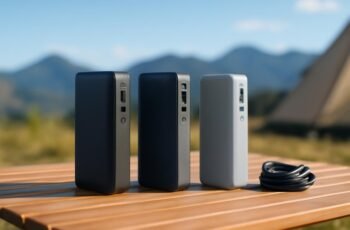
We’re looking at seven gas-powered power stations that practically never quit, built for reliability, efficiency, and practical use in emergencies or remote work. We’ll weigh dual-fuel options, true inverter stability, and features like remote starts, ECO modes, and robust runtimes. With multiple outlets, CO sensors, and portability, these choices could redefine preparedness—but something about one model might surprise you, and that twist could change what you choose next.
Key Takeaways
- Compare top gas-powered power stations by peak/running watts, fuel type options (gasoline/propane), and runtime at 25% load for longer outages.
- Prioritize models with dual-fuel capability, low THD inverter power, and ECO/eco modes for quiet, efficient operation.
- Look for built-in CO detectors, automatic shutoff, and low-oil protection for essential safety during outages.
- Favor units with multiple outlets (120V, USB, RV-ready) and parallel capability for scalable power.
- Consider weight, portability, tank size, and remote/electric start features for reliable, on-demand use.
Westinghouse Dual Fuel Portable Generator with Remote Start
The Westinghouse Dual Fuel Portable Generator with Remote Start is the best pick for reliability enthusiasts who need flexible fuel options and easy remote operation. We lean on its 4650 peak watts, 3600 rated gasoline watts, and 3240 propane watts, plus a 4-gallon tank with gauge and a CO sensor for safety. Start is quick with electric push button, remote, auto choke, and an intuitive panel. It offers 5-20R, TT-30R, and L5-30R outlets for versatile connections, plus plug-and-play readiness. Comes boxed with oil, funnel, tools, manual; minimum assembly, factory-tested. EPA compliant with 3-year coverage and nationwide support.
Best For: Homeowners and outdoor enthusiasts who want a reliable, flexible dual-fuel portable generator with remote start and versatile outlets.
Pros:
- Dual-fuel capability (gasoline and propane) for flexibility and extended runtime
- Remote start, electric push button start, auto choke, and intuitive control panel for easy operation
- Multiple outlets (5-20R, TT-30R, L5-30R) and plug-and-play setup with factory testing
Cons:
- 4-gallon tank may require refueling for long outages
- Heavier portable unit may require wheel setup and battery hookup
- Limited detailed runtime specs beyond wattage; relies on fuel type for endurance
4400W Portable Inverter Generator with CO Sensor
This 4400-watt portable inverter generator with a built-in CO sensor is ideal for home use and emergency backups where safety matters, thanks to its automatic carbon monoxide detection. We’re reviewing PowerSmart’s 4400-Watt Portable Inverter Generator ( model DL5040C) with a 223 cc engine, delivering 4400 starting watts and 3600 running watts. It’s EPA compliant, lightweight at 61.29 lbs, and relatively quiet at 76 dB from 23 ft. With a 1.6-gallon tank, it runs about 11 hours at 25% load. Features include CO sensing, low oil shutdown, overload protection, recoil start, and durable steel/cast-iron construction. Warranty is two years.
Best For: Home emergency backup power users who need a CO-sensing, EPA-compliant portable inverter with reasonable runtime and moderate noise.
Pros:
- Built-in CO sensor adds safety for indoor or semi-enclosed use.
- 3600 running watts and 4400 starting watts provide solid power for essential appliances.
- Relatively lightweight (61.29 lbs) and portable with a compact footprint.
Cons:
- Noise level of 76 dB at 23 ft may be disruptive for quiet environments.
- 11-hour runtime at 25% load means longer outages require refueling for higher loads.
- 1.6-gallon tank and recoil start could be less convenient compared to electric-start models.
GENMAX Generator with Eco-Mode for Home & Camping
Ever wondered which compact generator fits home backup and camping trips without breaking the bank? We present the GENMAX GM1200i, EPA compliant with Eco-Mode for efficiency. This ultra-light 57 cc inverter powers 1200 starting/1000 running watts, with clean <3% THD and a 0.66-gallon tank. At 25.3 pounds and compact 16.5 x 9.4 x 15.7 inches, it suits home use or camping. It provides 120V/20A plus USB outlets, is parallel-ready, and features Eco mode, CO detect shutdown, and low oil alarms. Run times up to 6.5 hours at 50% load; reliability varies with break-in and maintenance.
Best For: Home backup and camping enthusiasts who need a lightweight, inverter-style generator with decent run times and fuel efficiency.
Pros:
- Ultra-lightweight and compact design (25.3 pounds; 16.5 x 9.4 x 15.7 inches) for easy transport and storage
- Inverter technology with clean power (<3% THD) and parallel-ready capability for extra power
- Eco-Mode and CO detect shutdown enhance fuel efficiency and safety in outdoor or home-use scenarios
Cons:
- Variable reliability reports and mixed customer service experiences
- Small fuel tank (0.66 gallons) may require more frequent refueling on longer outings
- Some users note fitment/maintenance issues (e.g., air filter panel looseness) during break-in or use
PowerSmart 2500-Watt Portable Inverter Generator for Camping
For campers who crave portability without sacrificing power, the PowerSmart 2500-Watt Portable Inverter Generator stands out with its super-quiet operation and lightweight design. We highlight its 2500 starting watts and 1900 running watts of clean power (<3% THD), plus eco mode and low oil shutdown for efficiency. At 42 pounds with a built-in handle, it’s easy to carry, measure 19.1 x 13.4 x 20.1 inches, and fit in small campsites. It runs on gas with a recoil start, offering 5.5 hours at 50% load, plus two 120V outlets, 12V DC, USB ports, and parallel capability. It’s praised as quiet, portable, and value-driven.
Best For: Campers and outdoor enthusiasts seeking a portable, quiet, 2500-watt inverter generator for powering essentials at the campsite.
Pros:
- Super quiet operation (52 dBA at 23 feet at partial load) and lightweight at 42 pounds with built-in handle
- Clean power with <3% THD and 1900 running watts, plus eco mode for efficiency
- Versatile outlets (two 120V outlets, 12V DC, two USB ports) and parallel capability for expanded use
Cons:
- 5.5 hours at 50% load may require frequent refueling on longer trips
- Recoil start may be less convenient than electric start models for some users
- Output wattage and running wattage distinctions can be confusing for first-time buyers
Pulsar 1200W Gas Portable Generator with Handle
The Pulsar 1200W Gas Portable Generator with Handle stands out for its built-in carrying handle, making it a breeze to transport for camping or quick outdoor setups. We note its 1,200W peak, 900W running power, and dual 120V outlets plus a 12V DC outlet. We appreciate the 69 cc 2-stroke engine with recoil start and a 1.1-gallon tank delivering up to 5 hours at half load. We caution against running AC units and highlight a 37.5-pound weight. Includes a durable carrying handle, compact 16.2″ x 14″ x 14.8″ frame, and a 1-year warranty for peace of mind.
Best For: campers and outdoor enthusiasts who need a portable, lightweight generator with basic dual 120V outlets and a handheld carry option for casual, small-load power needs.
Pros:
- Built-in carrying handle for easy transport
- Light weight at 37.5 pounds with compact dimensions
- Dual 120V outlets plus 12V DC outlet for basic power needs
Cons:
- Not suitable for running AC units or heavy continuous loads
- 1,200W peak / 900W running power limits larger appliances
- 2-stroke engine may require mixed fuel and more maintenance
PowerSmart 3800W Dual Fuel Inverter Generator, RV Ready
PowerSmart’s 3800W Dual Fuel Inverter Generator is our pick for RV travelers who need reliable, clean power without sacrificing portability. We love its dual-fuel versatility, switching between gasoline (3800 surge, 3300 rated) and propane (3500 surge, 3100 rated). The 149cc OHV engine keeps performance steady, while the inverter delivers pure sine wave power with under 3% THD, safe for phones, tablets, laptops, and CPAPs. It includes a CO sensor with auto shutoff, plus overload and low-oil protections. RV-ready TT-30R outlet, compact 50.7 lb frame, and quiet operation at 70dB maintain campsite harmony. Reliable, portable, and adaptable for emergencies or outings.
Best For: RV travelers and campers needing reliable, clean power with dual-fuel versatility in a portable, quiet inverter generator.
Pros:
- Dual-fuel capability (gasoline or propane) for flexibility and fuel availability.
- Clean inverter power (Pure Sine Wave, <3% THD) safe for sensitive electronics.
- RV-ready with TT-30R outlet and compact, portable design (50.7 lb, 21.9 x 13.4 x 19.5 in).
Cons:
- Noise level 70 dB at 23 feet, which may be noticeable at campsites.
- 3800W surge may require careful load management to avoid overload.
- Propane performance: lower rated watts than gasoline option (3100W) under propane use.
Oxseryn 2800-Watt Portable Inverter Generator with Fuel Shut Off
If you need reliable backup power that’s easy to transport, consider the Oxseryn 2800-Watt Portable Inverter Generator with Fuel Shut Off. We value its 2000 running watts and 2800 peak, plus the 1.1-gallon tank that pairs with a 39-pound, compact frame and built-in handle. With ECO mode, parallel operation, and quiet performance under 58 dBA at 23 ft, it suits home, camping, or emergencies. It provides 2 x 120V, 1 x 12V, 1 x USB, and Type-C outlets, plus a fuel shut-off and low-oil protection. EPA compliant and backed by a 2-year warranty, it’s ready and portable.
Best For: Home backup and outdoor enthusiasts who need portable, quiet, efficient power with multiple charging options.
Pros:
- Lightweight (39 lbs) and portable with built-in handle for easy transport
- Quiet operation (under 58 dBA at 23 ft) and ECO mode for fuel efficiency
- Multiple outlets (2 x 120V, 1 x 12V, 1 x USB, Type-C) plus fuel shut-off and low-oil protection
Cons:
- 1.1-gallon fuel tank may require refueling for longer outages
- 9-hour runtime primarily at 25% load; higher loads shorten runtime
- High-altitude performance may require a kit or adjustments when moving between elevations
Factors to Consider When Choosing Gas-Powered Power Stations
We start by weighing fuel type versatility, so you can pick stations that run on your preferred fuel without hassle. We also look for inverter clean power, since steady, low-distortion output protects your devices. Plus, we’ll consider noise, runtime and tank size, and how portable the unit truly is for your needs.
Fuel Type Versatility
Gas-powered power stations with fuel-type versatility give you flexibility when outages hit or you’re off the grid. Dual-fuel generators offer gasoline and propane options, expanding fuel availability during outages or camping trips. Propane can burn cleaner in some models and preserves gasoline for longer shelf life, boosting long-term versatility. Inverter-based units with dual-fuel capability typically deliver clean power (<3% THD) suitable for sensitive electronics, a critical advantage if you’re running laptops or chargers. RV-ready outlets (e.g., TT-30R) in dual-fuel units enhance compatibility for recreational use and extended outages alike. A thoughtful dual-fuel design often pairs with CO sensors and low-oil shutoffs to maintain safe operation across fuel types, ensuring reliable performance when you need it most.
Inverter Clean Power
Inverter-powered stations deliver clean power thanks to pure sine wave inverters, keeping voltage and frequency stable across loads and making them safe for laptops, phones, and other sensitive gear. When we compare options, THD below 3% is a strong indicator of inverter-grade quality that protects delicate electronics. These systems maintain consistent output across a wide load range, so you’re not wobbling between under- or over-driven devices. Eco/economy modes help trim fuel use without sacrificing clean power, which is a practical balance for longer runs or camping trips. Parallel capability matters too; it lets us stack running watts while preserving inverter performance. And while you evaluate, note that quieter operation—around 52–58 dBA at 23 feet—adds real-world comfort for extended use.
Noise Levels Consideration
Do noise levels matter enough to guide your choice of a gas-powered power station? Yes, because decibels at a set distance help you compare real-world sound under different loads. Most portable gas generators run from about 52 dBA at 23 feet for quiet models to 76 dB at 23 feet for louder ones. Inverter generators push even lower noise due to advanced management, with some as low as 58 dBA at 23 feet. Understand that a unit’s rating can rise with load, often moving from 25% to full load and climbing to 70–76 dBA. Check the test conditions, not just the label. For sensitive environments or camping, seek “super quiet” or ECO/Quiet modes to minimize audible output.
Runtime And Tank Size
When you’re sizing a gas-powered power station, runtime and tank size go hand in hand. Larger tanks generally yield longer runtimes at a given load, with capacities from about 0.66 to 1.6 gallons shaping endurance. Runtime hinges on load percentage—many units run longer at 25% to 50% load than at higher outputs. Manufacturers often publish explicit figures, like up to around 11 hours at 25% load, to help estimate refuel intervals. Tank capacity and engine efficiency together determine usable hours, with efficient inverters sometimes extending runtime at lower outputs. Parallel operation and eco modes can optimize fuel use, boosting total endurance for the same tank. Understanding these interactions helps you pick the right balance for your needs.
Portability And Weight
Portability and weight drive practical decisions when sizing a gas-powered power station. We look for lighter units under 30 pounds, with models around 25–39 pounds that are easier to move. Heavier options can exceed 50 pounds and demand more effort, especially during setup or relocation. Built-in handles and compact dimensions—roughly 16–21 inches long and 9–14 inches wide—enhance grab-and-go usability for quick trips. Portable generators commonly land in the 25–42 pound range, with some dual-fuel or inverter models staying near the lower end for easier transport. Rugged portability often pairs with compact footprints under 20 inches long, helping fit into tents or vehicle trunks. Weight and size directly affect relocation ease, setup time, and practicality for camping or emergency backup use.
Safety Features
Safety features are essential to regard because gas-powered power stations can pose real risks if something goes wrong. We prioritize CO sensors with automatic shutoff to prevent carbon monoxide buildup, giving you peace of mind when you rely on it indoors or in enclosed spaces. A low-oil shutdown protects the engine by stopping operation if oil levels drop, reducing seizure risk and costly damage. Overload protection guards both generator and devices by shutting down when electrical demand exceeds capacity. Inverter models deliver cleaner power with THD under 3%, safer for sensitive electronics and modern gadgets. Emergency safety measures—automatic CO shutoff plus visible fault indicators—keep you informed and ready to respond, minimizing risk and downtime in any situation.
Outlets And Compatibility
Outlets and compatibility determine how smoothly a gas-powered power station fits your setup. We’ll check the number and types of outlets—120V duplex, TT-30R RV, L5-30R, USB ports—to ensure you can power your devices without adapters. Parallel capability matters, so you can link multiple units for higher output when needed. Essential receptacles matter too: at least two 120V outlets plus a 12V DC or USB port for common loads. Clean power is non-negotiable, so we look for less than 3% THD to protect sensitive electronics. RV-ready configurations, like TT-30R, are a bonus if you’re powering appliances in a recreational vehicle. By matching outlets to your gear, you avoid last‑minute surprises and keep your workflow uninterrupted.
Frequently Asked Questions
How Long Does Fuel Last Under Continuous Load?
We can’t give a universal fuel duration; it depends on generator size, load, and efficiency. Under continuous full-load, expect hours ranging from about 8 to 24, with larger, higher-efficiency models lasting longer, and proper maintenance extending life.
Are There Quiet Operation Options Under Full Load?
Yes, there are quiet operation options under full load—we prioritize sound-dampening designs, low-noise exhaust, smart load management, and vibration isolation, so you get reliable power without disturbing surroundings while we stay fully productive.
Do These Units Support Parallel Connection for More Power?
Yes, they can be paralleled for extra power. We’ve got you covered, and we’ll handle the wiring safely, no-cutting-corners style. If you’re considering it, we’ll guide you through the setup step by step.
What Maintenance Schedule Keeps Reliability High?
We schedule regular oil changes every 50–100 hours, inspect filters, test safety valves, check spark plugs, and run load tests monthly; perform battery and coolant checks seasonally, and log all maintenance for reliability and prompt issue detection.
Can They Run Essential Home Appliances Safely?
Yes, they can run essential home appliances safely, as long as you follow manufacturer guidelines, use proper transfer switches, don’t overload circuits, keep ventilation clear, and perform regular maintenance checks with a qualified technician. We’ll walk you through it.
Conclusion
We’ve highlighted seven gas-powered power stations that blend reliable runtime with practical design, ideal for emergencies or remote work. One interesting stat: high-quality inverter generators with true sine wave output often deliver THD under 3%, keeping sensitive electronics safe. When choosing, prioritize dual-fuel options, remote or easy start, CO sensors, and sufficient runtime for your needs. With the right pick, you’ll stay powered through outages and outdoor adventures alike.