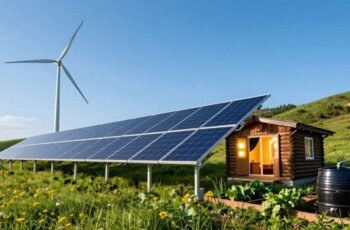
Ensuring a reliable power supply during outages is vital for remote locations and critical operations, which is why an extensive off-grid backup power system requires careful planning and precise component integration. By analyzing your energy needs, selecting appropriate generation sources, and designing an efficient storage solution, you can optimize system performance and longevity. Understanding these technical details is essential to prevent failures and maximize resilience—key factors that warrant a detailed exploration of best practices and troubleshooting methods.
Key Takeaways
- Assess your power needs and select appropriate renewable energy sources and backup generators.
- Choose suitable batteries and system components to ensure reliability and longevity.
- Regularly maintain and troubleshoot system components to prevent failures and optimize performance.
- Incorporate monitoring systems for real-time performance tracking and early issue detection.
- Design a scalable, efficient system to maximize energy availability and reduce downtime during outages.
Understanding Off-Grid Backup Power and Why It Matters
While grid outages are often unpredictable, they can severely disrupt essential systems and daily routines. Off-grid backup power provides a reliable solution by ensuring continuous energy supply during such interruptions. It involves independent energy sources, like batteries or generators, that operate without reliance on the main grid. Understanding this technology is important because it minimizes downtime, safeguards critical infrastructure, and maintains operational stability. Off-grid systems are designed to be resilient, offering rapid response and consistent power delivery. They also reduce dependency on external utilities, which is crucial in remote locations or during prolonged outages. Recognizing their importance helps us evaluate the right configurations and technologies needed to maintain essential functions under any circumstances.
Key Components of an Off-Grid Backup Power System
A reliable off-grid backup power system hinges on several critical components working seamlessly together to guarantee uninterrupted energy supply. At its core, a robust energy storage system—typically batteries—stores excess power generated during peak times, ensuring availability during periods of low generation. Power generation units, such as solar panels or wind turbines, convert renewable resources into usable electricity, requiring efficient charge controllers to regulate voltage and current, preventing damage. An inverter is essential for transforming DC stored power into AC for household use, maintaining stable voltage and frequency. Ultimately, a monitoring and control system provides real-time data on system performance, enabling proactive management and troubleshooting. Integrating these components with precision ensures consistent, reliable off-grid power, minimizing downtime and maximizing efficiency.
Evaluating Your Power Needs and Setting a Realistic Budget
To effectively plan your off-grid backup power system, we must first quantify your energy consumption by analyzing usage patterns and peak loads. Establishing a realistic budget requires balancing these energy needs against financial constraints, ensuring system scalability and longevity. This targeted assessment allows for an optimized design that meets your requirements without exceeding your financial limits.
Assess Energy Consumption
How can we accurately determine our energy needs to guarantee a reliable off-grid backup power system? First, we must analyze our critical loads by listing essential devices and calculating their total wattage. Second, we should evaluate daily operating hours to establish energy consumption in watt-hours (Wh). Third, it’s important to incorporate future expansion plans or added devices to refine our estimates. Precise measurement involves reviewing manufacturer specifications, using a power meter, or tracking usage over time. This detailed assessment helps prevent under-sizing, which risks system failure, or over-sizing, which inflates costs. Ultimately, understanding exact consumption patterns guarantees our system is both efficient and resilient, providing a solid foundation for selecting appropriate capacity and setting realistic expectations for off-grid reliability.
Determine Budget Constraints
While accurately evaluating your power needs is essential, establishing a realistic budget is equally critical to guarantee the off-grid backup system remains financially viable. Setting a clear financial boundary helps prioritize components and prevents overspending. To aid this process, consider the following:
| Budget Range | System Size | Key Components |
|---|---|---|
| Low | Small | Basic inverter, few panels |
| Moderate | Medium | Larger inverter, battery bank |
| High | Large | Advanced inverter, solar array |
Choosing the Right Power Generation Options (Solar, Generator, Wind, Etc.)
When selecting power generation options, we must consider the specific advantages and limitations of each technology, such as solar power’s scalability and low operational costs versus generators’ reliability during low sunlight or wind conditions. Analyzing the different generator types—portable, standby, or inverter—helps determine their suitability for various load demands and operational environments. By evaluating these factors objectively, we can optimize our off-grid power system for efficiency, resilience, and cost-effectiveness.
Solar Power Benefits
Have you considered the tangible advantages of solar power as a reliable off-grid backup solution? Solar offers several key benefits:
- Scalability and Modularity: Solar systems can be expanded or reduced based on energy needs, allowing flexible capacity planning.
- Low Operating Costs: Once installed, solar panels require minimal maintenance, translating to reduced long-term expenses.
- Environmental Impact: Solar produces clean energy, reducing carbon footprint and aligning with sustainable off-grid living goals.
These benefits highlight solar’s efficiency and cost-effectiveness, making it an attractive option for reliable power supply. Its silent operation and independence from fuel sources further enhance its appeal, ensuring consistent energy output regardless of external factors. Overall, solar power’s technical advantages make it a compelling choice for off-grid backup solutions.
Generator Types and Uses
Are you selecting the most effective power generation method for your off-grid needs? Generators vary considerably in design and application, making them suitable for different scenarios. Portable generators are ideal for temporary or emergency use, offering quick deployment but limited runtime. Standby generators are permanent fixtures, providing reliable backup during extended outages. Fuel type is a key factor: gas, diesel, or propane each impacts efficiency, cost, and maintenance.
| Generator Type | Primary Use |
|---|---|
| Portable | Temporary, emergency power |
| Standby | Continuous backup for homes/offices |
| Inverter | Sensitive electronics, quiet operation |
Designing a Reliable Battery Storage Solution for Off-Grid Power
Designing a reliable battery storage solution for off-grid power requires a thorough understanding of load demands, cycle life, and system efficiency. We must accurately assess peak and average loads to determine capacity needs. Next, selecting batteries with a high cycle life ensures durability under frequent charge-discharge cycles. Finally, optimizing system efficiency minimizes energy losses during storage and retrieval. To achieve this, consider:
Designing off-grid battery systems requires understanding load demands, cycle life, and system efficiency for optimal performance.
- Battery Chemistry: Lithium-ion offers higher energy density and longer lifespan compared to lead-acid, reducing long-term costs.
- Depth of Discharge (DoD): Limiting DoD extends battery life and stabilizes performance.
- Temperature Management: Proper thermal regulation maintains battery health and efficiency, especially in variable climates.
These factors collectively form the foundation for a resilient, efficient off-grid battery system.
Installing and Maintaining Your Off-Grid Backup System
Effective installation and ongoing maintenance are essential to ensuring the reliability and longevity of your off-grid backup power system. Proper setup involves precise placement of components to maximize efficiency and safety, including secure mounting, appropriate wiring, and adherence to manufacturer specifications. Regular maintenance ensures system performance remains ideal, such as inspecting connections, cleaning components, and monitoring system metrics. To streamline this process, consider:
| Maintenance Task | Key Details |
|---|---|
| Visual Inspection | Check for corrosion, loose connections, and physical damage |
| Battery Health Check | Measure voltage and capacity, replace aging units |
| Firmware Updates | Keep inverters and controllers current for efficiency |
| System Testing | Run diagnostics periodically to verify operation |
| Cleaning and Calibration | Remove debris, calibrate sensors for accuracy |
Consistent attention guarantees system resilience and operational effectiveness.
Troubleshooting Common Off-Grid Power Issues and Optimizing Performance
When troubleshooting off-grid power systems, identifying the root causes of performance issues requires a systematic approach and a solid understanding of system components. First, we analyze energy flow to pinpoint bottlenecks or inefficiencies. Second, we verify component health—batteries, inverters, and charge controllers—to detect failures or degradation. Third, we examine environmental factors like shading or temperature that could impact solar input or system output. By following these steps, we can isolate issues such as voltage drops, reduced capacity, or system shutdowns. Optimizing performance involves fine-tuning charge settings, balancing loads, and scheduling maintenance. This analytical process ensures our off-grid system operates reliably, maximizing energy availability while minimizing downtime.
Frequently Asked Questions
How Long Can an Off-Grid Backup System Run Without Sunlight or Fuel?
We can typically run an off-grid backup system for several days to weeks, depending on battery capacity and load demands. Properly sized batteries and efficient power management extend operational time without sunlight or fuel, ensuring sustained reliability.
What Safety Precautions Are Necessary for Off-Grid Power Systems?
Like a vigilant guardian, we prioritize safety by installing proper grounding, using appropriate protective gear, maintaining regular system inspections, and adhering to electrical codes, ensuring our off-grid power system remains secure, reliable, and risk-free during operation.
Can Off-Grid Systems Be Expanded Easily Over Time?
Yes, off-grid systems can be expanded, but we must carefully assess existing capacity, upgrade components like batteries and inverters, and guarantee proper wiring. Strategic planning and modular design facilitate smooth scalability, minimizing system inefficiencies and maintaining reliable power.
What Are the Environmental Impacts of Different Power Sources?
Imagine a landscape where solar panels silently soak up sunlight, wind turbines spin gracefully, but fossil fuels cast dark smudges on the environment. We find solar and wind sources cleaner, yet they require careful land and resource management.
How Do Weather Conditions Affect System Performance and Reliability?
Weather conditions critically impact system performance; clouds diminish solar efficiency, storms cause physical damage, and temperature extremes affect battery capacity, leading to decreased reliability. We analyze these factors to optimize system resilience and guarantee consistent power delivery.
Conclusion
In conclusion, a well-designed off-grid backup power system ensures resilience and energy independence, even during outages. By carefully selecting components, accurately assessing your needs, and maintaining your setup, you maximize efficiency and longevity. Are we truly prepared for unforeseen disruptions if our systems aren’t optimized? Ultimately, proactive management and informed choices are key to achieving reliable, sustainable off-grid power—because staying powered isn’t just a convenience, it’s a necessity in today’s unpredictable world.