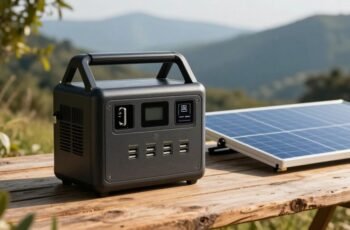
Setting up an off-grid power station requires a detailed understanding of your energy demands and the technical components involved. We need to analyze load profiles, select durable, efficient equipment, and design a system that balances performance and safety. Every decision impacts reliability and cost. To guarantee a successful project, we must consider not only installation but also ongoing maintenance and troubleshooting, which are critical for long-term operation. The complexities involved make it essential to approach this systematically.
Key Takeaways
- Conduct a comprehensive load analysis to determine total energy requirements and future expansion needs.
- Select appropriate renewable components like solar panels, wind turbines, and batteries based on site conditions.
- Plan system layout to optimize sun and wind exposure, minimizing wiring length and shading issues.
- Ensure safety protocols, regular maintenance, and system monitoring for longevity and reliable operation.
- Evaluate costs, subsidies, and troubleshoot issues by inspecting components and system performance regularly.
How to Assess Your Energy Needs for an Off-Grid Power Station
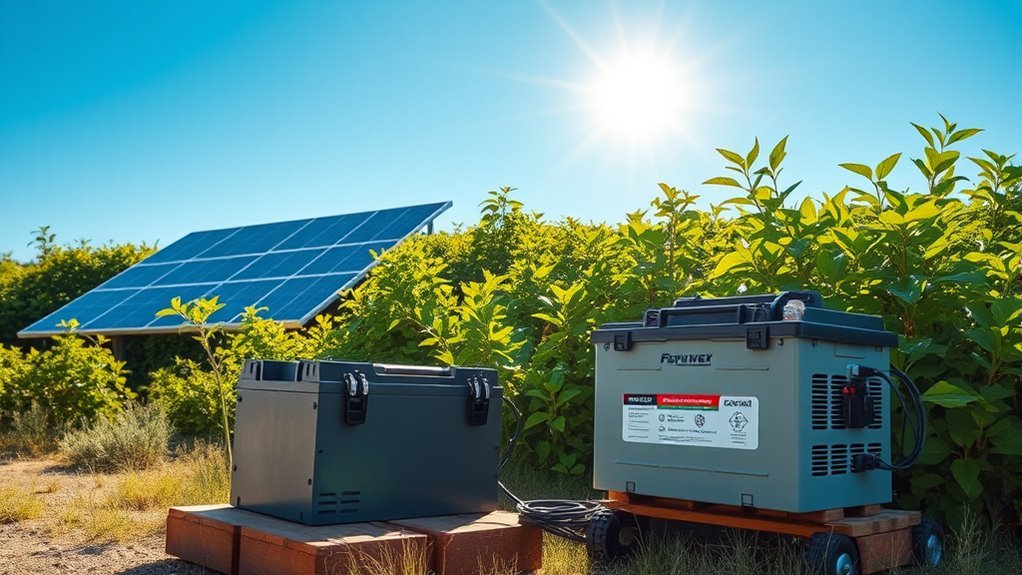
How do we accurately determine our energy requirements for an off-grid power station? We begin by conducting a detailed load analysis, identifying all devices and appliances, and calculating their individual wattages and usage durations. This involves creating an exhaustive list of electrical loads, noting their operational hours per day, and summing their energy consumption to establish total daily demand in watt-hours. To refine this estimate, we consider peak load conditions, potential future expansions, and inefficiencies within the system. We also factor in seasonal variations that may alter energy use. Precise assessment requires careful data collection and conservative estimates to guarantee system capacity exceeds actual needs, preventing shortfalls. This analytical approach forms the backbone of designing an efficient, reliable off-grid power station tailored to specific energy demands.
Choosing the Right Components: Solar, Wind, and Battery Storage Options
Selecting the appropriate combination of solar panels, wind turbines, and battery storage is essential to guarantee the off-grid system meets our energy demands reliably and efficiently. To optimize performance, we must analyze component specifications and environmental factors:
Choosing the right renewable components ensures reliable, efficient off-grid energy tailored to your environment.
- Solar panel efficiency and wattage rating, ensuring sufficient energy capture during peak sunlight.
- Wind turbine capacity and cut-in speeds, aligning with wind resource assessments to maximize energy generation.
- Battery chemistry and capacity, balancing depth of discharge, lifespan, and storage needs for consistent power supply.
- System integration and control electronics, ensuring seamless operation, load balancing, and protection against overcharging or discharging.
A thorough technical evaluation of these components allows us to design a resilient, scalable, and cost-effective off-grid power station tailored to specific energy profiles.
Planning Your Off-Grid Power System Layout and Installation Steps
After choosing the appropriate components for our off-grid power system, the next step involves carefully planning the layout and installation process to guarantee peak performance and safety. We begin by mapping out ideal locations for solar panels, wind turbines, and batteries, considering factors like sun exposure, wind flow, and accessibility. Proper spatial arrangement minimizes wiring lengths, reducing energy loss and voltage drops. We also need to ensure proper load distribution across circuits to prevent overloads. Wiring routes must avoid shading and obstructions, while grounding systems should be strategically positioned for safety. Additionally, adherence to local codes and manufacturer guidelines is essential during installation. This detailed planning enhances system efficiency, simplifies maintenance, and lays a solid foundation for long-term operational reliability.
Important Safety Tips and Maintenance Practices for Longevity
Maintaining safety and proper operation is essential for ensuring the longevity of an off-grid power system. To achieve this, we recommend strict adherence to key safety protocols and proactive maintenance.
- Regularly inspect electrical connections for corrosion or looseness, preventing potential faults.
- Monitor battery health through voltage and temperature checks to avoid overcharging or thermal runaway.
- Keep ventilation clear around batteries and inverters to prevent overheating.
- Schedule routine system audits to identify wear or degradation early, ensuring components operate within specified parameters.
Implementing these practices reduces the risk of system failures, enhances efficiency, and extends component lifespan. A disciplined maintenance routine combined with safety vigilance ensures the system’s reliable long-term performance.
Cost Considerations and Budgeting for Your Off-Grid Power Setup
Understanding the financial scope of an off-grid power system is essential for effective planning and sustainable operation. We must evaluate initial capital costs, including solar panels, batteries, inverters, and wiring, alongside ongoing expenses like maintenance and system upgrades. Accurate budgeting requires analyzing energy consumption patterns to determine appropriate component capacities, which directly influence costs. It’s imperative to consider location-specific factors such as installation complexity, local tariffs, and potential subsidies or tax incentives. We should also account for contingency funds to address unforeseen technical issues or component failures. A thorough financial plan balances upfront investment against long-term savings, ensuring system reliability without overextending resources. Precise cost estimation and strategic budgeting are indispensable for creating a resilient, economical off-grid power solution.
Troubleshooting Common Off-Grid Power System Issues
When operating an off-grid power system, troubleshooting becomes an essential skill to guarantee continuous and reliable energy supply. Identifying issues swiftly prevents system damage and minimizes downtime. Key steps include:
- Check the battery health: Inspect voltage levels and electrolyte levels to identify potential degradation or failure.
- Verify charge controller operation: Ensure proper voltage regulation and look for error indicators or abnormal readings.
- Inspect wiring connections: Tighten loose connections and examine for corrosion or damage that may impede current flow.
- Test inverter function: Confirm proper output voltage and frequency, and check for overheating or fault indications.
A systematic approach focusing on these components helps isolate problems efficiently, guaranteeing stability and peak performance of your off-grid power system.
Frequently Asked Questions
How Long Can an Off-Grid Power Station Operate Without Sunlight or Wind?
We can typically operate an off-grid power station for several days to weeks without sunlight or wind, depending on battery capacity, load demand, and energy efficiency. Properly sized systems extend operational periods considerably during such conditions.
What Permits or Regulations Are Required for Off-Grid Power Installations?
We need local, state, and federal permits for off-grid power installations, including zoning, environmental, and electrical codes. We analyze regulations to guarantee compliance, secure necessary approvals, and prevent legal issues, optimizing our setup process efficiently and responsibly.
How Scalable Is an Off-Grid Power System for Future Energy Needs?
Think of our off-grid system as a growing tree—initially small, but scalable with sturdy branches. We design it modularly, allowing us to expand capacity seamlessly, ensuring it meets increasing energy demands through smart integration of additional solar, storage, or generation units.
Can I Integrate Backup Generators With My Off-Grid Setup?
Yes, you can integrate backup generators with your off-grid system. We recommend proper sizing, automatic transfer switches, and synchronization controls to guarantee seamless operation, reliability, and efficient energy management during grid outages or high demand periods.
What Are the Environmental Impacts of Different Off-Grid Energy Sources?
Different off-grid energy sources impact the environment variably; solar minimizes emissions, wind is low-impact but may affect wildlife, while diesel generators produce significant pollution. We analyze these factors to choose the most sustainable, eco-friendly options for your setup.
Conclusion
By meticulously planning and carefully selecting components, we craft a resilient off-grid power system that operates like a finely tuned engine—reliable, efficient, and self-sustaining. Regular maintenance guarantees its heart keeps beating steadily through changing conditions, while troubleshooting sharpens our understanding of its intricate mechanics. Like skilled artisans, we shape a renewable energy sanctuary, transforming raw resources into a steady current that powers our independence, illuminating the path toward sustainable, off-grid living.