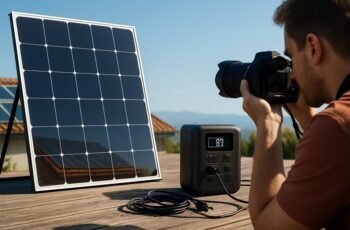
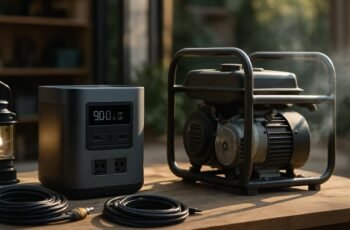
Most people don’t realize that portable power stations and inverter generators operate on fundamentally different principles—one relies on stored electrical energy, while the other generates power through fuel combustion. This distinction impacts everything from noise levels to maintenance requirements and suitability for various tasks. Understanding these differences can help us determine which option aligns better with our specific needs, whether for outdoor adventures or emergency backups. Let’s explore how these devices compare across key factors.
Key Takeaways
- Portable power stations store energy in batteries, offering silent, emission-free operation ideal for small devices and short-term use.
- Inverter generators produce electricity via fuel combustion, supporting higher continuous power loads for extended periods.
- Power stations are compact and lightweight, making them highly portable for camping and outdoor activities.
- Inverter generators require refueling and regular maintenance but provide longer run times and stable voltage for sensitive electronics.
- Portable power stations have lower operating costs and multiple charging options, while inverter generators emit noise and pollutants.
How Portable Power Stations Work and What They Power
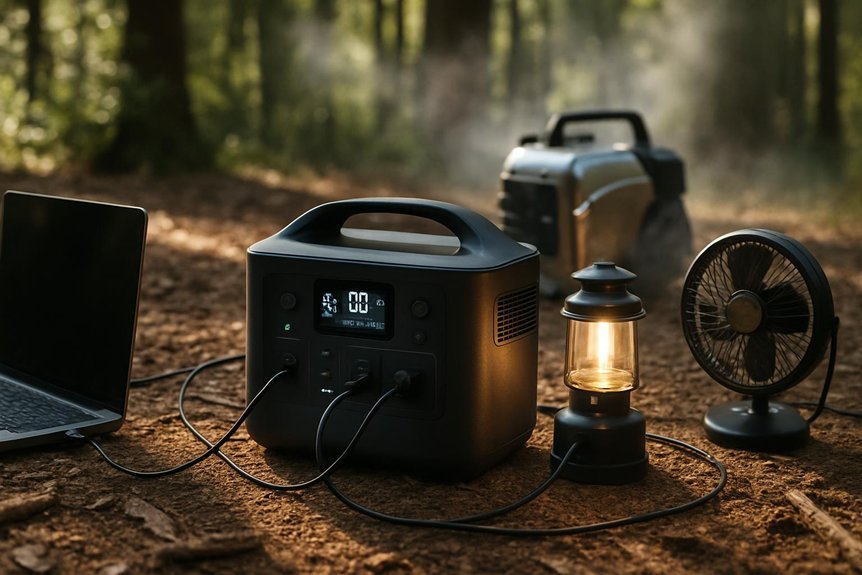
Although portable power stations vary in design, they all operate by storing electrical energy in built-in batteries and converting it into usable AC power through an inverter. We rely on advanced battery technology, such as lithium-ion cells, to guarantee high charging efficiency and longer lifecycle. These stations offer output compatibility with various devices, from small electronics to essential appliances, enhancing user convenience in diverse portable applications. Their compact design supports eco-friendly options by eliminating fuel combustion and reducing emissions. In emergency preparedness, they provide reliable power backups without noise or fumes. Effective power management systems monitor battery status and optimize energy use, extending runtime. Understanding these technical aspects helps us evaluate portable power stations as versatile, clean, and practical energy sources for on-the-go and critical situations.
How Inverter Generators Deliver Power Differently
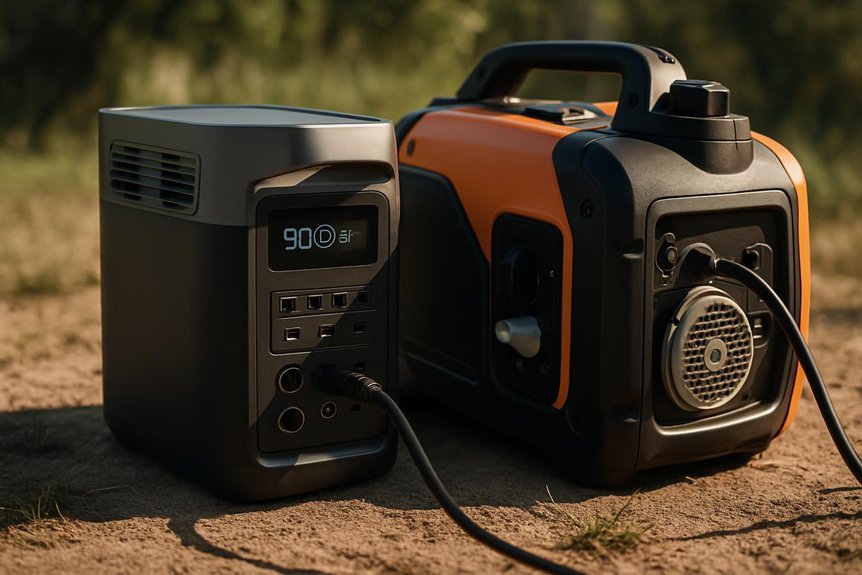
While portable power stations rely on stored battery energy to provide clean, quiet power, inverter generators take a different approach by producing electricity on demand through fuel combustion combined with advanced electronics. This method impacts their power delivery and load management distinctly:
- Fuel combustion drives an engine connected to an alternator, generating AC power directly.
- Inverter technology converts this AC power to DC and then back to stable, clean AC, optimizing output quality.
- Load management is dynamic; the engine adjusts speed based on real-time power demand, improving fuel efficiency.
- Continuous power delivery depends on fuel availability, allowing extended operation without recharging downtime.
Comparing Noise Levels: Portable Power Stations vs Inverter Generators
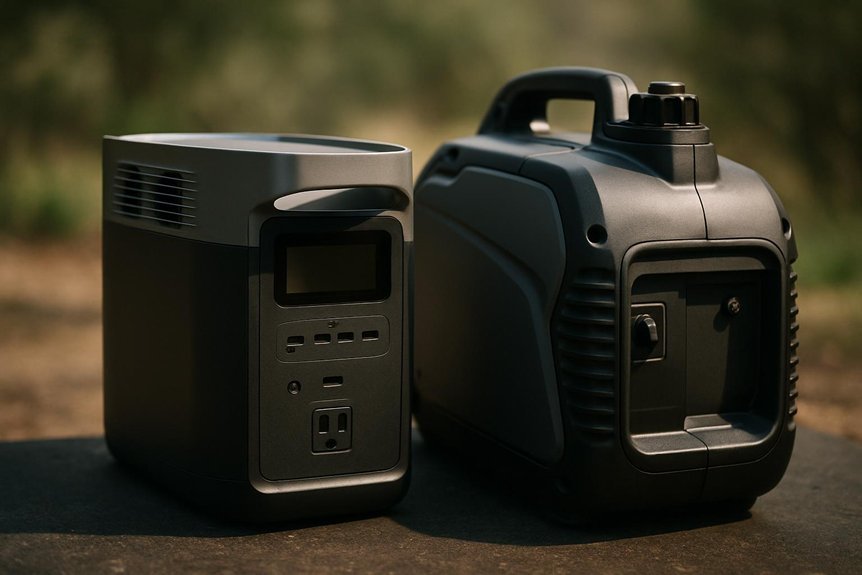
When comparing noise output, portable power stations generally operate at considerably lower decibel levels than inverter generators. We need to evaluate how these sound levels affect their use in different environments, especially in noise-sensitive settings. Understanding the benefits of quieter operation can help us choose the right power solution for our needs.
Noise Output Comparison
How loud should we expect our power sources to be during operation? Understanding noise output is essential when comparing portable power stations and inverter generators, especially considering noise regulations and user preferences.
- Portable power stations operate silently or with minimal noise since they rely on batteries and electronic components, producing under 50 dB.
- Inverter generators use combustion engines, generating noise levels typically between 50-65 dB, depending on load and design.
- Noise regulations vary by region, influencing acceptable sound emissions for generators, but portable power stations often bypass these limits due to low noise.
- User preferences lean toward quieter solutions for camping or residential use, favoring portable power stations when noise disturbance is a critical factor.
Sound Levels In Use
Because sound levels directly impact user experience and compliance with noise regulations, we need to examine how portable power stations and inverter generators perform under typical operating conditions. Portable power stations generally operate silently due to their battery-based design, requiring no combustion and benefiting from inherent sound insulation in their enclosures. In contrast, inverter generators produce noise from their internal combustion engines and cooling systems, despite improved sound insulation technologies. User preferences often favor portable power stations for quiet environments, while inverter generators may be acceptable where moderate noise is tolerable. However, inverter generators’ sound levels can vary considerably based on load and model, making them less predictable. Understanding these distinctions helps users select the appropriate power source aligned with their noise tolerance and regulatory requirements.
Quiet Operation Benefits
Examining the practical advantages of quiet operation reveals why noise levels greatly influence the choice between portable power stations and inverter generators. Noise reduction is a critical factor impacting user comfort and overall experience. Portable power stations excel due to their silent operation, achieved through advanced sound insulation and absence of combustion engines. In contrast, inverter generators, while quieter than traditional generators, still produce noticeable noise.
Consider these benefits of quiet operation:
- Enhanced user comfort in camping or residential environments.
- Reduced disturbance to wildlife and natural surroundings, lowering environmental impact.
- Easier compliance with noise regulations in urban or event settings.
- Improved communication and focus when using power sources for work or leisure.
Thus, portable power stations provide superior noise management, influencing our selection process considerably.
Fuel and Charging Options: What You Need to Know
Let’s examine the differences in fuel types between portable power stations and inverter generators, as this impacts usability and runtime. We’ll also review the various charging methods available for portable power stations to understand their convenience and efficiency. Understanding these factors helps us make informed decisions based on our power needs and operational environments.
Fuel Types Comparison
While both portable power stations and inverter generators serve to provide electricity on the go, they rely on fundamentally different fuel sources and charging methods. Understanding fuel types is essential when evaluating fuel efficiency and environmental impact.
- Portable Power Stations: Use lithium-ion or lithium iron phosphate batteries, charged via electricity. They offer high fuel efficiency and zero direct emissions, minimizing environmental impact.
- Inverter Generators: Typically run on gasoline, propane, or diesel. Gasoline offers quick refueling but lower fuel efficiency and higher emissions.
- Propane Generators: Cleaner burning than gasoline, resulting in reduced environmental impact and improved fuel efficiency.
- Diesel Generators: Provide robust power with better fuel efficiency than gasoline but produce more emissions than propane.
This comparison highlights trade-offs between renewable battery storage and fossil fuel combustion.
Charging Methods Overview
Because charging methods directly influence convenience and operational cost, understanding the various options for portable power stations and inverter generators is essential. Portable power stations typically support multiple charging methods: solar charging, AC charging, USB charging, and car charging. Solar charging offers renewable energy input but varies with panel efficiency and sunlight availability. AC charging provides reliable, faster replenishment from wall outlets, often optimized through advanced battery management systems to maximize efficiency ratings and battery lifespan. USB charging caters to smaller devices and emergency scenarios, though it’s less efficient for bulk power restoration. Car charging enables on-the-go replenishment but depends on vehicle output capacity. In contrast, inverter generators rely on fuel combustion, requiring refueling rather than electronic input. Evaluating these methods helps us balance operational efficiency with practical energy needs.
Size, Weight, and Portability Differences Explained
Although both portable power stations and inverter generators serve similar functions, their size, weight, and portability differ considerably due to their underlying technologies and design priorities. When conducting a size comparison and portability assessment, consider these factors:
- Weight Implications: Portable power stations are generally lighter due to lithium-ion batteries, enhancing travel convenience, while inverter generators use heavier fuel tanks and engines.
- Design Features: Power stations boast compact, sleek designs facilitating storage solutions; inverter generators tend to be bulkier with rugged exteriors.
- User Preferences: Those prioritizing ease of transport often prefer power stations, especially for camping or outdoor usability.
- Outdoor Usability: Inverter generators can be less convenient for frequent relocation due to bulk, impacting real-time mobility.
Power Capacity and Runtime: Which Lasts Longer?
When comparing power capacity and runtime, we must evaluate how each device manages energy storage and consumption. Portable power stations rely on built-in batteries, typically lithium-ion, offering a fixed power capacity defined by their battery size. In contrast, inverter generators consume fuel to produce electricity, theoretically extending runtime as long as fuel is available. In a runtime comparison, portable power stations excel in power efficiency since they convert stored energy directly to usable power without combustion losses. However, their total runtime is limited by battery capacity. Inverter generators provide longer continuous operation but with lower power efficiency due to fuel consumption and engine mechanics. Ultimately, portable power stations offer predictable runtime with high efficiency, while inverter generators allow extended use contingent on fuel supply, making runtime dependent on operational context.
Best Uses for Portable Power Stations in Outdoor and Emergency Situations
Portable power stations serve several critical roles in outdoor and emergency scenarios, offering reliable, quiet, and fuel-free energy. They integrate seamlessly into camping essentials and emergency preparedness plans due to their portability and clean power output. Here are four best uses we’ve identified:
- Charging communication devices: Guarantees smartphones and radios remain operational during emergencies.
- Powering medical equipment: Supports essential devices like CPAP machines without noise disruption.
- Lighting solutions: Provides consistent power for LED lights, enhancing safety in the dark.
- Running small appliances: Powers items such as mini-fridges or portable fans, improving comfort outdoors.
When an Inverter Generator Is the Right Choice for You
When we require continuous power output over extended periods, an inverter generator often proves more suitable due to its ability to run as long as fuel is available. We also need to evaluate fuel availability and storage logistics, which can impact the practicality of using an inverter generator. Understanding these factors helps us determine when this option aligns best with our power needs.
Continuous Power Needs
Although both inverter generators and portable power stations offer reliable energy solutions, inverter generators excel at meeting continuous power demands over extended periods. Their design supports continuous energy solutions, making them ideal backup power options for prolonged use. Here’s why inverter generators suit continuous power needs:
- Sustained Operation: They run efficiently for hours without overheating.
- Fuel Efficiency: Advanced engines optimize fuel consumption during extended use.
- Power Stability: Provide consistent voltage output, vital for sensitive electronics.
- Higher Capacity: Typically support higher wattage loads continuously compared to portable power stations.
For applications requiring uninterrupted power supply, inverter generators are technically better equipped. They guarantee stable, reliable energy output, essential for continuous operation scenarios.
Fuel Availability Considerations
Meeting continuous power demands often requires us to evaluate how fuel availability impacts our choice of equipment. Fuel accessibility is critical when selecting an energy source; inverter generators rely on gasoline or propane, which are widely available but require storage and refilling. Portable power stations use batteries charged via solar or grid power, limiting us to electricity access and recharge times. Understanding fuel logistics helps us decide the right system.
| Fuel Type | Accessibility | Storage Complexity | Refuel Time | Reliability |
|---|---|---|---|---|
| Gasoline | High | Moderate | Quick | Consistent |
| Propane | Moderate | High | Quick | Consistent |
| Battery (Solar/Grid) | Variable | Low | Slow | Dependent on source |
| Diesel | Moderate | Moderate | Quick | Consistent |
| Natural Gas | Low | Low | Continuous | Highly Reliable |
Inverter generators suit us when fuel accessibility is assured.
Maintenance and Operating Costs Compared
Since both portable power stations and inverter generators serve similar functions, comparing their maintenance and operating costs helps us make informed decisions about long-term ownership. The repair frequency and operational lifespan directly impact total costs. Here’s a breakdown:
- Portable power stations require minimal maintenance—mostly battery health checks—resulting in lower repair frequency.
- Inverter generators need regular oil changes, spark plug replacements, and air filter cleanings, increasing upkeep costs.
- Operational lifespan varies: generators can last 2,000–3,000 hours with proper care, while portable power stations depend on battery cycles, typically around 500–1,000 full cycles before noticeable capacity loss.
- Fuel expenses add to inverter generators’ operating costs, whereas portable power stations rely on electricity for recharging, often cheaper and more stable.
How to Choose Between a Portable Power Station and an Inverter Generator
Understanding the differences in maintenance and operating costs sets the stage for selecting the right power solution for our needs. When choosing between a portable power station and an inverter generator, we need to analyze factors like power output, runtime, and noise levels. Portable power stations excel in solar compatibility, allowing us to recharge via solar panels, which extends battery lifespan and reduces fuel dependency. Conversely, inverter generators typically provide higher continuous power, making them suitable for heavy-duty applications but require regular fuel and maintenance. Battery lifespan is critical for power stations; we must consider usage cycles and charging methods to optimize longevity. Ultimately, our choice depends on balancing portability, environmental impact, runtime needs, and the ability to integrate solar charging with operational demands.
Frequently Asked Questions
Are Portable Power Stations Safe to Use Indoors?
Yes, portable power stations are safe for indoor safety when we follow usage guidelines carefully. We must guarantee proper ventilation, avoid overloading, and regularly check battery status to prevent hazards like overheating or electrical faults during indoor use.
Can Inverter Generators Power Sensitive Electronics Without Damage?
Like a symphony’s perfect note, inverter generators produce clean sine wave power with stable surge capacity, so we can confidently power sensitive electronics without damage, ensuring smooth operation and safeguarding our valuable devices.
How Do Weather Conditions Affect Portable Power Station Performance?
We’ve found temperature effects can reduce battery efficiency and runtime, while high humidity impact may cause internal condensation, risking damage. So, we recommend keeping portable power stations within manufacturer-specified temperature and humidity ranges for peak performance.
What Warranties Typically Cover Portable Power Stations and Inverter Generators?
We find warranty duration typically ranges from one to three years, covering defects in materials and workmanship. Coverage details may exclude battery degradation or misuse, so we recommend reviewing terms carefully to understand limitations and claim procedures.
Are There Specific Brands Recommended for Reliability and Durability?
Who doesn’t want reliable gear? We’ve analyzed brand comparisons and user reviews, finding Jackery and Goal Zero excel in portable power stations, while Honda and Yamaha lead inverter generators for durability and consistent performance in varied conditions.
Conclusion
When deciding between a portable power station and an inverter generator, we need to weigh efficiency against practicality. Portable power stations offer quiet, clean energy with minimal upkeep—perfect for modern campers or emergency kits. Inverter generators, though louder and requiring fuel, provide sustained, higher wattage power for demanding tasks. Like choosing between a horse and a horseless carriage, our choice depends on the journey ahead and the power needs we face.