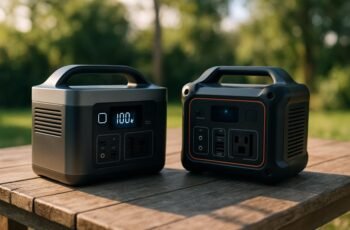
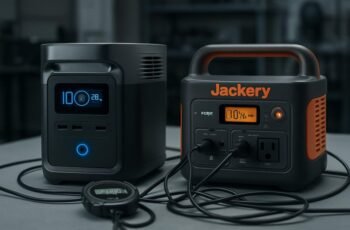
Imagine planning a weekend camping trip where your goal is to power multiple devices without worrying about battery life. When choosing between the Anker Powerhouse and the Jackery Explorer, we need to evaluate how their capacity, portability, and charging options match up against real-world demands. Both have strengths that cater to different users, but which features truly make one stand out over the other? Let’s break down the key differences to help clarify that.
Key Takeaways
- Anker Powerhouse offers higher battery capacity and longer runtime compared to Jackery Explorer under similar loads.
- Jackery Explorer is more compact and lighter, making it easier to carry for short trips than the heavier Anker Powerhouse.
- Anker includes more USB-C ports and better-spaced front panel ports, reducing cable clutter versus Jackery’s compact port grouping.
- Jackery supports diverse charging options including car and wall inputs, while Anker emphasizes higher inverter efficiency for longer device use.
- Jackery targets casual users with competitive pricing and app monitoring; Anker appeals to power users valuing durability and extended off-grid use.
Battery Capacity and Runtime Comparison
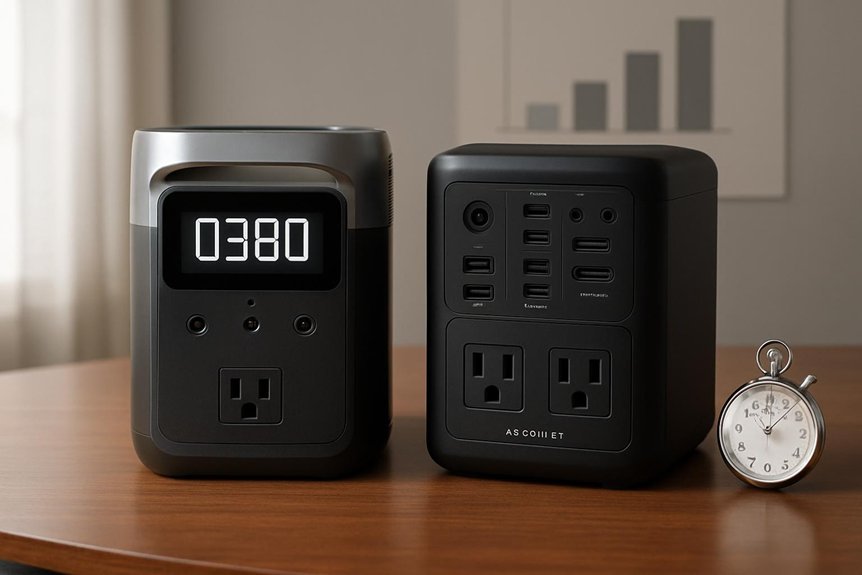
While both the Anker Powerhouse and Jackery Explorer offer portable power solutions, their battery capacities and runtimes differ markedly, impacting how long they can support your devices. The Anker Powerhouse typically boasts a higher battery capacity, which translates into longer runtime longevity under similar loads. However, battery efficiency also plays a vital role; the Jackery Explorer often uses optimized power management systems that can extend usage time despite a smaller capacity. When comparing runtime longevity, we need to take into account device draw and inverter efficiency—factors where both models vary. Ultimately, the Anker tends to deliver longer continuous use, but Jackery’s efficient battery management can close the gap in real-world scenarios. Understanding these nuances helps us choose the ideal power station based on our specific runtime and efficiency needs.
Portability and Design Differences
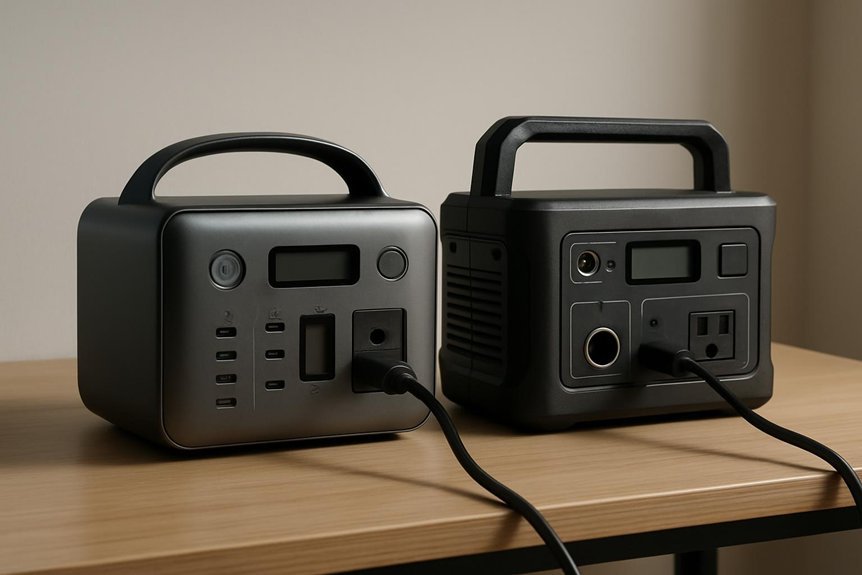
When comparing the Anker Powerhouse and Jackery Explorer, we need to evaluate size and weight, as these directly impact portability. The build quality and materials also influence durability and user experience, while handle design and port placement affect ease of use on the go. Let’s examine how each model balances these factors.
Size And Weight
Both the Anker Powerhouse and Jackery Explorer offer portable power solutions, but their size and weight present notable differences that affect how we carry and use them. When analyzing these aspects, we notice:
- Weight Distribution: The Anker Powerhouse often has a more balanced weight distribution, making it easier to carry despite being heavier overall. The Jackery Explorer, though lighter, can feel bulkier due to uneven weight placement.
- Compact Design: Jackery Explorer leans toward a more compact design, fitting comfortably in smaller spaces, which enhances portability.
- Overall Weight: Anker Powerhouse tends to be heavier, which might limit ease of transport during extended trips.
Build Quality Materials
Although portability depends largely on size and weight, the materials and build quality of the Anker Powerhouse and Jackery Explorer play an essential role in their durability and user experience. The Anker Powerhouse uses high-grade ABS plastic with reinforced corners, enhancing material durability against drops and impacts. Its construction techniques emphasize a solid, compact frame that resists flexing. Conversely, the Jackery Explorer employs a mix of ABS and polycarbonate, offering a slightly lighter feel but still maintaining robust protection. Its construction techniques focus on modular assembly, which can facilitate repairs but may affect long-term sturdiness. Both units feature well-sealed exteriors to guard internal components from dust and moisture, but Anker’s tighter tolerances suggest a marginal edge in overall material durability. Ultimately, these differences influence how each device holds up during travel and regular use.
Handle And Port Placement
Material quality sets the stage, but how we carry and connect to these power stations greatly impacts their everyday usability. When comparing the Anker Powerhouse and Jackery Explorer, handle ergonomics and port accessibility stand out as key differences.
- Handle Ergonomics: The Jackery Explorer features a sturdy, well-contoured handle that feels comfortable during extended carrying. In contrast, Anker’s handle is functional but less refined in shape, which may affect grip comfort.
- Port Accessibility: Anker Powerhouse arranges its ports on the front panel with ample spacing, reducing cable clutter. Jackery’s ports are grouped more compactly, which can occasionally complicate simultaneous connections.
- Port Variety: Both offer multiple output options, yet Anker includes more USB-C ports, enhancing versatility for modern devices.
Power Output and Charging Options Explained
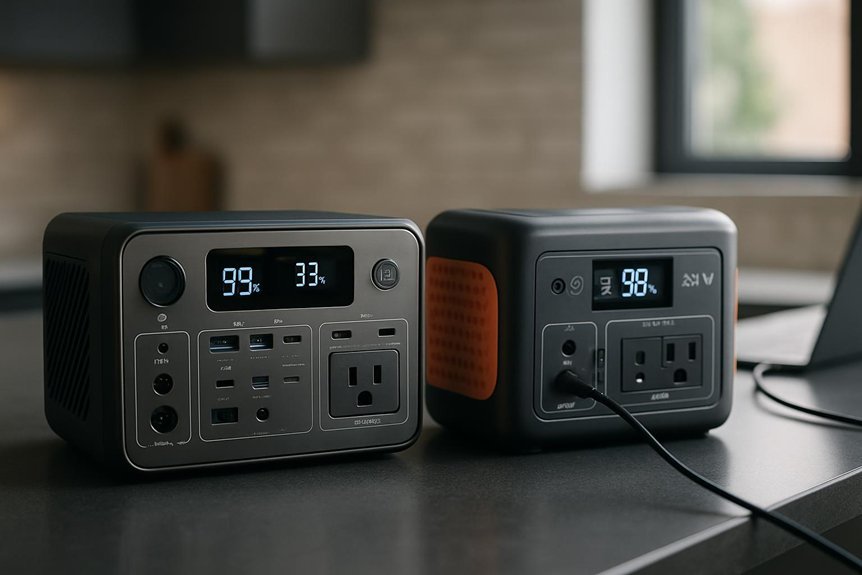
When evaluating portable power stations like the Anker Powerhouse and Jackery Explorer, understanding their power output and charging options is vital to matching them with our specific needs. Both units deliver reliable wattage, but the Anker Powerhouse often features higher inverter efficiency, meaning it converts stored DC power to AC more effectively. This can translate to longer device runtimes. With regard to charging, both models support solar compatibility, allowing us to recharge via solar panels, which is essential for off-grid use. However, the Jackery Explorer typically offers a wider range of input options, including car charging and wall outlets, providing versatile recharging methods. By analyzing these factors, we can better determine which portable power station aligns with our usage scenarios and energy demands.
User Interface and Ease of Use Features
Understanding power output and charging capabilities is just one piece of the puzzle; how we interact with these devices daily plays an equally significant role. When comparing the Anker Powerhouse and Jackery Explorer, their user interface design and overall user experience stand out distinctly.
- Display Clarity: Both units offer clear LCD screens, but Jackery’s interface provides more detailed real-time data, enhancing user experience.
- Button Layout: Anker’s simpler button arrangement supports quick operation, while Jackery’s multiple buttons may require a short learning curve.
- App Integration: Jackery includes an app for remote monitoring, improving user interface design, whereas Anker lacks this feature.
Safety and Durability for Outdoor Use
When comparing Anker Powerhouse and Jackery Explorer, we need to closely examine their build quality and how well they’re designed to handle outdoor conditions. Both models include safety features like overcharge protection and temperature control, but their durability under rugged use varies. Let’s analyze these factors to understand which unit offers better reliability for outdoor adventures.
Build Quality Comparison
Although both the Anker Powerhouse and Jackery Explorer are designed for outdoor use, their build quality reveals distinct approaches to safety and durability. When evaluating materials durability and construction techniques, we notice key differences:
- Anker Powerhouse uses reinforced ABS plastic with a rugged finish, enhancing impact resistance and long-term durability.
- Jackery Explorer opts for a smoother polycarbonate shell, which offers lightweight portability but may be less resistant to heavy shocks.
- Both units feature sealed ports and rubberized edges, but Anker’s design integrates additional internal bracing, improving structural integrity under rough conditions.
Safety Features Overview
Since we rely on portable power stations in unpredictable environments, evaluating their safety features is essential for both user protection and device longevity. Both the Anker Powerhouse and Jackery Explorer integrate overheating protection to prevent internal damage during extended use or high power draw. This feature automatically regulates temperature, ensuring the units remain safe under stress. Additionally, surge protection is built into both models, shielding connected devices from voltage spikes caused by unstable power sources or sudden load changes. While the Powerhouse offers a slightly more advanced thermal management system with enhanced cooling vents, the Explorer compensates with robust circuitry designed to minimize surge impact. Overall, each device prioritizes safety effectively, but subtle differences in design may influence durability during rigorous outdoor use.
Price Points and Value for Money
While both the Anker Powerhouse and Jackery Explorer offer reliable portable power solutions, their price points reflect different priorities in capacity, features, and build quality. Conducting a value comparison and cost analysis helps us understand which model delivers better bang for our buck.
- Anker Powerhouse generally commands a higher price due to its robust build and slightly higher capacity, appealing to users prioritizing durability and performance.
- Jackery Explorer offers competitive pricing with a focus on user-friendly features and portability, making it attractive for casual or light users.
- Considering accessories, warranty, and customer support is essential in the overall value comparison, as these factors influence long-term satisfaction beyond initial cost.
This balanced cost analysis allows us to weigh upfront investment against practical benefits effectively.
Which Is Best for Your Specific Needs?
How do we determine which portable power station suits our unique needs best? It begins with evaluating our specific usage scenarios. For example, if we need a power station primarily for short camping trips, a lighter, more compact model like the Jackery Explorer may be ideal. Conversely, for extended off-grid use or power-hungry devices, the Anker Powerhouse’s higher capacity could serve us better. Customer reviews further clarify real-world performance, highlighting durability, recharge speed, and support quality. By analyzing these insights alongside technical specs, we can match features to our priorities—whether portability, battery life, or power output. Ultimately, neither option fits all situations perfectly, so taking a tailored approach guarantees we choose the power station that aligns precisely with our lifestyle and demands.
Frequently Asked Questions
Can Either Power Station Jump-Start a Car?
Neither unit offers jump start capacity for vehicles, as their battery technology focuses on portable power output rather than high-current bursts. We should consider dedicated jump starters for reliable car engine ignition instead.
Are There Any Smartphone Apps for Remote Control?
Neither unit offers remote connectivity or app compatibility for remote control. We’ve analyzed their features thoroughly, and both prioritize straightforward, manual operation over smartphone integration, limiting remote management options for users seeking app-based controls.
Do These Units Support Solar Panel Charging?
They say, “Make hay while the sun shines,” and both units support solar panel compatibility, letting us harness sunlight. We’ve found their charging efficiency varies by panel type, so matching specs guarantees ideal solar energy use.
What Is the Noise Level During Operation?
We’ve found user reviews highlight low noise levels during operation, reflecting strong operational efficiency. Both units run quietly enough for most environments, with minimal fan noise, ensuring they won’t disrupt your activities or outdoor experience.
Are There Any Accessories Included in the Box?
Think of accessories as the toolkit accompanying a sturdy ship; both units include charging cables and adapters. Considering battery capacity and weight comparison, these essentials guarantee efficient use without adding bulk, aiding portability and power management seamlessly.
Conclusion
After weighing the Anker Powerhouse’s robust capacity and durability against Jackery Explorer’s portability and user-friendly design, it’s clear both serve different needs. As the saying goes, “Don’t put all your eggs in one basket”—your choice depends on whether you prioritize long runtimes or convenience on the go. Ultimately, understanding your specific power demands and outdoor habits will guide you to the best fit, ensuring reliable energy wherever your adventures take you.