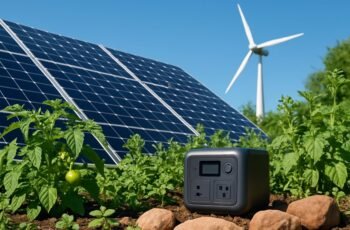
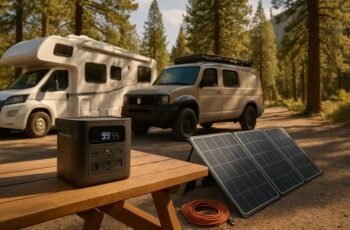
When we head out camping, having reliable portable power can make all the difference in comfort and convenience. It lets us keep our devices charged, run small appliances, and stay safe with proper lighting—all without relying on traditional power sources. But with so many options available, from solar panels to battery packs, it’s important to understand which setup fits our needs best. Let’s explore how to make smart choices that keep us powered efficiently and sustainably.
Key Takeaways
- Portable power enables electricity generation and storage for lighting, charging, and appliances during camping, ensuring safety and comfort off-grid.
- Battery packs, solar panels, and portable generators are common power sources, each varying in capacity, portability, and environmental impact.
- Choosing the right power source depends on efficiency, weight, usage duration, charging speed, and user reliability reviews.
- Solar panels offer eco-friendly, quiet power but require sunlight, regular maintenance, and may have higher upfront costs.
- Essential accessories and safety practices, like smart power strips and secure storage, optimize power use and protect gear in outdoor conditions.
What Is Portable Power and Why It Matters for Camping
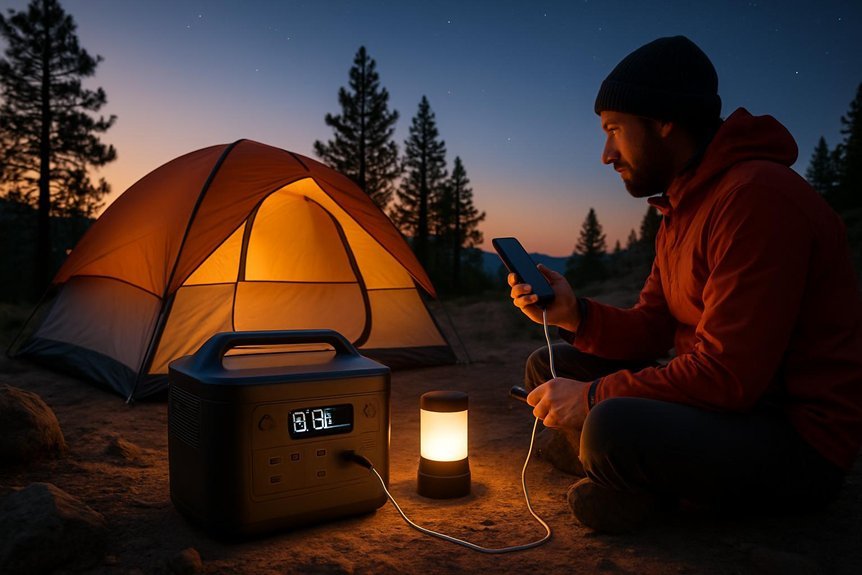
Portable power is the ability to generate and store electricity in a compact, mobile form, allowing us to use and charge devices away from traditional power sources. When camping, portable power becomes one of our essential camping essentials, ensuring we stay connected, safe, and comfortable. It lets us run lights, charge phones, operate small appliances, and power emergency gear without relying on unreliable or unavailable grid power. Using portable power also encourages energy conservation, as we learn to manage and prioritize device usage to extend battery life. By choosing efficient power solutions, we reduce waste and environmental impact. Understanding portable power’s role in camping helps us prepare better, making our outdoor adventures more enjoyable and less stressful, with reliable energy at our fingertips.
Different Types of Portable Power Options for Campers
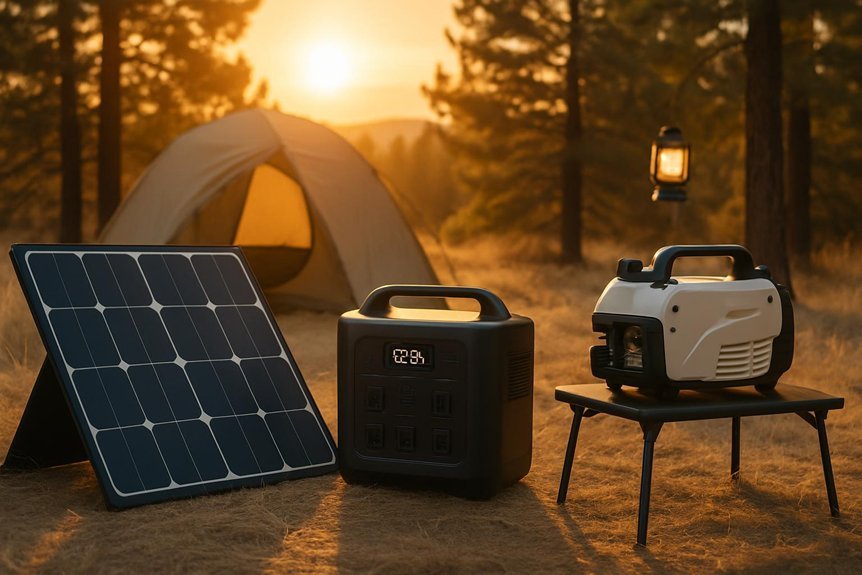
Let’s explore the main portable power options that suit different camping needs: battery packs and banks, solar chargers and panels, and portable generators. Each offers unique benefits depending on how much power you need and how long you plan to stay off-grid. Understanding these choices helps us pick the right gear to keep our devices charged and our trips powered up.
Battery Packs and Banks
Battery packs and banks serve as vital lifelines when we’re out camping, providing reliable power for our devices and gear. When choosing one, we focus on battery capacity—measured in milliamp-hours (mAh) or watt-hours (Wh)—to guarantee it meets our energy needs. We also consider charging options; some packs offer multiple USB ports or even USB-C fast charging, letting us power several devices simultaneously. Weight considerations are important since heavier packs can slow us down, so we aim for a balance between capacity and portability. Additionally, we think about environmental impact, preferring battery banks with rechargeable lithium-ion cells over disposable alternatives to reduce waste. By weighing these factors, we pick the best battery pack that keeps us powered without adding unnecessary bulk or harming nature.
Solar Chargers and Panels
Although we often rely on battery packs, solar chargers and panels offer an eco-friendly way to keep our devices powered during camping trips. These devices convert sunlight into electricity, providing a renewable power source that minimizes environmental impact. When choosing solar panels, we focus on solar efficiency—the rate at which sunlight converts to usable energy—since higher efficiency means faster charging. Portable durability is also essential; panels and chargers must withstand outdoor conditions like rain and rough handling. We appreciate versatile charging options, from compact foldable panels to rigid setups, allowing us to adapt to different device needs. By integrating solar chargers into our gear, we reduce reliance on disposable batteries or electricity sources, making our camping experience more sustainable and self-sufficient.
Portable Generators Overview
While solar chargers provide a clean and quiet way to power our devices, portable generators offer a more robust solution when we need higher power output or longer runtimes. There are two main types: gas-powered and inverter generators. Gas models deliver strong, consistent power but require regular generator maintenance like oil changes and air filter cleaning to stay reliable. Inverter generators are quieter and more fuel efficient, making them ideal for smaller campsites or sensitive electronics. When choosing, we consider fuel efficiency, runtime, and ease of transport. Proper generator maintenance guarantees safety and longevity, especially on extended trips. By understanding these options, we can pick a portable generator that fits our camping needs without sacrificing convenience or performance.
How to Choose the Right Portable Power Source for Your Trip
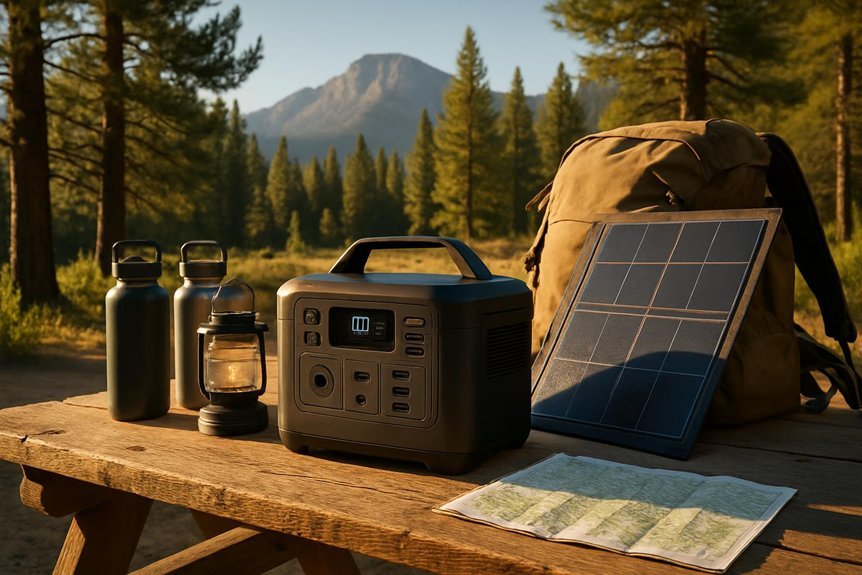
How do we determine the best portable power source for our camping trip? We start by weighing key factors to meet our specific needs. Power efficiency and energy conservation help us maximize usage without wasting resources. Considering weight is essential since lighter gear means easier transport. We also evaluate usage duration to guarantee the power lasts through our trip. Charging speed matters for quick replenishment, especially on longer stays. Of course, environmental impact influences our choice—opting for greener options when possible. To make informed decisions, we compare brands and check user reviews for reliability and performance insights.
- Power efficiency and energy conservation
- Weight considerations for easy transport
- Usage duration to match trip length
- Charging speed and convenience
- Brand comparisons and user reviews
Solar Panels for Camping: Pros, Cons, and Setup Tips
Solar panels offer a clean, renewable way to keep our devices charged while camping, especially on sunny days. However, we need to contemplate factors like weather dependency and setup complexity before relying on them. Let’s explore the key benefits, potential challenges, and practical tips to get the most from a solar setup on our trips.
Advantages of Solar Panels
Because we rely on portable power during our camping trips, choosing an efficient and sustainable energy source is essential. Solar panels offer impressive solar efficiency, converting sunlight quickly into usable power. They have a low environmental impact, making them an eco-friendly choice. Charging speed varies by model, but many deliver reliable power throughout the day without noisy generators. Space considerations matter; compact, foldable panels fit well in our gear. Cost analysis shows that while initial investment can be higher, long-term savings and durability pay off. Maintenance tips from user reviews highlight easy cleaning and minimal upkeep. Brand comparisons help us pick trusted models with strong warranties.
Key advantages include:
- High solar efficiency
- Low environmental impact
- Quiet, steady charging speed
- Compact design for space-saving
- Long-term cost-effectiveness
Potential Drawbacks to Consider
Although portable solar panels bring many benefits to our camping adventures, we should also consider some potential drawbacks before relying on them entirely. Weight considerations are important, as some solar setups can add bulk to our gear, impacting portability. From a cost analysis perspective, quality panels and batteries require a significant upfront investment. Charging speed varies with sunlight availability, making power supply unreliable during cloudy days or dense forest cover—highlighting usage limitations. Maintenance challenges arise as panels need regular cleaning to function efficiently, and delicate components can be damaged during transport. While solar power is environmentally friendly, manufacturing and disposing of panels carry an environmental impact we shouldn’t overlook. Being aware of these factors helps us make informed decisions about integrating solar power into our camping routines.
Effective Solar Setup Tips
When setting up our portable power system, we need to maximize sunlight exposure by positioning panels at the ideal angle and facing south whenever possible. Choosing the right setup location is essential for maximum solar efficiency. Avoid shaded areas and consider the sun’s path throughout the day to maintain consistent energy capture. Here are some effective solar setup tips to improve your camping power:
- Use adjustable mounts to fine-tune panel angles.
- Keep panels clean from dirt and debris.
- Avoid placing panels near tall trees or structures.
- Monitor weather conditions to anticipate reduced output.
- Connect panels in parallel or series based on your power needs.
Portable Battery Packs: Capacity, Charging, and Best Uses
Portable battery packs have become vital gear for camping, providing a reliable source of power for our devices and small appliances. When choosing one, we focus on battery capacity—measured in milliamp-hours or watt-hours—to guarantee it meets our energy needs without adding excessive weight. Charging methods vary; many packs support USB-C fast charging and solar input, giving us flexibility in the field. Considering power efficiency is important to maximize runtime and minimize waste. We also check device compatibility, verifying the pack supports the voltage and connectors our gadgets require. Best applications for these packs include charging phones, GPS units, and small lights. Balancing capacity and weight lets us carry enough power without burdening ourselves, making portable battery packs a practical, versatile solution for off-grid adventures.
Using Power Stations to Run Appliances Off-Grid
Since we need more power than battery packs can offer for larger devices, power stations become essential for running appliances off-grid. They provide reliable energy to keep our off-grid appliances functioning smoothly, making power management vital for efficiency. When selecting a power station, we focus on these factors:
- Capacity to match appliance wattage and runtime
- Multiple output ports (AC, USB, 12V) for versatility
- Battery type and recharge speed
- Portability and weight for easy transport
- Safety features like surge protection and temperature control
Essential Accessories to Maximize Your Portable Power Setup
To get the most out of our power stations, we need to pair them with the right accessories that enhance functionality and convenience. First, a reliable solar panel with good accessory compatibility guarantees efficient recharging while camping off-grid. We also benefit from power management tools like smart power strips that monitor and control energy use, preventing overloads. Extension cords designed for outdoor use extend reach without compromising safety. USB hubs and adapters tailored to our devices streamline charging multiple gadgets simultaneously. Additionally, carrying protective cases helps safeguard our setup from the elements. By choosing accessories that match our power station’s specifications, we optimize performance and usability. Thoughtful accessory selection is key to a smooth, efficient portable power experience during our camping adventures.
Safety Tips for Using Portable Power Devices Outdoors
Whenever we use power devices outdoors, we must prioritize safety to protect ourselves and our equipment. Taking proper safety precautions helps prevent accidents and damage. Let’s focus on key areas like weather considerations and equipment inspection to guarantee smooth operation. Being mindful of fire hazards and wildlife awareness keeps our campsite safe and undisturbed. Following correct charging protocols reduces risks, while having emergency plans and first aid ready prepares us for unexpected situations. Here are essential tips to keep in mind:
- Inspect all portable power gear before use for damage or wear
- Avoid using devices in wet or extreme weather conditions
- Set up power stations away from flammable materials to prevent fire hazards
- Store devices securely to avoid attracting wildlife
- Always carry a first aid kit and have emergency plans in place
Staying vigilant guarantees a safe, enjoyable outdoor experience.
How to Maintain and Care for Your Portable Power Gear
Maintaining and caring for our portable power gear guarantees it performs reliably throughout every camping trip. Following proper maintenance tips and usage guidelines enhances gear longevity. We should adopt smart charging practices, avoiding overcharging and using recommended chargers. Cleaning techniques like wiping dust and debris prevent damage, while seasonal care ensures batteries stay healthy during off-season storage. Addressing troubleshooting issues early avoids bigger problems.
| Aspect | Best Practices |
|---|---|
| Charging Practices | Use original chargers, avoid full depletion |
| Storage Solutions | Store in cool, dry places; partial charge for long-term storage |
| Cleaning Techniques | Use soft cloths; avoid moisture in ports |
Frequently Asked Questions
Can Portable Power Devices Charge Electric Vehicles While Camping?
Yes, we can charge electric vehicles while camping if the portable power device has sufficient charging capabilities and matches our vehicle compatibility. It’s essential to check power output and connector types to guarantee efficient, safe charging on the go.
How Do Weather Conditions Affect Portable Power Efficiency?
Weather’s like a mood swing for our portable power—cloudy skies dim solar efficiency, while cold chills slow battery performance. We’ve got to plan for these shifts to keep our gear charged and ready on every trip.
Are There Any Legal Restrictions on Using Portable Power in National Parks?
Yes, we’ve found that many national parks enforce solar regulations and generator guidelines to protect the environment. It’s important we check specific park rules before camping to guarantee our portable power use stays legal and eco-friendly.
Can Portable Power Sources Be Used for Emergency Communication Devices?
Yes, we can use portable power sources for emergency communication devices to guarantee communication reliability. For effective emergency preparedness, we should choose reliable, long-lasting power options that keep our devices charged during critical situations.
What Are the Environmental Impacts of Disposing Portable Power Batteries?
We once tossed batteries like old socks, unaware of harm. Improper disposal methods release toxins, polluting soil and water. So, we prioritize battery recycling to protect nature, turning waste into resources and reducing environmental impact effectively.
Conclusion
As we’ve seen, portable power transforms camping from a simple getaway into a fully equipped adventure. Whether it’s solar panels soaking up the sun or battery packs charging our devices, these tools keep us connected and comfortable. Let’s not forget—choosing the right power source isn’t just about convenience; it’s about respecting nature and staying safe. So, why settle for darkness when portable power can light up our path every step of the way?