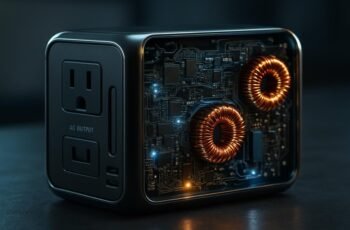
We might say an MPPT charge controller is the silent workhorse behind efficient solar energy systems. By continuously adjusting the voltage and current from solar panels, it guarantees we extract the maximum possible power. This optimization is not just a minor improvement—it can greatly enhance system performance. Understanding how this device functions and why it’s essential can transform how we approach solar power management, revealing opportunities that many overlook.
Key Takeaways
- MPPT charge controllers optimize solar panel output by continuously adjusting voltage and current to maximize energy efficiency.
- They enhance battery life by preventing overcharging and deep discharges with precise charge regulation and temperature compensation.
- MPPT controllers outperform PWM types by dynamically tracking maximum power points for higher energy harvest, especially in variable conditions.
- These controllers support high-voltage solar panels and reduce power loss, enabling longer cable runs and better system performance.
- Proper installation includes matching voltage ranges, following wiring guidelines, and regular maintenance to ensure stable, efficient operation.
What Is an MPPT Charge Controller and Why It Matters
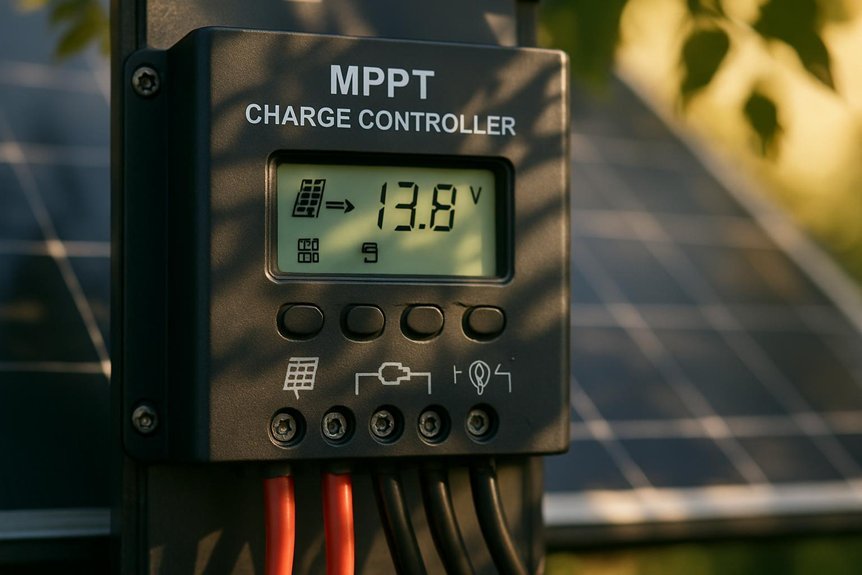
An MPPT (Maximum Power Point Tracking) charge controller optimizes the energy harvested from solar panels by continuously adjusting the electrical operating point. By employing MPPT technology, we enhance solar efficiency through precise energy conversion and charge regulation. This guarantees that the solar array operates at its maximum power point despite fluctuating environmental conditions. In renewable systems, such optimization is essential for maximizing power output and battery longevity. MPPT controllers adapt seamlessly to hybrid setups, balancing inputs from diverse energy sources while maintaining system stability. Furthermore, they facilitate smoother grid integration by stabilizing voltage and current, which reduces energy losses. Understanding these functions helps us appreciate why MPPT charge controllers are indispensable in modern solar power applications focused on efficiency and reliability.
How MPPT Charge Controllers Maximize Solar Power Output
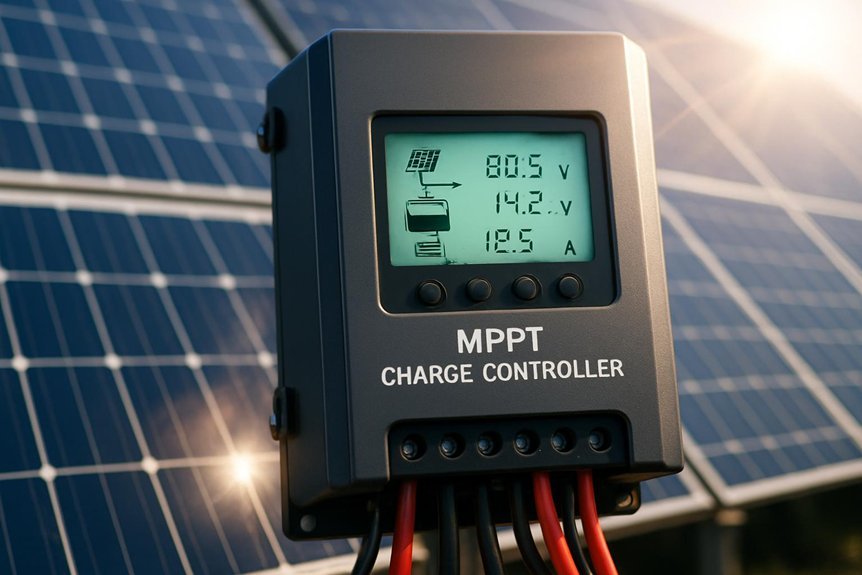
Although solar panels produce variable power depending on environmental conditions, MPPT charge controllers guarantee we extract the maximum possible energy by continuously tracking and adjusting the panel’s operating voltage and current. This dynamic process guarantees the panel operates at its maximum power point, where voltage and current combine for peak solar harvesting efficiency. By precisely matching the load to the solar array’s output characteristics, MPPT controllers optimize power transfer, minimizing energy losses inherent in fixed-voltage systems. This power optimization is critical during fluctuating sunlight, temperature variations, and shading, enabling consistent, high-efficiency energy capture. Consequently, MPPT charge controllers greatly enhance overall system performance, delivering more usable energy to batteries or loads than traditional methods, making them indispensable for effective solar power management.
MPPT vs PWM Charge Controllers: What’s the Difference?
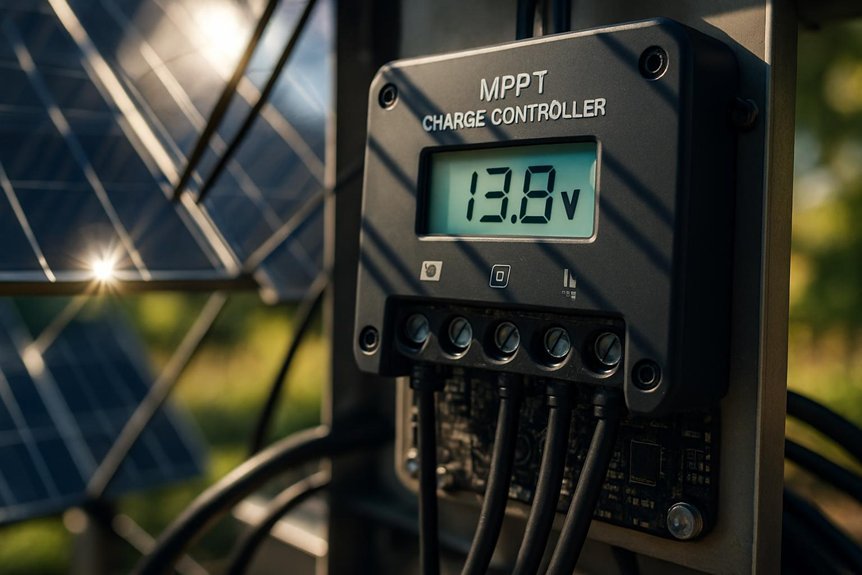
Understanding how MPPT charge controllers maximize solar power output naturally leads us to compare them with pulse-width modulation (PWM) charge controllers, another common technology in solar energy systems. MPPT controllers optimize power extraction by dynamically adjusting voltage and current, capturing the maximum power point under varying conditions. In contrast, PWM controllers regulate charging by directly connecting panels to batteries, resulting in limited voltage control. This fundamental difference highlights MPPT advantages, including higher efficiency and better performance in low-light or high-temperature scenarios. Conversely, PWM limitations become evident in systems with higher panel voltages or when solar irradiance fluctuates, causing energy losses. Choosing between MPPT and PWM depends on system size, budget, and performance requirements, but MPPT generally offers superior energy harvest through advanced tracking and power conversion capabilities.
How an MPPT Controller Tracks the Maximum Power Point
Because solar panel output varies with sunlight and temperature, MPPT controllers continuously analyze voltage and current to pinpoint the exact maximum power point. They employ sophisticated tracking algorithms that dynamically adjust the load to maximize power extraction. These algorithms, often based on perturb and observe or incremental conductance methods, iteratively measure panel voltage and current, calculating power output at each step. By comparing these values, the controller identifies the voltage at which power peaks and sets this as the operating point. This real-time feedback loop guarantees that the solar system operates at its best efficiency under changing environmental conditions. Through precise power optimization, MPPT controllers greatly improve energy harvest compared to fixed or less adaptive systems, maintaining peak performance throughout the day.
Benefits of Using an MPPT Charge Controller in Solar Systems
Let’s examine how MPPT charge controllers improve solar system performance by enhancing energy efficiency and extending battery lifespan. By continuously optimizing the power extraction from solar panels, these controllers maximize energy input. Additionally, they regulate charging to prevent battery overcharging and thermal stress, which greatly prolongs battery health.
Enhanced Energy Efficiency
While traditional charge controllers regulate voltage by simply limiting power, MPPT (Maximum Power Point Tracking) charge controllers actively enhance the voltage and current from solar panels to extract maximum energy. This reflects significant solar energy advancements, enabling efficiency improvement beyond conventional limits. By continuously tracking the panel’s maximum power point, MPPT controllers adjust operating parameters dynamically, enhancing energy harvest even under fluctuating conditions. This results in:
- Increased energy conversion rates, often up to 30% higher than PWM controllers
- Effective voltage matching between panels and batteries, minimizing losses
- Adaptation to environmental changes like temperature and shading, sustaining peak performance
Through these mechanisms, MPPT charge controllers maximize usable energy, improving system output and reliability with precision and technical sophistication.
Extended Battery Lifespan
When we optimize the charging process with an MPPT charge controller, we directly contribute to extending battery lifespan by reducing stress on the battery cells. The controller maximizes power transfer while maintaining ideal voltage and current, which improves battery care by minimizing overcharging and deep discharges. This precise regulation enhances lifespan extension by increasing effective charge cycles and preventing premature degradation. We must also consider temperature effects since high temperatures accelerate battery deterioration; MPPT controllers often integrate temperature compensation to adjust charging parameters accordingly. Maintenance tips include regularly checking connections and ensuring battery quality factors such as proper capacity and chemistry compatibility. By combining these practices with MPPT technology, we effectively prolong battery service life, optimize performance, and reduce replacement frequency in solar energy systems.
When Should You Choose an MPPT Charge Controller?
We should choose an MPPT charge controller when our solar panel voltage considerably exceeds the battery voltage, allowing ideal voltage conversion. It’s essential for maximizing energy efficiency, especially in systems with variable sunlight conditions. Additionally, large battery bank setups benefit from MPPT controllers due to their ability to handle higher power and improve overall system performance.
High Solar Panel Voltage
Solar panel voltage plays a critical role in determining the efficiency of energy conversion in photovoltaic systems. When dealing with high voltage solar arrays, selecting an MPPT charge controller becomes essential to optimize solar efficiency. Unlike PWM controllers, MPPT units can handle higher input voltages and convert them efficiently to match battery charging requirements.
We should consider an MPPT charge controller when:
- The solar panel array voltage exceeds the nominal battery voltage considerably
- There’s a need to minimize power loss due to voltage mismatch
- Higher voltage arrays enable longer cable runs with reduced current and voltage drop
Maximizing Energy Efficiency
Although MPPT charge controllers often come at a higher upfront cost, their ability to maximize energy harvest from photovoltaic arrays makes them the preferred choice in many scenarios. When we focus on solar panel enhancement, MPPT controllers continuously track the panel’s maximum power point, adjusting voltage and current to extract peak energy. This dynamic adjustment considerably improves energy storage efficiency compared to traditional controllers. We should choose MPPT controllers especially when solar panel voltage exceeds battery bank voltage or under variable weather conditions, where voltage and current fluctuate. By ensuring the system operates at ideal power points, MPPT controllers minimize energy loss, enhance charge rates, and extend battery life. Fundamentally, they provide a technically superior solution for maximizing overall system efficiency in diverse solar installations.
Large Battery Bank Systems
When managing large battery bank systems, selecting an MPPT charge controller becomes crucial to optimize charging efficiency and system performance. In large-scale installations, precise battery management is critical to extend battery life and guarantee reliability. MPPT controllers maximize power extraction by continuously adjusting input voltage, which is essential when handling high-capacity batteries. We should choose MPPT controllers when:
- Managing complex battery arrays requiring consistent voltage regulation
- Operating in environments with fluctuating solar irradiance
- Seeking to reduce energy losses and improve charge rates efficiently
How to Connect an MPPT Charge Controller to Your Solar Setup
Let’s begin by identifying the key components and wiring sequence required to connect an MPPT charge controller to our solar setup. Proper wiring techniques are critical to guarantee efficient energy flow and system safety. We start by connecting the solar panels to the controller’s input terminals, followed by linking the controller’s output to the battery bank. Finally, we connect the load terminals if applicable. To avoid errors, we must strictly follow polarity and wire gauge recommendations.
| Component | Connection Point |
|---|---|
| Solar Panels | Controller’s Solar Input |
| MPPT Controller | Battery Bank Terminals |
| Load (Optional) | Controller’s Load Output |
Using these steps minimizes troubleshooting tips like voltage drops or incorrect readings.
Common Issues With MPPT Controllers and How to Fix Them
We often encounter voltage compatibility problems with MPPT controllers that disrupt system efficiency or cause failures. Addressing these issues requires verifying input voltage ranges and ensuring proper matching with the solar array. Additionally, updating the controller’s firmware can resolve bugs and improve performance, so we’ll explore these solutions in detail.
Voltage Compatibility Problems
Although MPPT charge controllers are designed to enhance solar power conversion, voltage compatibility problems frequently arise and disrupt system performance. Voltage mismatch between the solar array and controller input can cause the MPPT to operate outside its ideal range, reducing charging efficiency. Additionally, improper voltage ratings can lead to erratic controller behavior or damage.
Common voltage compatibility issues include:
- Solar panel open-circuit voltage exceeding controller maximum input voltage
- Battery bank voltage not matching controller specifications
- Voltage fluctuations causing the MPPT algorithm to misinterpret maximum power points
To maintain ideal charging efficiency, we must guarantee system components have compatible voltage ratings and stabilize voltage levels. Addressing these issues prevents energy loss and protects the MPPT controller’s lifespan.
Firmware Update Solutions
When MPPT charge controllers exhibit inconsistent performance or fail to track the ideal power point accurately, outdated or buggy firmware often plays a significant role. Ensuring firmware compatibility with your controller model is essential before initiating the update process. We recommend following precise troubleshooting guidelines to avoid interrupting critical operations during installation. Firmware updates typically include software enhancements that improve performance monitoring and refine the user interface, making system management more intuitive. Maintaining version control allows us to track changes and rollback if necessary. The upgrade benefits are tangible: enhanced tracking accuracy, reduced faults, and better energy yield. By systematically applying firmware updates, we can mitigate common MPPT controller issues and sustain peak operation over time, ensuring reliable solar charging performance.
How MPPT Controllers Improve Battery Life and Efficiency
Since maximizing battery performance hinges on efficient energy management, MPPT controllers play an essential role by continuously enhancing the solar panel output to match the battery’s charging requirements. This precise battery management improves overall solar efficiency and prevents overcharging or deep discharging, which can degrade battery health.
MPPT controllers improve battery life and efficiency by:
- Adjusting voltage and current to extract maximum power from solar panels under varying conditions
- Regulating charge rates to maintain ideal battery voltage and temperature
- Minimizing energy loss during conversion, ensuring more usable electricity reaches the battery
Tips for Maintaining and Optimizing Your MPPT Charge Controller
Proper maintenance and enhancement of our MPPT charge controllers guarantee they deliver peak performance and extend system longevity. To guarantee peak function, regular controller maintenance is essential. We should inspect wiring connections for corrosion or looseness, verifying that all terminals are secure. Cleaning heat sinks and vents prevents overheating, which can degrade efficiency. Monitoring system parameters through the controller’s interface allows us to detect anomalies early. Efficiency tips include calibrating voltage and current sensors periodically to maintain accurate readings. Additionally, we must update firmware when available to incorporate performance improvements. Positioning the controller in a cool, ventilated area minimizes thermal stress, enhancing operational stability. By integrating these targeted maintenance and enhancement strategies, we maximize the MPPT controller’s efficiency and reliability, safeguarding our solar energy system’s overall effectiveness.
Frequently Asked Questions
Can MPPT Controllers Work With Wind or Hydro Power Systems?
Yes, we can use MPPT controllers with wind energy and hydro energy systems. They optimize voltage and current, maximizing power extraction despite fluctuating conditions, improving overall system efficiency in variable renewable energy applications like wind and hydro setups.
Are MPPT Charge Controllers Compatible With All Battery Types?
We’d say MPPT charge controllers aren’t magically compatible with all batteries. Their battery compatibility depends on the controller’s programming, but when matched right, they optimize charging efficiency, ensuring precise, reliable power management for various battery types.
How Do Temperature Changes Affect MPPT Controller Performance?
Temperature effects influence MPPT controller efficiency optimization by altering voltage and current characteristics. We must account for these variations to maintain peak performance, as extreme temperatures can reduce tracking accuracy and overall energy harvest.
What Is the Typical Lifespan of an MPPT Charge Controller?
Like a well-tuned engine, an MPPT charge controller typically lasts 10-15 years. Maintaining ideal MPPT efficiency requires regular charge controller maintenance, ensuring peak performance and extending its lifespan in varying environmental conditions.
Can MPPT Controllers Be Used in Off-Grid and Grid-Tied Systems?
Yes, we can use MPPT controllers in both off-grid and grid-tied systems. They optimize off-grid advantages by maximizing battery charging and enhance grid-tied efficiency through precise power conversion and real-time solar input tracking.
Conclusion
As we harness the sun’s energy, the MPPT charge controller acts like a skilled navigator, steering our solar system toward maximum performance. By continuously adjusting to the ideal power point, it guarantees we extract every drop of energy, much like squeezing the last bit of juice from a fruit. Embracing this technology not only enhances efficiency but also safeguards our battery’s health, making our solar investment both smarter and more sustainable.