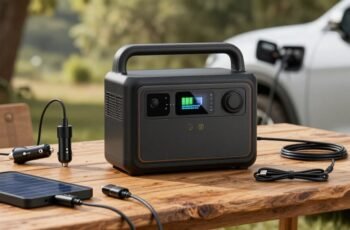
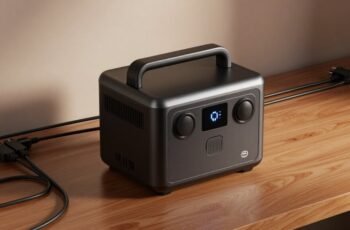
Understanding what 1000Wh power signifies is essential for evaluating energy capacity in various systems. It provides a clear measure of how long a device can operate or how much energy a battery can store. However, translating this figure into real-world applications requires careful consideration of device consumption and efficiency factors. To determine if 1000Wh suits your needs, it’s important to explore how this capacity translates into actual usage scenarios and potential limitations.
Key Takeaways
- 1000Wh represents the total energy capacity of a power system, indicating how much energy it can store or deliver.
- It means the system can provide 1000 watts for one hour or equivalent combinations (e.g., 500W for 2 hours).
- It helps estimate how long devices can run on that energy, based on their wattage.
- Higher capacity (like 1000Wh) supports longer runtimes and larger or multiple devices simultaneously.
- It is a standard measurement to compare the energy potential of batteries, generators, and solar systems.
What Does 1000Wh Power Mean and Why It Matters
Understanding what 1000Wh (watt-hours) represents is essential for evaluating the capacity and performance of power sources. It quantifies the total energy stored or delivered over time, indicating how long a device can operate at a specified consumption rate. Specifically, 1000Wh means the power source can supply 1000 watts for one hour or an equivalent combination, such as 500 watts for two hours. This measurement allows us to compare different batteries, generators, or solar systems objectively. Recognizing the significance of this value helps us assess whether a power system can meet our energy demands reliably and efficiently. Fundamentally, 1000Wh provides a clear, standardized metric for understanding a power source’s potential and suitability for various applications.
How to Calculate 1000Wh in Real-World Terms
To understand what 1000Wh translates to in actual use, we need to convert energy capacity into typical consumption scenarios. By applying specific power draw rates, we can determine how long a device operates on this capacity. This approach provides a clear, practical perspective on energy requirements and device performance.
Converting Wh to Usage
How can we translate 1000Wh into real-world energy consumption? To do this, we need to relate watt-hours to common device usage. For example, a typical LED light consumes about 10W. Running this light continuously for 100 hours uses 1000Wh. Similarly, a 100W laptop used for 10 hours also consumes 1000Wh. This conversion involves dividing the total watt-hours by the device’s power draw to determine usage duration. Conversely, knowing the duration and power consumption allows us to estimate energy consumption in watt-hours. By applying these calculations, we can accurately quantify how long specific devices operate on 1000Wh, translating the abstract energy capacity into tangible, real-world usage scenarios. This approach guarantees precise understanding of energy consumption relative to device power ratings and operational timeframes.
Practical Power Examples
Let’s examine specific examples to see how 1000Wh translates into real-world device usage. If we consider a 100W portable refrigerator, it could operate continuously for 10 hours on 1000Wh. A typical LED light bulb consuming 10W would run for 100 hours on the same energy. Similarly, a smartphone charger drawing 15W could charge a device approximately 66 times, assuming 100% efficiency. For larger appliances, a 2000W microwave could operate for just 30 minutes with 1000Wh. Understanding these calculations helps us grasp the practical implications of energy capacity, allowing us to better assess how long various devices can run on a given power reserve. This precision is essential for planning off-grid energy solutions or optimizing portable power systems.
Comparing 1000Wh Batteries: Capacity and Usage Scenarios
Different capacity levels of 1000Wh batteries determine their suitability for various applications, from portable devices to larger systems. Practical usage scenarios illustrate how energy demands influence battery selection and performance. Understanding these distinctions helps optimize power management for specific needs.
Different Capacity Levels
A 1000Wh battery capacity can serve a variety of applications, depending on the specific energy demands and usage scenarios. Different capacity levels influence operational duration, scalability, and efficiency. For example:
- Higher capacity batteries enable extended operation without frequent recharges.
- They support larger or more power-intensive devices.
- Smaller capacities may suffice for short-term or low-power applications.
- Modular systems can combine multiple batteries for increased capacity.
- Capacity variations impact weight, size, and portability.
Understanding these distinctions helps in selecting the most suitable battery for specific needs, balancing energy output with logistical constraints. Precise capacity measurement ensures accurate predictions of runtime, system performance, and overall utility, making it crucial for tailored energy solutions.
Practical Usage Examples
Comparing 1000Wh batteries reveals their diverse applications based on capacity and power demands; such batteries can power various devices for extended periods, depending on their usage scenarios. For example, a 1000Wh battery can run a 100W laptop for approximately 10 hours, or a 2000W power tool for about 30 minutes. In renewable energy systems, they support small off-grid setups, providing consistent backup for essential appliances. Portable power stations using 1000Wh capacity are suitable for outdoor activities, emergency preparedness, or remote work environments. Their high capacity enables sustained operation of multiple devices simultaneously, such as lights, smartphones, and small appliances. The specific application depends on the power consumption profile of connected devices and the duration of use, emphasizing the importance of matching capacity to operational requirements.
What Devices Can Run on 1000Wh Power?
Since 1000Wh capacity represents a substantial amount of stored energy, it can power a variety of devices across different applications. This capacity is sufficient for small to medium-sized electronics and appliances, making it versatile for portable power solutions. Devices that can operate on 1000Wh include:
- Laptop computers and multiple mobile devices
- Small refrigerators or mini-fridges
- LED lighting systems and portable floodlights
- Power tools such as drills and saws
- Medical equipment like portable monitors or oxygen concentrators
Understanding these applications highlights the practical utility of a 1000Wh power source, especially for emergency backup, outdoor activities, or off-grid scenarios. Its capacity supports both essential and recreational devices, ensuring continuous operation in various settings.
How Long Will a 1000Wh Battery Last?
The runtime of a 1000Wh battery depends primarily on the power consumption of the devices connected to it. To estimate duration, divide the battery capacity by the device’s wattage. For example, a device consuming 100W would run approximately 10 hours (1000Wh / 100W = 10 hours). Conversely, a device drawing 250W would operate for about 4 hours (1000Wh / 250W = 4 hours). The actual runtime can vary slightly due to efficiency losses, temperature, and battery age. Precise calculations require knowing the device’s exact power draw, as runtime decreases proportionally with increased consumption. This approach allows for an accurate projection of how long a 1000Wh capacity can sustain specific loads in real-world applications.
Factors That Affect the Actual Runtime of a 1000Wh Power Source
Several factors directly influence the actual runtime of a 1000Wh power source beyond its nominal capacity. These include the device’s power consumption, which determines how quickly energy is depleted, and the efficiency of the power conversion system, affecting how much energy is usable. Environmental conditions like temperature can impact battery performance, while the age and health of the battery influence its capacity retention. Additionally, the discharge rate plays a role; higher current draws reduce runtime due to internal resistance and heat generation.
- Device power draw and operational load
- Conversion efficiency of power electronics
- Ambient temperature and environmental conditions
- Battery age, cycle life, and degradation
- Discharge rate and current demand
Is a 1000Wh Battery Right for Your Needs? Key Considerations
Determining whether a 1000Wh battery suits your needs requires evaluating your specific energy demands and operational context. We analyze your device or system’s power consumption over typical usage periods, considering peak versus continuous loads. If your application requires sustained power for extended periods, a 1000Wh capacity may be appropriate; however, if your demands fluctuate or are low, it might be oversized. Efficiency factors, such as discharge rates and ambient conditions, also influence suitability. Additionally, physical size, weight constraints, and budget play vital roles in decision-making. Before selecting a 1000Wh system, conduct detailed power audits and assess whether its capacity aligns with your operational profile and logistical limitations to guarantee peak performance and cost-effectiveness.
Understanding the Limitations and Benefits of 1000Wh Power Systems
While 1000Wh power systems offer substantial capacity for portable energy needs, they also come with specific limitations that must be considered. Their size and weight can affect portability, especially for frequent transport or outdoor use. Charging times may be prolonged, limiting quick turnaround in high-demand situations. The cost of high-capacity systems can be significant, impacting budget considerations. Additionally, efficiency losses during energy conversion can reduce overall runtime.
Key benefits include:
- Extended runtime for multiple devices
- Increased energy independence
- Compatibility with diverse appliances
- Enhanced reliability for critical applications
- Reduced need for frequent recharging
Understanding these factors helps optimize system deployment, balancing capacity with practicality and ensuring effective energy management in various scenarios.
Frequently Asked Questions
Can a 1000WH Battery Fully Power an Entire Household?
Yes, a 1000Wh battery can power essential household devices temporarily, but it won’t sustain an entire household long-term without additional power sources, due to energy consumption rates and the battery’s limited capacity for continuous use.
How Does Temperature Affect 1000WH Battery Performance?
Like a delicate flower, a 1000Wh battery’s performance dips in extreme cold, shrinking capacity, while heat accelerates degradation. Temperature variations directly influence efficiency, longevity, and safety, demanding careful environmental control for peak operation.
Are 1000WH Batteries Suitable for Outdoor or Portable Use?
We find 1000Wh batteries highly suitable for outdoor or portable use due to their high energy capacity, enabling extended device operation; however, their size and weight may impact portability, so careful consideration of use-case and transport is essential.
What Is the Cost Comparison of 1000WH Batteries Versus Larger Systems?
We find 1000Wh batteries generally cost less upfront than larger systems, offering a budget-friendly, portable power option for basic needs. However, larger systems tend to provide more capacity, making them more suitable for extensive, long-term energy demands.
How Often Should a 1000WH Battery Be Recharged?
We recommend recharging a 1000Wh battery once it drops below 20% capacity, typically every 2-3 days with daily use, to maintain peak performance and battery longevity, considering usage patterns and load demands.
Conclusion
Understanding what 1000Wh power truly means helps us make informed decisions about energy needs. It’s a substantial capacity, but does it match your specific demands? By analyzing your device requirements and usage scenarios, we can determine if a 1000Wh system provides the right balance of endurance and portability. Ultimately, selecting the right capacity guarantees reliable performance—so, can you picture your devices running seamlessly, powered by just the right amount of energy?