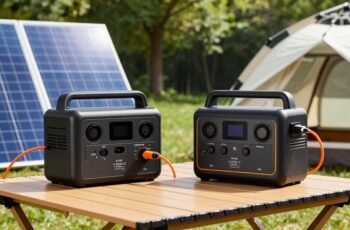
When evaluating portable generators, understanding how kilowatt-hours (kWh) reflect their energy capacity is vital. This measurement combines power output with runtime, providing a thorough view of how long a generator can sustain specific loads. Grasping this concept helps us select units that meet our practical needs efficiently. But to truly optimize generator performance, we need to analyze how kWh interacts with wattage and runtime—an essential aspect that warrants closer examination.
Key Takeaways
- kWh measures the total energy produced over time, combining power output and duration, not instant power.
- Higher kWh ratings indicate longer runtimes and greater energy capacity for your generator.
- To determine your energy needs, calculate each device’s wattage, convert to kWh, and sum for total consumption.
- Proper generator selection involves matching its kWh capacity to your actual energy requirements.
- Managing load and understanding peak vs. rated kWh prevent overloads and ensure efficient, reliable operation.
What Does Kilowatt-Hours (kWh) Measure in Portable Generators?
Have you ever wondered what the term kilowatt-hours (kWh) truly measures in the context of portable generators? Essentially, kWh quantifies the total amount of electrical energy a generator can produce over time. It’s a measure of energy capacity, combining power output (kilowatts) with duration (hours). For example, a generator rated at 1 kW running continuously for one hour produces 1 kWh of energy. This metric helps us understand how long a generator can sustain specific loads before refueling or recharging. It’s distinct from power ratings, which indicate instant output. By analyzing kWh, we can assess a generator’s efficiency and suitability for particular applications, ensuring that it meets the energy demands for extended use or emergency backup without overloading or premature exhaustion.
Why kWh Is Key to Choosing the Right Generator Capacity
Understanding the total energy capacity of a generator in relation to kWh allows us to select the appropriate size for specific needs. This measurement directly correlates to how long a generator can sustain power output at a given load, making it essential for capacity planning. By analyzing kWh, we can determine whether a generator can meet our energy demands over a specified period, ensuring reliability and efficiency. Accurate kWh assessment helps us avoid under-sizing, which leads to inadequate power supply, or over-sizing, which results in unnecessary costs. Hence, understanding kWh enables precise capacity matching, optimizing performance, and ensuring the generator aligns with usage patterns, whether for emergency backup, recreational use, or continuous industrial operation. This focus on energy measurement is fundamental to making informed, technical decisions.
How to Calculate Your Energy Needs Using kWh
To determine your energy needs accurately, we start by estimating the power requirements of each device or appliance you plan to run. Next, we calculate your daily consumption by summing these requirements over typical usage periods. This process enables precise sizing of your generator based on your total kWh needs, ensuring reliable and efficient power supply.
Estimating Power Requirements
Calculating your energy needs is essential for selecting an appropriately sized portable generator, and this process begins with estimating your total power consumption in kilowatt-hours (kWh). To do this accurately, we analyze the power draw of each device or appliance, considering both their rated wattage and operational duration. We convert wattage to kilowatts by dividing by 1,000, then multiply by the estimated hours of use to obtain the energy contribution in kWh. Summing these values provides a thorough picture of your total energy requirement. This systematic approach ensures you account for peak loads and continuous operation, facilitating a precise match between your energy demand and the generator’s capacity. Accurate estimation minimizes under- or over-sizing, optimizing performance and efficiency.
Calculating Daily Consumption
When determining your daily energy consumption, the key is to quantify how much energy each device uses over a typical day in kilowatt-hours (kWh). To do this, we identify each device’s power rating in watts and estimate its daily runtime in hours. Multiplying the power in kilowatts (divide watts by 1,000) by the hours it operates yields its daily energy use in kWh. Summing these values across all devices gives your total daily energy requirement. This calculation helps you understand your actual power needs and guides the selection of an appropriate generator. Precise estimation assures waste, promotes efficiency, and prevents under- or over-sizing the generator, optimizing performance and cost-effectiveness in meeting your energy demands.
Understanding the Relationship Between Wattage, Runtime, and kWh
Understanding how wattage influences runtime is essential for accurate energy planning, as higher power consumption directly reduces operational duration. Factors such as load variation, generator efficiency, and fuel type markedly impact runtime and, consequently, the total energy output measured in kWh. Analyzing these relationships allows us to optimize generator use and better estimate energy availability for specific needs.
Power Consumption Calculation
How do wattage, runtime, and kilowatt-hours interconnect to determine a portable generator’s power consumption? Power consumption depends on calculating the total energy output over time. The key relationship is:
- Wattage (W) indicates the power draw at any moment.
- Runtime (hours) reflects how long the generator runs continuously.
- Kilowatt-hours (kWh) measure total energy used, calculated as: ( text{kWh} = frac{text{Wattage} times text{Runtime}}{1000} ).
Runtime Impact Factors
What factors influence the runtime of a portable generator, and how do these factors interact with wattage and energy consumption? The primary determinant is the generator’s fuel capacity relative to its power output. Higher wattage loads increase energy draw, reducing runtime proportionally, because the generator consumes fuel at a faster rate under heavier loads. Conversely, lower wattage operation extends runtime, as fuel consumption diminishes. The generator’s efficiency, including engine design and load management, also plays a role; more efficient models convert fuel to electrical energy more effectively, prolonging operation. Environmental factors such as temperature and altitude can impact fuel combustion efficiency, subtly affecting runtime. Ultimately, understanding these interdependencies enables precise predictions of generator performance based on wattage demands and fuel capacity, optimizing usage and planning.
Comparing Portable Generators: What kWh Ratings Tell You About Performance
When evaluating portable generators, the kWh rating provides an essential metric for gauging their performance capabilities. This figure indicates the total energy storage or output capacity, enabling comparisons across models. Key insights include:
- Energy Capacity: Higher kWh ratings typically correlate with longer runtime and greater power availability, essential for extended use.
- Power Density: Comparing kWh ratings relative to weight or size reveals efficiency; a higher rating in a compact unit signifies better design.
- Operational Suitability: Generators with specific kWh ratings align with different energy needs, from small appliances to critical systems, guiding appropriate selection.
Understanding these aspects allows for a more precise evaluation of a generator’s performance potential, ensuring it meets specific energy demands effectively.
How to Read and Interpret Generator Specifications for Better Decisions
Reading and interpreting generator specifications accurately enables us to make informed purchasing decisions aligned with specific energy needs. To do so, we focus on key metrics like rated power output, surge capacity, fuel efficiency, and runtime. The rated power indicates continuous output, while surge capacity reflects the maximum power a generator can handle briefly. Fuel efficiency, often expressed as hours per gallon, influences operational costs and runtime. Additionally, understanding voltage, amperage, and frequency ensures compatibility with your devices and local standards. Precise interpretation involves cross-referencing these specifications with your anticipated load and usage patterns. By analyzing these details, we avoid overestimating or underestimating capacity, guaranteeing the generator meets demands without unnecessary costs or performance issues. This analytical approach supports smart, data-driven decisions in selecting the right portable power source.
Tips for Optimizing Your Generator Use Based on kWh Capacity
To optimize your generator’s performance based on its kWh capacity, it is vital to accurately assess your energy consumption patterns and match them with the generator’s output capabilities. Precise load management ensures efficiency and prevents overloading. Consider these strategies:
- Prioritize essential loads—identify critical devices, and run only those to maintain ideal kWh utilization.
- Implement load balancing—distribute power demand evenly across circuits to prevent peak overloads and maximize runtime.
- Schedule usage strategically—operate high-energy appliances during periods of lower overall consumption, reducing strain on the generator.
Common Mistakes to Avoid When Considering kWh in Portable Generators
Misjudging the kWh capacity of a portable generator often leads to critical errors that can compromise both performance and safety. Underestimating load requirements may cause overloading, damaging sensitive electronics or causing shutdowns. Conversely, overestimating capacity results in inefficient fuel use and unnecessary expense. It’s essential to accurately match your power needs with the generator’s kWh output. Consider the following common pitfalls:
| Mistake | Consequence | Prevention |
|---|---|---|
| Ignoring startup surge power | Damage to appliances | Account for initial surge in calculations |
| Overestimating needs | Higher costs | Precisely assess peak and continuous loads |
| Failing to check runtime | Unexpected shutdowns | Evaluate fuel capacity against usage |
| Not understanding rated vs. peak kWh | Mismatched expectations | Differentiate continuous and surge ratings |
Frequently Asked Questions
How Does kWh Relate to Generator Fuel Efficiency?
Kwh directly measures the energy output of a generator, and higher efficiency means more kwh per unit of fuel. We analyze fuel consumption relative to kwh output to optimize performance, reduce costs, and improve overall generator efficiency.
Can kWh Ratings Predict Generator Lifespan?
Kwh ratings don’t directly predict generator lifespan, but higher capacities often indicate more robust components. We analyze usage patterns and maintenance to estimate lifespan, understanding that consistent operation and proper care considerably influence durability and longevity.
Is kWh the Only Factor in Generator Performance?
Kwh isn’t the sole star guiding generator performance; factors like efficiency, load capacity, and durability shape its true output. We analyze these elements to guarantee reliable power, much like a symphony where each instrument plays a crucial role.
How Do Weather Conditions Affect kWh Output?
Weather conditions directly impact Kwh output by affecting generator efficiency; cold temperatures can reduce fuel combustion efficiency, while high humidity or wind may cause fluctuations, ultimately decreasing overall power generation and influencing performance consistency in portable generators.
What Safety Considerations Are Linked to kWh Capacities?
Bite the bullet and prioritize safety when dealing with kWh capacities; always adhere to manufacturer guidelines, avoid overloads, guarantee proper grounding, and use appropriate circuit protection to prevent electrical hazards and equipment damage.
Conclusion
In analyzing generator capacity, we often assume higher kWh always equates to better performance. However, this isn’t necessarily true without context—runtime, load, and efficiency matter equally. Our data suggests that understanding the nuanced relationship between wattage, duration, and energy consumption reveals that ideal generator selection hinges on precise kWh calculations tailored to specific needs. Ultimately, informed decisions depend on an all-encompassing grasp of these interconnected factors rather than solely chasing higher kWh ratings.