When we’re out in the field, reliable power can make or break a shoot. Portable power stations offer a clean, quiet solution that keeps our cameras, lights, and audio gear running smoothly without the hassle of generators or scarce outlets. But choosing the right unit and managing its use efficiently requires a clear understanding of your equipment’s needs and battery performance. Let’s explore how to optimize portable power for filmmaking.
Key Takeaways
- Choose portable power stations with sufficient watt-hour capacity and compatible ports for all filmmaking equipment.
- Monitor and manage battery life by avoiding full discharges and using smart chargers to extend runtime.
- Position power stations strategically to minimize cable runs, secure them, and reduce environmental and theft risks on location.
- Prioritize essential gear and use energy-efficient accessories to optimize power consumption and extend operational time.
- Regularly inspect connections, battery health, and inverter status to prevent interruptions and maintain consistent power output.
Why Portable Power Stations Are Essential for Filmmaking
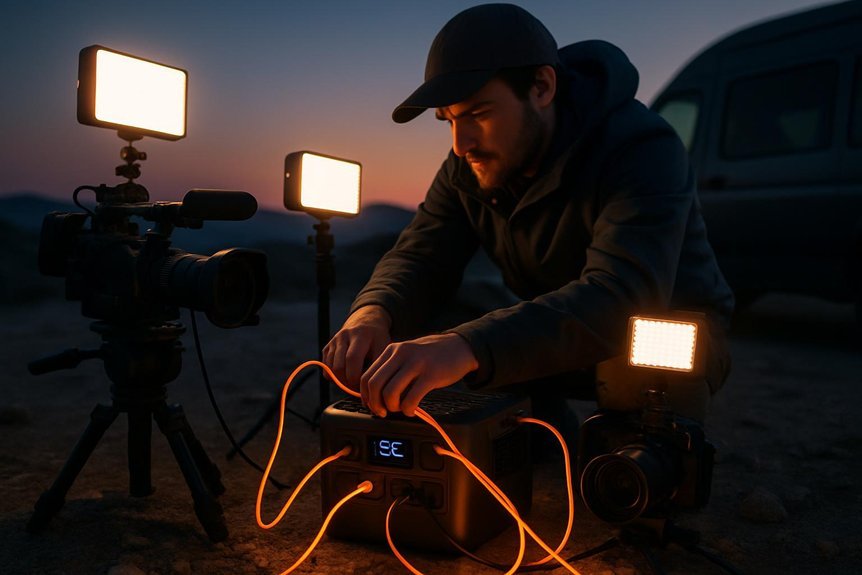
When we’re out on location, having at least one reliable portable power station is essential for keeping our filmmaking equipment running smoothly. Portable power stations address critical filmmaking logistics by providing consistent, on-demand power without relying on unpredictable external sources. They mitigate common location challenges such as lack of accessible outlets, variable power quality, and restrictions on generator use. By delivering clean, stable energy, these stations guarantee sensitive devices like cameras, monitors, and lighting operate without interruption or damage. Their compact size and ease of transport streamline setup and breakdown, saving valuable time on set. In short, portable power stations are practical solutions that maintain workflow efficiency, enhance equipment reliability, and ultimately support the technical demands we face during remote shoots.
How to Choose the Right Portable Power Station for Your Gear
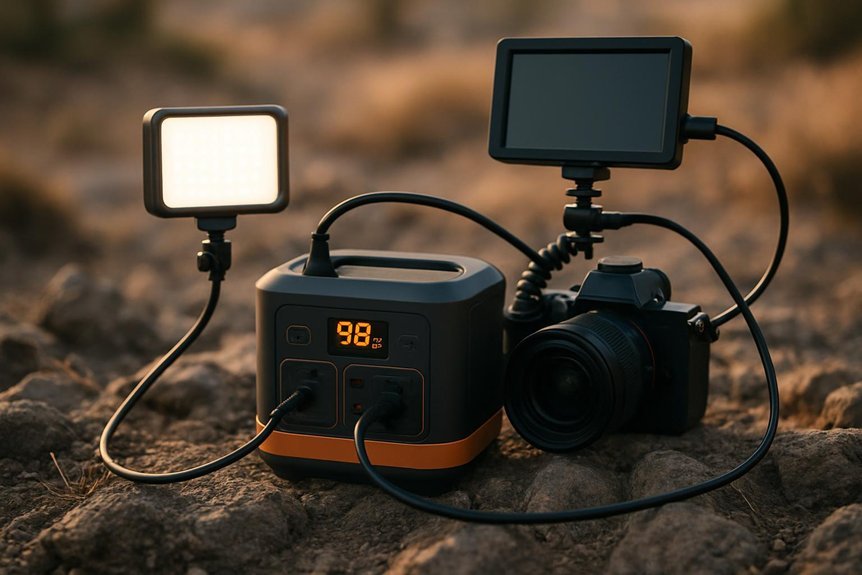
When choosing a portable power station, we need to assess our gear’s total power capacity requirements to guarantee consistent operation. It’s essential to verify port compatibility to connect all devices without adapters or interruptions. Additionally, considering battery life helps us plan for shooting durations and recharge intervals effectively.
Power Capacity Needs
Although selecting a portable power station might seem straightforward, evaluating our gear’s power capacity needs guarantees we choose a unit that reliably supports all devices without interruption. Understanding the power requirements and energy demands of each piece of equipment is vital. We start by listing wattage and expected runtime to calculate total energy consumption in watt-hours (Wh). This confirms we don’t underestimate capacity and avoid mid-shoot power failures.
| Equipment | Power Requirements (W) | Estimated Runtime (hrs) |
|---|---|---|
| Camera | 30 | 4 |
| LED Light Panel | 50 | 3 |
| Monitor | 40 | 5 |
Multiplying power requirements by runtime helps us select a station with adequate Wh capacity, matching our combined energy demands precisely.
Port Compatibility Options
Three key port types—AC outlets, USB ports, and DC outputs—drive our choice of a portable power station for filmmaking gear. We must match these port types with our equipment’s connector compatibility to guarantee seamless power delivery. Understanding wattage requirements is critical; each device demands specific power outputs, so the station must handle peak loads without exceeding device limitations. Voltage specifications vary across gear, so verifying that the station supports appropriate voltage levels prevents damage. Adapter options can expand compatibility, but they add complexity and potential inefficiency. Brand differences also matter—some manufacturers design proprietary ports, limiting cross-use. By carefully evaluating port types, connector compatibility, wattage requirements, and voltage specifications, we can select a portable power station that reliably powers our filmmaking equipment without compromise.
Battery Life Considerations
How long can our portable power station keep our filmmaking gear running during a shoot? To answer that, we must focus on battery life considerations, essential for uninterrupted production. Here are three key factors to assess:
- Capacity vs. Consumption – Match the station’s watt-hour (Wh) rating with your equipment’s total power draw to estimate runtime accurately.
- Battery Maintenance – Regularly calibrate and store batteries properly to preserve capacity and extend lifecycle, avoiding unexpected failures.
- Charging Strategies – Plan for timely recharging using solar, AC, or vehicle power sources to prevent downtime during critical moments.
Setting Up Portable Power Stations on Location
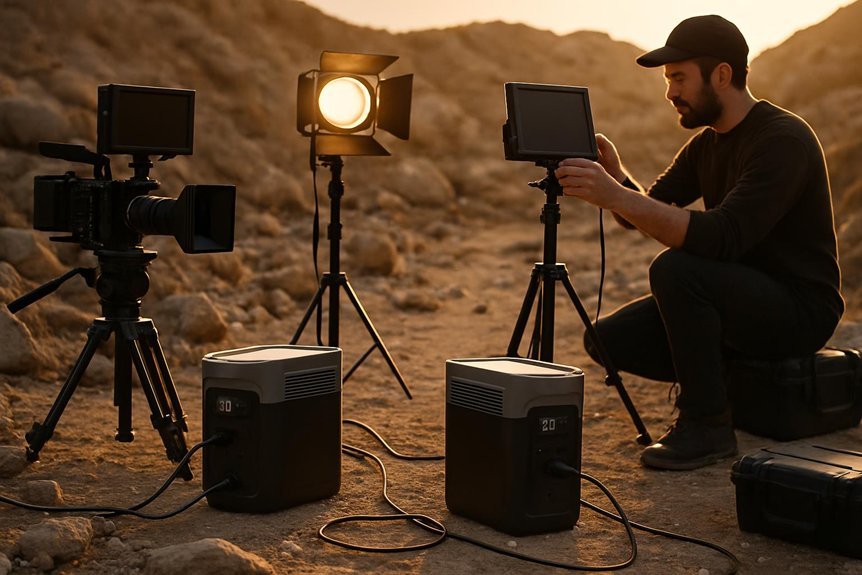
When setting up portable power stations on location, we need to first assess our power requirements based on the equipment we’ll use. This helps us address location challenges such as limited access to outlets, uneven terrain, or weather exposure. We select power stations with sufficient capacity and output ports to match our devices’ voltage and current demands. Next, we position the stations strategically to minimize cable runs and reduce trip hazards. Effective power management is critical; we monitor consumption closely and prioritize essential gear to extend runtime. We also prepare for contingencies by having backup batteries or solar panels ready. Finally, securing the stations against environmental factors and theft guarantees uninterrupted operation throughout the shoot. This systematic approach optimizes reliability and efficiency on any set.
Powering Cameras, Lights, and Audio Equipment Efficiently
Although each piece of filmmaking equipment has unique power demands, we can streamline on-set efficiency by tailoring our power delivery to cameras, lights, and audio devices individually. Optimizing camera power involves selecting batteries and adapters that confirm gear compatibility without overloading portable stations. Enhancing light efficiency requires matching LED or tungsten setups with appropriate power draws to extend shoot duration. For audio reliability, stable voltage supply and quality connectors prevent signal dropouts during location setup.
To manage energy effectively, consider these key points:
- Assess each device’s power consumption precisely to allocate station output efficiently.
- Use accessory choices that support standardized connections for seamless integration.
- Monitor energy management actively to balance load and avoid downtime.
This approach guarantees smooth operation across all critical equipment.
Tips for Maximizing Battery Life During Long Shoots
To maximize battery life during long shoots, we need to optimize power consumption by adjusting settings and minimizing unnecessary use. Choosing energy-efficient accessories helps reduce overall drain on our power sources. Additionally, managing charging cycles carefully guarantees batteries maintain their capacity throughout the day.
Optimize Power Consumption
Since power sources are often limited during extended shoots, we need to adopt strategies that stretch battery life without compromising equipment performance. Optimizing power consumption involves a combination of planning and real-time adjustments.
- Implement solar integration to supplement portable stations, reducing dependency on finite battery reserves and extending operational time.
- Utilize power monitoring tools to track consumption rates and identify high-drain devices, enabling informed decisions on load management.
- Prioritize powering only essential equipment, shutting down or disconnecting non-critical gear during idle periods to conserve energy.
Use Energy-Efficient Accessories
When we select accessories that prioritize low power consumption, we considerably extend our battery life during long shoots. Choosing energy-efficient lighting, such as LED panels with adjustable brightness, reduces wattage without compromising illumination quality. We also opt for compact monitors and wireless transmitters designed for minimal energy draw. These choices align with sustainable power solutions, minimizing our environmental impact while maintaining performance. Additionally, using accessories with built-in power-saving modes further conserves energy. It’s crucial to evaluate each component’s power specs and compatibility with our portable stations to avoid unexpected drains. By integrating energy-efficient accessories into our setup, we streamline power management and reduce the frequency of battery swaps or charges, keeping our shoots uninterrupted and efficient. This approach guarantees we maximize runtime without sacrificing technical quality.
Manage Charging Cycles
Although battery capacity and accessory efficiency play critical roles, how we manage charging cycles directly impacts the longevity and performance of our power sources during extended shoots. Effective charging strategies and precise cycle management guarantee we extract maximum runtime without prematurely degrading the batteries.
To optimize cycle management, we should:
- Avoid full discharges to prevent deep cycle damage and maintain capacity.
- Implement partial charges rather than frequent full charges to reduce stress on battery cells.
- Use smart chargers that regulate voltage and current, preventing overcharging and overheating.
Troubleshooting Common Portable Power Station Issues
Even the most reliable portable power stations can encounter issues that disrupt our filmmaking workflow. To address common problems, we start by checking for faulty connections—loose cables often cause power interruptions. Proper battery maintenance is essential; we regularly inspect battery health to prevent capacity loss. Overheating issues require us to guarantee adequate ventilation and avoid exceeding load limitations, as excessive demand strains the system. Inverter problems manifest as inconsistent power output; we verify inverter status and reset if necessary. Power surges can trigger display errors or system shutdowns, so we use surge protectors and monitor voltage spikes. Our troubleshooting steps include systematic inspection of connections, loads, and error codes, enabling us to quickly identify and resolve issues, maintaining peak power station performance during shoots.
Frequently Asked Questions
Can Portable Power Stations Charge Other Devices Like Drones or Laptops?
Yes, we can confidently say portable power stations offer excellent drone compatibility and laptop charging capabilities. They provide stable power outputs, multiple ports, and voltage regulation, ensuring our devices stay powered safely and efficiently during field operations.
Are Portable Power Stations Safe to Use in Extreme Weather Conditions?
Can we trust portable power stations in harsh elements? Yes, many offer weather resistance and maintain stable battery performance, but we should avoid extreme cold or wet conditions to guarantee safety and peak functionality during use.
How Do Portable Power Stations Compare to Traditional Generators in Noise Levels?
In noise comparison, portable power stations are markedly quieter than traditional generators, enhancing filmmaking efficiency by minimizing sound interference. Their near-silent operation allows us to focus on capturing clean audio without extra noise management challenges on set.
What Are the Environmental Impacts of Using Portable Power Stations?
How can we ignore sustainability practices when considering portable power stations? They reduce emissions compared to fuel generators, but we must manage battery disposal carefully to minimize environmental harm and truly support eco-friendly operations in filmmaking.
Can Portable Power Stations Be Used While Charging Simultaneously?
Yes, we can use portable power stations while charging simultaneously, but charging efficiency may slightly decrease. Effective power management helps us balance input and output, ensuring continuous operation without overloading or damaging the battery system.
Conclusion
As we wrap up, remember that portable power stations are the backbone of any on-location shoot, delivering steady energy like a conductor guiding an orchestra. By choosing the right unit, setting it up properly, and managing battery life carefully, we guarantee our gear stays powered without interruption. With these practices, we keep production running smoothly, no matter where the shoot takes us—turning potential power pitfalls into seamless creative flow.