Imagine the quiet hum of your CPAP machine suddenly cutting out in the middle of the night due to a power outage. We understand how essential uninterrupted therapy is for restful sleep and overall health. That’s why using a portable power station can be a game-changer, providing a reliable, clean energy source wherever you are. But choosing the right unit and setting it up properly requires careful consideration—so let’s explore what really matters.
Key Takeaways
- Portable power stations ensure continuous CPAP operation during outages or travel by providing reliable, clean sine wave power.
- Choose lithium-ion battery stations for longer life, lighter weight, and better portability in CPAP use.
- Calculate battery capacity by matching CPAP wattage, voltage, and adding a 20% safety margin for uninterrupted nightly use.
- Verify power station compatibility with CPAP voltage and wattage, using recommended cables and secure connections for safety.
- Maximize battery life by managing CPAP settings, recharging before depletion, and performing regular maintenance on the power station.
How Portable Power Stations Keep Your CPAP Machine Running
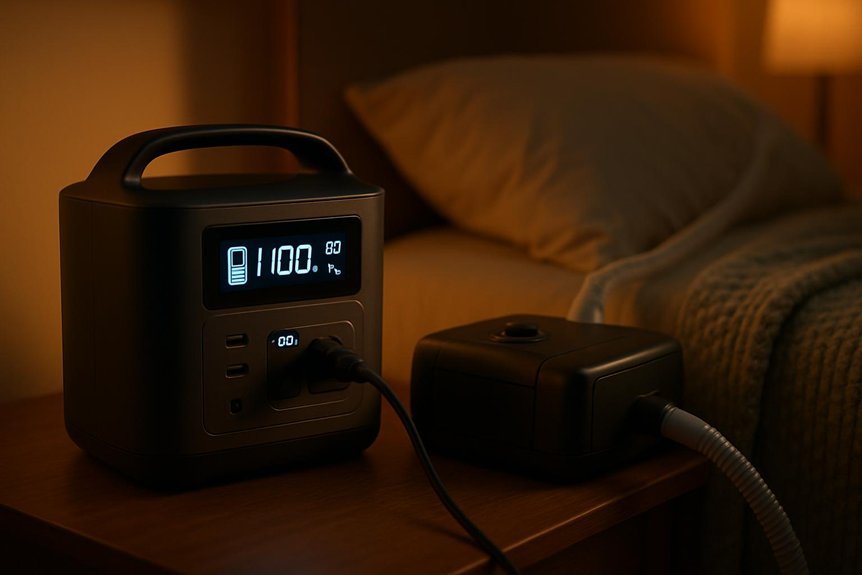
Although CPAP machines are fundamental for restful sleep, their reliance on continuous power can be a challenge during outages or travel. Portable power stations resolve this by providing reliable, uninterrupted energy tailored to CPAP needs. When selecting a power station, understanding battery types—typically lithium-ion or lead-acid—is significant, as lithium-ion offers longer life and lighter weight. Additionally, inverter compatibility plays an important role; the inverter must deliver clean sine wave output to prevent damage or malfunction of sensitive CPAP equipment. By ensuring these technical aspects align, we can confidently maintain CPAP operation regardless of location or power availability. This precision lets us safeguard our therapy without compromise, making portable power stations a fundamental companion for any CPAP user.
Key Features to Look for in a Portable Power Station for CPAP
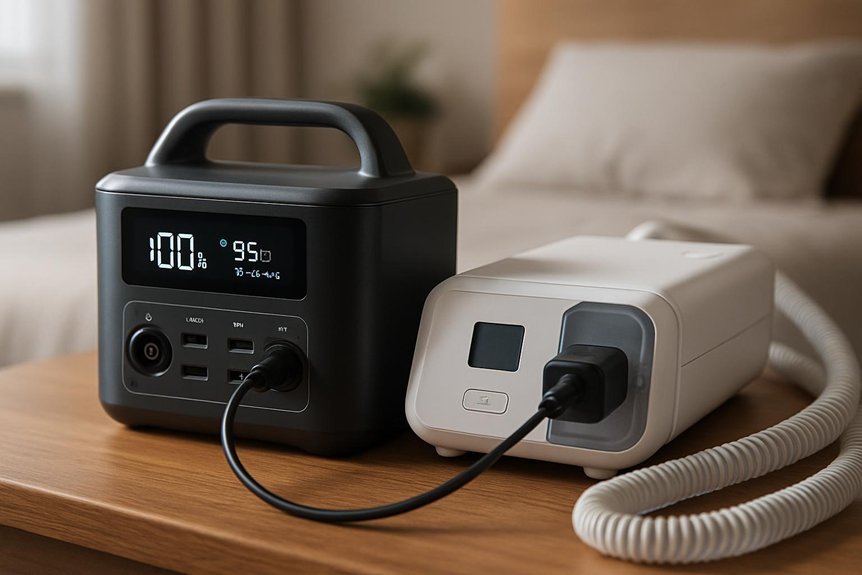
When choosing a portable power station for our CPAP machines, we must focus on several critical features that guarantee reliable and safe operation. Understanding these guarantees our therapy remains uninterrupted, even in power outages or travel.
Choosing the right portable power station ensures uninterrupted, safe CPAP therapy during outages and travel.
Key features to evaluate include:
- Battery Type: Lithium-ion batteries offer longer life cycles and lighter weight, making them ideal for portability and consistent power delivery.
- Power Output: The station must provide a stable and sufficient wattage output compatible with our CPAP machine’s requirements to prevent damage or shutdown.
- Safety Protections: Look for built-in safeguards like overcharge, short-circuit, and temperature controls to protect both the power station and CPAP device.
Focusing on these guarantees we choose a power station that supports our health needs reliably and safely.
How to Calculate the Right Battery Capacity for Your CPAP Needs
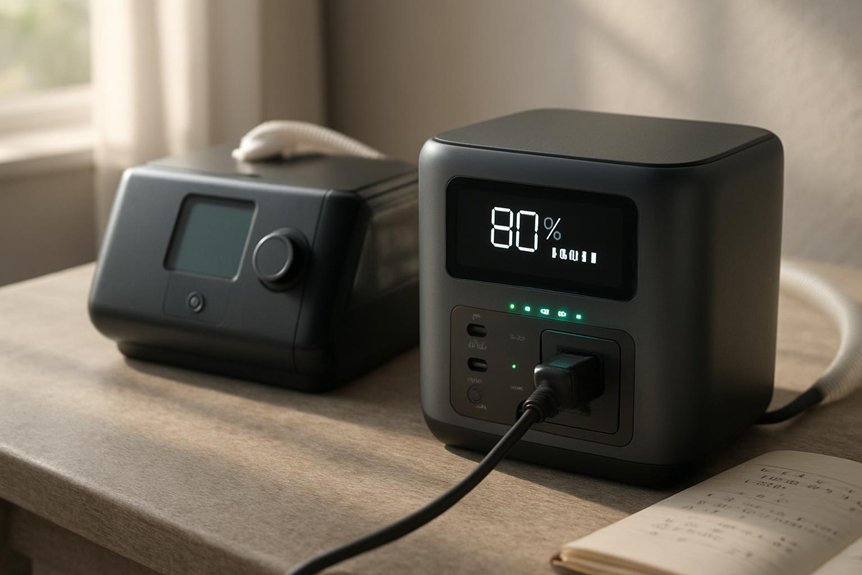
Anyone looking to power their CPAP machine with a portable station needs to accurately calculate the battery capacity required for uninterrupted use. First, identify your CPAP’s power consumption, usually listed in watts. Next, note the battery voltage of the portable power station, commonly 12V or 24V. To determine the required amp-hour (Ah) rating, divide the total watt-hours your CPAP consumes during a typical night by the battery voltage. For example, if your CPAP uses 30 watts for 8 hours, that’s 240 watt-hours; dividing by a 12V battery voltage gives 20Ah. We should also factor in a safety margin—around 20% extra—to avoid complete depletion, ensuring reliability. This precise calculation helps us choose a battery capacity that meets our CPAP needs without risking power loss.
Setting up Your Portable Power Station With a CPAP Machine
Before connecting our CPAP machine to a portable power station, we need to verify the power station is fully charged and compatible with our device’s voltage and wattage requirements. Ensuring proper cpap compatibility prevents damage and guarantees uninterrupted therapy. To set up our portable power correctly, we should:
Always check your portable power station’s charge and compatibility before connecting your CPAP machine for safe, continuous therapy.
- Confirm the power output matches our CPAP’s specifications, including voltage and wattage.
- Use the manufacturer-recommended cables or adapters to maintain safety and performance.
- Secure all connections firmly to prevent accidental disconnections during use.
Tips to Maximize Battery Life and Avoid CPAP Interruptions
Although portable power stations offer great convenience, we need to actively manage their battery life to guarantee our CPAP therapy runs smoothly without interruptions. Prioritizing battery maintenance and power efficiency helps extend usage time. Let’s optimize settings on our CPAP device, reduce unnecessary power drains, and recharge the station before it hits critically low levels.
| Challenge | Solution |
|---|---|
| Unexpected power loss | Monitor battery status closely |
| Reduced battery capacity | Perform regular maintenance |
| Inefficient power usage | Adjust CPAP settings for efficiency |
Frequently Asked Questions
Can Portable Power Stations Charge Other Medical Devices Simultaneously?
Yes, we can charge multiple medical devices simultaneously, but we must monitor battery capacity and charging efficiency carefully to avoid overloading. Prioritizing essential devices guarantees reliable power and prevents unexpected shutdowns during critical use.
Are There Safety Concerns Using Power Stations With Oxygen Concentrators?
We recognize the delicate balance needed here. Yes, oxygen safety is essential; ensuring concentrator compatibility with power stations prevents risks like overheating or sparks. Let’s carefully choose devices designed for safe, reliable oxygen concentrator operation together.
How Do Weather Conditions Affect Portable Power Station Performance?
We understand temperature extremes and high humidity levels reduce battery efficiency and slow charging speed in portable power stations. Let’s guarantee ideal conditions to maintain reliable performance and protect your device during use.
What Maintenance Is Required for Portable Power Stations?
We recommend regular battery care by avoiding full discharges and storing the station in a cool, dry place. Follow charging tips, like using the original charger and not overcharging, to extend your portable power station’s lifespan efficiently.
Are Portable Power Stations Compatible With All CPAP Machine Brands?
We’ve found that portable power stations generally support CPAP compatibility, but it depends on brand specifications. Let’s always check your CPAP’s voltage, wattage, and connector type to guarantee seamless, safe operation without surprises.
Conclusion
By using portable power stations tailored for CPAP machines, we can confidently guarantee uninterrupted therapy even during outages or travel. Matching power output and capacity to our device’s needs is vital, as is understanding battery management to extend runtime. While some believe higher capacity always means better performance, we’ve found optimizing settings and efficient use truly maximize uptime. Together, these strategies let us maintain essential sleep therapy safely and reliably wherever we go.