When living on the road in an RV or van, reliable power is essential for comfort and safety. We need to understand how to assess our energy needs and select the right mix of solar panels, batteries, and generators. Setting up a system that’s efficient and safe requires careful planning and maintenance. Let’s explore how to build a portable power setup that keeps us charged and ready, no matter where the road takes us.
Key Takeaways
- Assess daily energy needs to select appropriate battery capacity and power sources for RV and van life setups.
- Use solar panels combined with batteries and charge controllers for efficient, quiet, and off-grid power solutions.
- Match inverters to device loads and implement power management to maximize battery life and system reliability.
- Conduct regular maintenance, battery monitoring, and safety checks to prevent faults and extend system lifespan.
- Follow fire prevention, emergency preparedness, and safe cooking practices to ensure occupant safety on the road.
How to Choose the Right Portable Power for Your RV or Van
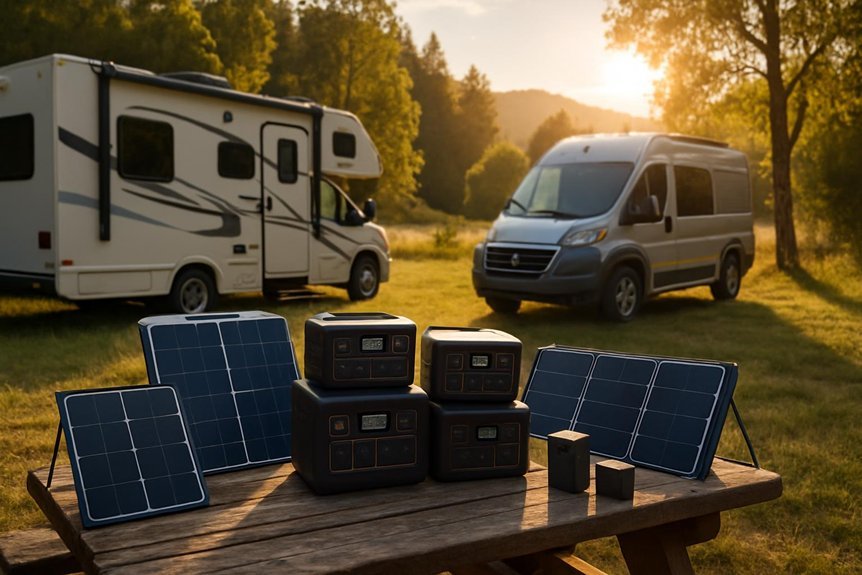
When choosing the right portable power for your RV or van, we need to assess our specific energy needs and travel habits first. Understanding how much power we consume daily guides us in selecting the right battery capacity. Solar charging is an excellent option for off grid living, boosting energy efficiency while keeping weight considerations in check. We should also evaluate inverter options to guarantee compatibility with our devices. Effective power management helps maximize battery life and reduces waste. Maintenance tips, like keeping connections clean and monitoring charge levels, extend system longevity. Balancing all these factors—solar charging, battery capacity, energy efficiency, inverter choices, power management, weight, and upkeep—guarantees we pick a portable power setup that’s reliable, efficient, and tailored to our adventure lifestyle.
Comparing Solar Panels, Batteries, and Generators for Van Life
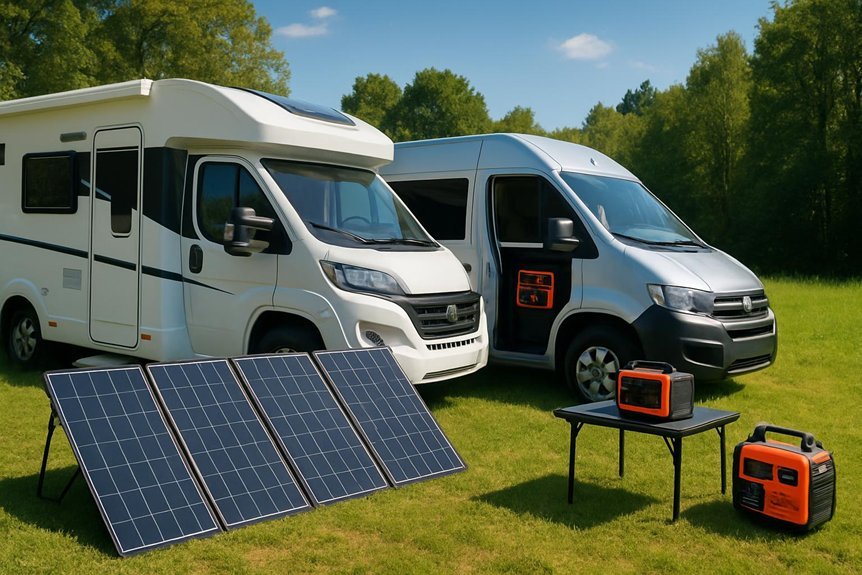
How do we decide between solar panels, batteries, and generators for powering our van life adventures? Each option has its strengths depending on our needs. Solar panel efficiency is key for continuous, silent energy from the sun, great for long-term travel without noise or fuel. Batteries store energy, so choosing the right battery capacity guarantees we can power devices overnight or on cloudy days. Generators provide quick, reliable power but can be noisy and require fuel, making them less eco-friendly.
Choosing between solar panels, batteries, and generators depends on your power needs and travel style.
Let’s break it down:
- Solar panels: Quiet, eco-friendly, best for sunny regions.
- Batteries: Essential for energy storage, size matters.
- Generators: Powerful but noisy and fuel-dependent.
- Combination: Often the best balance for flexibility and reliability.
Setting Up Your Portable Power System Step-by-Step
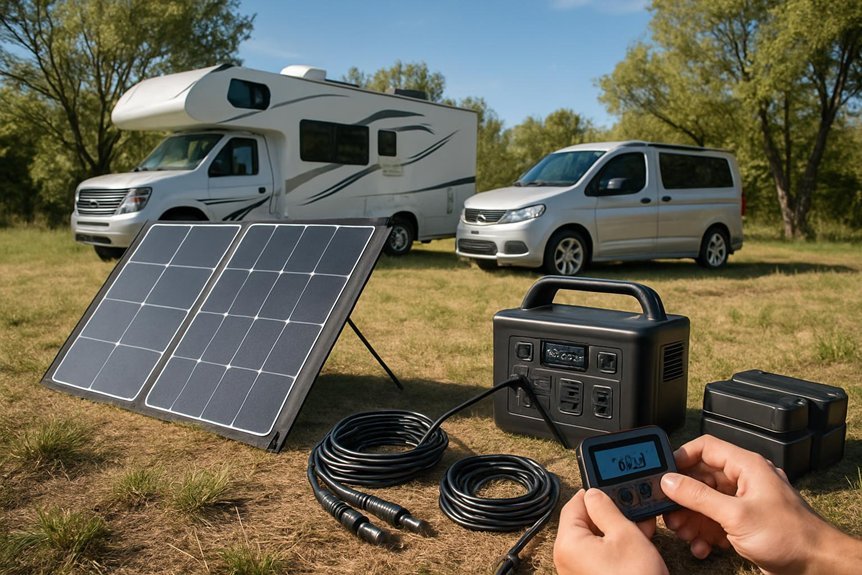
Let’s start by choosing the right components for your power system to match your energy needs. Next, we’ll walk through installing power connections safely and efficiently. Finally, we’ll cover how to test everything and troubleshoot common issues before hitting the road.
Choosing The Right Components
Although setting up a portable power system might seem overwhelming at first, choosing the right components becomes straightforward once we grasp our energy needs and usage patterns. Prioritizing power efficiency and load management helps us select equipment that maximizes output without wasting energy.
Here’s how we can choose wisely:
- Calculate total wattage to understand daily power demands.
- Pick batteries with sufficient capacity and long life cycles.
- Choose an inverter that matches our peak and continuous power loads.
- Include charge controllers to protect batteries and optimize solar input.
Installing Power Connections
Three essential steps guide us as we install power connections for our portable power system. First, we identify the appropriate power connection types, such as Anderson plugs, MC4 connectors, or standard 12V ports. Next, we gather installation tools like wire strippers, crimpers, and screwdrivers to guarantee secure connections. Finally, we carefully route and secure wiring to prevent damage and guarantee safety.
| Step | Power Connection Types | Installation Tools |
|---|---|---|
| Identify | Anderson plug, MC4 | None |
| Prepare | 12V port, USB | Wire stripper, crimper |
| Connect | Solar panel connectors | Screwdriver, multimeter |
| Secure wiring | Inline fuse holders | Cable ties, electrical tape |
| Final check | Battery terminals | Wrench, voltage tester |
This method keeps our setup efficient and reliable.
Testing And Troubleshooting
Testing and troubleshooting form the backbone of a reliable portable power system. Before hitting the road, we need to perform power diagnostics and voltage testing to guarantee everything runs smoothly. Connection checks help us spot loose wires that cause power fluctuations or inverter issues. Battery monitoring keeps us aware of energy levels, avoiding unexpected shutdowns.
Let’s follow these essential steps:
- Conduct load testing to verify equipment compatibility and system capacity.
- Inspect all connections carefully for corrosion or wear.
- Use troubleshooting tips to quickly identify inverter or battery faults.
- Establish maintenance routines to prolong system life and reliability.
Tips for Maximizing Battery Life on the Road
To get the most out of our RV or van batteries, we need to adopt a few key habits that preserve their capacity and extend their lifespan. Regular battery maintenance is essential—checking fluid levels when applicable, cleaning terminals, and ensuring tight connections help prevent issues. We should avoid deep discharges by monitoring battery levels and recharging before they drop too low. Practicing energy conservation onboard further maximizes battery life: using LED lights, turning off unused appliances, and running high-drain devices sparingly all reduce strain. Additionally, parking in shaded areas helps keep batteries cool, as heat accelerates degradation. By combining proper maintenance with mindful energy use, we’ll enjoy more reliable power and longer battery service on the road.
Best Portable Power Stations for Boondocking and Remote Camping
A reliable portable power station can transform our boondocking and remote camping experiences by providing consistent energy without relying on hookups. Choosing the right unit means balancing power, portability, and energy efficiency. Based on power station reviews, here are four top picks that meet our off-grid needs:
- Jackery Explorer 1000 – Great energy efficiency and multiple output ports.
- EcoFlow River 2 Max – Compact, fast charging, and versatile.
- Goal Zero Yeti 1500X – Robust capacity for extended stays.
- Bluetti AC200P – High capacity with solar charging options.
These options combine durability and practical features, letting us enjoy remote adventures without worrying about power. Let’s choose one that fits our lifestyle and keeps our devices running smoothly.
Troubleshooting Common Portable Power Issues in RVs and Vans
While choosing the right portable power station sets us up for success, we might still face occasional issues when using them in our RVs and vans. Power loss often stems from wiring faults or connection problems, so regularly checking cables is key. Inverter issues can cause voltage fluctuations affecting appliances; resetting or updating firmware can help. Battery drain usually results from poor load management or leaving devices plugged in unnecessarily. To optimize solar efficiency, we should keep panels clean and angled correctly. Generator noise might signal mechanical problems needing attention. Implementing maintenance tips like inspecting connections, monitoring voltage, and managing loads guarantees reliable power. By staying proactive and troubleshooting these common problems, we keep our portable power systems running smoothly on every adventure.
Safety Practices for Using Portable Power While Traveling
Let’s focus on key safety practices for using portable power while on the road, starting with proper battery handling to avoid damage or injury. We’ll also cover essential fire prevention measures to keep our rigs and ourselves safe. Following these guidelines helps guarantee a trouble-free and secure travel experience.
Proper Battery Handling
Because portable power systems rely heavily on batteries, we need to handle them with care to guarantee safety and longevity. Proper battery handling is essential for effective battery maintenance and using the right charging techniques. Here’s how we can manage our batteries safely while on the road:
- Always store batteries in a cool, dry place to prevent overheating and damage.
- Use manufacturer-recommended charging techniques to avoid overcharging or deep discharging.
- Regularly inspect batteries for leaks, corrosion, or physical damage to catch issues early.
- Secure batteries firmly during travel to prevent shifting, which can cause short circuits or damage.
Fire Prevention Measures
Handling batteries properly helps reduce risks, but we also need to stay vigilant about fire prevention when using portable power on the road. Fire risks can stem from faulty wiring, overheating, or careless cooking near power sources. Our prevention strategies include regular electrical safety checks and keeping all connections secure and dry. Installing smoke detectors and having fire extinguishers accessible are essential safety equipment measures. We also make certain to follow cooking precautions, like never leaving stoves unattended and keeping flammable materials away from heat sources. Finally, developing clear emergency plans guarantees we understand how to act quickly if a fire starts. By combining these steps, we greatly reduce fire risks and protect our home on wheels.
Frequently Asked Questions
Can I Use Portable Power to Run My RV Air Conditioner?
Yes, we can use portable power to run our RV air conditioner, but it depends on air conditioner types and power consumption. Some units need more watts, so choosing the right portable power system is essential for reliable cooling.
How Do Weather Conditions Affect Portable Power Performance?
Coincidentally, temperature fluctuations and humidity levels directly impact portable power performance. We’ve noticed colder temps reduce battery efficiency, while high humidity can cause corrosion. So, we always monitor weather to keep power reliable and lasting longer.
Are Portable Power Stations Safe for Indoor Use?
Yes, portable power stations are safe for indoor use if we guarantee proper indoor ventilation and follow battery safety guidelines. We should avoid overheating and keep them away from flammable materials to prevent any risks while using them indoors.
What Is the Average Lifespan of a Portable Power Battery?
Batteries boast a lifespan between 3 to 5 years, depending on diligent battery maintenance and charging cycles. We recommend monitoring usage, avoiding overcharging, and storing batteries properly to prolong power performance and preserve their potential.
Can I Charge My Portable Power Station With My Vehicle’s Alternator?
Yes, we can use alternator charging to power our portable station, but we need to guarantee vehicle compatibility first. Using a proper DC to DC charger helps protect both the battery and vehicle’s electrical system during charging.
Conclusion
As we journey through the world of portable power, remember that choosing the right system is like building a strong bridge—connecting us to comfort and safety on the road. By understanding our energy needs, selecting reliable equipment, and following safety practices, we can keep our RV or van life running smoothly. Let’s stay prepared, maintain our systems, and enjoy the freedom of off-grid living without worry or interruption.