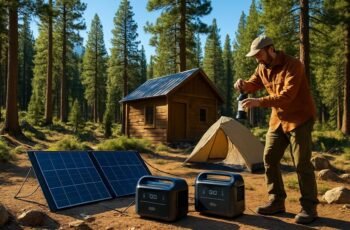
When we consider how essential portable power is for construction tools, especially on remote sites, it’s clear that choosing the right system can make or break our workflow. Battery-powered tools improve mobility and reduce noise, while portable generators handle heavier demands. But not all power solutions are created equal, and understanding the technical aspects behind battery life, compatibility, and safety can greatly impact efficiency. Let’s examine what factors truly matter when selecting portable power for the job.
Key Takeaways
- Portable power ensures job site efficiency by enabling tool use in remote locations without fixed electrical infrastructure.
- Battery-powered tools offer cordless flexibility, reduced noise, and minimal maintenance for improved site mobility.
- Lithium-ion batteries provide high energy density, fast charging, and longer runtimes for sustained productivity.
- Cordless tools like impact drivers and brushless drills optimize power usage while maintaining performance.
- Regular maintenance, proper storage, and safety inspections extend battery life and prevent power-related accidents.
Why Portable Power Matters for Construction Tools
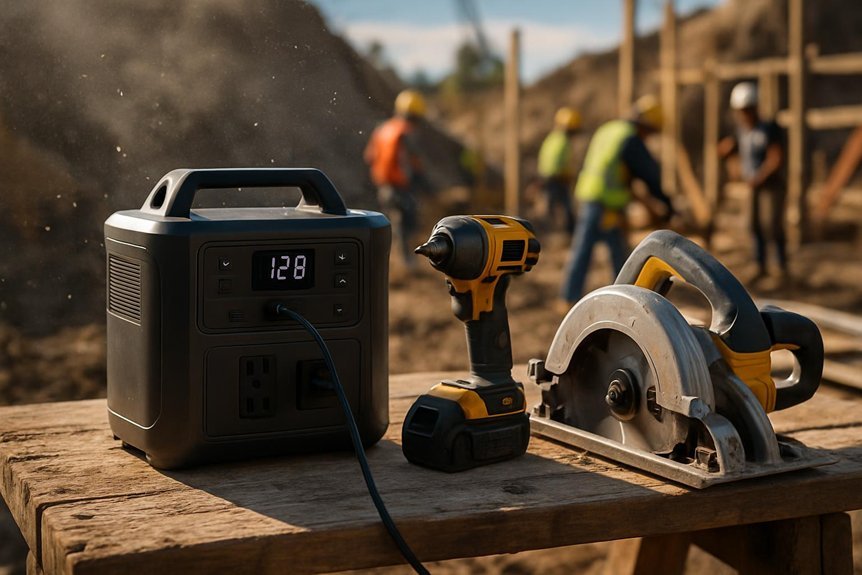
Although construction sites vary widely, one thing remains constant: the need for reliable, portable power. We understand that without dependable power sources, job site efficiency suffers greatly. Portable power enables us to operate tools in remote or undeveloped areas where fixed electrical infrastructure is unavailable. This flexibility directly impacts productivity by reducing downtime and allowing continuous work. Furthermore, portable power supports tool versatility, letting us switch between various power tools quickly without waiting for specialized outlets or extensions. By prioritizing portable power solutions, we guarantee that our teams maintain steady progress regardless of site conditions. Essentially, portable power is not just a convenience—it’s a critical component that drives operational efficiency and tool adaptability on every construction project.
Types of Portable Power Options for Job Sites
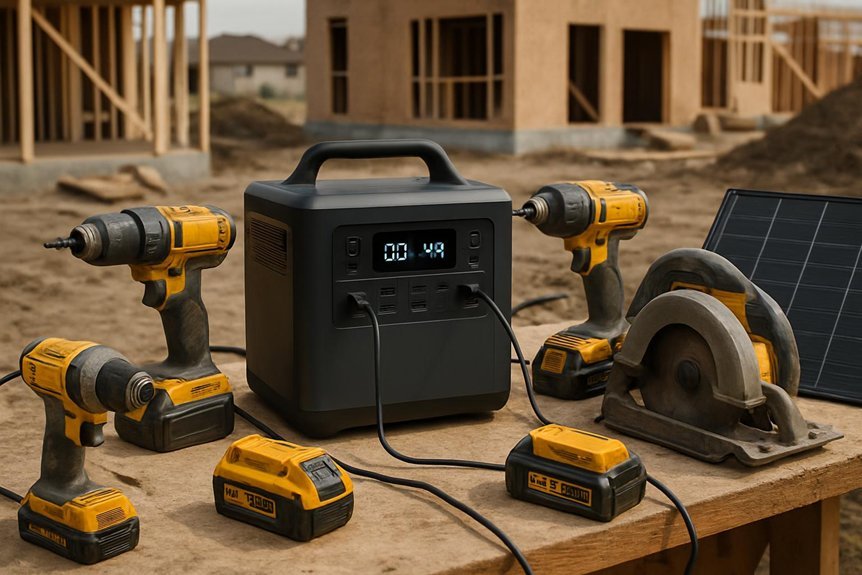
Let’s examine the primary portable power options for job sites: battery-powered tools and portable generators. Battery-powered tools offer cordless flexibility and reduced noise, ideal for confined spaces. Portable generators provide higher power output for demanding equipment but require fuel management and ventilation considerations.
Battery-Powered Tool Benefits
When we evaluate portable power options for job sites, battery-powered tools offer distinct advantages that enhance efficiency and safety. Their ergonomic design reduces operator fatigue, allowing for longer work periods without compromising control or precision. Battery tools eliminate cords, minimizing trip hazards and improving site mobility. Utilizing sustainable energy through rechargeable lithium-ion batteries, these tools reduce dependence on fossil fuels and lower emissions. The consistent power output guarantees reliable performance across varied tasks, while quick-swap battery systems maximize uptime. Maintenance demands are minimal compared to fuel-powered alternatives, cutting downtime and operational costs. By integrating battery-powered tools, we improve workplace safety, operational efficiency, and environmental responsibility — critical factors for modern construction projects aiming to optimize productivity and sustainability.
Portable Generator Options
Since job sites often demand reliable power beyond what batteries can provide, portable generators become essential tools for many construction projects. When selecting a generator, we focus on generator capacity to guarantee it meets the wattage requirements of our tools and equipment without overloading. Fuel efficiency is equally critical, as it directly impacts operational costs and runtime. Gasoline, propane, and diesel models each offer distinct advantages; diesel generators typically provide better fuel efficiency and durability, while gasoline units are lighter and easier to refuel. Inverter generators deliver stable power suitable for sensitive electronics but often at a higher cost. By evaluating job site power needs and balancing capacity with fuel efficiency, we can choose the best portable generator that maximizes productivity while minimizing downtime and expenses.
How to Choose the Right Battery System for Your Tools
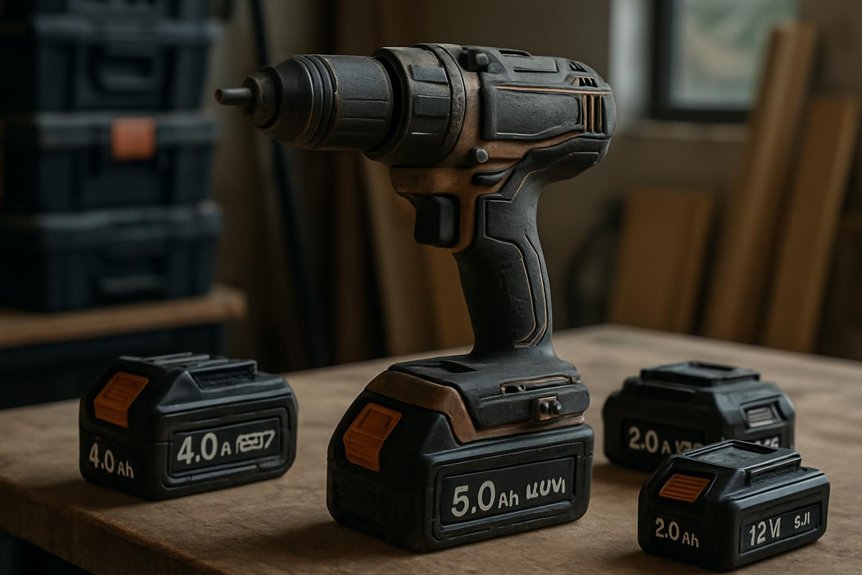
Let’s evaluate battery types based on their energy density, weight, and durability to find the best fit for our tools. We need to guarantee the battery system is fully compatible with our existing equipment to avoid performance issues. Finally, reviewing runtime and charging speed will help us maintain efficiency on the job site.
Battery Type Comparison
Although choosing the right battery system can seem complex, understanding the key differences between lithium-ion, nickel-cadmium, and lead-acid batteries helps us make informed decisions that optimize tool performance and durability. Lithium-ion batteries offer significant lithium advantages: high energy density, minimal memory effect, and lighter weight, providing longer run times and faster charging. Nickel-cadmium batteries, while robust and tolerant to temperature extremes, present nickel drawbacks such as memory effect and environmental concerns due to toxic cadmium. Lead-acid batteries remain cost-effective and reliable for heavy-duty applications but are bulkier and have lower energy density compared to lithium-ion. By weighing these technical factors pragmatically, we can select a battery system that balances efficiency, longevity, and operational demands for construction tools without compromising on power or convenience.
Compatibility With Tools
When selecting a battery system, we must verify it matches the specific tool’s voltage, form factor, and power requirements to confirm ideal performance and safety. Tool compatibility guarantees the battery delivers the correct current without damage or inefficiency. Using mismatched batteries can reduce runtime and risk tool failure.
| Tool Type | Voltage (V) | Compatible Battery Form Factor |
|---|---|---|
| Cordless Drill | 18 | Slide-in |
| Impact Wrench | 20 | T-style |
| Circular Saw | 36 | Pack-in |
Checking these parameters helps us select the right battery system tailored for our tools’ power requirements. This approach maximizes efficiency and extends tool life, confirming jobsite reliability.
Runtime And Charging
Understanding the compatibility of batteries with our tools sets the foundation, but guaranteeing sufficient runtime and efficient charging is what keeps our work uninterrupted. To achieve runtime optimization, we must select battery systems with capacities that match our tool usage patterns, balancing amp-hour ratings and power demands. Lithium-ion batteries often provide superior energy density, extending work periods without added weight. Charging efficiency is equally critical; fast chargers reduce downtime, but they must be compatible with the battery chemistry to prevent degradation. Smart chargers with temperature control and voltage regulation enhance battery lifespan while maintaining rapid charge cycles. By prioritizing both runtime optimization and charging efficiency, we guarantee our portable power solutions sustain productivity on-site, minimizing delays and maximizing tool availability throughout the workday.
Comparing Battery Life and Charging Speeds on the Market
How do we determine which battery offers the best balance between runtime and recharge speed for our construction tools? We start by evaluating battery efficiency, which directly impacts how long a tool can operate before needing a recharge. Modern lithium-ion batteries dominate the market due to their high energy density and consistent power delivery. Next, we assess charging technologies—fast chargers utilizing advanced circuitry can reduce downtime considerably, sometimes cutting recharge times by half compared to standard chargers. However, rapid charging can affect battery lifespan, so we must weigh quick turnaround against long-term durability. By comparing specifications like amp-hour ratings, voltage stability, and charger compatibility across brands, we can select batteries that optimize both operational time and recharge speed, ensuring our portable power solutions meet the demanding conditions on job sites efficiently.
Top Cordless Tools That Maximize Portable Power Efficiency
Five cordless tools stand out for maximizing portable power efficiency on the job site. First, cordless impact drivers deliver high torque with minimal energy draw, exemplifying cordless innovation. Next, brushless cordless drills optimize power usage and extend battery life through advanced motor control. Third, cordless reciprocating saws balance cutting power with energy efficiency, essential for varied tasks. Fourth, cordless angle grinders incorporate power optimization features to maintain performance under load while conserving battery charge. Finally, cordless nailers combine rapid-fire capability with low power consumption, reducing downtime for recharging. Selecting these tools guarantees we leverage the latest cordless innovation and power optimization technologies, improving productivity without sacrificing portability or battery longevity. This precision-focused approach helps us meet demanding construction schedules efficiently.
Using Portable Generators to Power Heavy-Duty Equipment
When we tackle heavy-duty equipment on-site, portable generators become indispensable for delivering reliable power where traditional sources aren’t accessible. Choosing the right generator capacity is critical; it must match or exceed the power demands of equipment like concrete mixers, compressors, or welders. Fuel efficiency also plays an essential role in minimizing downtime and operational costs during extended use.
We focus on generators that offer:
- High surge capacity to handle motor startups without voltage drops
- Robust fuel tanks enabling long run times between refills
- Durable construction to withstand harsh job site conditions
Safety Tips for Managing Portable Power on Construction Sites
Having selected the right portable generator to power heavy-duty equipment, we must now focus on managing that power safely on site. Regular site inspections and hazard identification are critical to prevent accidents involving portable power. We need to guarantee that cables are intact, connections secure, and that generators operate in well-ventilated areas to avoid carbon monoxide buildup. Electrical loads should never exceed generator capacity.
| Safety Aspect | Action Required | Frequency |
|---|---|---|
| Site Inspections | Check for damaged cables | Daily |
| Hazard Identification | Identify potential trip hazards | Before each use |
| Ventilation | Guarantee open air circulation | Continuous |
| Load Management | Monitor electrical load | Every shift |
How to Maintain and Extend the Life of Your Portable Power Gear
Proper maintenance plays an essential role in extending the operational life of our portable power gear and ensuring consistent performance on site. Prioritizing battery care and efficient power management is key. We need to regularly inspect connections and clean terminals to prevent corrosion. Also, storing batteries at ideal temperatures preserves capacity and lifespan. Implementing a charging routine avoids deep discharges that degrade battery health. Additionally, protecting tools and batteries from physical damage is vital.
To maintain and extend life, we should:
- Use manufacturer-recommended chargers and monitor charging cycles
- Keep batteries in a cool, dry environment to prevent overheating
- Perform routine inspections for wear, damage, and secure connections
Frequently Asked Questions
Can Portable Power Tools Be Used in Extreme Weather Conditions?
Yes, we can use portable power tools in extreme conditions, but we must implement strict safety measures. Ensuring proper insulation, waterproofing, and regular maintenance helps us maintain functionality and protect ourselves from hazards effectively.
What Are the Environmental Impacts of Portable Power Tool Batteries?
We understand battery disposal impacts the environment considerably, especially if not recycled properly. Also, energy sourcing for manufacturing these batteries often relies on nonrenewable resources, increasing carbon footprints. We must prioritize sustainable practices to reduce these effects.
Are There Any Noise Regulations for Portable Generators on Job Sites?
Like a ticking clock, generator noise is tightly controlled; yes, job site regulations set decibel limits to protect workers’ hearing and nearby residents. We must guarantee compliance to maintain safety and minimize disruption efficiently.
How Do Portable Power Tools Affect Overall Job Site Productivity?
We understand portable power tools boost job efficiency by reducing downtime and increasing mobility. Their tool versatility lets us tackle diverse tasks swiftly, streamlining workflows and improving overall job site productivity considerably.
Can Portable Power Systems Be Integrated With Smart Technology?
Like weaving a digital thread through power veins, we can integrate portable power systems with smart connectivity, enhancing energy efficiency. This fusion lets us monitor, optimize, and control power use precisely, boosting job site performance pragmatically.
Conclusion
We’ve all seen how a well-charged battery is like the heartbeat of a construction site—powering tools smoothly, just as a steady pulse keeps us going. Choosing the right portable power system isn’t just about convenience; it’s about preventing costly downtime and boosting efficiency. By understanding battery life, charging speeds, and safety, we guarantee our tools run reliably, turning every project into a well-oiled machine ready to tackle any challenge.