When we connect solar panels to portable power stations, ensuring compatibility is essential to avoid inefficiencies or potential damage. Voltage and current ratings must align precisely, and connector types need to match for a secure link. Choosing the appropriate wattage also plays a pivotal role in ideal charging performance. But beyond these basics, how do different panel configurations and types affect overall compatibility? Understanding these factors is key to maximizing your system’s potential.
Key Takeaways
- Ensure solar panel voltage matches the portable power station’s accepted input voltage range to prevent damage or inefficient charging.
- Verify connector types (e.g., MC4, Anderson) and use compatible adapters if necessary for proper electrical connections.
- Match solar panel wattage with the power station’s maximum input capacity to optimize charging speed and avoid overload.
- When using multiple panels, choose series for higher voltage or parallel for higher current, aligning with power station input limits.
- Position panels to avoid shading and maximize sunlight exposure for consistent, efficient power generation and charging.
How to Check Voltage Compatibility Between Solar Panels and Power Stations
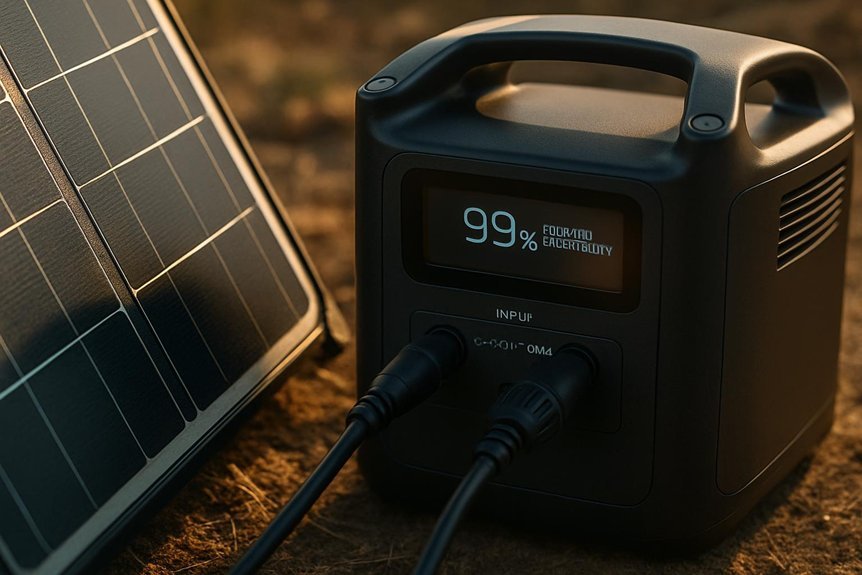
Before connecting our solar panels to power stations, we need to verify their voltage compatibility to guarantee safe and efficient operation. To do this, we start by performing an accurate voltage measurement of the solar panel under standard test conditions. Next, we consult the power station specifications, focusing on the acceptable input voltage range. Ensuring the solar panel’s output voltage falls within this range is critical to avoid damage or inefficiency. If the panel’s voltage exceeds or falls below the power station’s limits, we risk malfunction or reduced charging performance. By systematically comparing measured voltages with documented power station specifications, we maintain ideal system integrity and prevent electrical mismatches that could compromise safety or energy transfer efficiency.
Matching Connectors: What You Need to Know for Seamless Charging
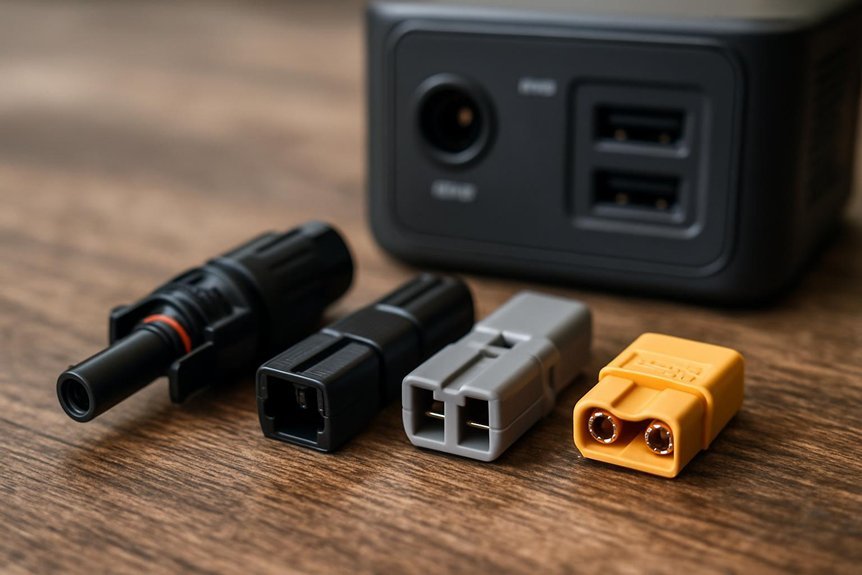
Once we confirm voltage compatibility between our solar panels and power stations, the next step is to secure their connectors physically match for seamless charging. Various connector types—such as MC4, Anderson, or proprietary plugs—demand close attention since mismatched connectors prevent proper electrical flow. We must verify the exact connector interface on both devices to avoid the need for inefficient adapters. Additionally, cable lengths impact system performance; longer cables introduce voltage drop, reducing charging efficiency. Selecting appropriate cable lengths that balance flexibility and minimal resistance is essential. When necessary, using higher-gauge cables can offset losses over distance. By thoroughly analyzing connector types and optimizing cable lengths, we establish a reliable, streamlined connection that maximizes energy transfer without compromising safety or convenience.
Choosing the Right Wattage for Efficient Portable Power Station Charging
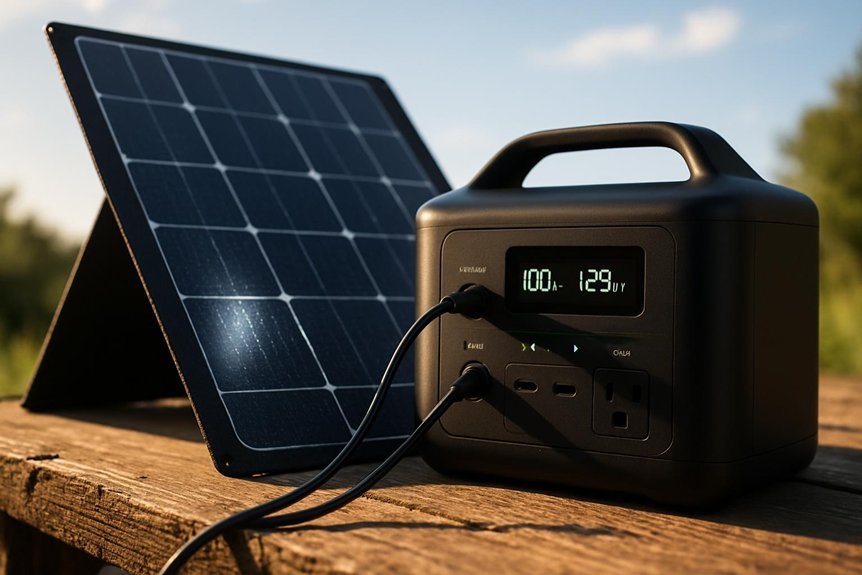
Let’s evaluate how to match solar panel output wattage with our power station’s input limits to guarantee efficient charging. Selecting a panel with wattage that aligns with the power station’s maximum input prevents energy loss and potential damage. Optimizing this balance is key to maximizing charge speed and system longevity.
Matching Solar Panel Output
Although solar panels come in various wattages, choosing one that matches our portable power station’s input capacity is essential for optimal charging efficiency. Different solar panel brands offer a range of outputs, so we must analyze the specifications carefully to align with our power station models. Oversizing the panel’s wattage may lead to energy loss due to input limitations, while undersizing results in longer charging times. We should examine the nominal voltage and maximum power output of the solar panel to guarantee compatibility with the power station’s rated input. By selecting solar panels whose peak wattage closely matches the power station’s ideal charging input, we maximize energy transfer, reduce inefficiencies, and extend the overall lifecycle of our equipment. This strategic alignment is key to enhancing solar charging performance.
Power Station Input Limits
When selecting a solar panel for our portable power station, we must carefully consider the station’s input limits to guarantee efficient charging. Each power station specifies maximum input voltage and output current ratings that we cannot exceed. If our solar panel’s input voltage surpasses the station’s limit, it risks damaging internal circuitry or triggering automatic shutdowns. Similarly, if the output current from the panel is higher than the power station’s rated input current, we risk overheating or inefficiency. To choose the right wattage, we calculate compatible combinations of input voltage and output current based on the station’s specifications. Staying within these parameters guarantees ideal power transfer and protects the station’s components. Ignoring input limits leads to suboptimal charging and potential equipment failure.
Optimal Charging Efficiency
Since selecting the right wattage directly impacts charging speed and system longevity, we must analyze our portable power station’s capacity alongside solar panel output. Different solar panel types—monocrystalline, polycrystalline, and thin-film—offer varying efficiencies and power ratings. Matching the panel wattage to the power station’s input limits maximizes charging speed without risking overcurrent damage. Over-sizing panels won’t increase charging speed beyond the station’s maximum input, while under-sizing prolongs charging time inefficiently. We should calculate the ideal wattage by considering the power station’s maximum input wattage and typical solar irradiance. This balance guarantees efficient energy transfer, prevents battery degradation, and maximizes solar utilization. By choosing compatible solar panel types and wattages, we enhance charging speed and maintain peak charging efficiency throughout the system’s lifespan.
Understanding Solar Panel Types and Their Impact on Compatibility
Because different solar panel types rely on distinct materials and designs, understanding their characteristics is essential for evaluating system compatibility. Monocrystalline, polycrystalline, and thin-film panels each offer varying solar efficiency and energy output, influenced by their panel materials. Monocrystalline panels deliver higher efficiency but may come at a premium price, while thin-film panels provide flexibility and lighter weight, impacting installation considerations for portable power setups. Brand compatibility also plays a critical role, as voltage, current, and connector types must align with the power station’s input specifications. Additionally, environmental factors like temperature and shading affect performance differently across panel types. By analyzing these parameters, we can optimize the integration of solar panels with portable power stations, ensuring reliable and efficient energy harvesting tailored to specific user needs.
Tips for Connecting Multiple Solar Panels to Your Power Station
Understanding the characteristics of different solar panel types sets the foundation for effectively connecting multiple panels to your power station. When configuring charging setups, we must decide between series connections, which increase voltage, and parallel connections, which boost current. Series connections suit power stations with higher voltage input limits, while parallel connections align with those favoring higher current. For portable applications, parallel setups often offer flexibility and safer voltage levels. It’s essential to verify compatibility with your specific power station brand, as input specifications vary. We recommend matching panel voltages and ensuring combined output does not exceed the station’s maximum input. Using appropriate connectors and fuses further enhances safety and efficiency. By carefully selecting connection methods, we optimize energy harvest and maintain system integrity.
Common Compatibility Issues and How to Troubleshoot Them
We often encounter voltage mismatch problems that can reduce system efficiency or cause damage if not addressed properly. Connector compatibility issues also frequently disrupt proper connections and power transfer. Let’s analyze these challenges and outline practical troubleshooting steps to guarantee ideal solar panel integration.
Voltage Mismatch Problems
Although solar panels are designed to operate within specific voltage ranges, mismatches between panel voltages and system requirements often cause inefficiencies or damage. When the panel voltage exceeds or falls below the portable power station’s input voltage range, voltage regulation becomes compromised. This can trigger the system’s protective mechanisms or force the inverter to operate outside its ideal parameters, reducing inverter efficiency. To troubleshoot, we first verify the open-circuit voltage (Voc) of the solar panel against the station’s maximum input voltage. If Voc is too high, it risks damaging components or causing shutdowns. Conversely, too low a voltage results in insufficient power delivery. Employing a charge controller with appropriate voltage regulation or selecting panels with matching voltage specifications guarantees stable operation and maximizes energy transfer efficiency.
Connector Compatibility Issues
Since solar panel connectors vary widely in type and configuration, verifying compatibility with your portable power station is critical to maintaining a reliable connection and efficient energy transfer. Common connector types include MC4, Anderson, and XT60, each with distinct pin arrangements and voltage ratings. Mismatched connectors can cause poor contact or even system failure. To troubleshoot compatibility issues, first identify the connector types on both your solar panel and power station. Next, consider adapter solutions designed to bridge incompatible connectors safely. Using an appropriate adapter not only verifies mechanical fit but also preserves electrical integrity. Always check that adapter solutions support the current and voltage specifications of your setup to prevent damage. By systematically addressing connector compatibility, we optimize performance and safeguard equipment longevity.
Best Practices for Maximizing Solar Charging Efficiency With Your Power Station
When optimizing solar charging efficiency with your power station, we must carefully consider factors such as panel orientation, shading, and the compatibility of voltage and current ratings. Effective solar panel placement directly impacts charging time optimization by maximizing sunlight exposure. To enhance efficiency, we recommend the following best practices:
Maximize solar charging efficiency by optimizing panel orientation, avoiding shading, and ensuring voltage compatibility.
- Align solar panels perpendicular to the sun’s rays to maximize irradiance and minimize energy loss.
- Avoid shading from trees, buildings, or other obstructions, as partial shading can disproportionately reduce output and increase charging time.
- Verify the solar panel’s voltage and current ratings match the power station’s input specifications to prevent inefficiencies or damage.
Frequently Asked Questions
Can Weather Conditions Affect Solar Panel Compatibility With Power Stations?
Yes, weather effects directly impact solar efficiency, which influences power output. While compatibility remains unchanged, we must consider reduced energy generation during cloudy or rainy conditions, affecting how effectively solar panels charge portable power stations under varying weather.
Are Portable Solar Panels Safe to Use Indoors?
We don’t recommend using portable solar panels indoors due to insufficient sunlight for ideal solar energy capture, which compromises efficiency. For indoor safety, confirm panels are dry, well-ventilated, and connected properly to avoid electrical hazards.
How Do Temperature Extremes Impact Solar Panel Performance?
We understand temperature extremes reduce solar output because high heat lowers temperature efficiency, causing voltage drops. Conversely, colder conditions improve efficiency but may affect panel durability. Managing temperature is essential for ideal solar performance.
Can Solar Panels Charge Power Stations During Cloudy Days?
Can solar panels charge power stations on cloudy days? Yes, but reduced solar efficiency lowers charging speed. We’ll still get power, though it takes longer, so planning for less sunlight guarantees reliable energy storage during overcast conditions.
What Maintenance Is Required for Solar Panels Used With Power Stations?
We regularly perform panel cleaning to remove dust and debris, ensuring maximum efficiency. Additionally, we check inverter maintenance by inspecting connections and firmware updates, preventing energy loss and prolonging the system’s overall lifespan for reliable power station charging.
Conclusion
By ensuring our solar panels and portable power stations speak the same electrical language, we unfasten a seamless energy dance—voltage, connectors, and wattage all in harmony. Like tuning an instrument, precise compatibility transforms sunlight into reliable power, avoiding discordant malfunctions. When we align components carefully and optimize connections, we harvest energy efficiently, turning every ray into stored strength. Let’s stay vigilant and proactive, mastering the technical symphony for dependable, sustainable charging on the go.