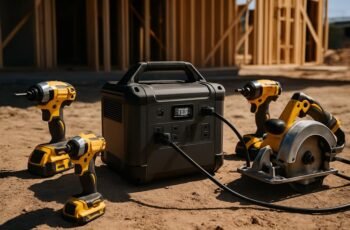
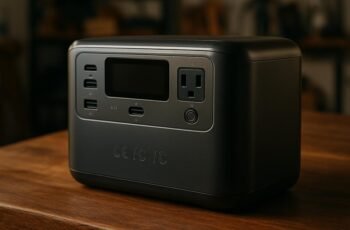
We convert stored energy, we regulate voltage, and we guarantee compatibility—all through the inverter in a portable power station. This critical component transforms direct current from batteries into usable alternating current, allowing us to power everyday devices off-grid. Understanding how inverters function, the types available, and their impact on efficiency reveals much about the performance and reliability of portable power stations. Let’s explore the mechanics behind this essential process.
Key Takeaways
- Inverters convert stored DC battery power into AC power for appliance compatibility in portable power stations.
- They use switching components to chop DC voltage into pulses, shaping stable AC waveforms.
- Pure sine wave inverters provide clean, reliable power ideal for sensitive electronics in portable systems.
- Inverter efficiency affects battery runtime by minimizing power loss from internal resistance and heat.
- Safety features like overload and thermal protection ensure inverter and device longevity during operation.
What Is an Inverter and Why It Matters in Power Stations

An inverter is a critical component in portable power stations, converting stored direct current (DC) from batteries into alternating current (AC) that powers our everyday devices. Understanding the inverter significance lies in its role as the bridge between energy storage and usable power output. Without efficient power conversion, the stored DC energy remains inaccessible to appliances designed for AC supply. Inverters guarantee compatibility by shaping and regulating the output voltage and frequency, maintaining stable power delivery. This process directly affects the reliability and efficiency of the entire power station. Recognizing these technical aspects helps us appreciate why inverter quality and design critically influence performance, energy loss, and device safety in portable power applications. Consequently, inverter significance is fundamental to the functionality of portable power stations.
How Inverters Convert DC to AC Power
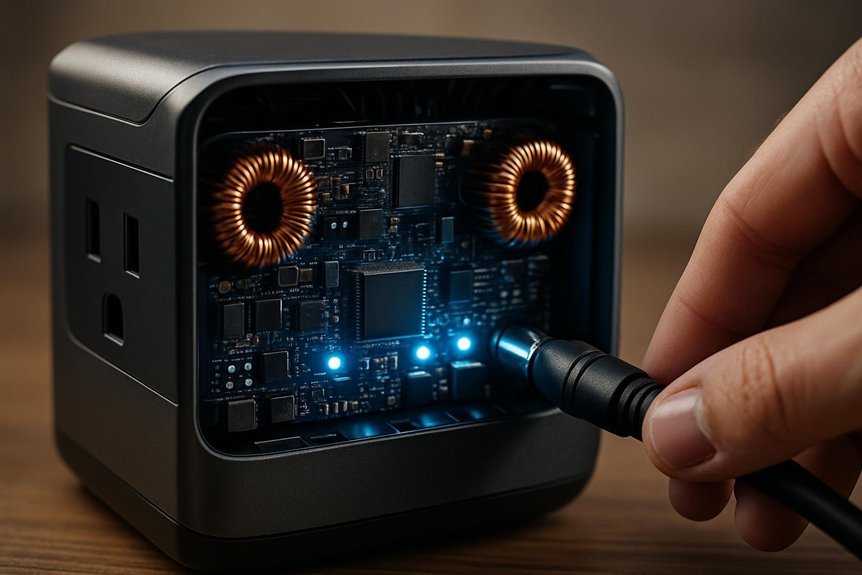
Let’s examine how inverters transform direct current (DC) into alternating current (AC) by switching voltage polarity to generate specific waveforms. We’ll analyze the differences between square, modified sine, and pure sine waves, focusing on their impact on device compatibility and power quality. Finally, we’ll assess inverter efficiency and identify where power losses typically occur during the conversion process.
Basic Inverter Function
Understanding how inverters convert direct current (DC) into alternating current (AC) is essential for grasping their role in portable power stations. At the core, inverter technology relies on switching components, like transistors, to rapidly alternate the DC input, producing an AC output. This process involves chopping the DC voltage into pulses and then shaping these pulses into a usable AC waveform. By controlling the switching frequency and duration, inverters generate AC power compatible with household appliances. Inverter applications demand precision in timing and voltage regulation to guarantee stable power delivery. This conversion enables portable power stations to supply AC power from battery-stored DC sources, making them versatile for off-grid or emergency scenarios. Understanding this basic function underscores the critical role inverters play in modern portable energy solutions.
Waveform Types Explained
The quality and shape of the AC waveform produced by an inverter considerably impact the performance of connected devices. Primarily, inverters output either a pure sine wave or a modified sine wave. A pure sine wave closely replicates the smooth, continuous waveform of utility power, ensuring compatibility with sensitive electronics and minimizing electromagnetic interference. Modified sine wave inverters approximate this waveform using a stepped, square-like pattern, simplifying circuitry but potentially causing issues in devices requiring clean power, such as audio equipment or variable-speed motors. While modified sine wave inverters are more cost-effective, their waveform can generate additional heat and noise in some appliances. Understanding these waveform distinctions helps us select the appropriate inverter type for specific applications, balancing performance needs against design constraints in portable power stations.
Efficiency and Power Loss
While waveform quality determines device compatibility, the efficiency of an inverter defines how effectively it converts DC power from a battery into usable AC power. During this energy conversion, some power loss is inevitable due to internal resistance, switching elements, and heat dissipation. We measure inverter efficiency as the ratio of output AC power to input DC power, typically expressed as a percentage. High-efficiency inverters minimize power loss, extending battery runtime and improving overall system performance. Factors influencing efficiency include inverter design, component quality, and operating load. Understanding these elements helps us optimize portable power stations, ensuring we get the maximum usable AC energy from the stored DC power while reducing wasted energy and heat generation. This precise balance is essential for reliable, long-lasting portable power solutions.
Different Types of Inverters Used in Portable Power Stations
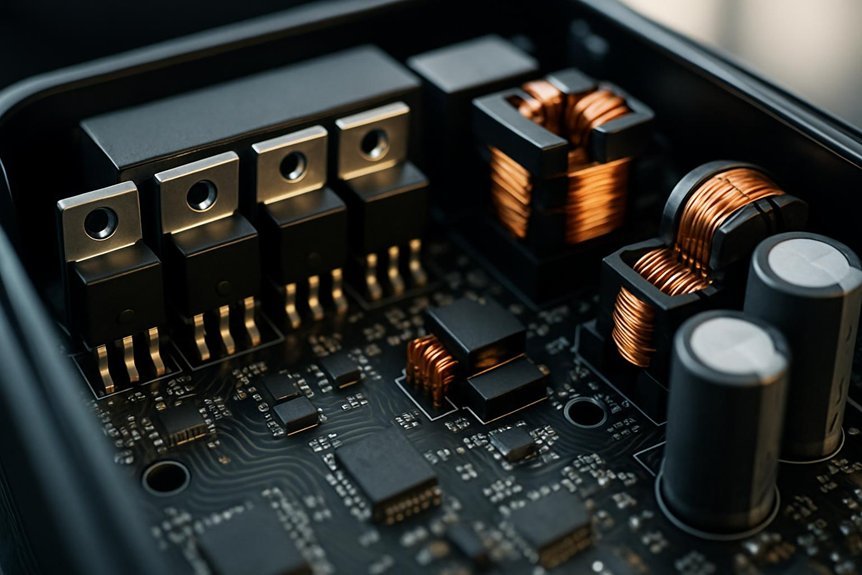
Although inverters serve the same fundamental purpose—converting DC to AC power—they come in several distinct types that impact performance, efficiency, and compatibility with various devices. The primary inverter technologies found in portable power stations include modified sine wave, pure sine wave, and hybrid inverters. Modified sine wave inverters offer cost-effective solutions but can cause interference with sensitive electronics. Pure sine wave inverters provide clean, stable power closely matching utility grid standards, making them ideal for delicate devices. Hybrid inverters combine features to optimize efficiency and output quality. Leading inverter brands differentiate themselves through proprietary technologies, thermal management, and waveform accuracy. Understanding these variations helps us select the appropriate inverter type to meet specific power demands, ensuring reliable operation and device safety within portable power stations.
How Inverter Efficiency Affects Battery Life and Performance
Since inverter efficiency directly influences how much power is converted from DC to AC, it plays a critical role in determining both battery life and overall system performance. Higher efficiency means less energy loss during conversion, reducing unnecessary battery drain. This extends battery life by minimizing deep discharge cycles and heat generation, which can degrade battery cells. Effective battery management relies on inverters that maintain ideal efficiency across varying loads. Load matching, the process of aligning inverter output with actual power demand, is crucial to prevent wasted energy. When the inverter operates near its peak efficiency point, we see improved runtime and system responsiveness. Conversely, poor load matching leads to inefficiencies that accelerate battery wear and compromise performance. Therefore, optimizing inverter efficiency is essential for maximizing portable power station longevity and reliability.
Safety Features Built Into Power Station Inverters
Many portable power station inverters incorporate multiple safety features designed to protect both the device and its users. Key safety mechanisms include overload protection, which prevents damage by automatically shutting down the inverter when current exceeds safe limits. This feature guards against overheating and potential circuit failure. Additionally, inverters often integrate short-circuit protection, thermal shutdown, and low-voltage cutoffs to maintain operational integrity. These mechanisms work in unison to prevent electrical faults and extend the lifespan of internal components. By continuously monitoring voltage, current, and temperature, the inverter guarantees stable performance under varying load conditions. Understanding these safety features helps us appreciate how inverters maintain reliability and user safety, especially in portable power stations where power demands can fluctuate unpredictably.
How to Choose the Right Inverter for Your Portable Power Station
Let’s evaluate inverter types to identify which best matches our portable power station’s requirements. We need to calculate power capacity accurately to guarantee consistent performance under load. Additionally, evaluating efficiency and key features will help us optimize energy use and functionality.
Inverter Types Explained
When selecting an inverter for our portable power station, understanding the different types is essential to optimizing performance and efficiency. Inverter technology advancements have expanded options, reflecting inverter applications diversity. We primarily consider:
- Pure sine wave inverters: deliver clean power, ideal for sensitive electronics.
- Modified sine wave inverters: cost-effective but less efficient for complex devices.
- Square wave inverters: simplest form, rarely used due to poor compatibility.
- Hybrid inverters: combine features for versatile applications and improved efficiency.
- Multi-mode inverters: adapt output based on load requirements, enhancing energy management.
Power Capacity Needs
Having identified the various inverter types and their operational characteristics, our next step is to evaluate the power capacity requirements that will determine the most suitable inverter size for our portable power station. We must analyze the total power consumption of all connected devices, considering both continuous and peak loads. Accurately estimating energy requirements guarantees the inverter can handle startup surges without overloading. It’s essential to sum the wattage ratings of appliances we intend to power simultaneously and factor in any transient spikes. Selecting an inverter with a capacity slightly above our maximum calculated load provides a safety margin, preventing performance degradation. This precise matching between power consumption and inverter capacity optimizes the station’s reliability and longevity, ensuring consistent power delivery tailored to our specific energy demands.
Efficiency and Features
Although selecting an inverter with adequate capacity is essential, we must also prioritize efficiency and feature sets to maximize our portable power station’s overall performance. Advanced inverter technology directly impacts energy conversion efficiency, reducing power loss and extending battery life. When choosing an inverter, consider these critical factors:
- Conversion efficiency percentage to minimize wasted energy
- Pure sine wave output for sensitive electronics
- Built-in protection features like overload and thermal shutdown
- Compatibility with battery voltage and charging systems
- Additional functionalities such as remote monitoring or modular expandability
Common Issues With Inverters and How to Troubleshoot Them
Since inverters play a critical role in converting DC to AC power within portable power stations, any malfunction can disrupt the entire system’s operation. Common issues include inverter overheating, which often results from inadequate ventilation or excessive load. To troubleshoot, we should guarantee proper airflow and reduce the load to within specifications. Inverter noise signals potential mechanical or electrical faults; we can isolate this by inspecting fans and connections. Inverter failure may stem from component damage or prolonged stress, requiring diagnostic tests like voltage and continuity checks. Regular maintenance, including cleaning and firmware updates, helps prevent these problems. By systematically applying these troubleshooting tips, we can quickly identify and resolve inverter issues, guaranteeing reliable power station performance and extending inverter lifespan.
Frequently Asked Questions
Can Inverters Be Used With Solar Panels in Portable Power Stations?
Yes, we can use inverters with solar panels in portable power stations by ensuring solar panel compatibility and optimizing inverter efficiency. This integration maximizes energy conversion, enabling reliable AC power output for various devices during off-grid situations.
How Do Temperature Changes Affect Inverter Performance?
Temperature changes impact inverter performance by affecting thermal efficiency; higher temperatures reduce cooling effectiveness, shortening inverter lifespan. We must manage heat carefully to maintain peak operation and extend the device’s durability and reliability in various environments.
What Maintenance Is Required for Inverters in Portable Power Stations?
Let’s treat inverter cleaning like a tune-up, essential for extending inverter lifespan. We regularly remove dust and guarantee ventilation, preventing overheating. These precise steps keep performance ideal, guarding our portable power stations against premature failure.
Are Inverters Noisy During Operation?
Inverters generally aren’t noisy during operation; their efficiency and inverter cooling systems minimize sound output. Efficient designs reduce heat generation, so cooling fans run quietly or intermittently, ensuring minimal operational noise for portable power stations.
Can Inverters Handle Surge Power From Power Tools?
We can confirm inverters handle surge capacity effectively, ensuring tool compatibility during startup spikes. However, matching the inverter’s surge rating with your power tools is essential to prevent overloads and maintain stable, reliable performance consistently.
Conclusion
Together, we’ve explored how inverters act as the heartbeat of portable power stations, converting stored energy into life-giving AC current. Like skilled conductors, they orchestrate complex electrical signals to power our devices reliably and efficiently. Understanding their types, efficiency, and safety features guarantees we choose the right one, extending battery life and performance. By mastering inverter technology, we reveal the true potential of portable power, illuminating our off-grid and emergency needs with precision and confidence.