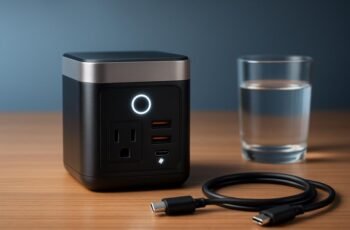
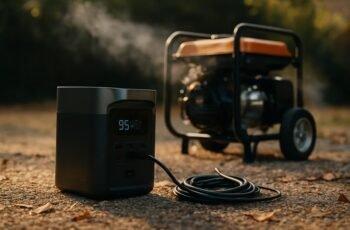
Weighing convenience against capacity, portability against power, we face a clear trade-off in choosing a portable power station. Lightweight models, under 10 pounds, excel in mobility and quick device charging with 100Wh to 500Wh capacity. Heavy units, over 30 pounds, deliver 1000Wh+ for longer runtimes and demanding applications but at higher costs. Understanding these differences is key—so how do we decide which fits our specific needs?
Key Takeaways
- Lightweight power stations weigh under 10 pounds, offering superior portability for short trips and emergencies.
- Heavy power stations exceed 30 pounds, providing larger battery capacities over 1000Wh for extended use.
- Lightweight models recharge faster but have limited runtime, suitable for charging small devices like phones and laptops.
- Heavy models deliver higher power output (1000+ watts) and longer runtimes, supporting multiple devices simultaneously.
- Choosing between them depends on portability needs, power demand, duration of use, and budget constraints.
What to Expect From Lightweight Portable Power Stations
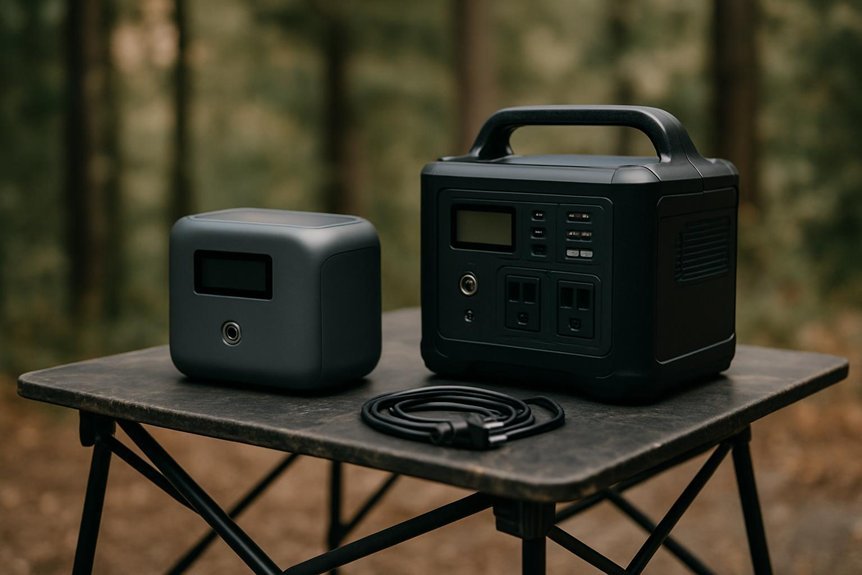
Although lightweight portable power stations typically offer lower capacity than their heavier counterparts, they excel in mobility and ease of use. We find that these units usually weigh under 10 pounds, providing significant portability benefits for travelers and outdoor enthusiasts. Their compact size guarantees they fit easily into backpacks or car trunks, enhancing travel convenience without compromising essential functionality. Technically, lightweight stations often feature battery capacities ranging from 100Wh to 500Wh, suitable for charging smartphones, laptops, or small appliances. Their inverter outputs generally max out at 300W to 600W, which supports moderate power demands but limits heavy-duty use. By prioritizing portability benefits and travel convenience, these units offer a practical solution for users needing reliable, on-the-go power with minimal bulk and weight.
Why Heavy Portable Power Stations Offer More Power
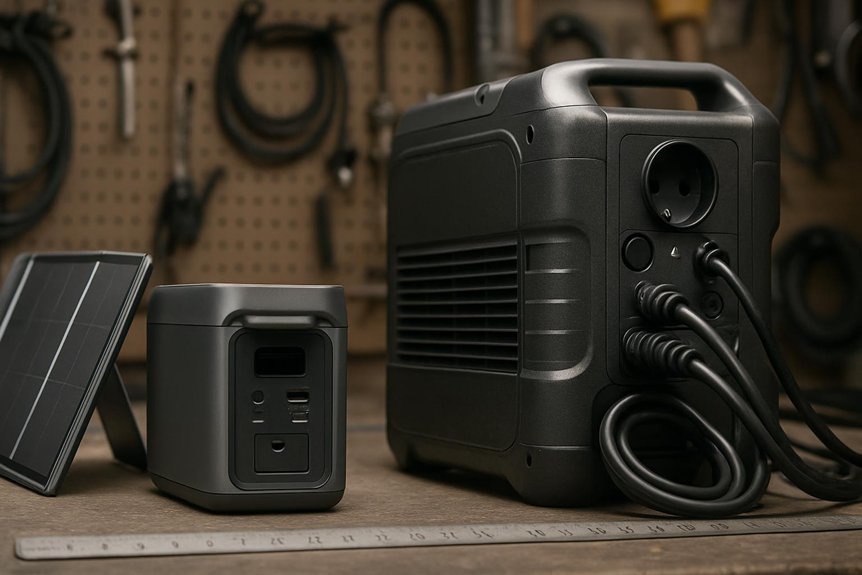
We understand heavy portable power stations pack larger battery capacities, enabling them to store considerably more energy than lightweight models. Their higher output wattage supports demanding devices and multiple simultaneous connections without performance drops. This combination results in extended run times, making them ideal for longer, power-intensive use cases.
Larger Battery Capacity
Battery capacity directly influences how much energy a portable power station can store and deliver. Heavy portable power stations typically house larger battery packs, often exceeding 1000Wh, compared to lightweight models that usually offer under 500Wh. This difference stems from advanced battery technology, such as high-density lithium-ion cells, that heavy units leverage to maximize storage without excessive bulk. While larger batteries provide extended runtime, they can impact charging speed; heavy stations may require longer to recharge fully due to their higher capacity. However, some incorporate fast-charging technologies to mitigate this. In contrast, lightweight stations, though quicker to recharge, sacrifice total energy storage. By prioritizing larger battery capacity, heavy portable power stations guarantee sustained power delivery for demanding applications, highlighting a clear trade-off between portability and energy availability.
Higher Output Wattage
Heavy portable power stations often deliver output wattages two to three times higher than their lightweight counterparts, enabling them to power more demanding devices and multiple appliances simultaneously. This capability stems from their high capacity options, which include robust inverters and larger battery cells designed to handle elevated power demands. For instance, while lightweight models may peak around 300-500 watts, heavy units frequently exceed 1000 watts, supporting equipment like power tools, medical devices, and kitchen appliances without strain. The advanced thermal management systems in heavier stations also facilitate sustained high output without overheating. Consequently, if your power needs involve running several high-draw devices or equipment requiring consistent peak wattage, heavy portable power stations offer a clear technical advantage over lighter alternatives.
Extended Run Time
How long can your portable power station keep your devices running under continuous use? Heavy portable power stations excel in extended usage due to larger battery capacities and optimized energy efficiency. While lightweight models prioritize portability, they often sacrifice runtime. Let’s compare typical runtimes and capacities:
| Model Type | Battery Capacity (Wh) | Continuous Run Time (hrs) |
|---|---|---|
| Lightweight | 200 | 4 |
| Mid-weight | 500 | 10 |
| Heavy | 1000 | 20 |
Heavy units provide roughly double the runtime of mid-weight models and five times that of lightweight ones. Their advanced energy efficiency further maximizes output, making them ideal for prolonged use in off-grid or emergency scenarios. So, if extended run time is a priority, heavy portable power stations are the clear choice.
How Portability Affects Your Power Station Choice
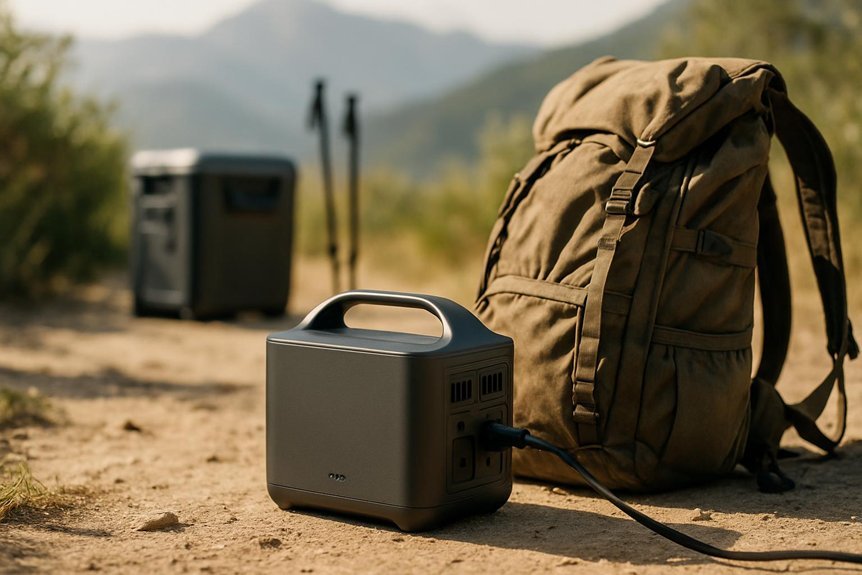
Although both lightweight and heavy portable power stations offer reliable energy solutions, their portability greatly influences which model suits our specific needs. When evaluating portability factors, weight considerations are paramount. Lightweight stations typically weigh under 15 pounds, enhancing ease of transport for activities like hiking or quick setups. In contrast, heavy models, often exceeding 30 pounds, can provide more features but require more effort to move. We must also factor in dimensions and handle design, which affect maneuverability and storage. For instance, a compact, lightweight unit fits easily in backpacks, whereas heavier stations may need wheeled carriers. Balancing these portability factors against our intended use helps us choose the ideal power station. Ultimately, understanding how weight and design impact mobility guarantees we select a unit aligned with our energy and transport needs.
Comparing Battery Capacity and Runtime Between Models
Weight and portability definitely shape our choice of power stations, but we also need to evaluate battery capacity and runtime to match our energy demands. Lightweight models often feature lithium-ion batteries, offering moderate capacity around 200-500Wh, suitable for short-term use. Heavy units typically house lithium iron phosphate (LiFePO4) batteries, delivering 1000Wh or more, which extends runtime considerably. Charging speed varies; lightweight stations usually recharge faster due to smaller battery sizes, while heavy-duty models might take longer but support higher cycle counts. When comparing models, we must consider that higher capacity doesn’t always mean longer runtime if power consumption is high. Matching battery types with expected usage helps optimize performance. Ultimately, balancing capacity, runtime, and charging speed guarantees we select the right power station for our specific needs.
Which Features Matter Most for Your Usage Needs
What features truly impact our experience with portable power stations? First, aligning user needs with power requirements is essential. For high-wattage devices, stations with robust inverter output and high battery capacity excel, though they tend to be heavier. Weight considerations become critical for mobile usage scenarios like hiking or camping, where lightweight models enhance portability but may limit runtime and device compatibility. Conversely, stationary or vehicle-based setups can leverage heavier units offering extended runtime and multiple output ports. We should also evaluate charging speed and input options, as faster recharge times improve uptime, particularly in off-grid conditions. By analyzing these technical factors relative to our specific usage scenarios, we can select a power station that balances operational efficiency with practical constraints, ensuring peak performance tailored to our demands.
Balancing Cost vs Performance in Power Stations
When comparing lightweight and heavy portable power stations, we need to analyze cost efficiency by measuring watt-hour capacity against price. Heavier models often deliver higher performance per dollar, but lightweight options may offer better value for specific, lower-demand uses. Let’s evaluate how performance scales with price to find the ideal balance for our needs.
Cost Efficiency Comparison
Three key factors shape the cost efficiency of portable power stations: initial purchase price, energy capacity, and output performance. When we analyze budget considerations, lightweight models often come with lower upfront costs but reduced capacity, limiting their efficiency in extended use. Conversely, heavy stations demand higher initial investments but deliver greater watt-hours per dollar, optimizing long-term savings through fewer recharge cycles and enhanced durability. For example, a heavy unit with 1500Wh capacity may cost 30% more than a 500Wh lightweight model but can power devices three times longer, reducing frequent replacements or supplemental charging. Balancing these variables helps us identify which station aligns better with both immediate budget constraints and extended operational demands, ensuring we maximize value without compromising performance.
Performance Versus Price
Understanding cost efficiency sets the stage for evaluating how performance measures up against price in portable power stations. When comparing lightweight and heavy models, budget considerations heavily influence our choices. Lightweight stations typically offer moderate power output at a lower price point, optimizing energy efficiency for small devices. In contrast, heavy power stations deliver higher wattage and extended runtimes but come with a significant cost increase. By analyzing watt-hour per dollar ratios, we see heavy units often provide more raw power but less cost-effectiveness per unit of energy delivered. Consequently, balancing upfront cost with energy efficiency is vital. For users prioritizing portability and budget, lightweight options perform adequately. Those requiring sustained high output may justify investing in heavier, pricier models, provided the performance gains align with their specific energy demands.
When to Choose Lightweight or Heavy Power Stations?
How do we decide between lightweight and heavy portable power stations? It boils down to balancing lightweight benefits against heavy drawbacks based on our specific needs. Lightweight models offer ease of transport and quicker deployment, ideal for short trips or emergency use. Heavy stations, though less portable, provide greater capacity and longer runtimes, suited for extended off-grid scenarios.
Consider these factors:
- Portability needs: Lightweight benefits shine when frequent movement is required.
- Power demand: Heavy units excel with higher watt-hour capacities.
- Usage duration: Longer outages favor heavy stations despite their drawbacks.
- Setup complexity: Lightweight models typically require minimal setup.
- Budget constraints: Heavy stations often cost more upfront but deliver sustained power.
Frequently Asked Questions
How Do Portable Power Stations Impact the Environment?
We see portable power stations reduce environmental impact through higher energy efficiency, lowering carbon emissions compared to fossil fuels. Choosing models with sustainable materials further improves their sustainability impact, making them smarter, eco-friendly energy solutions for us all.
Can Portable Power Stations Be Used Indoors Safely?
When it comes to indoor safety, portable power stations are a safe bet if we monitor power output carefully. Unlike gas generators, they produce no fumes, making them ideal for enclosed spaces with proper ventilation and usage guidelines.
What Maintenance Is Required for Portable Power Stations?
We recommend regular battery care, like avoiding full discharges and storing at 50% charge. Maintenance tips include keeping connections clean and updating firmware. These steps guarantee peak performance and longevity compared to neglecting upkeep.
Are There Any Warranty Differences Between Lightweight and Heavy Models?
We’ve found warranty coverage often varies by model durability; heavier models typically offer longer warranties due to robust construction, while lightweight stations may have shorter coverage. Comparing specs helps us choose the best balance for our needs.
How Do Weather Conditions Affect Portable Power Station Performance?
We’ve found temperature extremes reduce battery efficiency, while high humidity levels risk internal corrosion. Comparing data, cold slows output, heat accelerates degradation. Protecting stations in stable conditions optimizes performance and prolongs lifespan effectively.
Conclusion
When choosing between lightweight and heavy portable power stations, we’re balancing a scale—mobility on one side, power on the other. Lightweight units, under 10 pounds, offer nimble convenience for quick charges and short trips, delivering 100-500Wh. Heavy stations, over 30 pounds, pack 1000Wh+, fueling longer, demanding use but at a weight and cost premium. By analyzing capacity, runtime, and portability, we can pinpoint the perfect fit for our unique energy needs and travel style.