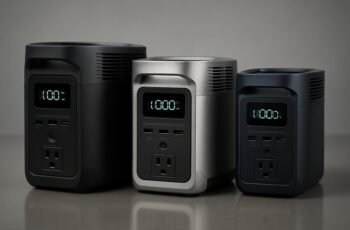
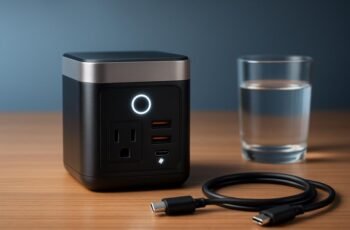
We often hear that portable power stations can fully replace traditional generators, but is that really the case? By examining key factors like power output, noise levels, environmental impact, and usability, we can identify where each option excels or falls short. Understanding these differences is essential before deciding which solution fits your specific energy demands and lifestyle needs. Let’s explore how these two power sources truly compare.
Key Takeaways
- Portable power stations are lightweight, quiet, and eco-friendly, ideal for sensitive electronics and small appliances.
- Generators provide higher continuous power output suitable for heavy-duty devices but are noisy and emit pollutants.
- Power stations require minimal setup and maintenance, while generators need fuel handling and regular engine care.
- Portable power stations run on rechargeable batteries with zero emissions, whereas generators rely on fuel combustion.
- Choice depends on power needs: power stations for low wattage and portability; generators for high wattage and extended runtime.
How Portable Power Stations and Generators Work Differently
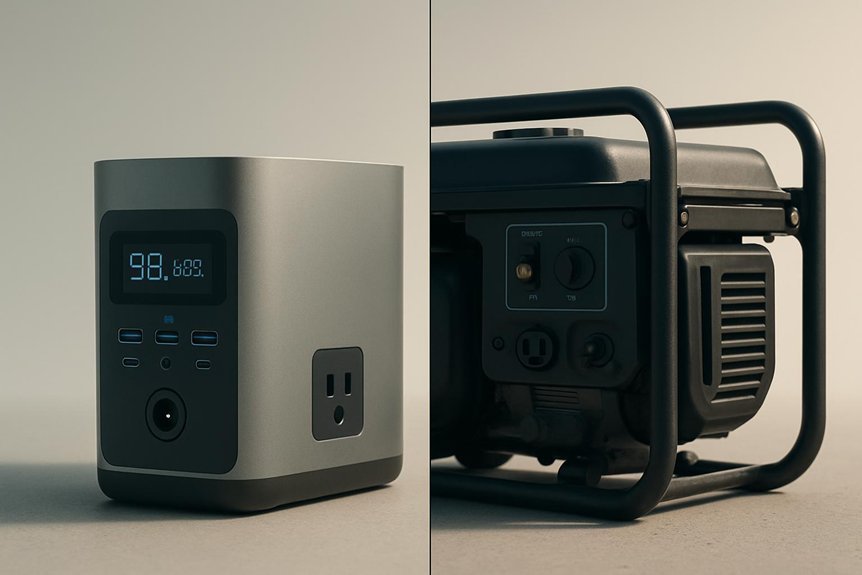
While both portable power stations and generators provide electricity on the go, they operate on fundamentally different principles. Portable power stations rely on advanced battery technology, typically lithium-ion or lithium iron phosphate cells, to store electrical energy. This stored energy is then converted through an inverter to supply clean, stable AC power. Generators, in contrast, produce electricity mechanically by burning fuel—usually gasoline or diesel—driving an engine connected to an alternator.
When comparing energy efficiency, portable power stations excel by minimizing energy loss during conversion and eliminating fuel consumption during idle periods. Generators tend to be less efficient, as their engines consume fuel continuously, regardless of load. This fundamental difference in energy conversion and storage highlights why battery technology plays a critical role in boosting the efficiency and environmental sustainability of portable power stations.
Comparing Convenience: Setup, Portability, and Maintenance
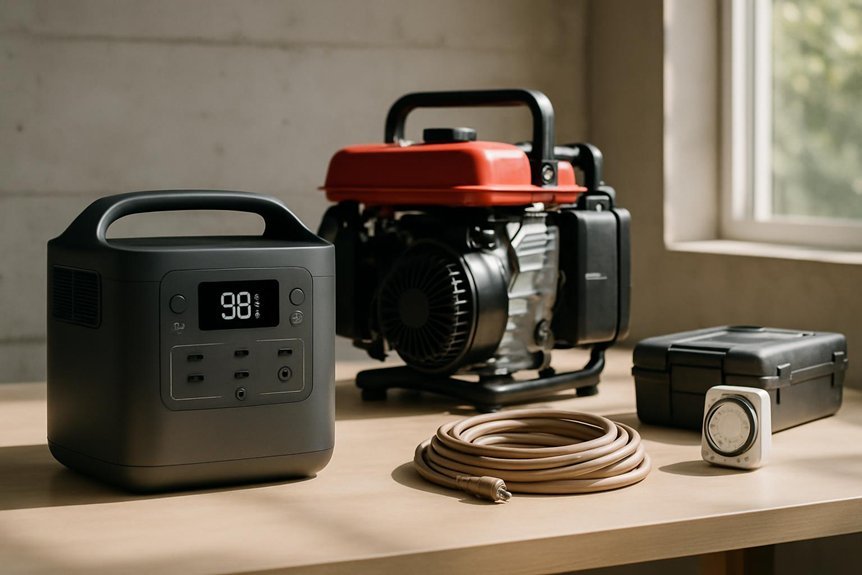
We can evaluate convenience by examining setup time, portability, and maintenance demands for both portable power stations and generators. Portable power stations often boast user friendly features like one-button start and integrated displays, enabling setup within minutes. Their travel friendly designs, including compact dimensions and lightweight frames (typically under 30 lbs), enhance mobility. Conversely, generators require fuel handling, engine priming, and sometimes assembly, which extends setup time and demands more physical effort. Portability suffers due to heavier weights (often 50+ lbs) and bulkier profiles, despite some models including wheels. Maintenance-wise, power stations primarily need battery care and software updates, offering low upkeep. Generators require regular oil changes, filter replacements, and fuel stabilization, increasing maintenance complexity. Overall, portable power stations deliver superior convenience through streamlined setup, easier transport, and minimal maintenance compared to generators.
Noise Levels and Environmental Impact of Power Stations vs. Generators
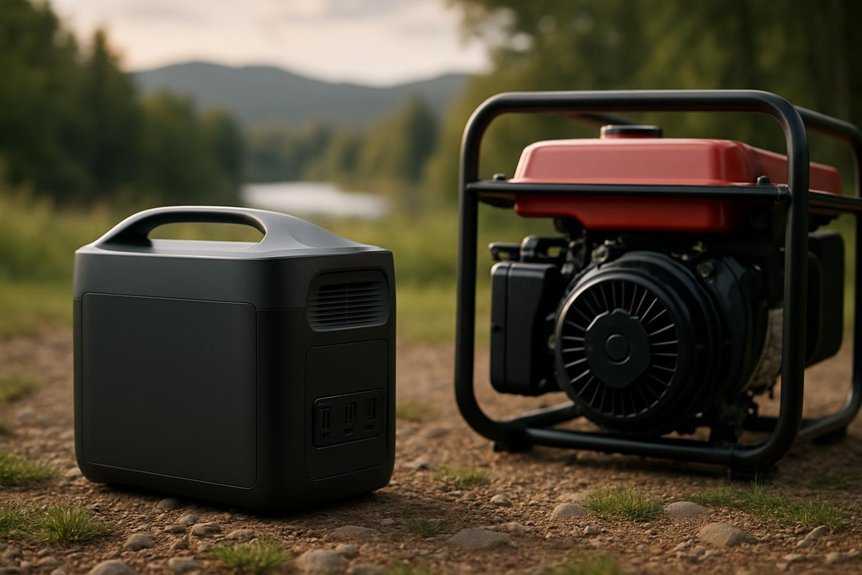
Because noise pollution and environmental footprint are critical factors in choosing between portable power stations and generators, we need to analyze their operational sound levels and emissions. Portable power stations operate silently or generate minimal sound, typically below 50 decibels, which considerably reduces sound pollution. In contrast, conventional gas-powered generators emit noise levels ranging from 60 to 90 decibels, contributing to substantial sound pollution and discomfort in residential or outdoor settings. Regarding environmental impact, portable power stations produce zero direct emission levels since they rely on stored electricity, often charged via renewable sources. Generators, however, burn fossil fuels, releasing carbon monoxide, nitrogen oxides, and particulate matter, increasing harmful emissions. From both noise and environmental perspectives, portable power stations offer a cleaner, quieter alternative, making them preferable for eco-conscious users.
Fuel Types, Runtime, and Refueling: What You Need to Know
Quiet operation and low emissions are important, but understanding how power sources sustain their output over time is equally important. Portable power stations rely on rechargeable lithium-ion batteries, offering consistent runtime defined by battery capacity, typically 200-2000Wh, and require no fuel, reducing maintenance costs. Generators, however, run on gasoline, propane, or diesel, with fuel efficiency varying widely—gasoline generators average 0.5 gallons per hour under moderate load, affecting runtime and refueling frequency. Propane models provide cleaner combustion but can have shorter run times due to lower energy density. Diesel generators are fuel-efficient but heavier and noisier. Refueling generators is straightforward but requires fuel storage and safety considerations. In contrast, power stations recharge via AC or solar inputs, providing quieter, maintenance-light operation but limited by battery capacity and recharge time. Understanding these differences helps us choose the right power solution.
Power Output and Device Compatibility for Outdoor and Emergency Use
When selecting a power source for outdoor or emergency use, we must evaluate both power output and device compatibility to meet our specific needs. Portable power stations typically offer power capacities ranging from 200Wh to over 2000Wh, suitable for charging small electronics, medical devices, and even running low-wattage appliances. In contrast, generators provide higher continuous power output, often exceeding 2000W, making them compatible with heavy-duty device types like power tools and large refrigerators. However, generators may lack sensitive electronics’ compatibility due to inconsistent power surges. Portable power stations deliver stable, clean sine wave power, ensuring safety for delicate devices. Thus, understanding our device types and their wattage requirements helps us choose between the clean, moderate power capacity of stations and the robust, high-output capability of generators for reliable outdoor and emergency power solutions.
Which Is Right for You? Matching Power Needs to Your Lifestyle?
How do we determine which power solution aligns best with our lifestyle and energy demands? First, we analyze our lifestyle activities—camping trips, remote work, or emergency preparedness—to estimate daily power requirements. Portable power stations excel in lightweight, clean energy delivery, supporting smaller devices up to 1500W, ideal for charging laptops, phones, and small appliances. Generators, however, provide higher continuous output, often surpassing 3000W, suitable for heavy-duty tools or prolonged power outages. We must also consider fuel availability, noise levels, and maintenance. If our lifestyle activities demand portability and quiet operation with moderate power, a portable power station fits best. Conversely, for high power requirements and extended use, a generator is more practical. Matching these specifications guarantees efficient, reliable energy tailored to our specific needs.
Frequently Asked Questions
Can Portable Power Stations Charge Electric Vehicles?
Yes, we can charge electric vehicles with portable power stations, but their charging capacity varies. We must guarantee vehicle compatibility and consider power output limits, as portable stations typically offer lower capacity compared to traditional generators.
Are There Safety Concerns With Storing Power Stations Indoors?
Like handling a ticking clock, indoor safety with power stations demands strict storage guidelines. We must guarantee proper ventilation and avoid flammable areas, as overheating risks rise compared to generators, making careful monitoring essential for safe indoor use.
How Do Weather Conditions Affect Generator Performance?
We’ve found generator efficiency drops considerably in weather extremes—cold reduces fuel combustion, while heat strains cooling systems. Moisture can cause corrosion, so maintaining ideal conditions is essential to sustain consistent generator performance over time.
Can Portable Power Stations Be Used During Air Travel?
By coincidence, portable power stations often face strict travel regulations due to battery capacity limits, typically under 100Wh. We must compare device specs carefully to guarantee compliance and avoid issues during air travel, prioritizing safety and efficiency.
What Are the Warranty and Service Options for Both Devices?
We’ve found warranty comparison shows portable power stations often have 1–3 years coverage, while generators range 2–5 years. Service options for generators typically include local repairs; portable stations rely more on manufacturer support and mail-in service.
Conclusion
When weighing portable power stations against generators, we’re traversing a spectrum of power and practicality. Portable stations shine with quiet, clean energy—ideal for sensitive gear and eco-conscious adventurers. Generators roar with higher output but demand fuel and tolerance for noise and emissions. By matching your power appetite to your lifestyle needs, you can choose the right tool—whether it’s the silent sentinel or the robust workhorse powering your next move.