Many people don’t realize that the choice between EcoFlow and Anker portable power stations hinges on more than just capacity—it also involves recharge speed, port variety, and design priorities. While EcoFlow offers robust options for extended use and rapid recovery, Anker focuses on compactness and safety for mobile devices. Understanding these nuances can help us determine which brand truly fits our specific needs and lifestyle. Let’s explore how these factors compare in detail.
Key Takeaways
- EcoFlow offers higher battery capacities (often 1000Wh+) suitable for longer runtimes and powering multiple devices simultaneously.
- Anker provides more compact, lightweight models with capacities around 500-800Wh, ideal for short trips and essential device charging.
- EcoFlow excels in fast recharge speeds, with some models charging fully in under 2 hours using advanced fast-charging technology.
- Anker focuses on USB output ports for mobile devices, while EcoFlow supports diverse ports including multiple AC outlets and USB-C.
- EcoFlow is pricier but offers longer warranties and better for stationary backup; Anker is more affordable and optimized for portability and safety.
What to Look for in a Portable Power Station
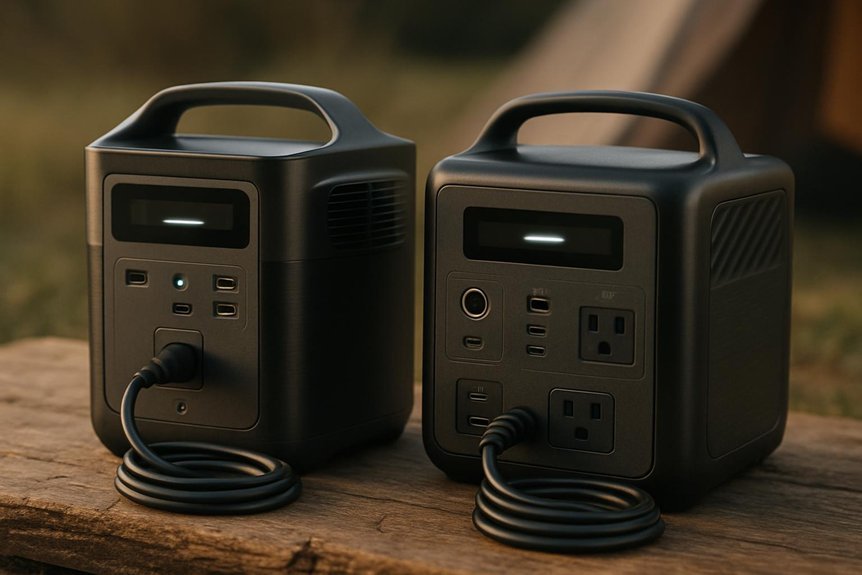
When choosing a portable power station, what factors should we prioritize to guarantee it meets our specific needs? First, we need to evaluate portability factors such as size, weight, and handle design, ensuring the unit is easy to transport for our intended use. Compact and lightweight models excel for outdoor activities, while heavier stations may suit stationary backup needs. Next, charging options are essential—does the station support multiple input methods like AC outlets, solar panels, or car chargers? Versatile charging options increase usability, especially during extended trips or power outages. Additionally, we should consider charging speed and compatibility with our existing gear. By focusing on these portability factors and charging options, we can select a power station tailored precisely to our mobility demands and energy replenishment preferences.
Comparing Battery Capacity and Runtime of EcoFlow vs Anker
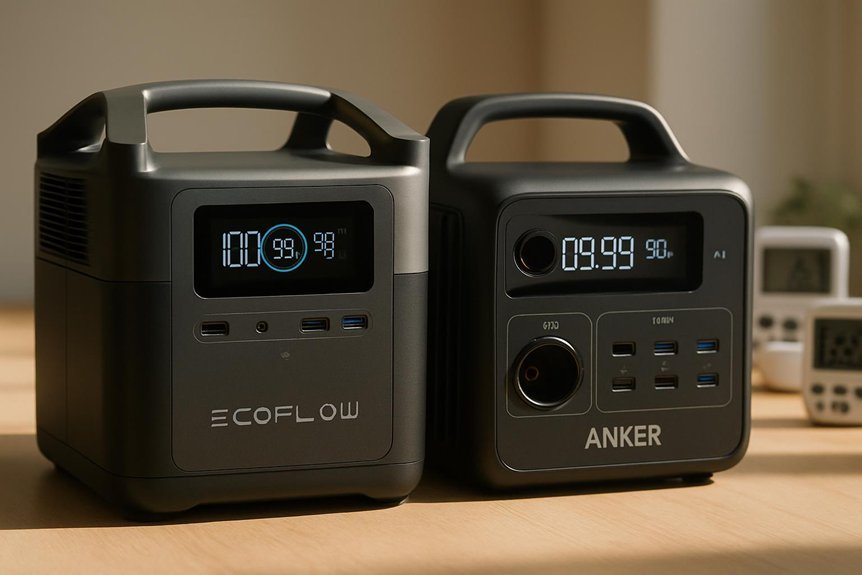
Although both EcoFlow and Anker offer reliable portable power stations, their battery capacities and runtimes vary considerably, affecting their suitability for different uses. EcoFlow typically employs advanced lithium-ion battery technology, delivering higher capacity options, often exceeding 1000Wh, which supports longer runtimes for demanding applications. Anker, while also using lithium-ion cells, generally offers more compact units with capacities around 500Wh to 800Wh, focusing on portability. When analyzing runtime efficiency, EcoFlow models tend to maintain consistent output over extended periods, benefiting from optimized battery management systems. Anker units excel in lighter, short-term usage scenarios but may experience faster depletion under heavy loads. Understanding these differences helps us select the best portable power station based on our energy needs and runtime expectations.
How Fast Can EcoFlow and Anker Power Stations Recharge?
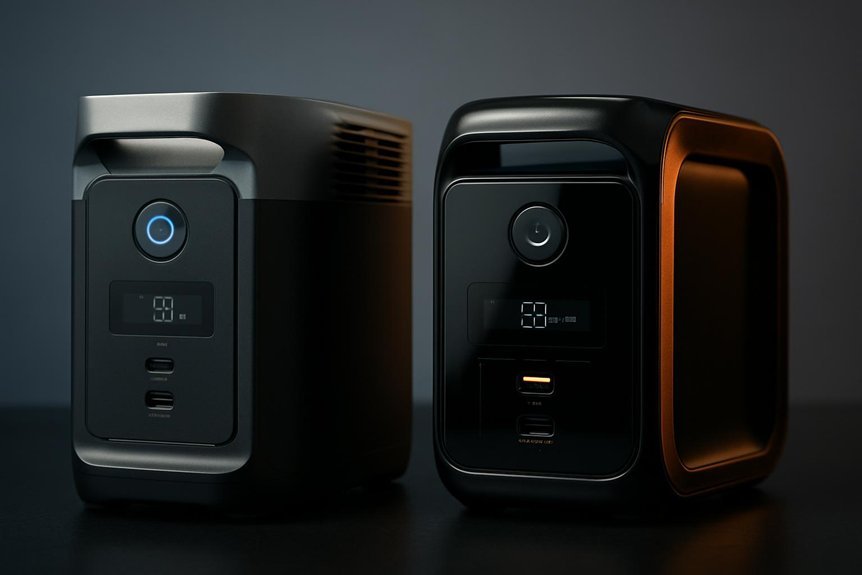
How quickly can we get our EcoFlow or Anker power stations back to full charge? Recharge speed largely depends on each brand’s charging technology. EcoFlow uses advanced fast-charging algorithms and higher input wattage, allowing some models to recharge in under 2 hours. Anker generally offers reliable but slower recharge speeds due to more conservative input limits.
| Model | Recharge Speed (Hours) | Charging Technology |
|---|---|---|
| EcoFlow Delta 2 | 1.9 | X-Stream Fast Charging |
| Anker 545 | 4.5 | Standard AC Charging |
| EcoFlow River 2 | 3.5 | Dual Charging Input |
Port Selection and Output Options: Which Brand Fits Your Devices?
Recharge speed is a key factor, but we also need to take into account how well these power stations connect with our devices. When comparing EcoFlow and Anker, port versatility plays a vital role in device compatibility. EcoFlow power stations generally offer a wider range of ports, including multiple AC outlets, USB-A, USB-C with Power Delivery, and even carport outputs, enhancing their ability to support diverse devices simultaneously. Anker models often focus on USB outputs, emphasizing fast charging for smartphones and laptops but with fewer AC options. This means if you rely on various electronics, including high-draw appliances, EcoFlow might fit better. Conversely, if your needs center around mobile devices, Anker’s streamlined port selection could suffice. Evaluating port versatility alongside device compatibility helps us choose the best match for our specific power demands.
Design and Portability: Which Power Station Is Easier to Carry?
When we consider design and portability, both EcoFlow and Anker offer distinct approaches that cater to different user needs. In a weight comparison, Anker’s power stations generally weigh less, making them easier to carry for extended periods. EcoFlow models, while slightly heavier, compensate with robust construction and larger capacity. The handle design also differs: EcoFlow incorporates sturdy, integrated handles that provide a secure grip, ideal for transporting heavier units. Anker opts for simpler, often foldable handles that enhance compactness but may compromise comfort during long carries. Both brands prioritize portability, but if lighter weight and compactness are your focus, Anker might be preferable. For those seeking durability with a grip optimized for heftier loads, EcoFlow’s handle design stands out. Ultimately, your choice depends on how you balance weight and handle ergonomics.
Price and Value: Is EcoFlow or Anker More Affordable for Your Needs?
When comparing EcoFlow and Anker power stations, we need to look beyond just the initial cost to understand their long-term value. We’ll analyze how their features align with their price points to see which offers the best overall affordability. This approach helps us determine which option fits our specific needs without overspending.
Initial Cost Comparison
Comparing the initial costs of EcoFlow and Anker power stations reveals key differences that impact affordability for various users. Our initial cost analysis shows that Anker models generally come with a lower price tag, making them attractive for those with tighter budget considerations. EcoFlow units, however, often command higher upfront prices due to advanced features and higher capacity options. While Anker offers solid entry-level choices, EcoFlow targets users willing to invest more initially for enhanced performance. It’s important to weigh these initial expenses against your immediate power needs and financial limits. By focusing strictly on the purchase price without factoring in long-term aspects, we can better understand which brand aligns best with your current budget constraints and priorities.
Long-Term Value Analysis
Evaluating long-term value requires looking beyond upfront costs to assess durability, efficiency, and ongoing expenses associated with EcoFlow and Anker power stations. When considering long term durability, EcoFlow models tend to offer robust build quality, often backed by a three-year warranty, which exceeds Anker’s typical one- to two-year coverage. This gives EcoFlow an edge in warranty comparison, potentially reducing replacement costs over time. However, Anker units are known for efficient power management, which can lower operational costs. Both brands use quality components, but EcoFlow’s extended warranty signals confidence in product lifespan. Ultimately, choosing the more affordable option depends on how you weigh initial price against the likelihood of repairs or replacements, factoring in warranty length and real-world durability over the product’s expected service life.
Features Versus Price
Three key factors shape the affordability of EcoFlow and Anker power stations: feature sets, price points, and how well each aligns with your specific needs. EcoFlow models typically offer advanced features like faster charging speeds and greater solar compatibility, which can justify their higher price tags. Anker units, while generally more budget-friendly, may offer fewer ports or slower recharge times but still maintain solid user reviews for reliability and ease of use. When considering value, we must weigh whether EcoFlow’s premium features meet demands like off-grid solar setups or rapid power replenishment. Conversely, Anker’s affordability suits users prioritizing basic, dependable power without extra frills. By analyzing features versus price alongside user feedback, we can better determine which power station offers the most practical value for your specific situation.
Best Use Cases for EcoFlow and Anker Portable Power Stations
When choosing between EcoFlow and Anker portable power stations, we need to evaluate their suitability for outdoor adventures and emergency power solutions. Each brand offers distinct features that cater to different usage scenarios, such as capacity, portability, and charging speed. Let’s analyze how these factors align with our specific power needs in various situations.
Outdoor Adventures Compatibility
Outdoor enthusiasts often rely on portable power stations to keep their devices charged and essential gear running during extended trips. When comparing EcoFlow and Anker, both cater well to camping essentials and hiking gear, but their strengths vary. EcoFlow excels in capacity and output, ideal for powering multiple devices simultaneously, while Anker offers lightweight, compact options better suited for short hikes or minimal gear setups.
| Feature | EcoFlow | Anker |
|---|---|---|
| Power Capacity | Higher, supports multiple devices | Moderate, optimized for portability |
| Weight | Heavier, less suited for long hikes | Lightweight, easy to carry |
| Ideal Use | Extended camping with many devices | Short trips with basic gear |
Together, they cover a broad spectrum of outdoor needs efficiently.
Emergency Power Solutions
Understanding how EcoFlow and Anker power stations perform in emergency scenarios helps us make informed decisions beyond recreational use. Both brands provide reliable backup power essential for disaster preparedness and daily use, but differences emerge in key areas:
- Power reliability: EcoFlow often leads with faster charging speeds, ensuring quicker recovery during outages.
- Battery safety: User reviews highlight Anker’s robust safety features, critical in prolonged emergencies.
- Solar compatibility: EcoFlow excels with seamless solar panel integration, supporting energy independence off-grid.
- Portable convenience: Anker’s compact design enhances mobility, useful for quick evacuations or on-the-go power.
Frequently Asked Questions
Are Ecoflow and Anker Power Stations Safe for Indoor Use?
We find both Ecoflow and Anker power stations safe for indoor use, provided we follow ventilation requirements carefully. Proper airflow prevents overheating, ensuring indoor safety during operation without emitting harmful fumes or excessive heat.
Do Ecoflow and Anker Offer Customer Support and Warranty Services?
Isn’t it surprising when top brands actually provide reliable customer service? Both Ecoflow and Anker offer solid warranty coverage and responsive support, ensuring we’re covered if anything goes wrong with their portable power stations.
Can Ecoflow and Anker Power Stations Be Used Simultaneously With Solar Panels?
Yes, both Ecoflow and Anker power stations support solar panel compatibility, allowing dual charging setups. We can connect their units simultaneously to solar panels, optimizing energy intake and ensuring efficient, flexible power management during outdoor activities or emergencies.
What Environmental Certifications Do Ecoflow and Anker Power Stations Have?
Like a beacon in fog, both Ecoflow and Anker hold solid sustainability ratings. They incorporate eco friendly materials and meet certifications like RoHS and CE, showcasing their commitment to reducing environmental impact through detailed, analytical design choices.
How Do Ecoflow and Anker Handle Firmware Updates and Software Integration?
We find both brands offer seamless firmware features through dedicated apps, ensuring timely updates. Their software compatibility with iOS and Android enhances user control, but Ecoflow often provides more frequent updates and advanced monitoring tools than Anker.
Conclusion
When choosing between EcoFlow and Anker, we weigh capacity against portability, speed against simplicity, versatility against budget. We consider EcoFlow’s powerful, fast-recharging stations for extended use and quick recovery, while valuing Anker’s compact, user-friendly models for light, mobile needs. We balance price with performance, size with output, and durability with design. Together, we find the right power station that matches our lifestyle, our devices, and our peace of mind.