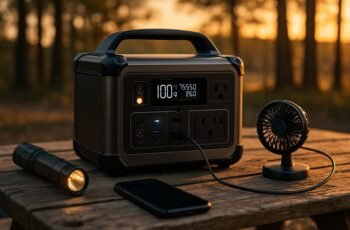
Imagine being stranded in a remote area, your electric vehicle’s battery nearly drained, when a compact device suddenly becomes your lifeline. That’s the power of a car charging portable power station—an essential tool for off-grid travel and emergency situations. Understanding how these devices work, their key features, and best practices can make all the difference in ensuring reliable, safe, and efficient vehicle charging anywhere. Let’s explore what makes a good portable power station and how to choose the right one for your needs.
Key Takeaways
- Understand the device’s power output and compatibility with your vehicle’s charging port and requirements.
- Choose a portable power station with sufficient capacity and multiple versatile charging ports for your EV needs.
- Prioritize safety features like overcurrent, overvoltage, and thermal protections to prevent electrical hazards.
- Use high-quality cables and recharge the power station before capacity drops below 20% for optimal performance.
- Store and operate the station within recommended temperature ranges to extend battery life and ensure efficient charging.
What Is a Car Charging Portable Power Station and How Does It Work?
A car charging portable power station is a compact, rechargeable device designed to supply electrical power to various devices and appliances, especially in remote or off-grid locations. It typically incorporates a lithium-ion or lithium-polymer battery as its energy source, paired with multiple output ports such as AC, DC, and USB. Charging occurs via an integrated car charger port, which connects directly to a vehicle’s 12V or 24V power outlet. When connected, the station converts the vehicle’s DC power into usable AC or DC power through internal inverters and converters. This process allows users to power or recharge devices like smartphones, laptops, and small appliances. Its portability and versatility make it essential for situations requiring reliable power where traditional grid access is unavailable.
Key Features to Look for When Choosing a Portable EV Charging Station
When selecting a portable EV charging station, focusing on key features guarantees reliable performance and compatibility with your needs. Essential aspects include power output capacity, which determines charging speed; make sure it matches your vehicle’s requirements. Look for multiple charging ports and versatile connector types (Type 1, Type 2, or CCS) for broader compatibility. Battery capacity influences how many charges you can perform off-grid; opt for higher capacity units if longer trips are frequent. Additionally, check for robust safety features such as overcurrent, overvoltage, and thermal protections to prevent damage. Portability features like weight, handle design, and compact form factor are also vital for ease of transport. Finally, verify the station supports standard charging protocols and has reliable power input options for varied scenarios.
Comparing Different Types of Portable Power Stations for Electric Vehicles
When comparing portable power stations for electric vehicles, we focus on battery capacity variations and charging speed options, which directly impact usability and efficiency. Different models offer a range of capacities from compact units to high-capacity systems, affecting how many charges they can support. Additionally, charging speeds vary markedly, influencing how quickly a station can recharge an EV or itself for subsequent use.
Battery Capacity Variations
Understanding battery capacity variations is essential when comparing portable power stations for electric vehicles, as it directly impacts their usability and range. Different battery chemistries and sizes determine how much energy each station can store, influencing charge duration and power delivery. For example, lithium-ion batteries typically offer higher energy density and longer lifespan, whereas lead-acid variants are more affordable but less efficient. The following table summarizes key differences:
| Battery Type | Capacity Range (Wh) | Lifespan (cycles) |
|---|---|---|
| Lithium-ion | 500–2000 | 1000+ |
| Lead-acid | 300–1500 | 300–500 |
Selecting the appropriate capacity depends on your vehicle’s energy needs and usage frequency.
Charging Speed Options
Charging speed is a critical factor when evaluating portable power stations for electric vehicles, as it directly affects how quickly a station can replenish its energy and, consequently, how ready it is for use. Different stations employ varying charging technologies, such as AC wall outlets, DC fast charging, or high-current DC outputs. AC charging typically offers slower recharge times, often several hours, but is widely compatible. DC fast charging provides markedly faster replenishment, often within 30 to 60 minutes, using higher voltage and current levels. Some stations incorporate multiple charging options, allowing for flexible, rapid energy replenishment, while others are limited to basic AC inputs. Selecting a station with the appropriate charging speed depends on usage frequency, vehicle compatibility, and desired downtime.
How to Use Your Portable Power Station Safely and Effectively
To guarantee safe and effective use of your portable power station, it’s essential to follow proper operational guidelines and safety protocols. Always operate within the manufacturer’s specified voltage and wattage limits to prevent overloads. Before use, inspect connections and cables for damage, ensuring secure and clean contacts. Avoid exposing the unit to moisture, extreme temperatures, or direct sunlight, which can compromise safety and performance. When powering devices, connect only compatible equipment to prevent electrical faults. Use the power station in well-ventilated areas to avoid overheating. Always turn off the unit before disconnecting devices or performing maintenance. Adhering to these safety practices ensures efficient operation, prolongs device lifespan, and minimizes risk of electrical hazards during use.
Top Tips for Extending Battery Life and Maximizing Charging Efficiency
Maximizing the battery life and charging efficiency of your portable power station requires strategic practices that minimize unnecessary energy drain and optimize performance. To achieve this, focus on proper usage and maintenance. Keep the station within recommended temperature ranges, as extreme heat or cold accelerates battery degradation. Avoid deep discharges; recharge before the battery drops below 20% capacity. Use high-quality, compatible chargers to guarantee efficient power transfer. Additionally, consider these tips:
- Limit simultaneous device connections to reduce load
- Store the power station in a cool, dry environment when not in use
- Perform regular calibration cycles to maintain accurate battery capacity readings
Implementing these measures helps preserve battery health and enhances overall charging efficiency for prolonged device reliability.
Frequently Asked Questions About Car Charging Portable Power Stations
Understanding the most common questions about car charging portable power stations can help users optimize their use and guarantee reliability during critical moments. These devices typically feature multiple output options, including USB, AC, and DC ports, designed for versatile applications. They are charged via 12V vehicle outlets or dedicated AC adapters, with charging times varying based on capacity. Proper maintenance, like avoiding over-discharge and storing in cool environments, prolongs lifespan. Users often ask about compatibility with devices; most power stations support standard electronics up to their rated wattage. Safety features such as overload protection and thermal cutoffs are integrated to prevent damage. Ensuring proper operation through understanding these FAQs enhances efficiency and readiness for emergencies or outdoor activities.
Frequently Asked Questions
Can I Use a Portable Power Station for All Electric Vehicle Models?
We can confirm that portable power stations aren’t compatible with all electric vehicle models due to variations in charging standards, power requirements, and connector types. Always check your vehicle’s specifications and the power station’s capabilities before use.
How Long Does a Typical Portable Power Station Take to Fully Charge?
A typical portable power station generally takes around 4 to 8 hours to fully charge, depending on its capacity and the charging method used. We recommend referring to the manufacturer’s specifications for precise charging times.
Are Portable Power Stations Suitable for Outdoor or Emergency Use?
Yes, portable power stations are ideal for outdoor and emergency use because they provide reliable, clean energy without noise or fumes, are easy to transport, and feature multiple charging options, ensuring essential device operation during power outages or remote activities.
What Maintenance Is Required for a Car Charging Portable Power Station?
We regularly check and clean the terminals, guarantee proper storage, and monitor battery health, as studies show proper maintenance extends device lifespan by up to 30%. These steps keep our portable power stations reliable and ready for use.
Do Portable Power Stations Support Fast or Rapid Charging?
Yes, portable power stations often support fast or rapid charging, utilizing high-power input ports like USB-C or AC outlets, which considerably reduce charging time. However, compatibility depends on the station’s specifications and input power ratings.
Conclusion
In conclusion, selecting, using, and maintaining a car charging portable power station requires careful consideration, consistent safety practices, and strategic management. By understanding key features, comparing options, and following best usage tips, we can optimize performance, extend battery life, and ensure reliable EV charging on the go. Empowered with knowledge and proper care, we can confidently navigate off-grid charging needs, making our electric journeys safer, more efficient, and more convenient.