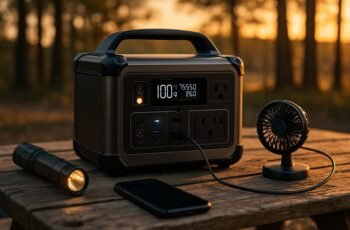
We often assume that simply turning off a portable power station is enough to preserve its battery life, but is that really true? Proper storage involves more than just powering down; it requires specific preparation and environmental controls to maintain battery health and device functionality. Understanding these factors can prevent costly degradation. Let’s explore the essential steps and conditions that guarantee your power station remains reliable over time.
Key Takeaways
- Store portable power stations in cool, dry, and well-ventilated areas with temperatures between 15°C and 25°C.
- Charge batteries to about 50% capacity before storage and maintain charge between 40% and 60% during storage.
- Use insulated, moisture-resistant cases and clean the unit’s exterior and ports before storing.
- Monitor battery charge every 3 to 6 months and recharge as needed to prevent self-discharge.
- Protect units from physical damage using impact-resistant cases and secure storage to avoid falls or vibrations.
Why Proper Storage Matters for Portable Power Stations
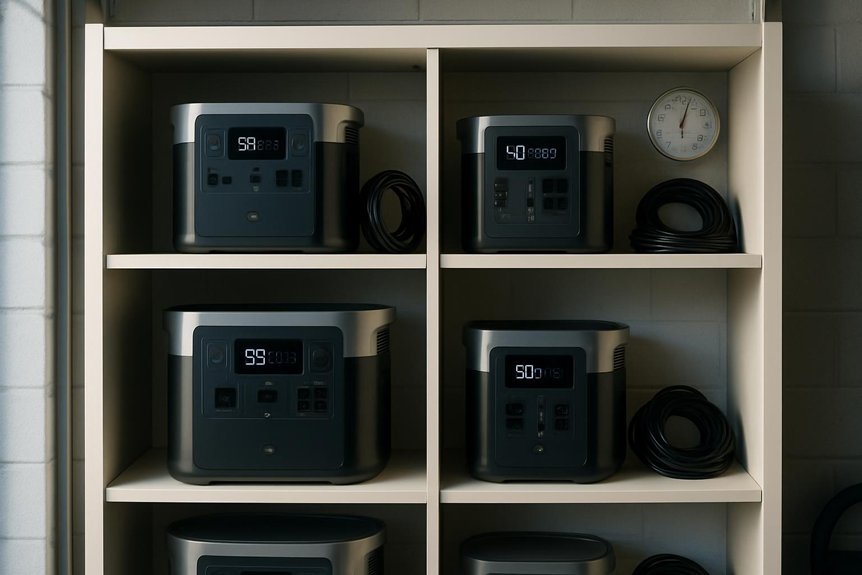
Although portable power stations are designed for durability, we must store them properly to maintain their performance and longevity. The battery lifespan depends heavily on the storage environment, as factors like temperature, humidity, and exposure to elements directly affect the internal chemistry of lithium-ion cells. Extremes in temperature can accelerate capacity degradation and reduce cycle life. Additionally, improper storage environments can lead to self-discharge or corrosion, compromising safety and efficiency. By controlling the storage environment—ideally a cool, dry place with stable temperatures—we minimize these risks. Proper storage preserves the battery’s state of charge, prevents voltage drops, and ultimately extends the power station’s functional service life. Understanding these technical implications reinforces why storage practices are critical for peak performance.
How to Prepare Your Power Station Before Storing
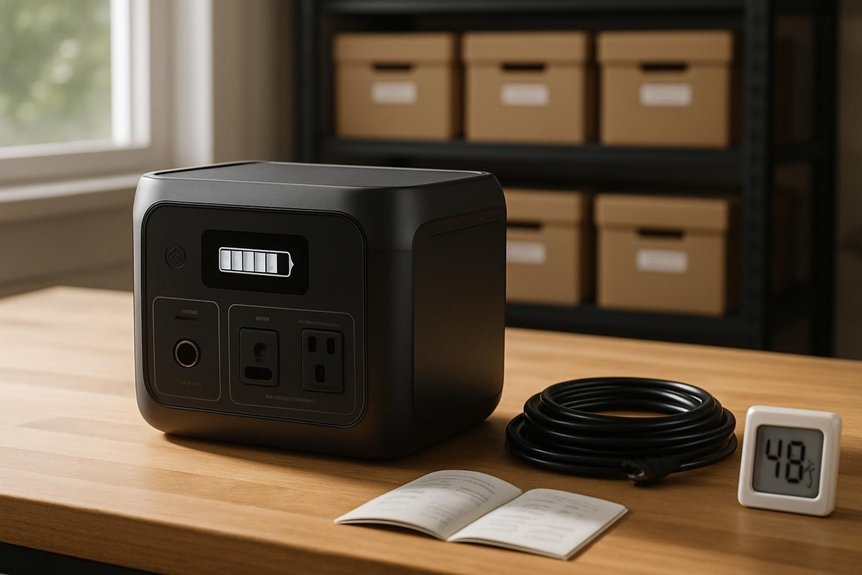
Before storing our portable power station, we need to carefully prepare it to guarantee ideal preservation. Proper battery maintenance is essential to prevent degradation during storage. We should fully charge the battery, then discharge it to about 50% capacity before storage. This balances the chemical state within the battery cells. Additionally, we must clean the power station’s exterior and make certain all ports are dry and free of debris. Selecting appropriate storage containers is critical—they should be insulated, durable, and moisture-resistant to protect the unit from environmental factors.
| Step | Action |
|---|---|
| Battery Maintenance | Charge to 100%, discharge to 50% |
| Cleaning | Wipe exterior, dry all ports |
| Storage Containers | Use insulated, moisture-resistant box |
Following these steps optimizes longevity and functionality.
Ideal Temperature and Humidity for Storage
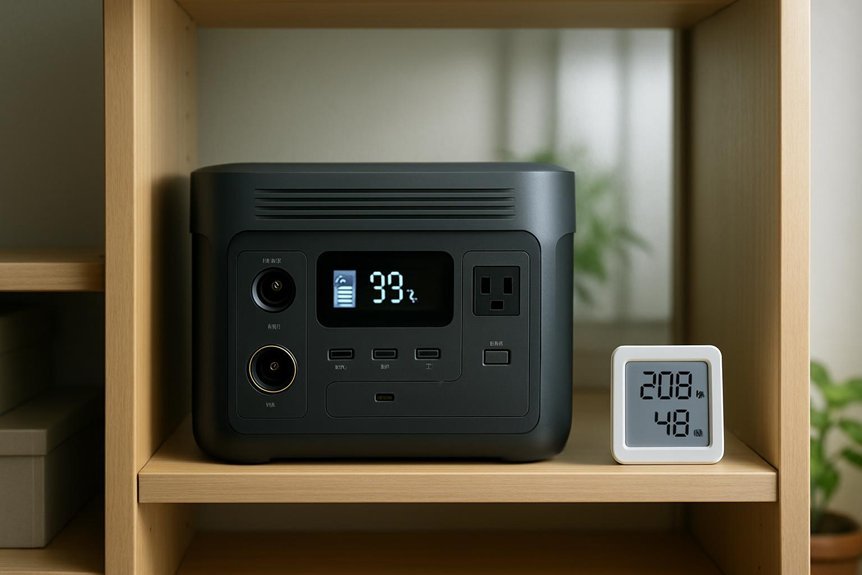
When storing our portable power stations, maintaining an environment with stable temperature and controlled humidity is essential to preserving battery health and overall performance. Deviations from ideal temperature ranges accelerate chemical degradation, while improper humidity levels can cause corrosion and electrical faults. We should target:
- Temperature ranges between 15°C and 25°C (59°F–77°F) to minimize thermal stress.
- Avoid temperatures below 0°C (32°F) to prevent electrolyte freezing.
- Limit humidity levels to 30%–50% relative humidity to inhibit condensation and corrosion.
- Store units in well-ventilated, climate-controlled areas to maintain consistent conditions.
Best Practices for Charging and Battery Levels During Storage
Controlling storage environment lays the groundwork for preserving portable power stations, but managing their charge levels during storage also greatly impacts battery longevity. Effective battery management requires maintaining the state of charge between 40% and 60% to minimize stress and capacity loss. Fully charging or fully discharging before storage accelerates degradation. We recommend monitoring and adjusting charging frequency to avoid deep discharges; typically, checking charge levels every 3 to 6 months suffices. During these intervals, recharge the battery to the ideal mid-range level to prevent self-discharge effects. Avoid leaving the unit plugged in continuously, as overcharging can cause heat buildup and chemical wear. Adopting these best practices for charging and battery levels during storage guarantees your portable power station remains reliable and extends its overall service life.
Where to Store Your Portable Power Station Safely
Although portable power stations are designed for durability, selecting an appropriate storage location greatly influences their performance and lifespan. We recommend prioritizing controlled environments that mitigate risks associated with temperature fluctuations and moisture exposure. When choosing storage sites, consider these factors:
Proper storage in controlled environments is key to maximizing portable power station performance and lifespan.
- Favor indoor locations to avoid extreme outdoor conditions such as humidity, rain, and temperature extremes.
- Ascertain the area is well-ventilated to prevent heat buildup, which can degrade battery chemistry.
- Store the unit on a stable surface away from direct sunlight to maintain consistent internal temperatures.
- Avoid damp or dusty areas that can facilitate corrosion or damage electrical components.
How to Protect Your Power Station From Physical Damage
Since portable power stations often endure transport and frequent handling, we must implement measures that minimize the risk of physical damage. Utilizing high-quality protective cases designed with impact resistance is essential. These cases absorb shocks and prevent dents or cracks to the station’s housing. We should also avoid placing the unit in unstable or cluttered spaces where it can fall or be struck by other objects. When moving the station, secure it firmly to reduce jolts and vibrations. Additionally, inspecting cases regularly for wear guarantees ongoing protection. By combining impact-resistant protective cases with careful handling, we greatly extend the power station’s operational lifespan and reliability, safeguarding its internal components from mechanical stress. This approach is critical to maintaining performance and safety during everyday use.
Tips for Long-Term Storage and Periodic Maintenance
When storing portable power stations for extended periods, we must follow specific protocols to preserve battery health and system integrity. Adhering to a strict maintenance schedule is vital to maximize battery lifespan and guarantee reliable performance upon reuse. We recommend the following:
- Charge the battery to 50-70% before storage to reduce capacity loss.
- Store the unit in a cool, dry environment, ideally between 15-25°C, to minimize chemical degradation.
- Inspect and recharge the battery every three months to prevent deep discharge.
- Clean terminals and ventilation ports to avoid corrosion and dust accumulation.
What to Do When Taking Your Power Station Out of Storage
A crucial step in reactivating your portable power station after storage is performing a thorough inspection and initial power-up sequence. First, follow unpacking tips carefully to avoid damaging connectors or internal components. Next, conduct a detailed usage check to verify battery health and system functionality.
| Step | Action |
|---|---|
| Visual Inspection | Check for physical damage or corrosion |
| Battery Check | Confirm charge level and capacity |
| Functional Testing | Power on and test output stability |
We recommend documenting each step to identify potential issues early. If anomalies arise, consult the manufacturer’s troubleshooting guide before use. This methodical approach guarantees your power station operates safely and efficiently after storage.
Frequently Asked Questions
Can Portable Power Stations Be Stored Outdoors Temporarily?
We can store portable power stations outdoors temporarily, but we must protect them from extreme outdoor conditions like moisture, heat, and dust. Using weatherproof covers guarantees safety and maintains battery performance during such temporary storage periods.
How Often Should Firmware Updates Be Applied During Storage?
We don’t want our power stations to become obsolete relics, so we should apply firmware updates every 3-6 months. Firmware importance lies in security and performance; update frequency guarantees peak storage readiness and device longevity.
Are There Specific Cleaning Products Safe for Power Station Maintenance?
We recommend using isopropyl alcohol and a soft cloth as safe cleaning methods. Avoid harsh chemicals or abrasive materials. Regularly applying these maintenance tips guarantees connectors stay corrosion-free and the power station operates efficiently.
Can Extreme Altitude Affect Stored Portable Power Stations?
Altitude effects can be a double-edged sword for battery performance; at extreme altitudes, lower air pressure and temperature fluctuations may reduce efficiency and lifespan. We must monitor conditions closely to maintain ideal power station health.
Is It Safe to Store Power Stations Near Other Electronics?
We don’t recommend storing power stations near other electronics due to fire hazard risks. Proper ventilation requirements must be met to prevent heat buildup and guarantee safe operation, minimizing potential damage to surrounding devices.
Conclusion
By following these precise storage guidelines, we guarantee our portable power stations remain reliable and efficient, like a well-tuned engine resting between journeys. Maintaining ideal charge levels, controlling temperature and humidity, and protecting against physical damage create a stable environment that prevents battery degradation. Let’s commit to regular checks and proper preparation, so when we need power on demand, our stations perform flawlessly—ready to light up our path without fail.