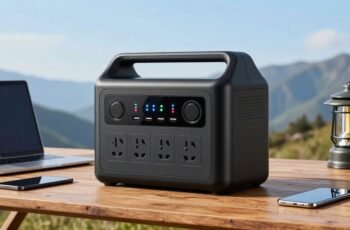
Most people don’t realize that improper charging cycles can considerably reduce a portable power station’s lifespan. To maintain peak performance, we need to follow precise charging protocols and monitor battery health regularly. Neglecting these details risks capacity loss and potential device failure. Understanding how to manage these factors effectively is essential, especially when you rely on your power station in critical situations. Let’s explore the key steps to guarantee your device remains reliable and efficient.
Key Takeaways
- Use manufacturer-approved chargers and disconnect once fully charged to prevent battery stress and overcharging.
- Clean external surfaces with a soft, dry cloth and use compressed air for ventilation ports to avoid moisture damage.
- Store the power station in a cool, dry place at around 50% charge to maintain battery health during inactivity.
- Regularly monitor battery capacity and age using built-in systems or external tools to track performance and anticipate replacements.
- Keep firmware updated by following manufacturer instructions to enhance stability, features, and overall device safety.
How to Charge Your Portable Power Station Correctly
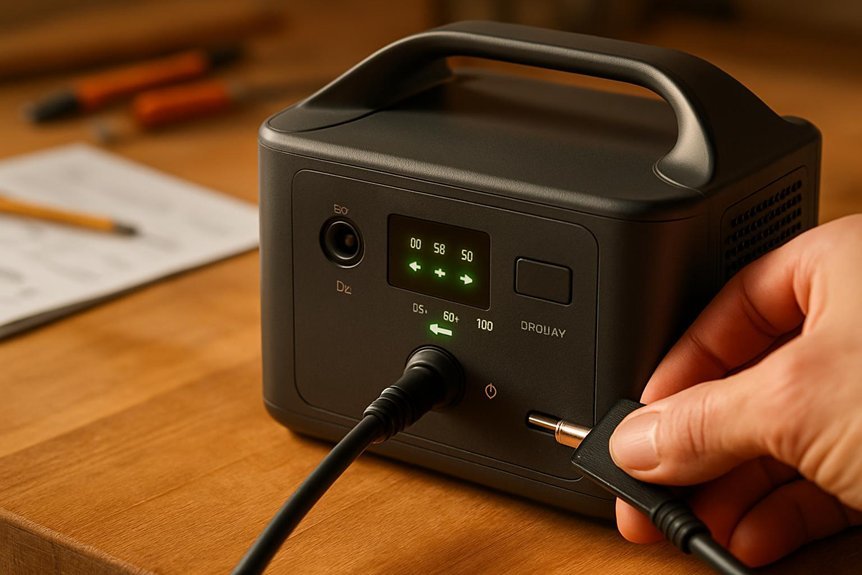
When we charge our portable power station correctly, we not only extend its lifespan but also secure peak performance during use. To optimize charging, we must understand the differences between solar charging and AC charging. Solar charging offers a sustainable, low-voltage input that requires proper alignment of solar panels and monitoring to maintain efficient energy transfer. Conversely, AC charging provides a stable, higher-voltage source that rapidly replenishes the battery via regulated circuitry. We should always use manufacturer-approved chargers and avoid overcharging by disconnecting once fully charged. Balancing these methods, we can maintain battery health by preventing deep discharges and high-temperature exposure during charging. By adhering to these technical protocols, we guarantee reliability and longevity for our portable power stations in varied operational contexts.
Tips for Cleaning and Storing Your Power Station
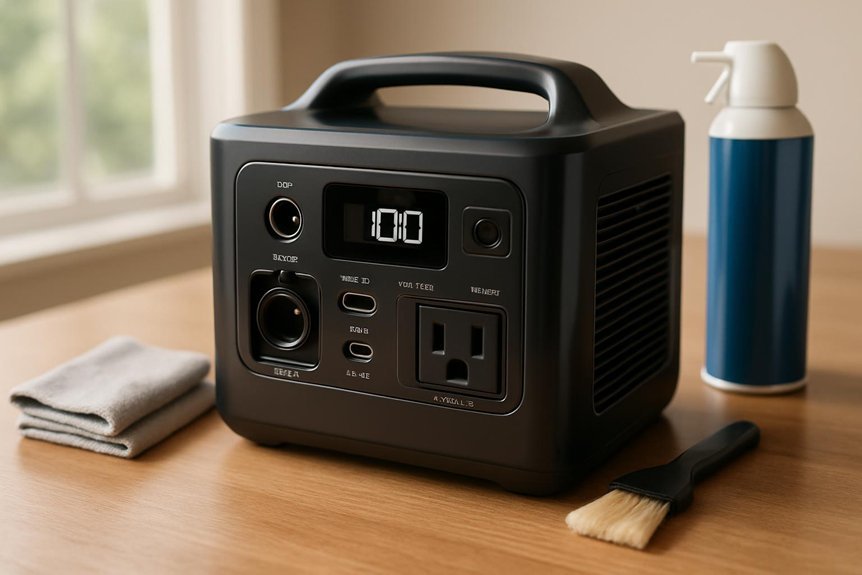
Proper charging practices set the foundation for maintaining our portable power station, but preserving its functionality also depends on how we clean and store it. Effective cleaning techniques involve using a soft, dry cloth to remove dust and debris from external surfaces, avoiding liquids that could infiltrate internal components. Compressed air can dislodge particles from ventilation ports without risking moisture damage. For storage solutions, we recommend keeping the power station in a cool, dry environment, away from direct sunlight and extreme temperatures, which can degrade battery cells. It’s critical to store the unit partially charged—typically around 50% capacity—to prevent battery stress and capacity loss. By combining these precise cleaning techniques with ideal storage solutions, we can extend the service life and reliability of our portable power station considerably.
How to Monitor Battery Health and Capacity
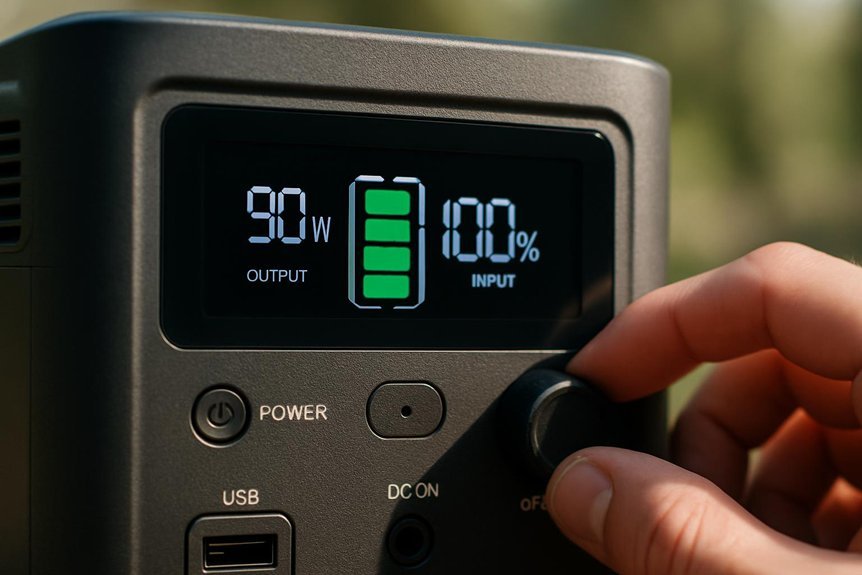
Although regular cleaning and storage optimize our power station’s longevity, closely monitoring battery health and capacity remains essential for ensuring consistent performance. Battery age directly impacts capacity and efficiency, so we need to track it carefully. To effectively monitor battery health and capacity, we should:
- Use the built-in management system or external diagnostic tools to measure real-time capacity and voltage levels.
- Record capacity monitoring data regularly to identify degradation trends and anticipate replacement needs.
- Compare current capacity against the rated capacity to assess battery wear and plan maintenance.
Best Practices for Using Your Power Station Safely
Since portable power stations handle significant electrical loads, we must adhere to safety protocols to prevent hazards and guarantee reliable operation. First, following manufacturer-recommended usage guidelines is essential to avoid overloading circuits and causing thermal stress. We should verify proper ventilation during operation to dissipate heat effectively, minimizing risks of overheating. Implementing basic safety precautions, such as using appropriate cables and connectors rated for the device’s power output, reduces electrical faults. We must also avoid exposing the station to moisture or extreme temperatures, which can degrade battery performance and compromise internal components. Regularly inspecting the unit for physical damage and confirming connections are secure enables early detection of potential issues. By rigorously applying these safety precautions and usage guidelines, we maintain operational integrity and extend the lifespan of our portable power station.
How to Update and Maintain Firmware
Maintaining safety and performance in our portable power stations goes beyond physical care; it also involves keeping the firmware up to date. Firmware updates are critical for guaranteeing peak device operation and addressing potential vulnerabilities. To effectively update and maintain firmware, we should:
Keeping firmware updated is essential for safety, performance, and protecting against vulnerabilities in portable power stations.
- Verify software compatibility by checking the manufacturer’s website for the latest firmware version tailored to our model.
- Connect the power station to a stable power source before initiating the update to prevent interruptions that could corrupt the firmware.
- Follow the update instructions precisely, often involving dedicated software or apps, to guarantee the process completes without errors.
Regularly updating firmware improves system stability, enhances features, and prolongs device lifespan, making this step an integral part of our maintenance routine.
What to Do When Your Portable Power Station Won’t Hold a Charge?
When our portable power station won’t hold a charge, it’s essential to systematically diagnose the issue to identify whether the problem lies with the battery, the charging system, or external factors. We start by applying precise troubleshooting techniques: checking the power input source, inspecting charging cables for damage, and verifying voltage output with a multimeter. If the charging system functions correctly, the battery’s health becomes the focal point. We assess battery voltage and capacity, noting any rapid drops or failure to reach full charge. Persistent issues often indicate the need for battery replacement, especially if the battery exhibits diminished cycles or internal damage. By following these analytical steps, we can isolate faults efficiently, ensuring informed decisions on repair or replacement to restore peak performance.
Frequently Asked Questions
Can I Use My Portable Power Station in Extreme Weather Conditions?
We can use portable power stations in extreme weather, but temperature effects greatly impact battery performance. Cold reduces capacity, while heat accelerates degradation. We should monitor conditions closely and avoid prolonged exposure to maintain efficiency and longevity.
How Long Do Portable Power Stations Typically Last Before Replacement?
Coincidentally, just as our power needs grow, portable power stations last about 3-5 years. We monitor battery lifespan and watch replacement indicators like reduced capacity or longer charge times to guarantee reliable performance and timely upgrades.
Are Portable Power Stations Safe to Use Indoors During Power Outages?
We can safely use portable power stations indoors during power outages, provided we monitor indoor safety carefully. Since they produce no carbon monoxide, unlike gas generators, they minimize toxic risks, ensuring a safer environment for continuous indoor use.
Can I Connect Multiple Portable Power Stations for Increased Power?
Only a few models support linking multiple units, increasing power capacity by up to 50%. We recommend checking compatibility and charging methods carefully to avoid damage and guarantee efficient energy management when connecting power stations together.
What Types of Devices Are Not Compatible With Portable Power Stations?
We find that high wattage appliances often exceed portable power stations’ limits, causing incompatibility. Also, devices requiring specific solar panel compatibility or unstable power input may not function properly with these stations, so checking specs is essential.
Conclusion
By following proper charging protocols, like avoiding deep discharges, we can extend our portable power station’s lifespan—studies show battery capacity can drop by up to 20% after just 300 full cycles if misused. Regularly monitoring battery health and updating firmware guarantees peak performance. Let’s prioritize safe usage, proper cleaning, and storage to maintain reliability. Together, these practices keep our devices efficient and ready, maximizing both safety and functionality over time.