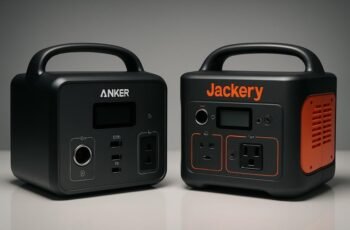
Much like choosing the right tool for a complex engineering challenge, selecting between lithium and LiFePO4 portable power stations demands careful analysis. Both technologies offer distinct advantages in energy storage, durability, and performance, but their differences impact usability and long-term value greatly. As we explore their characteristics—from weight and charging speeds to safety and cost—understanding these nuances will be essential for making an informed decision tailored to your specific power needs.
Key Takeaways
- Lithium power stations are lighter and more portable, ideal for outdoor activities and travel due to their compact design.
- LiFePO4 power stations offer superior thermal stability and safety, minimizing risks in extreme temperature conditions.
- LiFePO4 batteries provide significantly longer cycle life (2,000-5,000 cycles) compared to lithium-ion’s 500-1,000 cycles.
- Lithium-ion units support faster charging speeds, while LiFePO4 prioritizes controlled, safer charging at slower rates.
- LiFePO4 power stations have higher upfront costs but lower total ownership cost due to durability and fewer replacements.
What Are Lithium and LiFePO4 Batteries?
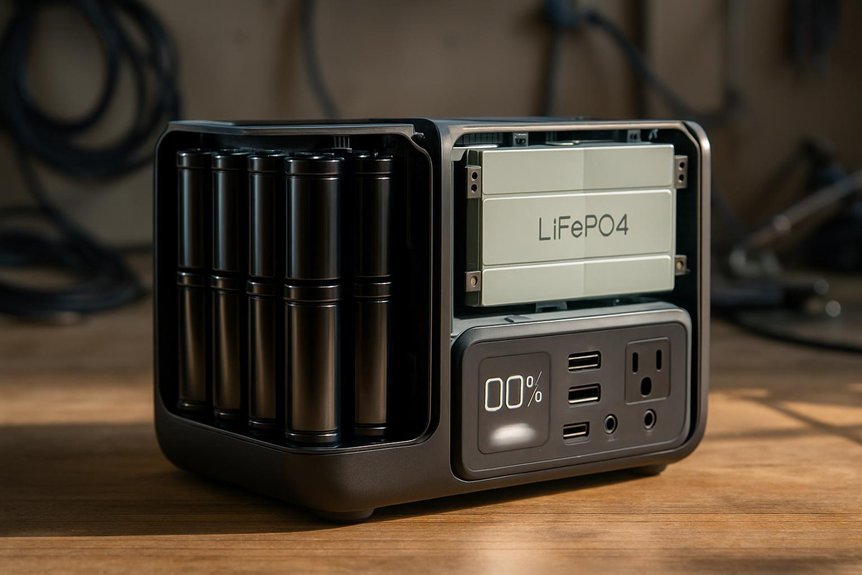
Batteries power our portable devices and energy storage systems, and understanding their chemistry is key to choosing the right one. Among the primary battery types we encounter are lithium-ion and lithium iron phosphate (LiFePO4) batteries. Lithium-ion batteries offer high energy density, which makes them ideal for compact devices needing extended runtimes. In contrast, LiFePO4 batteries exhibit lower energy density but compensate with enhanced thermal stability and longer cycle life. Analyzing these differences helps us determine suitability based on application requirements. While both battery types utilize lithium chemistry, their cathode compositions influence performance metrics considerably. Consequently, choosing between lithium-ion and LiFePO4 batteries requires balancing energy density against safety, longevity, and operational demands, ensuring the best performance for specific portable power station needs.
How Lithium and LiFePO4 Power Stations Store Energy
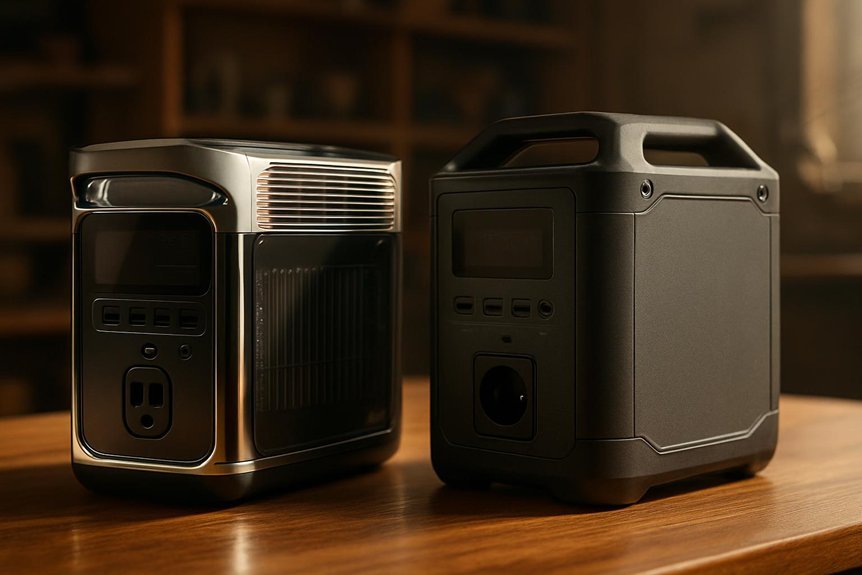
Although both lithium and LiFePO4 power stations rely on electrochemical reactions to store energy, they do so through distinct mechanisms tied to their electrode materials. Lithium-ion batteries typically use layered metal oxide cathodes and graphite anodes, enabling high energy density but fewer charge cycles. In contrast, LiFePO4 batteries employ lithium iron phosphate cathodes, which offer lower energy density but markedly enhanced thermal stability and longer charge cycles. This difference in electrode chemistry means LiFePO4 cells can endure deeper discharge and recharge processes without considerable degradation. When storing energy, lithium-ion cells maximize capacity in compact form, while LiFePO4 cells prioritize longevity and safety. Understanding these mechanisms helps us evaluate trade-offs between energy density and cycle life, vital for selecting the appropriate portable power station for specific applications.
Comparing Weight and Portability of Lithium vs LiFePO4 Stations
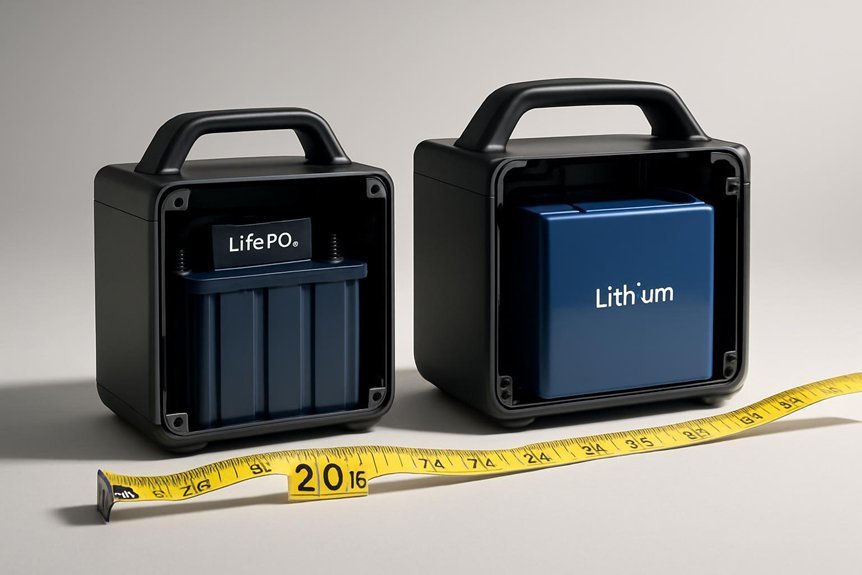
When we consider the weight and portability of lithium versus LiFePO4 power stations, the differences in their internal chemistry directly impact their physical design and usability. Lithium-ion cells tend to be lighter, resulting in better weight distribution and easier portability. LiFePO4 batteries, although heavier, offer enhanced stability but require more robust casing, affecting overall mass. These weight distribution factors influence portability considerations, especially for outdoor or mobile applications.
| Feature | Lithium Power Station | LiFePO4 Power Station |
|---|---|---|
| Cell Weight | Lower | Higher |
| Weight Distribution | Even | Denser core |
| Portability | More compact, lighter | Bulkier, heavier |
| Handling | Easier | Requires sturdier build |
| Application Suitability | Mobile use preferred | Stationary or semi-portable |
Understanding these factors helps us optimize portability choices.
Battery Lifespan: Which Lasts Longer, Lithium or LiFePO4?
How do lithium and LiFePO4 power stations compare regarding lifespan? When analyzing battery degradation and longevity factors, LiFePO4 cells demonstrate superior cycle life, often exceeding 2,000 to 5,000 full charge-discharge cycles. In contrast, typical lithium-ion batteries usually last around 500 to 1,000 cycles before noticeable capacity loss occurs. This difference stems primarily from LiFePO4’s stable chemical structure, which resists capacity fade and thermal stress better than conventional lithium chemistries. Additionally, LiFePO4’s lower susceptibility to degradation from deep discharges and high temperatures further enhances its lifespan. While lithium batteries may offer higher energy density, their longevity factors lag behind LiFePO4, making LiFePO4 power stations a more durable option for long-term use where battery lifespan is critical.
Charging Speed Differences Between Lithium and LiFePO4
Let’s compare the charging times of lithium and LiFePO4 batteries by examining how their distinct chemistries influence charge acceptance and efficiency under load. We’ll analyze the impact of these factors on overall charging speed and performance. This will help us understand which battery type offers faster and more reliable charging in practical applications.
Charge Time Comparison
Why do charge times vary markedly between lithium-ion and LiFePO4 power stations? The key lies in their distinct charge duration characteristics and ideal charging methods. Lithium-ion batteries typically support faster charge rates due to their higher tolerance for rapid current influx, reducing overall charge duration. Conversely, LiFePO4 batteries require more controlled charging methods to maintain safety and longevity, often resulting in longer charge times. Additionally, LiFePO4 chemistry demands a consistent charging voltage and current profile, which can slow the process compared to lithium-ion’s more flexible parameters. By understanding these technical differences, we see that lithium-ion power stations excel in rapid charging scenarios, while LiFePO4 models prioritize stability and cycle life, impacting their charge duration and practical usability in portable power applications.
Battery Chemistry Impact
Although both lithium-ion and LiFePO4 batteries store energy electrochemically, their distinct chemical structures directly influence charging speeds. Lithium-ion cells typically allow faster charging due to higher ionic conductivity and lower internal resistance, enhancing battery performance under rapid charge conditions. Conversely, LiFePO4’s stable phosphate structure provides excellent thermal stability but limits charge rates to prevent degradation. This trade-off affects how quickly each battery can recharge without compromising longevity. Additionally, LiFePO4’s chemistry reduces environmental impact by using less toxic materials and offering safer thermal characteristics, which indirectly supports sustainable charging practices. Understanding these chemical differences is essential when evaluating portable power stations, as battery chemistry dictates not only charging speed but also operational safety, lifecycle, and eco-friendliness.
Efficiency Under Load
The differences in chemical makeup between lithium-ion and LiFePO4 batteries directly influence how efficiently each performs under load, especially during charging. When analyzing efficiency metrics and load performance, we find distinct charging speed characteristics. Lithium-ion batteries generally support faster charging rates due to higher energy density and lower internal resistance, but they can degrade quicker under heavy load. LiFePO4 batteries, on the other hand, offer more stable charging performance with less heat generation, allowing consistent efficiency even at higher loads. Key factors include:
- Thermal stability: LiFePO4 manages heat better, preserving efficiency metrics under sustained load.
- Charge acceptance rate: Lithium-ion charges faster initially but slows as capacity fills.
- Cycle longevity: LiFePO4 maintains load performance over more cycles, balancing charging speed with durability.
These distinctions guide ideal power station choices based on usage patterns.
Safety Features in Lithium vs LiFePO4 Portable Power Stations
When comparing lithium and LiFePO4 portable power stations, we must carefully evaluate their safety features to understand how they protect users and devices. Both types adhere to rigorous safety standards, but LiFePO4 batteries excel in thermal management and fire resistance, reducing the risk of thermal runaway. Overcharge protection and short circuit prevention are integral to both chemistries, yet LiFePO4’s chemistry naturally offers greater stability under stress. Advanced battery monitoring systems continuously track voltage, temperature, and current, enabling real-time adjustments to prevent hazardous conditions. While lithium-ion units rely heavily on electronic controls for safety, LiFePO4 units benefit from inherent chemical stability, making them less prone to overheating and combustion. Overall, LiFePO4 power stations provide a safer operating profile, especially in demanding or high-temperature environments.
Cost Comparison: Upfront and Long-Term Value
Since we want to maximize both performance and budget efficiency, comparing the upfront costs and long-term value of lithium and LiFePO4 power stations is essential. Lithium power stations usually present lower upfront costs but sacrifice longevity. LiFePO4 units demand higher initial investment, yet they deliver superior durability and cycle life, translating into significant long-term savings.
Key factors to evaluate include:
- Upfront costs: Lithium models are initially cheaper due to less complex manufacturing.
- Cycle life: LiFePO4 batteries typically offer 2-3 times more charge cycles.
- Maintenance and replacement: LiFePO4 units require fewer replacements, reducing total ownership cost.
Performance in Extreme Temperatures and Outdoor Conditions
Although both lithium and LiFePO4 power stations operate well under standard conditions, their performance diverges markedly in extreme temperatures and harsh outdoor environments. LiFePO4 cells demonstrate superior temperature resilience, maintaining stable voltage and capacity in subzero and high-heat scenarios. This robustness enhances outdoor reliability, making LiFePO4 ideal for extended field use where temperature fluctuations are common. Conversely, conventional lithium-ion batteries tend to degrade faster and reduce output when exposed to extreme cold or heat, risking shortened cycle life and temporary capacity loss. Additionally, LiFePO4’s inherent thermal stability reduces the risk of thermal runaway, an important safety factor outdoors. When evaluating portable power stations for demanding environments, we must prioritize temperature resilience and outdoor reliability, where LiFePO4 technology clearly outperforms traditional lithium configurations.
Best Use Cases for Lithium Portable Power Stations
Because lithium portable power stations offer high energy density and lighter weight, we find them especially suited for applications requiring mobility and compactness. Their ability to efficiently power tech gadgets while maintaining a small footprint makes them ideal in varied scenarios. Best use cases include:
Lithium portable power stations excel in mobility and compactness, efficiently powering tech gadgets in diverse settings.
- Off grid camping and outdoor adventures, where lightweight, high-capacity power is essential for extended trips.
- Emergency backup and home energy, providing reliable, rapid deployment during outages with seamless solar integration.
- Tailgating events and RV travel, delivering portable energy for entertainment and essential devices without excessive bulk.
In each case, lithium power stations balance energy output and portability, optimizing user experience. Their compatibility with solar panels further enhances autonomy, making them versatile for both recreational and critical power needs.
When to Choose a LiFePO4 Portable Power Station?
When should we opt for a LiFePO4 portable power station over a traditional lithium model? We choose LiFePO4 when durability, safety, and longer lifecycle outweigh initial costs. The Lifepo4 benefits include enhanced thermal stability, longer cycle life, and safer chemistry, making them ideal for heavy-duty or frequent use. However, Lifepo4 drawbacks such as higher upfront cost and lower energy density must be considered.
| Feature | LiFePO4 Benefits | LiFePO4 Drawbacks |
|---|---|---|
| Cycle Life | 2000-5000+ cycles | Higher cost per unit |
| Thermal Stability | Superior, safer operation | Bulkier design |
| Energy Density | Lower than traditional Li | Requires more space |
| Safety | Non-toxic, stable chemistry | Initial investment higher |
| Maintenance | Minimal | Heavier weight |
We lean towards LiFePO4 for reliable, long-term power needs despite the trade-offs.
Frequently Asked Questions
Can Lifepo4 Batteries Be Recycled More Easily Than Lithium Batteries?
Yes, we find LiFePO4 batteries have simpler recycling processes due to stable chemistry and longer battery lifespan. This reduces hazardous waste and recovery complexity, making their recycling more efficient compared to conventional lithium batteries.
Do Lithium or Lifepo4 Power Stations Require Special Maintenance?
We understand both lithium and LiFePO4 power stations need special maintenance to optimize battery lifespan. We must follow strict charging protocols, avoid overcharging, and monitor temperature to guarantee efficient, safe performance and longevity.
How Do Lithium and Lifepo4 Stations Perform With Solar Panel Inputs?
It is understood that solar efficiency directly impacts charging speed; LiFePO4 stations maintain stable efficiency above 90% under high temperatures, outperforming lithium’s 85%. This gives us faster, more consistent solar charging, especially in intense sunlight conditions.
Are There Any Environmental Concerns Specific to Lithium Vs Lifepo4 Batteries?
We see lithium extraction causing significant environmental impact and pollution concerns, while LiFePO4 batteries offer longer lifespan with lower pollution. Choosing LiFePO4 reduces environmental harm despite higher upfront costs, benefiting sustainability overall.
Can I Use Lithium and Lifepo4 Power Stations Interchangeably in the Same Setup?
We can’t recommend interchangeable usage since battery compatibility varies; for example, LiFePO4 batteries offer 2,000–5,000 cycles versus 300–500 for lithium-ion. Mixing them risks performance issues and safety concerns in the same setup.
Conclusion
When choosing between lithium and LiFePO4 portable power stations, it’s clear that each has distinct advantages. Lithium models offer lightweight design and faster charging, ideal for quick, mobile use. However, LiFePO4 batteries boast an impressive lifespan of up to 5,000 cycles—over double that of typical lithium-ion batteries—making them the smarter investment for long-term reliability and safety. Understanding these trade-offs helps us select the best power solution tailored to our specific needs and environments.