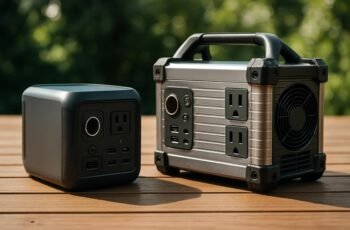
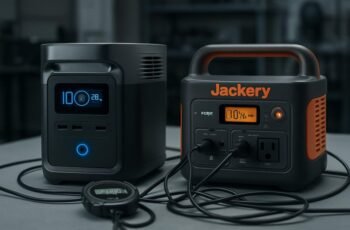
Did you know the Jackery Explorer 2000 offers more than double the battery capacity of the Explorer 1000? As we compare these two models, it’s clear that power output, portability, and port options set them apart considerably. Understanding these differences can help us choose the right unit for specific needs, whether it’s a quick weekend trip or an extended outdoor excursion. Let’s explore what makes each model unique and where one may outperform the other.
Key Takeaways
- Explorer 1000 is lightweight (22 lbs) and compact, while Explorer 2000 is heavier (43 lbs) with a larger form factor for higher capacity.
- Explorer 1000 has a 1002Wh battery with 500 cycles; Explorer 2000 doubles capacity to 2160Wh for extended use.
- Explorer 1000 outputs 1000W continuous power; Explorer 2000 provides 2000W continuous power with more AC and USB-C ports.
- Explorer 1000 supports up to 200W solar input; Explorer 2000 supports 400W solar input and faster AC charging.
- Explorer 1000 is more portable and affordable, while Explorer 2000 suits intensive power needs but is heavier and pricier.
Key Differences Between Jackery Explorer 1000 and 2000
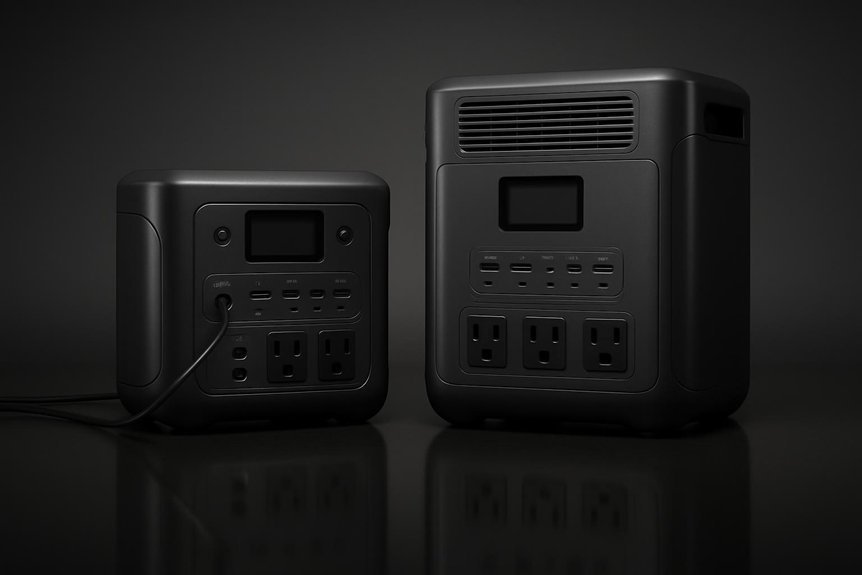
While both the Jackery Explorer 1000 and 2000 serve as reliable portable power stations, they differ considerably in capacity, power output, and overall design. The Explorer 2000 boasts a larger, more robust form factor to accommodate its higher watt-hour capacity and increased output ports. Its design features include enhanced cooling systems and an upgraded inverter, which user reviews often highlight as beneficial for extended, heavy-duty use. Conversely, the Explorer 1000 is more compact and lighter, appealing to users seeking portability without sacrificing essential power. User reviews consistently note the 1000’s balance of size and functionality, though some mention limitations in output compared to the 2000. These design differences reflect targeted use cases, with the 2000 suited for intensive power needs and the 1000 optimized for moderate, mobile applications.
Comparing Battery Capacity and Runtime for Each Model
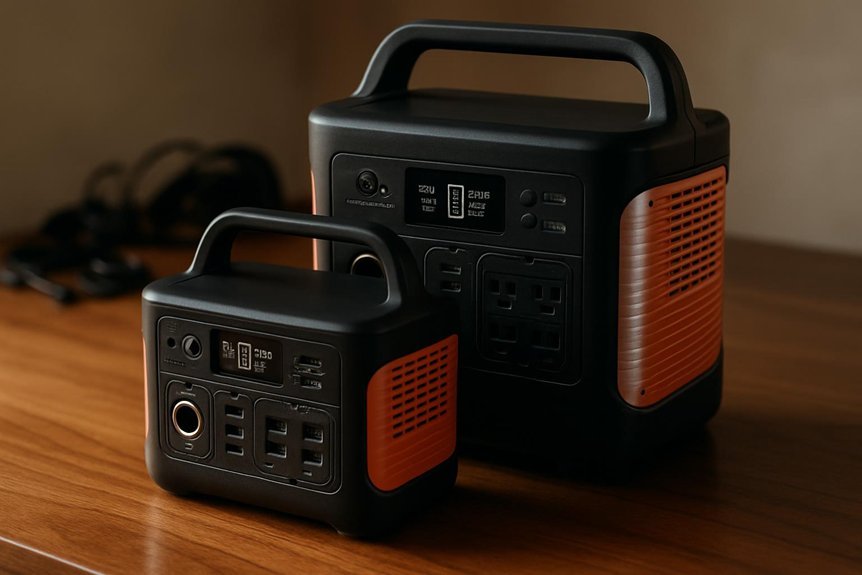
Let’s start by examining the battery capacity differences between the Explorer 1000 and 2000, which directly influence their runtime performance. We’ll analyze how each model handles various usage scenarios to understand their practical endurance. This comparison will help us determine which unit suits different power needs more efficiently.
Battery Capacity Differences
Because the battery capacity directly influences how long each Jackery model can power our devices, comparing the Explorer 1000 and 2000 reveals significant differences in their performance. The Explorer 1000 offers a 1002Wh lithium-ion battery, while the Explorer 2000 doubles that capacity to 2160Wh. This increase not only extends battery longevity in practical use but also impacts the number of charging cycles each unit can endure before capacity diminishes noticeably. Both models claim around 500 full charging cycles, but the larger capacity of the 2000 means it can sustain longer usage periods per cycle. Understanding these capacity differences helps us gauge which model suits our power needs more effectively, especially if we prioritize extended off-grid use or require longer device operation without recharging.
Runtime Performance Comparison
Since battery capacity sets the foundation for runtime, evaluating how the Jackery Explorer 1000 and 2000 perform in real-world usage highlights their practical differences. The Explorer 2000, with roughly double the capacity, naturally extends runtime, but runtime efficiency and power consumption also play critical roles.
Key points to reflect on include:
- Explorer 1000 delivers around 1000Wh, sufficient for moderate power needs.
- Explorer 2000 offers close to 2000Wh, doubling potential runtime.
- Both models maintain similar runtime efficiency despite capacity differences.
- Power consumption of connected devices directly impacts total runtime.
Usage Scenarios Impact
Understanding how battery capacity and runtime translate into real-world usage scenarios helps us determine which Jackery model fits specific needs better. The Explorer 1000, with its 1002Wh capacity, suits shorter outdoor adventures or situations requiring moderate power, providing reliable runtime for essential devices. In contrast, the Explorer 2000 offers nearly double the capacity at 2160Wh, making it ideal for extended trips or thorough emergency preparedness where prolonged power support is critical. Its extended runtime supports high-consumption devices longer, reducing the need for frequent recharging. When planning for outdoor adventures, the Explorer 1000 balances portability and power, while the Explorer 2000 excels in scenarios demanding sustained energy output. Choosing between them hinges on evaluating the duration and power demands of your specific usage, ensuring maximum efficiency and reliability.
Port Options and Power Output: What You Can Plug In
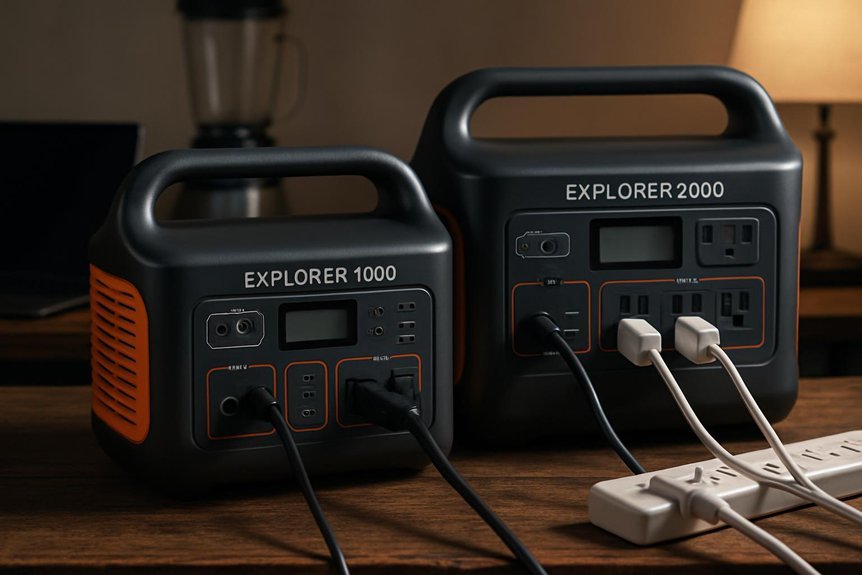
Let’s examine the port options and power output of both models to understand what devices they can support. We’ll compare the types of ports available, their maximum power delivery, and how that affects compatibility with different electronics. This analysis will help us determine which unit better fits your power needs.
Available Port Types
When comparing the Jackery Explorer 1000 and 2000, the variety and specifications of available ports play an essential role in determining which model best fits our power needs. Both units offer strong port versatility, but differences in plug compatibility influence device support. The Explorer 1000 includes:
- Three standard AC outlets for household appliances
- Two USB-A ports for smaller electronics
- One USB-C port for faster charging
- One 12V carport for automotive devices
Meanwhile, the Explorer 2000 expands on this by adding more AC outlets and additional USB-C ports, enhancing its flexibility for multiple devices simultaneously. This increased port selection means the 2000 better accommodates diverse plug types, making it ideal for complex setups. Understanding each model’s port options helps us choose the right balance between convenience and device compatibility.
Maximum Power Output
Both the Jackery Explorer 1000 and 2000 deliver substantial power outputs, but their maximum wattage and continuous power ratings differ considerably, influencing what devices we can reliably run. The Explorer 1000 provides a continuous output of 1000W with a surge capacity of 2000W, while the Explorer 2000 doubles that continuous output to 2000W with a 4000W surge. This difference directly impacts power efficiency and output stability, especially when handling high-demand appliances.
| Feature | Explorer 1000 |
|---|---|
| Continuous Power | 1000W |
| Peak Surge Power | 2000W |
| Output Stability | High |
| Power Efficiency | Optimized for 1000W |
| Suitable Devices | Small to medium loads |
This table highlights how each model’s power output affects our device choices and overall performance.
Device Compatibility Range
Understanding the maximum power output of the Jackery Explorer 1000 and 2000 sets the stage for evaluating what devices we can actually connect and operate. Both models offer versatile port options, but their device compatibility hinges on individual power requirements. The Explorer 1000 supports up to 1000W continuous output, while the 2000 doubles that to 2000W, expanding what we can plug in.
Key device compatibility factors include:
- AC outlets for laptops, small appliances, and power tools
- USB-A and USB-C ports for smartphones, tablets, and cameras
- 12V carport for automotive accessories
- Solar input compatibility for extended off-grid use
This range guarantees we match device power needs precisely, preventing overload while maximizing usability for various electronics.
How Portability and Weight Affect Your Outdoor Use
Although the Jackery Explorer 1000 and 2000 both deliver impressive power capacities, their portability and weight greatly influence how we use them outdoors. The Explorer 1000 weighs around 22 pounds, while the 2000 is notably heavier at approximately 43 pounds. This weight difference impacts outdoor convenience, especially when we consider carrying them over uneven terrain or loading them into vehicles. The 1000’s balanced weight distribution makes it easier to handle solo, enhancing mobility during camping or hiking trips. In contrast, the 2000’s bulk requires more effort and often a second person for transport, which can limit spontaneous use. Evaluating these factors helps us decide which model aligns better with our outdoor activities, balancing power needs with practical portability.
Charging Speed and Solar Compatibility Explained
When we consider how quickly these portable power stations recharge, the differences between the Jackery Explorer 1000 and 2000 become critical for planning our outdoor activities. Charging efficiency directly impacts downtime, and solar integration plays a key role in off-grid scenarios. The Explorer 2000 supports faster charging through higher input wattage, reducing recharge time considerably compared to the 1000. Both models offer solar compatibility, but their ideal panel wattage and input limits differ, affecting overall solar charging performance.
Key points include:
- Explorer 1000 max solar input: 200W
- Explorer 2000 max solar input: 400W
- Explorer 2000 offers quicker AC charging
- Both support MPPT technology for improved solar efficiency
Understanding these factors helps us maximize power availability during extended outdoor use.
Which Jackery Model Fits Your Power Needs Best?
How do we determine which Jackery model truly matches our power requirements? We need to analyze battery longevity and portability features relative to our typical energy use. The Explorer 2000 offers higher capacity and longer runtime but is heavier, while the Explorer 1000 is more portable with slightly less battery life. Below, we compare key factors to guide our choice:
| Feature | Explorer 1000 | Explorer 2000 |
|---|---|---|
| Battery Capacity | 1002Wh | 2160Wh |
| Weight | 22 lbs | 43 lbs |
| Portability Features | Compact, lighter | Larger, less portable |
| Output Power | 1000W (2000W surge) | 2200W (4400W surge) |
| Battery Longevity | Moderate | Extended |
Balancing portability and battery longevity helps us select the best model for our needs.
Pricing, Warranty, and Value for Money Comparison
Now that we’ve outlined the differences in battery capacity and portability between the Explorer 1000 and 2000, it’s important to evaluate how their pricing and warranty terms impact overall value. Both models employ strategic pricing strategies, reflecting their power output and features. The Explorer 1000 offers a more affordable entry point, while the 2000 justifies its higher cost with increased capacity.
Key considerations include:
- Explorer 1000’s competitive pricing suits moderate power needs.
- Explorer 2000’s premium price matches enhanced battery capacity.
- Both come with similar warranty features, typically a 2-year limited warranty.
- Warranty coverage includes defects but excludes damage from misuse.
Frequently Asked Questions
Can I Connect Multiple Jackery Units for Increased Power?
Yes, we can connect multiple Jackery units via parallel usage for power expansion. However, we need to verify compatibility and proper connectors, as not all models support parallel setup, so careful analysis is essential before proceeding.
Are These Models Suitable for Emergency Home Backup?
We believe both models suit emergency home power needs, offering reliable energy during outages. Their capacity supports essential devices, enhancing emergency readiness, though the 2000 provides longer runtime for extended power demands in home backup scenarios.
How Do These Models Perform in Extreme Weather Conditions?
We’ve found both models handle extreme weather well, thanks to their solar compatibility and robust build. However, the 1000’s portability options make it easier to relocate during harsh conditions, enhancing overall versatility in unpredictable environments.
What Maintenance Is Required to Prolong Battery Life?
We clean terminals, monitor voltage, and avoid full discharges. For battery care, we follow charging tips: use recommended chargers, keep batteries cool, and store them partially charged. These steps prolong battery life effectively.
Can These Power Stations Charge Electric Vehicles?
We can’t use these power stations for electric vehicle charging directly due to limited capacity and slow charging times. Plus, vehicle compatibility varies widely, so they’re better suited for smaller devices or emergency power, not full EV charging.
Conclusion
In comparing the Jackery Explorer 1000 and 2000, we see a clear trade-off between portability and power, much like choosing between a trusty pocket watch and a modern smartwatch. The 1000 suits solo adventurers valuing lightweight ease, while the 2000 answers the call for extended, high-demand use. By weighing battery capacity, output, and charging speed, we can objectively select the model that best aligns with our specific outdoor power needs and budget.