Most off-grid sites can’t use a hydro generator simply because water is nearby; they need steady flow and enough vertical head to sustain output. We’ll assess whether this 2,200W, 220V unit can provide practical, fuel-free power, focusing on its water requirements, load limits, and voltage stability. Its compact design looks convenient, but one specification may determine whether it works at all.
Key Takeaways
- The hydro generator is rated for 2,200 watts at 220 volts and 3,500 RPM, with no fuel required.
- It needs roughly 10 L/s of water, 0.3 MPa pressure, and a substantial vertical drop; listed head requirements vary.
- A 110 mm pipe is specified, so verify your site and installation can meet the equipment’s requirements.
- Keep connected loads within 2.2 kW, and check voltage stability before powering valuable devices.
- It may suit remote sites with reliable flowing water, but water diversion and local ecosystem impacts deserve consideration.
220-Volt Output
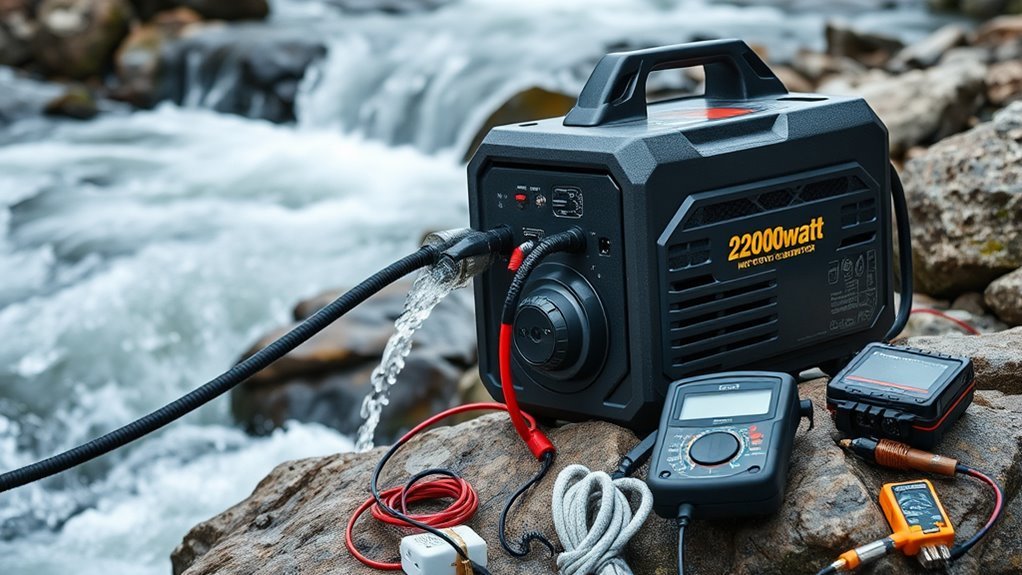
At 220 volts, this hydro generator delivers a rated 2,200 watts at 3,500 RPM, with no fuel required. We can assess its output by matching connected equipment to that 2.2 kW ceiling; exceeding the rating risks unreliable operation. Voltage stability matters because sensitive electronics need a consistent supply, while load regulation affects how well output responds as demand changes. The available specifications don’t quantify either performance measure, so we shouldn’t assume tight control under fluctuating water conditions or loads. For sustainable off-grid use, we can prioritize compatible appliances and steady water supply, then verify electrical performance with suitable monitoring before connecting valuable devices.
Detailed features
Because this hydro generator depends on adequate water flow and head, its operating requirements are central to its performance. We need roughly 0.3 MPa pressure, 0.05 m³/s flow, and a 15–20 m vertical drop; listed specifications also cite 30 m, so we should verify site conditions before installation. A 110 mm pipe feeds the 2,200 W, 220 V unit, which runs at 3,500 RPM without fuel. Its Copper coil supports electrical generation, while the thickened aluminum casing houses the compact assembly. Automatic idle control manages operation. We should cover the generator head and connect only appliances rated below 2.2 kW for off-grid use.
Pros and Cons
We’ll weigh the generator’s fuel-free, 2,200 W output against its need for a reliable water source and sufficient head. For off-grid use, we’ll assess how its compact design supports portability and where its flow and power limits constrain performance. Let’s compare these benefits and trade-offs to see whether it fits your site and energy needs.
Pros
When a suitable stream provides the required flow and head, this 2,200 W hydro generator can produce electricity without fuel, making it a practical option for off-grid power. We can use its 220 V output for compatible appliances, chargers, and lighting, while automatic idle control supports efficient operation. Its copper coil core and aluminum alloy casing suit outdoor use, and Low maintenance operation reduces routine servicing compared with fuel-powered alternatives. The compact, portable setup can connect to a collapsible hose for temporary power at camps or remote sites. By drawing on renewable water flow, we can reduce reliance on fossil fuels and local emissions.
Cons
Despite its fuel-free operation, this generator depends on a reliable water source that meets its demanding flow and head requirements, which limits where we can use it. Its Excessive water requirements—about 10 L/s, 0.3 MPa pressure, and a substantial vertical drop—may exclude many streams and sites. We’ll also need a 110 mm pipe and must keep output within the rated limit. Limited appliance capacity is another constraint: at 2,200 W, it can’t safely run equipment exceeding that load, and simultaneous appliances may push us over. These restrictions reduce flexibility, even though renewable water power can support off-grid use.
Concluding thoughts
For off-grid power in a suitable site, this 2,200W hydro generator offers a fuel-free option for running appliances below its rated capacity. We’d consider it only where water flow, pressure, and a suitable vertical drop meet specifications; confirm these before installation, since listed requirements vary. Its 220V output can support compatible devices, but we’d avoid loads exceeding 2.2kW and protect the generator head during operation. Long term reliability will depend on installation quality, water conditions, and maintenance. The Environmental impact may be lower than fuel-based generation, though water diversion can affect local ecosystems. For a suitable creek, it offers practical renewable power.
Frequently Asked Questions
What Water Source Is Suitable for Operating This Hydro Generator?
We need a reliable, clean running-water source, such as a creek or mountain stream, that meets the generator’s pressure and flow rate requirements: 0.3 MPa and 10 L/s. Check water quality and maintain a 15–20-meter drop.
How Much Vertical Drop Does the Installation Require?
We’ll need a Required vertical drop of 15–20 meters for reliable operation; the Minimum head is about 15 meters. Some specifications list 30 meters, so we should verify site conditions and maintain adequate flow sustainably.
Can the Generator Be Connected to a Collapsible Hose?
Yes, we can connect the generator to a collapsible hose for temporary power. Check Hose pressure compatibility against its 0.3 MPa requirement, and assess Flexible tubing durability for sustained flow, pressure, and environmentally responsible operation.
Does the Generator Require Fuel to Produce Electricity?
No fuel’s needed: this hydro generator uses flowing water to produce electricity, delivering Fuel free operation and renewable electricity. We can harness its stream-powered output—like a river powering a city—when water meets the specified pressure and flow requirements.
What Precautions Should Be Taken When Covering the Generator Head?
Cover the generator head with a ventilated, weather-resistant shield; Keep vents clear to prevent overheating. Protect wiring from moisture and abrasion, and secure the cover without blocking airflow. We should never enclose the operating generator tightly.
Conclusion
We see the 2,200W hydro generator as a compelling option when a site can reliably deliver its demanding water flow and head. Its 220-volt output can support useful off-grid loads, but we’d keep total demand below 2.2 kW and check voltage before connecting sensitive equipment. Picture 10 liters of water passing each second: that steady stream powers the system, yet also defines its limits. Verify installation specifications first; where conditions fit, hydro offers fuel-free electricity with a modest operational footprint.