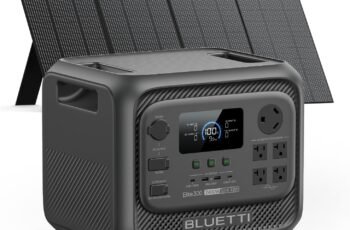
When the lights go out, the Dyness PPS1800 can keep essential appliances running from its 1,536Wh LiFePO4 battery and 1,800W continuous output. We’ll examine its charging options, ports, app controls, and sub-10-millisecond UPS switching, along with practical limits such as its 38.6-pound weight, short two-year warranty, and reduced runtime under heavy loads. Its specifications look capable, but how well do they translate into everyday backup use?
Key Takeaways
- The Dyness PPS1800 offers a 1,536Wh LiFePO4 battery and 1,800W continuous output, with 3,600W surge capacity.
- It powers common appliances such as refrigerators, coffee makers, and kettles, though high-wattage devices can drain it quickly.
- Fast charging is a highlight: AC reaches 80% in about 50 minutes, or roughly 43 minutes with combined AC and solar.
- It includes three AC outlets, USB ports, a car outlet, app controls, battery protections, and UPS switching under 10 milliseconds.
- At 38.6 pounds, it is substantial to carry; its two-year warranty is limited, despite a battery rated for over 4,000 cycles.
1,536Wh Portable Power Station
At 1,536Wh, the Dyness PPS1800 can store enough energy to power a range of everyday appliances and devices. Its Battery Capacity pairs with 1,800W of continuous AC output and 3,600W of surge power, supporting loads such as refrigerators, coffee makers, kettles, and electric grills. We can use this Energy Storage for home backup during outages or take it along for RV travel, camping, and outdoor work. Actual runtime depends on each device’s wattage and operating time, so we should check load requirements before connecting appliances. The PPS1800 also suits emergency preparedness, providing portable power when grid access is unavailable or unreliable.
Detailed features
Beyond its 1,536Wh capacity, the Dyness PPS1800 offers flexible charging and device connections for home, travel, and outdoor use. Charging options include AC, solar, and 12V or 24V vehicle input; AC reaches 80% in about 50 minutes. Combined 1,500W AC and 200W solar input takes it to 80% in roughly 43 minutes, while solar input supports up to 1,200W. We can connect equipment through three AC outlets, two USB-C ports, two USB-A ports, and a car outlet. Its 100W USB-C port powers compatible devices. Bluetooth smart controls display battery and power data and adjust charging limits, schedules, and silent mode.
Pros and Cons
We’ll weigh the PPS1800’s 1,536Wh LiFePO4 battery, 1,800W output, and rapid charging against its 38.6-pound weight and Bluetooth-only app access. We’ll also assess its port selection, UPS switching, and protection features for home backup and portable use. This comparison will help you judge which strengths and limitations matter most for your needs.
Pros
With 1,536Wh of LiFePO4 capacity and 1,800W of continuous output, the Dyness PPS1800 can run many everyday appliances and support home backup, camping, or RV use. Its 3,600W surge rating accommodates brief startup demands from compatible equipment. Fast AC Charging reaches 80% in about 50 minutes, while combined AC and solar input can shorten that to roughly 43 minutes. Durable LiFePO4 cells are rated for more than 4,000 charge cycles, and the battery management system monitors key operating conditions. We also get three AC outlets, USB-C and USB-A ports, a car outlet, app monitoring, and UPS switching under 10 milliseconds.
Cons
Despite its broad output and charging options, the Dyness PPS1800 has trade-offs: at 38.6 pounds, it’s heavy to carry, and its 1,536Wh capacity may not cover high-wattage appliances for long. We’ll find its dual handles useful, but the Heavy Carry Weight can still make frequent transport tiring, especially on camping trips or stairs. Limited Wi Fi Connectivity is another constraint: the app connects through nearby Bluetooth, so we can’t monitor or control the unit remotely over the internet. Solar panels aren’t included, adding to setup costs, and UPS-connected loads must stay below 1,500W on 100–120V circuits.
Concluding thoughts
Overall, the Dyness PPS1800 balances substantial capacity and output with practical charging and protection features. Its 1,536Wh LiFePO4 battery, 1,800W continuous output, and 3,600W surge rating support common appliances and backup loads. We also value AC, solar, and vehicle charging, plus UPS switching under 10 milliseconds for compatible equipment.
For Long Term Reliability, the battery’s rating of more than 4,000 cycles and integrated protections are meaningful advantages, though the two-year warranty remains limited. Practical Portability is mixed: dual handles and compact dimensions help, but 38.6 pounds is substantial. We’d recommend it for home backup, RV use, or camping when capacity outweighs weight.
Frequently Asked Questions
Can the PPS1800 Power a Refrigerator Overnight?
Yes, we can power a refrigerator overnight with the PPS1800’s 1,536Wh capacity and 1,800W output. Refrigerator Runtime depends on its energy use; verify Compressor Startup stays within the station’s 3,600W surge limit.
Are Solar Panels Included With the PPS1800?
No, solar panels aren’t included; you’ll need optional panel purchases. For Solar Panel Compatibility, we can connect panels through the XT60 port, which supports up to 1,200W of solar input. The package includes a port-to-XT60 cable.
Can Its Bluetooth App Control the Power Station Remotely Over the Internet?
No—Bluetooth connectivity keeps us close to the PPS1800; it doesn’t reach across the internet. We can use Remote monitoring nearby to check battery level, input and output power, energy statistics, and port loads through the app.
Is the PPS1800 Suitable for Grid-Tied Operation?
No, we shouldn’t use the PPS1800 for grid-tied operation. It lacks Grid interactive compatibility, so it can’t meet Utility interconnection requirements. We can use it for backup loads, keeping UPS-connected loads below 1,500W.
What Is the Warranty Period for the Dyness PPS1800?
The Dyness PPS1800 includes a two-year warranty, a safety net for your investment. We recommend reviewing Warranty coverage details and contacting Dyness about the claim process; we don’t have specific claim instructions available.
Conclusion
The Dyness PPS1800 pairs a 1,536Wh LiFePO4 battery with 1,800W continuous output, fast AC charging, solar input, app controls, and sub-10-millisecond UPS switching. We see it as a capable backup hub for household essentials and outdoor use, with three AC outlets and broad USB connectivity. Its 38.6-pound weight makes frequent carrying less convenient, while power-hungry appliances can quickly consume its reserve. Think of it as a sturdy bridge through outages, though its two-year warranty offers limited reassurance.