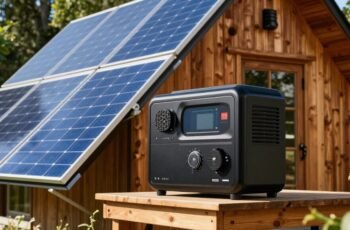
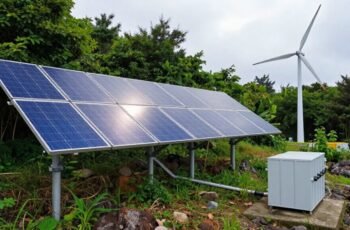
Designing a small off-grid system involves evaluating local renewable resources, gauging load demands, and selecting ideal components, all with precision and foresight. We must balance technological capabilities with cost-effectiveness, guarantee system scalability, and implement safety protocols to maximize longevity. This process demands careful planning and analytical rigor, as each decision impacts reliability and sustainability. Exploring these critical aspects can lead us to a resilient, autonomous energy solution tailored to specific site needs, prompting us to examine the most effective strategies for success.
Key Takeaways
- Assess local renewable resources and analyze seasonal variability to determine suitable energy sources and system sizing.
- Select appropriate battery technology considering lifespan, cost, and maintenance for reliable energy storage.
- Regularly monitor and maintain system components, especially batteries and connections, to ensure efficiency and longevity.
- Properly size and select wiring, connectors, and protective devices to ensure safety, reduce losses, and enhance system performance.
- Plan for scalability, budget comprehensively, and incorporate maintenance strategies for long-term off-grid system reliability.
How to Choose the Right Renewable Energy Sources for Your Off-Grid System
Selecting the appropriate renewable energy sources is a critical step in designing an efficient off-grid system, as it directly impacts reliability, cost-effectiveness, and sustainability. We analyze resource availability, considering local solar insolation, wind speed, and potential for small hydro or biomass. Our approach involves evaluating seasonal variability and capacity factors to optimize energy yield. We prioritize sources that align with site-specific conditions, ensuring consistent power generation with minimal storage reliance. Technological advancements, like high-efficiency solar panels or vertical-axis wind turbines, enable us to maximize output within limited space. By integrating diverse sources, we enhance system resilience and reduce dependency on a single resource. This strategic selection forms the foundation for a robust, sustainable, and cost-effective off-grid power solution.
How to Accurately Size Your Off-Grid Power System Components
Once we’ve identified the appropriate energy sources for our off-grid system, the next step is to accurately size each component to meet our energy demands efficiently. Precise sizing minimizes waste, maximizes reliability, and assure system longevity. To achieve this, we focus on:
- Calculating Load Requirements: Analyze daily energy consumption by itemizing appliances, devices, and their usage patterns.
- Determining Peak Power Needs: Identify the highest simultaneous load to size inverters and wiring appropriately.
- Sizing Energy Storage: Estimate battery capacity based on average consumption and desired autonomy, factoring in depth of discharge.
- Selecting Power Generation Capacity: Match solar, wind, or other sources to meet peak loads and compensate for variability, ensuring continuous supply.
This analytical approach guarantees a balanced, efficient, and resilient off-grid system.
What Battery Options Are Best for Small Off-Grid Systems?
Selecting the right battery for small off-grid systems requires analyzing suitable types based on longevity, maintenance demands, and overall cost-effectiveness. We consider how availability influences choices, ensuring the solution is both practical and reliable. This discussion aims to optimize performance while balancing economic and operational considerations.
Battery Types Suitable for Small Systems
What are the most effective battery options for small off-grid systems? To optimize performance and reliability, we consider these four types:
- Lithium Iron Phosphate (LiFePO4) – High energy density, longer cycle life, and superior thermal stability make this ideal for compact, efficient setups.
- Lead-Acid (Sealed AGM or Gel) – Cost-effective, proven technology with maintenance-free options suited for smaller budgets.
- Nickel-Cadmium (NiCd) – Robust in extreme temperatures and capable of deep cycling but less common due to environmental concerns.
- Flow Batteries – Emerging technology offering scalability and deep discharge capabilities, suitable for larger small systems with future expansion in mind.
Each presents unique trade-offs in cost, longevity, and performance, guiding tailored system design.
Longevity and Maintenance Needs
When evaluating batteries for small off-grid systems, understanding their longevity and maintenance needs becomes paramount to guarantee sustained performance over time. Lithium-ion batteries excel in this regard, offering high cycle life, typically exceeding 3,000 cycles, and minimal maintenance—mainly monitoring voltage and temperature. They resist degradation from deep discharges better than lead-acid options, translating to longer service life. Lead-acid batteries, particularly AGM and gel types, require regular equalization, watering, and inspection to maintain capacity and prevent sulfation. Their shorter lifespan, usually 500-1,000 cycles, demands more frequent replacement. Advanced battery management systems (BMS) integrated with lithium systems can optimize performance, reduce maintenance, and extend longevity. Ultimately, selecting a battery with a proven lifespan and low maintenance demands enhances system reliability and reduces long-term operational risks.
Cost-Effectiveness and Availability
For small off-grid systems, cost-effectiveness and availability are critical factors that influence battery selection, as budget constraints and supply chain considerations directly impact the overall viability of the setup. We need batteries that balance upfront costs with long-term performance and accessibility.
Consider these options:
- Lead-Acid Batteries: Widely available and inexpensive initially, but lower cycle life and maintenance needs increase lifetime costs.
- Lithium-Ion Batteries: Higher upfront cost but superior energy density and longevity, making them cost-effective over time.
- Nickel-Based Batteries: Good for deep cycling and high performance, yet limited supply and higher costs restrict widespread use.
- Flow Batteries: Emerging as scalable, long-lasting solutions, but their complexity and current availability hinder immediate adoption.
Choosing the right balance of cost and availability ensures reliable, sustainable off-grid power.
How to Design an Efficient and Reliable Off-Grid Wiring Setup
Designing an efficient and reliable off-grid wiring system hinges on precise system sizing to prevent overloads and optimize performance. We focus on implementing safe wiring practices that minimize voltage drops and guarantee long-term durability. By combining these principles, we create a robust wiring setup that maximizes system efficiency and safety.
Proper System Sizing
Proper system sizing is fundamental to guaranteeing an off-grid setup operates efficiently and reliably, as it directly influences performance, safety, and longevity. Accurate sizing involves balancing load demands with system capacity, preventing over- or under-sizing. Key considerations include:
- Load Analysis: Quantify daily energy consumption to determine total power needs.
- Component Rating: Match inverter, battery, and solar panel ratings to handle peak loads and future expansion.
- Wire Gauge Selection: Choose appropriate wire sizes based on current flow and distance to minimize losses.
- Redundancy Planning: Incorporate safety margins and backup capacities to enhance reliability and accommodate unexpected load increases.
A precise approach ensures peak performance, minimizes risks, and extends system lifespan through thoughtful, data-driven design.
Safe Wiring Practices
To guarantee our off-grid system operates safely and reliably, meticulous wiring practices are essential. We prioritize proper conductor sizing to minimize voltage drops and prevent overheating, selecting wire gauges based on current load calculations. Consistent use of high-quality connectors and terminals ensures secure, corrosion-resistant connections that maintain system integrity over time. We implement dedicated circuits for critical components, reducing the risk of overloads and facilitating troubleshooting. Proper routing involves avoiding sharp bends and protecting wiring from mechanical damage, which preserves insulation and prevents faults. We also incorporate appropriate fuse and breaker ratings to safeguard against short circuits. By adhering to these technical standards, we create a wiring setup that maximizes efficiency, minimizes failure points, and promotes long-term system safety.
What Are the Key Maintenance Tips for Off-Grid Systems?
Maintaining an off-grid system requires consistent oversight to guarantee peak performance and longevity. To achieve this, we recommend focusing on critical components with a systematic approach.
Consistent oversight of critical components ensures off-grid system performance, longevity, and optimal energy output.
- Regular Inspections – Check connections, terminals, and wiring for corrosion or looseness, ensuring electrical integrity.
- Battery Maintenance – Monitor electrolyte levels, perform equalization, and test capacity to prevent sulfation and extend lifespan.
- Cleaning and Cooling – Keep solar panels free of debris and dirt; ensure proper ventilation for inverters and batteries to prevent overheating.
- Performance Monitoring – Use data logging to identify efficiency drops, enabling proactive troubleshooting before failures occur.
Implementing these steps with precision assure system stability, enhances energy output, and maximizes investment longevity.
How to Budget and Plan for Off-Grid System Installation and Upgrades
Planning and budgeting for off-grid system installation and future upgrades require a strategic, data-driven approach that anticipates both initial costs and long-term operational expenses. We start by conducting a detailed load analysis to determine precise energy requirements, which informs component selection and sizing. Cost estimation should include equipment, installation, permits, and contingency funds for unforeseen issues. To guarantee scalability, we prioritize modular, upgrade-friendly components, enabling cost-effective system expansion over time. Incorporating predictive maintenance and efficiency improvements into the budget minimizes operational costs. We also consider evolving technology trends and potential regulatory changes, enabling proactive upgrades. This analytical, forward-looking planning ensures financial sustainability and system resilience, aligning initial investments with long-term performance goals.
Frequently Asked Questions
How Long Do Off-Grid System Components Typically Last?
Typically, batteries last 5-15 years, solar panels 25-30 years, inverters around 10-15 years, and charge controllers about 10-15 years. We carefully select durable components to guarantee system longevity and peak performance over time.
Can Off-Grid Systems Support High-Demand Appliances?
Sure, off-grid systems can support high-demand appliances if we carefully size batteries, inverters, and solar panels. We analyze energy needs precisely, ensuring our system sustains sustained, seamless power supply without risking overloads or system failures.
What Permits or Regulations Are Needed for Off-Grid Setups?
We research local zoning laws, building codes, and electrical permits thoroughly, ensuring our off-grid setups meet safety standards and regulations, which streamlines installation and guarantees legal compliance for sustainable, autonomous energy systems.
How Do Weather Conditions Affect System Performance?
Weather can greatly influence system performance, much like a river’s flow varies with rain. Cloud cover reduces solar efficiency, and storms can damage components, so designing resilient, adaptive systems guarantees reliable energy, regardless of fluctuating weather conditions.
Is Professional Installation Necessary for Small Off-Grid Systems?
We believe professional installation is essential for small off-grid systems, ensuring ideal performance, safety, and compliance with local codes. Skilled technicians accurately configure components, troubleshoot potential issues, and maximize system efficiency, ultimately providing reliable energy independence.
Conclusion
In designing a small off-grid system, precision and innovation are our best tools—like a craftsman honing their craft with meticulous care. By carefully selecting renewable sources, accurately sizing components, and prioritizing maintenance, we guarantee a resilient, efficient energy solution tailored to your needs. Thoughtful planning and future-proofing transform your off-grid setup into a sustainable power hub. With this approach, your system becomes not just a backup, but a reliable cornerstone of independence and long-term success.