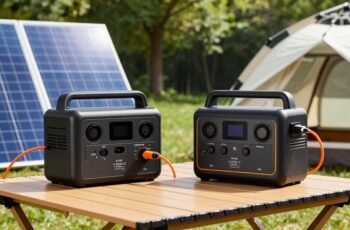
Let’s explore how portable power stations and gas generators differ fundamentally in design and operation. Portable power stations use lithium-ion batteries, offering quiet, emission-free energy, while gas generators rely on combustion engines, which generate noise and pollutants. These distinctions affect portability, maintenance, and overall usability in critical ways. Understanding these differences can help us determine which solution aligns better with specific power needs and environments.
Key Takeaways
- Portable power stations use lithium-ion batteries and inverters, while gas generators rely on fuel combustion and mechanical alternators for electricity.
- Portable power stations produce minimal noise under 60 decibels, unlike louder gas generators exceeding 70 decibels.
- Portable power stations are lightweight (10-30 lbs) and compact, whereas gas generators are heavier and bulkier.
- Portable power stations emit zero direct emissions, making them eco-friendly compared to gas generators that release CO2 and pollutants.
- Gas generators offer higher continuous power and longer runtimes for heavy appliances, while portable power stations suit quiet, short-term outdoor use.
How Portable Power Stations and Gas Generators Work Differently
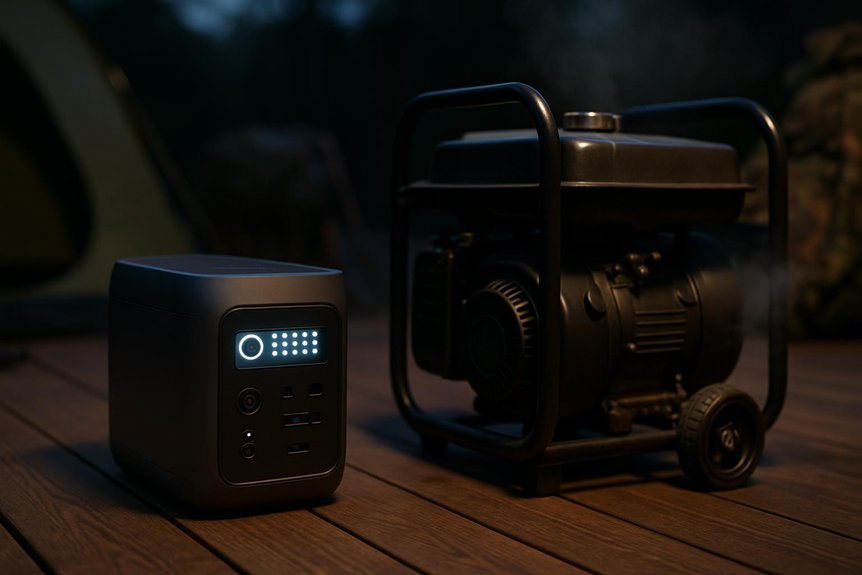
Although both portable power stations and gas generators serve as reliable backup energy sources, they operate on fundamentally different principles. Portable power stations rely on advanced battery technology, typically lithium-ion cells, to store electrical energy efficiently. This stored energy is then converted to AC power via an inverter when needed. In contrast, gas generators combust fuel, such as gasoline or propane, to mechanically drive an alternator that generates electricity on demand. From a fuel efficiency standpoint, portable power stations eliminate the continuous fuel consumption required by gas generators, offering a more energy-efficient and maintenance-free solution. Their performance depends on battery capacity and inverter efficiency, whereas gas generators’ output correlates directly with fuel input and engine efficiency. Understanding these operational differences helps us select the right power source for specific applications.
Comparing Noise Levels and Emissions for Outdoor Use
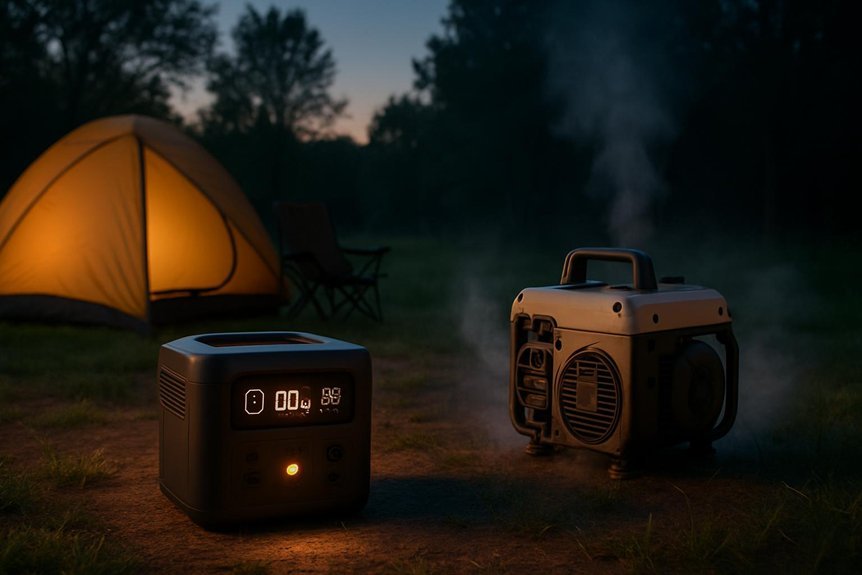
Let’s examine the noise output differences between portable power stations and gas generators, where power stations typically operate below 60 decibels compared to generators that can exceed 70 decibels. We’ll also compare their emissions, noting that gas generators release significant CO2 and NOx pollutants, whereas portable power stations produce zero direct emissions. Understanding these factors is essential for evaluating their suitability for outdoor use in noise-sensitive and environmentally regulated areas.
Noise Output Differences
When we compare portable power stations and gas generators, noise output emerges as a critical factor, especially for outdoor use. Gas generators typically operate between 60 to 90 operational decibels, producing a higher sound frequency range that can disrupt natural surroundings and communication. In contrast, portable power stations maintain notably lower noise levels, often below 50 decibels, generating minimal sound frequency emissions due to their battery-based design. This reduction in noise not only enhances user comfort but also complies better with noise regulations in residential or campsite areas. Understanding these differences helps us select the appropriate power source for noise-sensitive environments, prioritizing quieter operation without compromising energy output. Overall, portable power stations offer a substantial advantage in reducing noise pollution during outdoor activities.
Emission Impact Comparison
Beyond noise levels, evaluating the overall emission impact of portable power stations versus gas generators provides a more complete picture of their suitability for outdoor use. Gas generators rely on combustion, emitting carbon monoxide, nitrogen oxides, and particulate matter—primary emission sources contributing to air pollution and health risks. In contrast, portable power stations are zero-emission devices during operation, as they use stored electrical energy without direct combustion. This fundamental difference greatly reduces their environmental impact, especially in sensitive outdoor settings.
| Emission Sources | Environmental Impact |
|---|---|
| Gas Generators | High (combustion pollutants) |
| Portable Power Stations | Negligible (no direct emissions) |
| Noise Levels | Higher for gas generators |
Choosing portable power stations minimizes both noise and harmful emissions outdoors.
Portability and Weight: Which One Is Easier to Carry?
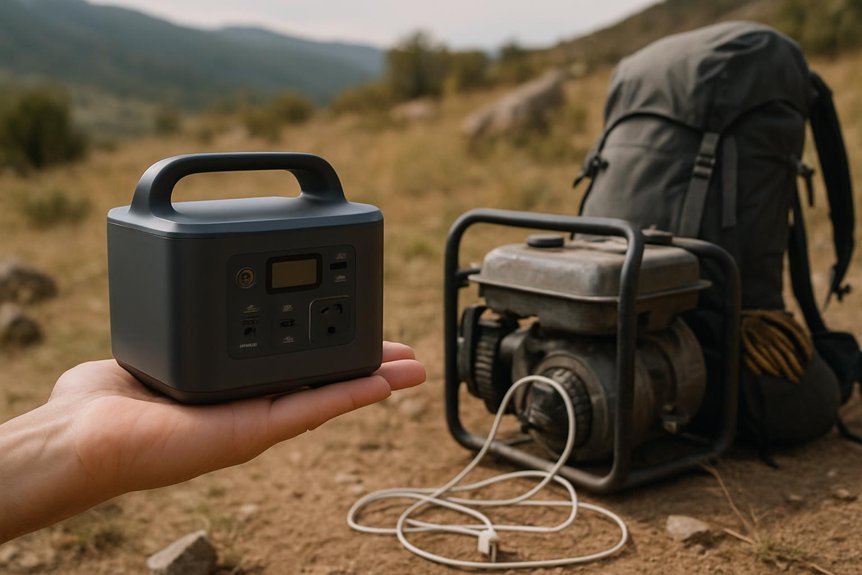
When comparing portable power stations and gas generators, weight plays a vital role in ease of transport, with power stations typically ranging from 10 to 30 pounds and gas generators often exceeding 50 pounds. Design factors like integrated handles and compact form influence how easily we can carry each unit. Let’s analyze handling and transportation metrics to determine which option offers better portability for various use cases.
Weight Comparison Overview
Portable power stations typically weigh between 10 to 30 pounds, making them considerably easier for us to carry and maneuver compared to gas generators, which often exceed 50 pounds and require more robust handling. When we analyze weight distribution and size differences, several factors stand out:
- Portable power stations have a compact form factor, optimizing internal components for balanced weight distribution.
- Gas generators’ bulkier engines and fuel tanks create uneven weight, complicating transport.
- The lighter weight of power stations reduces fatigue during extended use or relocation.
- Size differences mean power stations fit easily in smaller vehicles, while gas generators often need dedicated transport space.
Design and Portability
We find that the design and portability of power stations versus gas generators hinge on several measurable factors, including size, weight distribution, and handling features. Portable power stations typically exhibit superior design aesthetics, featuring a compact structure that emphasizes minimal footprint and ergonomic balance. Their weight generally ranges between 5 to 30 pounds, making them easier to carry compared to gas generators, which often weigh 50 pounds or more due to heavier engine components and fuel tanks. The compact structure of power stations enhances their portability, allowing for straightforward integration into backpacks or vehicle compartments. In contrast, gas generators’ bulkier design and uneven weight distribution reduce their ease of transport, despite handles or wheels. Overall, portable power stations prioritize portability through optimized design and lightweight materials, making them more convenient for on-the-go energy needs.
Handling and Transportation
Although both portable power stations and gas generators serve as reliable energy sources, their handling and transportation differ markedly due to weight and design factors. Portable power stations typically have optimized weight distribution and integrated carry handles, making them easier to lift and maneuver. Gas generators, however, often feature bulkier frames and uneven weight distribution, requiring more effort or additional equipment for transport.
Consider these key aspects:
- Portable power stations usually weigh between 10-30 lbs, while gas generators can exceed 50 lbs.
- Carry handles on power stations are ergonomically placed for balanced lifting.
- Gas generators may have wheel kits but lack uniform weight distribution, complicating movement.
- Power stations’ compact design enhances portability in confined spaces compared to gas generators.
Maintenance Needs: Battery Care vs. Fuel Management
Since both power sources rely on different technologies, their maintenance requirements diverge greatly. Portable power stations demand regular battery care to maximize battery lifespan. This includes avoiding deep discharges below 20% state of charge and performing partial charges to maintain peak battery health. Battery management systems (BMS) monitor temperature and voltage, but periodic calibration is recommended to guarantee accuracy. In contrast, gas generators require meticulous fuel storage practices; gasoline degrades within 3-6 months, risking engine damage and starting issues. Stabilizers extend fuel viability but require monitoring fuel quality and tank cleanliness. Additionally, generators need routine oil changes and spark plug inspections to maintain performance. Understanding these distinct maintenance protocols helps us choose the right power source aligned with our operational needs and maintenance capabilities.
Power Output and Runtime: What Fits Your Energy Demands?
Maintaining power sources properly sets the stage for evaluating how they perform under load. When considering power output and runtime, we need to match capacity requirements with energy efficiency. Portable power stations typically provide stable, clean power with moderate capacity, while gas generators offer higher output but less efficiency.
Here’s what to assess:
- Peak and Continuous Output – Confirm the device meets your maximum and sustained wattage needs.
- Battery or Fuel Capacity – Larger capacity extends runtime but affects portability.
- Energy Efficiency – Portable power stations convert energy with minimal loss; gas generators consume fuel less efficiently.
- Runtime Under Load – Calculate expected runtime based on your actual energy consumption profile.
Balancing these factors helps us select the right power source tailored to specific energy demands.
Best Use Cases for Portable Power Stations and Gas Generators
When selecting between portable power stations and gas generators, we must consider the specific scenarios where each excels based on their technical capabilities. Portable power stations deliver quiet, emission-free energy with outputs typically ranging from 200 to 2000 watts, making them ideal for camping essentials and outdoor adventures where noise and air quality matter. Their battery-based design supports sensitive electronics and provides clean power for devices during emergency backup or light home use. Conversely, gas generators offer higher continuous power, often exceeding 5000 watts, suitable for extended home use or powering multiple heavy appliances simultaneously. However, they emit noise and fumes, limiting their practicality in enclosed or noise-sensitive environments. By matching these power sources to usage contexts, we optimize efficiency and safety for specific energy demands.
Frequently Asked Questions
Can Portable Power Stations Be Used Indoors Safely?
Yes, we can use portable power stations indoors safely due to zero emissions and no fuel combustion. However, we must consider their power capacity to guarantee they meet our device requirements without overloading or overheating.
How Long Do Portable Power Station Batteries Typically Last?
We track battery lifespan, measure charging cycles, and monitor capacity. Typically, portable power station batteries last 500 to 1,000 cycles before capacity drops considerably, equating to 2 to 5 years of regular use with proper maintenance.
Are Gas Generators Allowed in All Campgrounds?
Gas generators aren’t allowed in all campgrounds due to campground regulations focused on minimizing generator noise, which often exceeds limits. We recommend checking specific site rules and decibel restrictions before planning to use a gas generator.
Do Portable Power Stations Require Special Disposal Methods?
When we once recycled an old phone battery, it reminded us portable power stations need careful battery disposal. We follow strict recycling guidelines to prevent environmental harm and guarantee proper handling of lithium-ion cells, essential for safety and sustainability.
Can Gas Generators Run on Alternative Fuels?
Yes, gas generators can run on alternative fuel types like propane, natural gas, and biodiesel, but their gas generator efficiency varies considerably, often dropping by 10-20% compared to traditional gasoline, depending on fuel quality and engine design.
Conclusion
In comparing portable power stations and gas generators, it’s clear that each has its strengths. Did you know portable power stations operate at sound levels as low as 40 decibels—comparable to a quiet library—while gas generators often exceed 70 decibels, like a vacuum cleaner? This difference highlights their suitability for noise-sensitive environments. By weighing factors like emissions, portability, and maintenance, we can choose the right solution that precisely fits our energy needs and usage scenarios.